Executive Overview
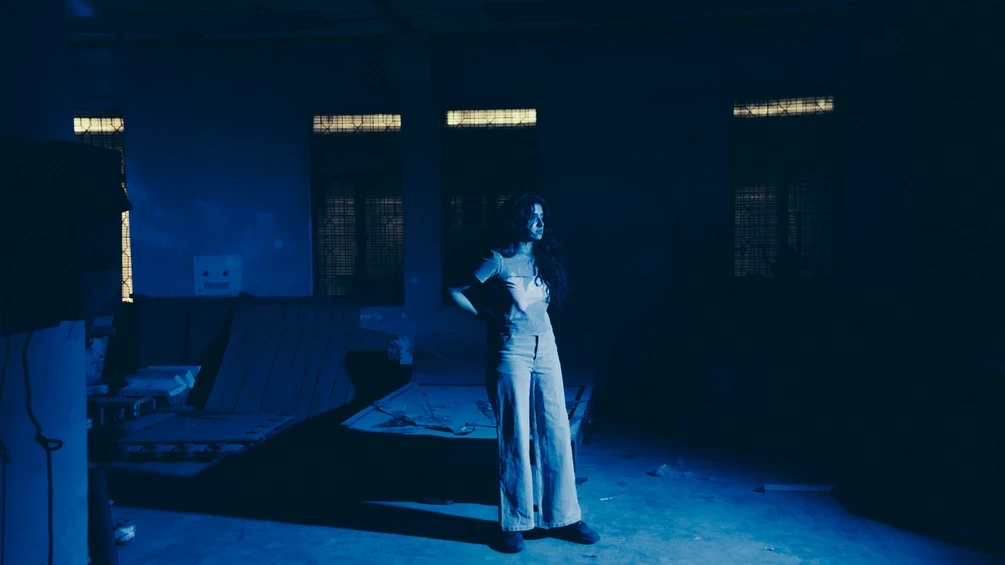
Electronic music is fundamentally a medium of transformation. At its core, the genre relies on the manipulation of soundwaves, the deconstruction of source material, and the birth of entirely new contexts from familiar building blocks. Yet, it is rare for an artist to execute this transformative ethos with the precise conceptual clarity demonstrated by New Delhi-based producer and multidisciplinary artist Sijya.
On October 2nd, Sijya is set to release her highly anticipated remix and rework EP, Leather & Brass [Retrofitted], via the esteemed independent imprint One Little Independent Records. Serving as a companion piece and conceptual evolution of her prior work, the project acts as a sonic kaleidoscope. It takes the original, intricately crafted compositions of Sijya’s sonic universe and hands them over to a curated roster of boundary-pushing producers, artists, and innovators whom Sijya deeply admires.
The announcement of the EP was officially heralded by the release of its lead single: “Do I Know [Rachika Nayar Edit],” a masterclass in emotional resonance and textural depth. As the broader tracklist begins to unfold, it reveals contributions from heavy-hitting sonic architects such as Sneha Khanwalkar and Molina. Together, these collaborators construct a vibrant tapestry that bridges geographical divides, crosses ideological borders between commercial and underground production, and pays homage to the creative brilliance of contemporary femme producers.
This comprehensive feature explores the anatomy of Leather & Brass [Retrofitted], charting the trajectory of Sijya’s career from the gargantuan, reverberating spaces of London’s Tate Modern to the intimate, collaborative digital exchanges that birthed this upcoming release. Through deep-dive analysis, contextual metrics, direct artist commentary, and an exploration of the global electronic landscape, we examine how Sijya is redefining what it means to be an independent electronic artist in the twenty-first century.
Detailed Chronology: From the Tate Modern to the Retrotech Laboratory
To fully understand the genesis of Leather & Brass [Retrofitted], one must retrace the steps of Sijya’s recent artistic journey—a period defined by monumental live performances, geographic displacement, and profound moments of creative epiphany.
The Turbine Hall Epoch and Live Validation
The narrative threads connecting Sijya’s recent output can be traced directly to her landmark performance at London’s world-renowned Tate Modern. Tasked with commanding the cavernous, industrial expanse of the gallery’s iconic Turbine Hall, Sijya delivered a set that challenged the acoustic architecture of the space. The experience of performing within such a historic, gargantuan brutalist structure left an indelible mark on her approach to scale, reverb, and spatial audio design.
This monumental performance was not an isolated triumph; it arrived on the heels of high-profile support slots alongside visionary acts such as The Cinematic Orchestra and Nabihah Iqbal. These engagements solidified Sijya’s reputation as an uncompromising live act capable of translating complex, introspective studio productions into visceral, room-filling spatial experiences.
The immediate byproduct of her Turbine Hall residency was the release of the standalone single appropriately titled "Turbine." Written and produced in the direct psychological aftermath of the performance, the track functioned as an acoustic processing of the sheer physical scale of the venue. It utilized industrial percussion, sweeping drone pads, and meticulous sound design to recreate the sensation of sound bouncing off towering steel beams and concrete walls.
Conceptualizing the Retrofitted Universe
Following the cycle of "Turbine" and her earlier single "I only want to crash," Sijya turned her attention inward. Having constructed a distinct sonic world characterized by metallic textures, organic field recordings, and driving electronic rhythms, she arrived at a conceptual crossroad. Rather than immediately pushing forward into a sophomore full-length LP, she chose to open her stems to the global community.
The concept for Leather & Brass [Retrofitted] was born out of a desire for community-building and mutual admiration. For years, Sijya found herself immersed in the output of a specific cohort of boundary-pushing producers—predominantly women and non-binary artists—who were redefining the parameters of ambient, club, and experimental electronic music.
"For the past few years, I’ve been obsessed with listening to femme producers and artists, and this remix comp is an ode to that," Sijya reflects. Rather than maintaining total authoritarian control over her catalog, she dismantled her own tracks, shipping the multi-track stems across continents. The result is a collaborative network of interpretations that honor the integrity of the source material while dragging it into startlingly new sonic territories.
Supporting Context & Metrics: The Geopolitics of Production and the Femme Avant-Garde
Leather & Brass [Retrofitted] exists at the intersection of several crucial contemporary movements within the global music industry: the decentralization of electronic music production, the dismantling of institutional barriers between commercial and underground spheres, and the hyper-visibility of marginalized genders in sound design.
The Femme Avant-Garde in Electronic Music
Historically, electronic music production and audio engineering have suffered from a severe gender disparity. Despite pioneering contributions from figures like Daphne Oram, Delia Derbyshire, and Wendy Carlos, the modern digital audio workstation (DAW) landscape has long been coded as a male-dominated domain.
In recent years, a powerful counter-movement has emerged, spearheaded by platforms, collectives, and artists actively rewriting this narrative. By dedicating Leather & Brass [Retrofitted] exclusively to a curated roster of visionary producers, Sijya is making an intentional curatorial statement. The EP positions women and femme creators not merely as vocalists or performers—roles to which they have historically been pigeonholed within the electronic space—but as foundational architects of sound, mix engineers, arrangers, and electronic auteurs.
Bridging the Indian Indie-Bollywood Divide
One of the most fascinating narrative dimensions of Leather & Brass [Retrofitted] is its inclusion of Sneha Khanwalkar, an artist whose career illuminates the complex geography of the Indian music industry.
Within the subcontinent, a stark and often artificial wall has historically separated the independent underground music scene from the sprawling, hyper-commercial apparatus of Bollywood. While indie artists often pride themselves on lo-fi aesthetics, DIY distribution, and Western-facing genre tropes, Bollywood relies on massive institutional budgets, hyper-polished production values, and an army of studio musicians and "music directors."
Khanwalkar stands as a legendary anomaly in this ecosystem. Renowned for her groundbreaking work on films like Gangs of Wasseypur and Oye Lucky! Lucky Oye!, Khanwalkar famously rejected the sanitized confines of Mumbai soundstages. Instead, she packed portable recording rigs, traveled deep into rural villages and urban slums across India, and captured authentic regional folk music, street sounds, and vernacular dialects on-site, subsequently weaving them into contemporary cinematic arrangements.
By enlisting Khanwalkar to reinterpret her track "Safe," Sijya is actively healing the fracture between India’s indie underground and its cinematic avant-garde. It is a creative dialogue that proves the technical and philosophical approaches of both worlds are deeply aligned.
Official Statements & Track Breakdown
To understand the emotional and technical depth of Leather & Brass [Retrofitted], one must examine the specific pairings that make up its tracklist, along with the personal motivations articulated by Sijya herself.
"Do I Know [Rachika Nayar Edit]"
The lead single from the EP sets an impossibly high standard for the rest of the collection. Enlisting Brooklyn-based producer, composer, and guitarist Rachika Nayar—whose acclaimed albums for NNA Tapes have cemented her as a master of emotional ambient and guitar-driven electronic composition—the track takes Sijya’s original melodic architecture and bathes it in a shimmering, melancholic glow.
“I love Rachika’s work and it’s amazing to have her rework ‘Do I Know’,” Sijya states. “[She] beautifully indulges the tender side of the song, it’s a perfect companion.”
Nayar’s edit eschews heavy club percussion in favor of granular synthesis, swelling bowed guitar harmonics, and a fragile vocal processing treatment that highlights the aching vulnerability at the core of Sijya’s songwriting. The result is a piece of music that feels simultaneously vast and intensely claustrophobic, pulling the listener into a warm, immersive auditory embrace.
Sneha Khanwalkar’s Reinterpretation of "Safe"
The involvement of Sneha Khanwalkar represents a masterstroke of curation. When discussing Khanwalkar’s inclusion, Sijya’s admiration is palpable:
“Sneha Khanwalkar is a legend. She is a music director — which is what producers are called in Bollywood. She’s done amazing work blending authentic regional sounds (that she’s often gone and recorded on ground herself) with contemporary sounds… I’ve often wondered why musicians in the Indian indie scene and the Bollywood scene are so, well, separate, when we’re basically doing the same thing. When we were thinking of Indian producers for the remixes she immediately came to mind because she is an undeniable music maker of our times.”
While details of Khanwalkar’s remix of "Safe" remain closely guarded ahead of the full EP release, industry insiders anticipate a masterclass in textural juxtaposition—merging Sijya’s metallic, industrialized sound design with Khanwalkar’s peerless ethnological field-recording techniques.
Molina’s Take on "I only want to crash"
Rounding out the primary features announced for the project is Molina, an artist celebrated for her ability to twist pop structures into dark, otherworldly synth-pop and electronic configurations. Taking on "I only want to crash"—a track that originally explored themes of digital saturation, burnout, and mechanical failure—Molina’s remix injects a pulsating, hypnotic rhythm designed to occupy the dim-lit spaces between ambient introspection and peak-time dancefloor catharsis.
Future Outlook: The Global Trajectory of Sijya
As the October 2nd release date for Leather & Brass [Retrofitted] draws closer, the broader implications of Sijya’s artistic strategy become increasingly clear. In an era dominated by hyper-fast algorithmic turnaround times, streaming fatigue, and disposable single cycles, Sijya is opting for a masterclass in world-building.
By treating her own catalog not as a set of static, finished products, but as living, breathing ecosystems capable of infinite adaptation, she positions herself alongside the most forward-thinking experimentalists in modern electronic music. The EP demonstrates that collaboration is not merely a promotional tool, but a vital methodology for cross-pollinating ideas, breaking down regional barriers, and challenging institutional borders.
Looking beyond the release of Leather & Brass [Retrofitted], Sijya’s trajectory points toward an increasingly borderless career. Armed with the validation of monumental live spaces like the Tate Modern, supported by visionary independent labels like One Little Independent Records, and backed by a global network of peer producers, she is quietly constructing a singular sonic blueprint.
For listeners, electronic music purists, and sonic adventurers alike, October 2nd marks an essential calendar date. Leather & Brass [Retrofitted] promises to be more than just a remix compilation; it is a manifesto for a new era of collaborative, femme-led electronic experimentation, proving that when brilliant minds collide, the resulting sparks can illuminate an entire musical landscape.