Executive Overview
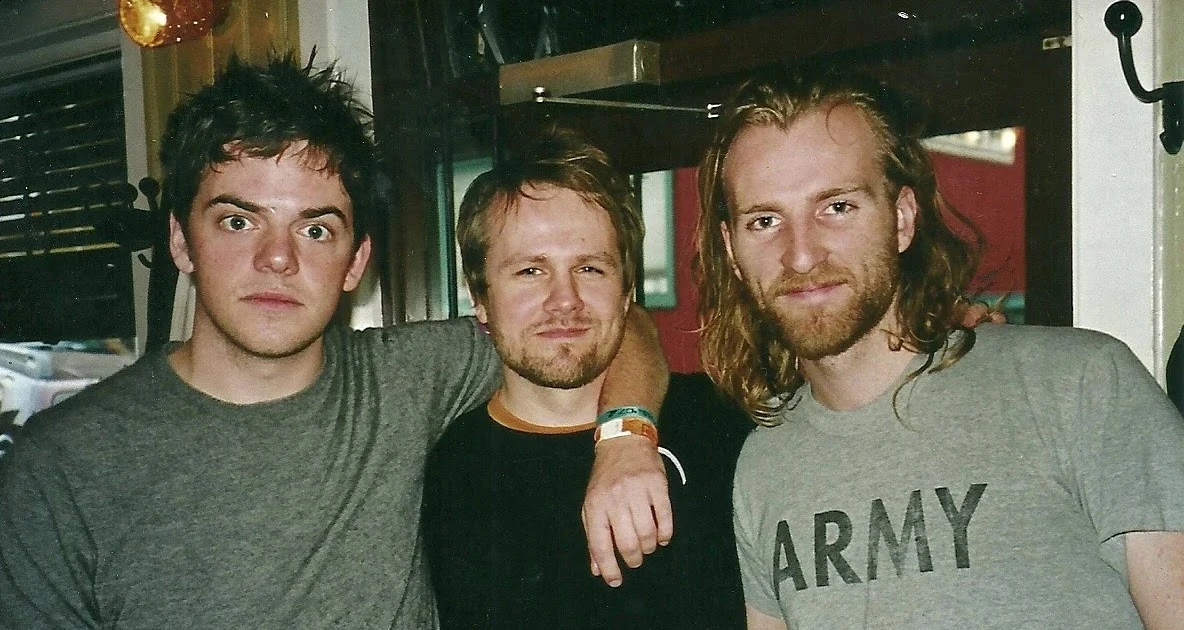
Two decades ago, a small studio in Reykjavík became the crucible for a quiet revolution in contemporary music. Founded in 2006 by Icelandic composer and producer Valgeir Sigurðsson, alongside American composer Nico Muhly and Australian-Icelandic producer Ben Frost, Bedroom Community was conceived as more than just a record label. It was built as a creative collective—a sanctuary for boundary-pushing artists who found themselves uninspired by the rigid divisions separating classical composition from electronic production, and traditional concert halls from home-studio experimentation.
As the label celebrates its 20th anniversary, its imprint on the modern musical landscape is undeniable. Long before "genre-fluidity" became a standard marketing term in the streaming era, Bedroom Community was actively dismantling the barriers between acoustic orchestration and digital sound design. Operating with a fierce independence and a rigorous artistic ethos, the collective fostered a tight-knit community of international visionaries. From its foundational releases to its ongoing support of avant-garde sound sculptors, the label has proven that intimacy, scale, and uncompromising artistic vision can coexist outside the traditional machinery of the major-label music industry.
This retrospective examines the origins, evolution, and enduring legacy of Bedroom Community, tracing its path from a Reykjavik basement project to a globally revered institution of sonic innovation.
Detailed Chronology: From Reykjavík Roots to Global Collective
The Genesis (2000–2005): Convergence in the North
To understand the birth of Bedroom Community, one must look at the individual trajectories of its founders. Valgeir Sigurðsson had spent nearly a decade serving as the indispensable studio right-hand to Iceland’s premier art-pop icon, Björk. Working out of the legendary Greenhouse Studios in Reykjavík, Sigurðsson developed an encyclopedic knowledge of acoustic engineering, signal processing, and the delicate art of translating eccentric artistic visions into recorded reality.
Thousands of miles away, Ben Frost was operating in virtual isolation. Spending "unholy amounts of time alone in a bedroom in Australia making highly questionable music," Frost was searching for a framework that could accommodate his aggressive, textural, and rhythmically complex sonic experiments. When Frost crossed paths with Sigurðsson in 2000, it marked a turning point. The encounter provided Frost with access to a world-class technical environment, while Sigurðsson found a kindred spirit eager to push audio technology to its breaking point.
Meanwhile, Nico Muhly was emerging as a wunderkind in the American classical composition scene. Trained at Juilliard and steeped in sacred choral traditions, Muhly possessed a rare fluency in both centuries-old counterpoint and contemporary minimalist structures. When the paths of Sigurðsson, Frost, and Muhly converged in Reykjavík, the chemistry was immediate. They shared a dissatisfaction with the conservative nature of institutional classical music and the often insular tendencies of IDM (intelligent dance music) and electronic production. They envisioned an alternative space where a string quartet could be treated with the raw aggression of a distorted synth, and where electronic textures could possess the emotional resonance of a cathedral organ.
The Launch and the Breakthrough (2006–2008): Opening the Room
Bedroom Community officially launched as a record label and collective in 2006. From the outset, the founders rejected the traditional corporate structure of the music industry. They did not operate with A&R departments chasing radio hits or demographic trends; instead, they functioned as an artistic guild where members produced, mixed, and contributed instrumental performances to each other’s records.
The watershed moment arrived with the label’s inaugural full-length release: Nico Muhly’s Speaks Volumes (2006). Produced and mixed by Valgeir Sigurðsson, the album was a stunning manifesto for what Bedroom Community could achieve. Comprising seven intricate pieces, Speaks Volumes relied on close-miked strings, driving pianos, subtle electronics, and, crucially, charged silence. It sounded neither strictly classical nor purely electronic. Instead, it occupied a liminal space where the breath of a violist was rendered as monumental as a wall of modular synthesizers.
As Ben Frost later reflected, Speaks Volumes was quite literally "the record that opened the room"—a proof-of-concept that demonstrated how raw domestic experimentation could be translated into high-art recordings without losing its vital, human pulse.
Expansion and Maturation (2009–2018): Nurturing the Avant-Garde
Following its explosive debut, Bedroom Community steadily expanded its roster, carefully curating artists who shared its ethos of fearless exploration. The label resisted rapid scaling, opting instead for a deliberate, community-driven growth model.
Icelandic composer Daníel Bjarnason brought a sweeping, cinematic sensibility to the roster with works like Processions, blending massive orchestral movements with delicate micro-sound design. American folk interpreter Sam Amidon joined the fold, recontextualizing traditional Appalachian folk songs through eccentric, modern arrangements that featured contributions from Muhly and Frost.
During this fertile decade, the collective also became a touring powerhouse. Bedroom Community orchestrated rare, multi-artist revues where the founders and labelmates would share a stage, performing solo compositions before culminating in sprawling, collaborative improvisations. These tours reinforced the idea that the label was not merely a trademark, but a living, breathing ecosystem of mutual artistic support. Artists such as Nadia Sirota, James McVinnie, and Liam Byrne found in Bedroom Community a rare institutional home that championed experimental commissioning, unhindered by commercial compromise.
Recent Eras and Ongoing Evolution (2019–Present): Redefining Boundaries
As the collective entered its second decade, it embraced a new generation of sonic experimentalists while retaining its foundational spirit. The inclusion of artists like Lyra Pramuk—whose vocal-only, computationally processed physical trance music redefines choral traditions—demonstrated that Bedroom Community remains at the absolute cutting edge of audio art.
The roster further broadened to include the hyper-textured electronic explorations of 404.zero, the collaborative compositions of Sam Slater and Gabriella Smith, and the dynamic string performances of Daniel Pioro. Even as the digital streaming landscape commodified music into background noise, Bedroom Community continued to advocate for physical releases, immersive listening experiences, and uncompromising artistic integrity.

Supporting Context & Metrics: The Architecture of an Independent Collective
To truly appreciate the longevity and impact of Bedroom Community, it is necessary to examine the operational metrics and cultural currents that sustained it over twenty years. In an industry defined by boom-and-bust cycles, venture-backed music startups, and the precarious economics of independent streaming, Bedroom Community’s survival is an outlier statistic.
Operational Philosophy: The Guild Model
| Traditional Label Model | Bedroom Community Model |
|---|---|
| A&R Driven: Trend-spotting and commercial viability calculations. | Peer-Driven: Collaborative curation based on artistic kinship. |
| Siloed Production: Outsourced mixing, mastering, and session players. | Integrated Craftsmanship: In-house production, engineering, and cross-pollination of talent. |
| Volume Scaling: High output to offset financial risk across diverse releases. | Curation & Intimacy: Selective releases prioritizing depth and physical packaging. |
| Genre Segmentation: Strict marketing boundaries (Classical, Electronic, Pop). | Genre-Agnosticism: Deliberate dissolution of historical musical borders. |
Economic and Geographic Footprint
Operating out of Reykjavík—a city with a population hovering around 130,000—granted the collective a unique vantage point. Far removed from the corporate pressures of London, New York, or Los Angeles, the Icelandic capital provided a quiet, striking landscape that deeply influenced the sonic texture of the label’s catalog. The "Icelandic sound"—often characterized by vast spatial reverb, glacial textures, and an interplay between chilling isolation and deep warmth—became a hallmark of early Bedroom Community releases, largely engineered under Sigurðsson’s watchful ear at Greenhouse Studios.
Despite its remote geographic headquarters, the collective maintained a fiercely international footprint. With founders and core artists spanning Iceland, the United States, Australia, and the UK, Bedroom Community functioned as a decentralized nomadic commune long before remote global collaboration became a post-pandemic necessity.
Official Statements and Founder Reflections
The philosophy of Bedroom Community is best understood through the words of the artists who built it from the ground up. In reflections published on the label’s official channels to mark its milestone anniversaries, the founders have frequently emphasized the accidental, exploratory nature of their enterprise.
Valgeir Sigurðsson, looking back on his transition from Björk’s right-hand studio engineer to label patriarch, has often emphasized the importance of the physical studio space as an instrument in its own right:
"When we started, there was no master plan to conquer a market. The plan was simply to build a room where sound could be treated with absolute reverence—where the laptop and the violin sat on the same mixing desk with equal authority. We wanted to dissolve the borders between classical tradition and electronic technology."
Ben Frost, whose journey from solitary bedroom recordings in Australia to international acclaim is intertwined with the label’s history, reflects on the visceral nature of their early collaborations:
"I spent unholy amounts of time alone in a bedroom in Australia making highly questionable music when I met Valgeir in the year 2000. Finding Bedroom Community meant finding a language I didn’t know I was missing. It was a place where failure was encouraged if it led to discovery, and where technical perfection never superseded emotional truth."
Nico Muhly, whose Speaks Volumes established the blueprint for the label’s acoustic-electronic synthesis, highlights the collective’s refusal to pander to institutional expectations:
"In the traditional classical world, you are often expected to write within specific historical guardrails. Bedroom Community gave us the terrifying and exhilarating freedom to throw those guardrails away. We could write a four-part choral motet, process it through a distorted guitar pedal, and treat the resulting chaos as chamber music. That liberation changed everything for me as a composer."
Future Outlook: The Next Twenty Years
As Bedroom Community enters its third decade, the musical landscape looks vastly different from the one that birthed it in 2006. The barrier to entry for music production has plummeted; spatial audio, artificial intelligence, and algorithmic composition tools now dominate contemporary conversations about the future of sound. Yet, the core values championed by Sigurðsson, Muhly, Frost, and their extended family of artists—tactile craftsmanship, deep listening, and human collaboration—are more vital than ever.
The label’s recent trajectory points toward an even greater expansion of its sonic palette. By welcoming artists like Lyra Pramuk and 404.zero, Bedroom Community has demonstrated that it is not trapped in a nostalgic reverence for its mid-2000s aesthetic. Instead, it continues to serve as an incubator for sounds that defy easy categorization.
Future initiatives from the collective promise to deepen their engagement with live ensemble performance, immersive spatial installations, and cross-disciplinary art. While the music industry at large grapples with the homogenization of sound driven by playlist algorithms, Bedroom Community remains a stubborn, brilliant beacon for the unclassifiable.
For listeners willing to lean in, listen closely, and venture beyond the borders of genre, the doors of the bedroom remain wide open.