Executive Overview
In the heart of Gateshead, a monumental musical undertaking is rapidly taking shape. On Sunday, 8 November 2026, the striking architecture of The Glasshouse International Centre for Music will reverberate with one of the most profound choral masterpieces in the Western classical canon: Edward Elgar’s The Dream of Gerontius. Leading this formidable sonic architecture will be Dinis Sousa, conducting the internationally acclaimed Royal Northern Sinfonia. They will be joined by a world-class roster of vocal soloists—tenor Benjamin Hulett, mezzo-soprano Sarah Connolly, and baritone Roderick Williams.
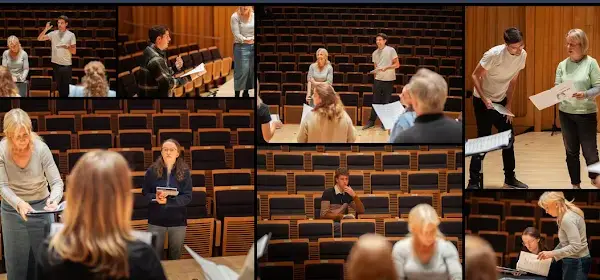
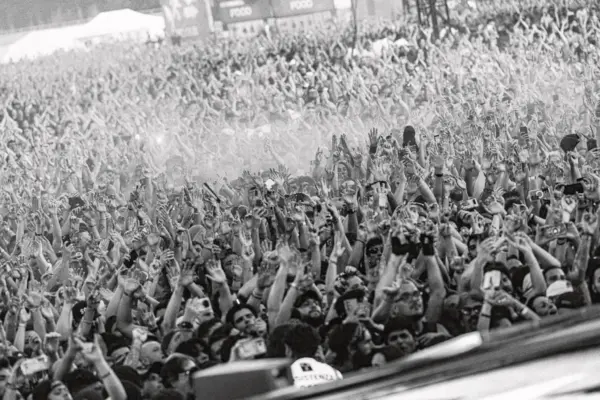
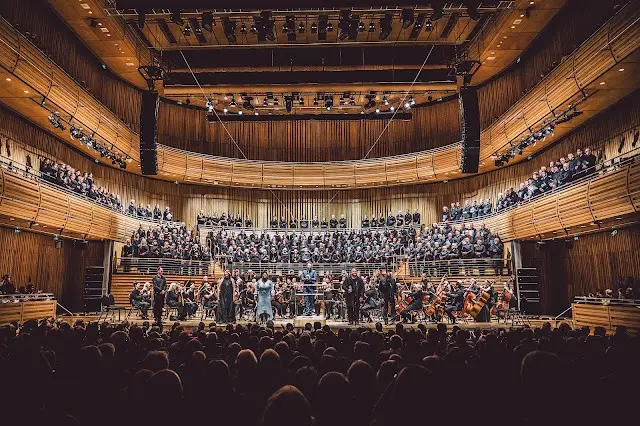
Yet, what elevates this upcoming performance from a standard orchestral concert to a landmark cultural event is its personnel. Sharing the stage with these professional musicians will be a massed force of approximately 290 non-professional singers and instrumentalists drawn from communities across the North-East of England. Ranging in age from 23 to 85, these passionate everyday musicians embody the core ethos of Share the Stage, an ambitious, ongoing initiative pioneered by The Glasshouse.
This concert marks the third major installment in the Share the Stage series, following critically acclaimed, emotionally charged performances of Michael Tippett’s A Child of Our Time in 2024 and Giuseppe Verdi’s towering Requiem. By deliberately dissolving the rigid boundary between professional and amateur music-making, this initiative challenges traditional models of high-art presentation. It posits that a regional orchestra’s true home is interwoven with the very fabric of its local community. As preparations intensify within the rehearsal halls of Gateshead, this article explores the history, methodology, human stories, and broader artistic implications of a project that is redefining participatory classical music in the United Kingdom.
Detailed Chronology and Evolution of Share the Stage
To fully appreciate the significance of the 2026 production of The Dream of Gerontius, one must trace the evolutionary trajectory of The Glasshouse’s Share the Stage initiative. Conceived as a direct response to post-pandemic isolation and a renewed industry-wide desire to reconnect cultural institutions with their surrounding populations, the project was designed from its inception to break down institutional barriers.
The Genesis: Breaking New Ground in 2024
The inaugural iteration of Share the Stage took place in 2024, focusing on Michael Tippett’s mid-20th-century pacifist oratorio, A Child of Our Time. Written in direct response to the horrors of the Nazi November Pogroms (Kristallnacht) and the persecution of minorities, Tippett’s work demands immense emotional and technical commitment from its performers. By integrating massed regional forces with the Royal Northern Sinfonia under Dinis Sousa’s baton, the 2024 concert demonstrated that regional non-professional musicians could rise to the demanding standards required by complex, modern choral-orchestral writing.
The success of A Child of Our Time was not merely measured by ticket sales or critical notices; it was measured by the psychological and social impact on the participants. Individuals who had spent decades singing quietly in home kitchens, church choirs, or community groups suddenly found themselves performing in Sage One—a world-class auditorium renowned for its acoustic brilliance—backed by a professional symphony orchestra.
The Verdi Milestone and the Path to Elgar
Buoyed by the triumph of the inaugural concert, the creative team at The Glasshouse expanded the conceptual framework of the series with a gripping staging of Verdi’s Requiem. This performance tested the limits of sheer dramatic power, requiring participants to navigate the terrifying Dies Irae alongside the tender, transcendent lyricism of the Lux aeterna.
Building upon the momentum of these earlier milestones, the announcement of Elgar’s The Dream of Gerontius for November 2026 represents a natural evolution. Cardinal John Henry Newman’s poem, set to Elgar’s deeply personal and spiritually charged late-Victorian score, demands an exquisite balance of fragile intimacy and overwhelming orchestral cataclysm. The meticulous planning for this event began months in advance, involving regional auditions, sectional rehearsals, digital learning resources, and regional choral workshops designed to bring hundreds of disparate voices into a unified, breathing ensemble.

Supporting Context & Metrics: The Anatomy of a Massive Collaboration
The sheer logistical and artistic scale of mounting The Dream of Gerontius with a 300-strong ensemble requires rigorous planning, community outreach, and structural support.
The Numbers Behind the Music
- Total Performers on Stage: ~300 musicians.
- Non-Professional Participants: 290 passionate singers and instrumentalists.
- Age Range of Amateurs: 23 to 85 years old—spanning multiple generations.
- Professional Core: The Royal Northern Sinfonia, alongside world-renowned soloists (Benjamin Hulett, Sarah Connolly, Roderick Williams) and conductor Dinis Sousa.
- Venue: Sage One, The Glasshouse International Centre for Music, Gateshead.
The Sociological Impact: Bridging Generations and Backgrounds
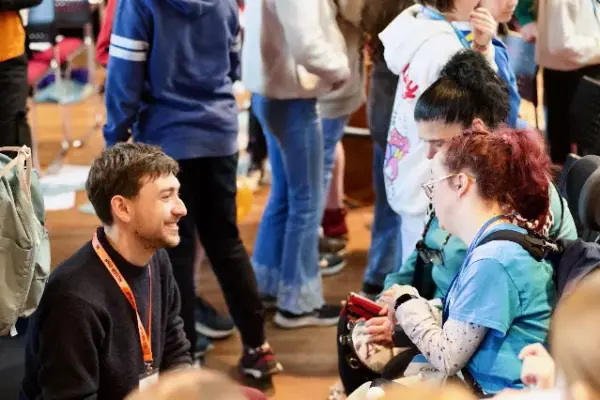
Classical music institutions across Europe have historically faced challenges regarding accessibility, elitism, and demographic stagnation. Share the Stage directly combats these systemic issues by democratizing the performance space. On the stage of Sage One, social hierarchies dissolve. Retired teachers stand shoulder-to-shoulder with university students; healthcare workers share vocal lines with retail employees and engineers.
Music education and community arts funding have faced severe cuts across the UK over the past decade. Initiatives like Share the Stage act as vital lifelines for adult amateur musicianship, offering lifelong learning opportunities that sustain mental health, social cohesion, and regional pride. The project proves that the desire to create complex, high-level art does not expire at the conservatory door; rather, it burns brightly in communities throughout the North-East.
Official Statements and Artistic Vision
At the heart of this collaborative movement is Dinis Sousa, whose artistic vision champions the belief that monumental music belongs to everyone. In a statement reflecting on the upcoming November 2026 performance, Sousa articulated the unique challenges and rewards of Elgar’s masterpiece:
"The Dream of Gerontius is an extraordinary piece of music to perform. It moves between moments that feel incredibly intimate and these huge, overwhelming passages where the orchestra, soloists and chorus come together with enormous power.
"That makes it a wonderful piece for Share the Stage. There is something very special about bringing hundreds of people together to make this music, with Royal Northern Sinfonia and our guest soloists performing alongside singers and instrumentalists from communities across the region. Everyone on that stage has a part to play in creating the performance, and I think the scale and energy of that will be incredible to experience in Sage One."
Sousa’s philosophy challenges the traditional maestro-centric model of classical performance. Instead of viewing the chorus and amateur instrumentalists as a mere backdrop to the professional orchestra, Sousa elevates them to central stakeholders in the artistic process. The dynamic energy generated by combining seasoned orchestral players with enthusiastic, dedicated community musicians produces a raw, emotionally unfiltered sound that cannot be replicated by an all-professional ensemble alone.
Personal Stories: The Human Element of Share the Stage
Behind the sweeping generalizations of statistics and artistic statements lie deeply personal journeys of transformation, rediscovery, and courage. The true measure of Share the Stage is found in the individual participants whose lives are touched by the project.

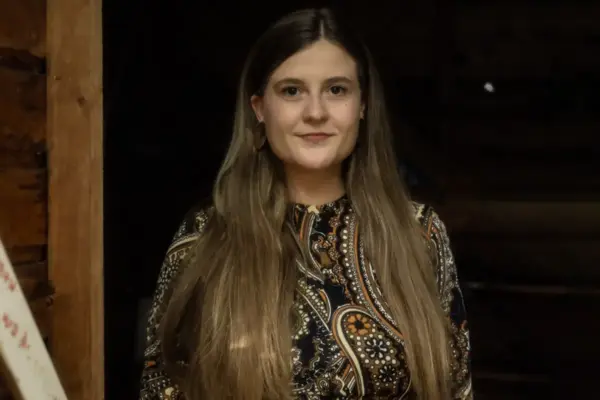
A compelling example is found in the journey of 73-year-old Suzanne Shell from Morpeth. For more than half a century, serious singing had been a closed chapter in Shell’s life—a youthful passion set aside in favor of career, family, and the practical demands of daily existence. However, when Share the Stage launched its inaugural project in 2024, Shell decided to take a leap of faith. She auditioned, dusted off her vocal skills, and immersed herself in the rigorous rehearsal process for Tippett’s A Child of Our Time.
Reflecting on her experience, Shell’s return to the stage proved that creative expression possesses no expiration date. Her journey inspired not only her peers within the regional chorus but also younger generations of musicians sharing the rehearsal space. Such stories are far from isolated; across the North-East, hundreds of participants report newfound confidence, profound social connections, and a revitalized sense of personal purpose through their involvement with The Glasshouse.
Future Outlook: Setting a New Standard for Regional Orchestras
As the musical world looks ahead to Sunday, 8 November 2026, the implications of The Dream of Gerontius stretch far beyond a single afternoon in Gateshead. The success of The Glasshouse’s Share the Stage model provides a blueprint for cultural institutions globally. In an era where arts organizations must continually justify their societal value and financial support, initiatives that directly engage the local populace as active creators—rather than passive consumers—offer a compelling path forward.
By pairing world-class professional artists like Benjamin Hulett, Sarah Connolly, and Roderick Williams with passionate community members under the inspired leadership of Dinis Sousa, The Glasshouse is proving that artistic excellence and radical inclusivity are not mutually exclusive. In fact, they are mutually dependent.
When the final, transcendent chords of Elgar’s Gerontius fade into the sublime acoustics of Sage One on that November evening, the applause will not merely celebrate a musical score flawlessly executed. It will celebrate a community united, voices blended, and a stage truly shared.
Full program details, ticketing information, and rehearsal updates can be accessed directly via The Glasshouse’s official website.