Executive Overview
In the grand tapestry of British media, few institutions carry the cultural weight, the political gravity, and the perpetual scrutiny of the British Broadcasting Corporation (BBC). For nearly a century, the public service broadcaster has been the cornerstone of the UK’s democratic discourse, a global beacon of trusted journalism, and a cultural exporter of unmatched magnitude. Yet, as the media landscape shifts beneath the feet of traditional broadcasters, the Corporation finds itself at a historic crossroads.
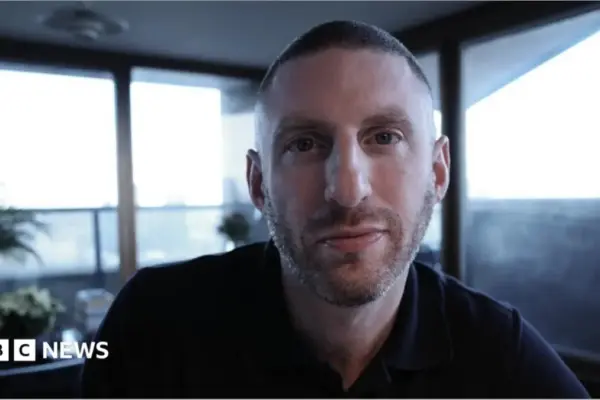
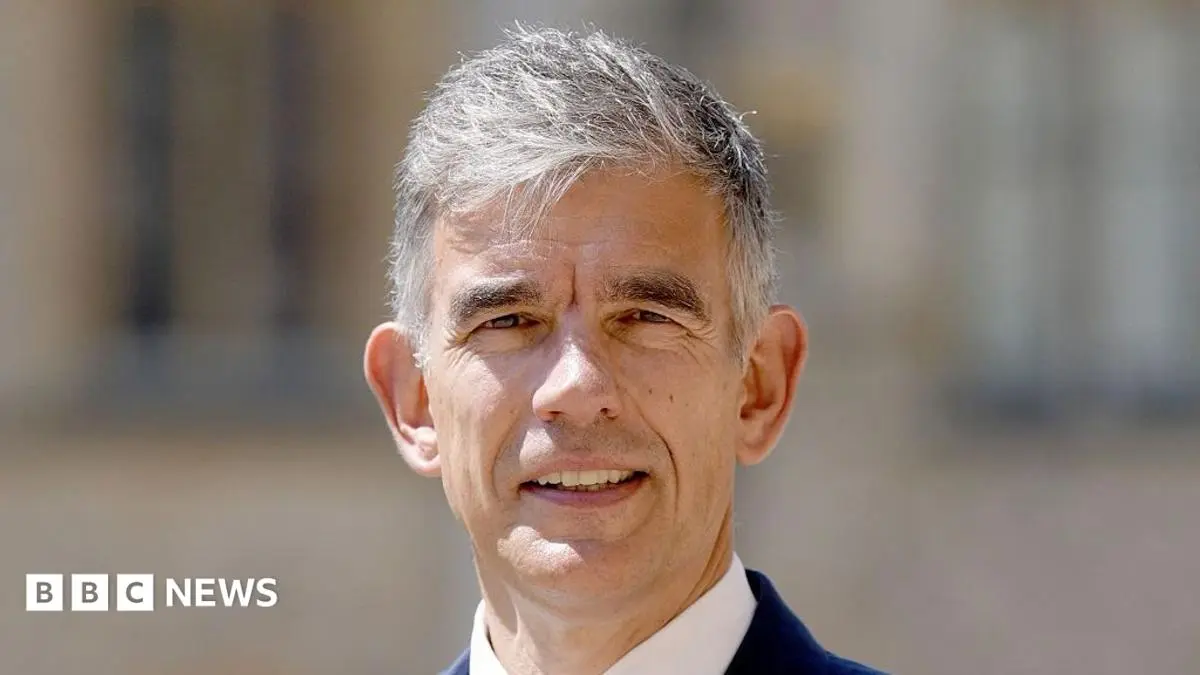
Enter Matt Brittin. In his inaugural major industry appearance—a candid, sweeping, and at times provocative in-conversation event with veteran broadcaster Kirsty Wark—the newly appointed Director-General laid bare his diagnosis of the ailing giant. Brittin, who assumed the role earlier this year after a high-profile tenure at tech titan Google, shied away from diplomatic platitudes. Instead, he offered a sharp critique of an organization he praised for its extraordinary reservoir of talent, yet indicted for institutional timidity, an inward-looking corporate culture, and a debilitating aversion to risk.
Brittin’s appointment is, in itself, a watershed moment for the BBC. Breaking with decades of insular tradition, he is the first Director-General to step into the role from outside the Corporation’s bureaucratic corridors since Greg Dyke took the reins in 2000. Bringing with him the fast-paced, experimental ethos of Silicon Valley, Brittin has signaled a radical departure from the status quo. He aims to drag a legacy institution into a hyper-accelerated digital age defined by the existential threats of artificial intelligence (AI), shifting consumer consumption patterns, and unrelenting political crossfire.
However, Brittin’s honeymoon phase is fraught with immediate, high-stakes crises. Even as he attempts to chart a course toward a digitally agile future, the BBC is locked in an escalating legal and reputational battle. The Corporation is currently fighting a staggering $10 billion (£7.4 billion) defamation lawsuit brought by US President Donald Trump in a Florida court, stemming from a disputed edit in a 2024 Panorama investigation concerning the US Capitol riots.
This comprehensive report examines Brittin’s explosive debut address, contextualizes his outsider mandate against the backdrop of the BBC’s structural challenges, details the escalating legal warfare with the US presidency, and evaluates whether a tech executive can successfully pivot a British cultural monolith into the mid-21st century.
Detailed Chronology
The Transition of Power: A Break from Tradition
The journey to Matt Brittin’s watershed interview began earlier this year with a quiet seismic shift in Broadcasting House. When Tim Davie stepped down from the Director-General post, the BBC’s Board of Governors faced a pivotal choice: double down on traditional broadcast insiders who understood the labyrinthine politics of the Corporation, or seek external disruption.
Opting for disruption, the Board selected Brittin, previously a prominent regional policy manager and executive at Google. Brittin’s career pedigree—steeped in digital ecosystems, algorithmic content delivery, data analytics, and fast-failure product development—marked a stark contrast to his predecessors. For an organization historically dominated by career journalists and internal administrators, importing an executive from the heart of Big Tech was an explicit admission that the old ways of doing business were no longer viable.
The Wark Interview: Breaking the Silence
Brittin’s conversation with Kirsty Wark served as his formal coming-out party to the media industry. Held before an intimate audience of peers, critics, and media professionals, the dialogue was designed to set the tone for his tenure. Rather than offering the standard corporate boilerplate about "building on strong foundations," Brittin wasted no time dissecting the structural pathologies of the institution he now leads.
[Timeline of Key Events]
 │
 ├── 2000: Greg Dyke appointed D-G (last external hire prior to 2024)
 ├── 2024: "Panorama" documentary airs regarding US Capitol riots (subsequent editing error)
 ├── Early 2024/2025: Tim Davie steps down; Matt Brittin appointed Director-General
 └── Present: Brittin's inaugural Wark interview & $10bn Trump defamation defense
Wark’s probing questions drew out stark admissions regarding the BBC’s cultural posture. Brittin did not mince words when describing the Corporation as structurally "inward looking," arguing that this insularity had bred an institutional "averse[ness] to risk." While he acknowledged being deeply "impressed" by the sheer magnitude of "creativity and talent" residing within the BBC’s production units, he warned that internal brilliance was being stifled by bureaucratic inertia.
Furthermore, Brittin addressed the volatile external pressures bearing down on the broadcaster. He painted a picture of an organization caught in a crossfire between predatory commercial rivals and intense political partisanship. "You’ve got very loud critics, many of whom are the commercial rivals of the corporation," Brittin observed, "and you’ve got political pressure on everything that you do journalistically."
The Trump Lawsuit and the Integrity Battle
The most critical segment of Brittin’s debut address centered on the existential threat posed by the multi-billion-dollar legal action spearheaded by Donald Trump. The US President is seeking $10bn (£7.4bn) in damages in a Florida court, alleging malicious misrepresentation in the editing of a 2024 Panorama documentary that scrutinized the events surrounding the US Capitol riots.
The BBC has previously conceded that an "error of judgement" occurred during the editing process of the program—an admission that has provided fodder for the plaintiff’s legal team. However, Brittin made it unequivocally clear that the Corporation intends to mount a robust defense of its journalistic integrity while simultaneously utilizing technical legal avenues to dismantle the suit.
Detailing the legal strategy during his conversation with Wark, Brittin stated: "We moved to dismiss the case on the grounds of jurisdiction in that nobody in the US actually saw the show with the bad edits, and it was a bad edit, and he won the election, and he’s got richer."
This pragmatic, almost blunt assessment highlights the tightrope Brittin must walk: acknowledging editorial failures without compromising the broader defense against what the Corporation views as an excessive, politically motivated assault on its financial and moral standing.
Supporting Context & Metrics
The BBC in the Age of Algorithmic Disruption
To understand the gravity of Brittin’s warnings, one must examine the macroeconomic and technological pressures facing public service broadcasting globally. The media ecosystem has undergone a generational migration from linear viewing and scheduled radio to on-demand streaming, social-first video, and algorithmic curation.
+-----------------------------------------------------------------+
|               THE MODERN MEDIA PRESSURES MATRIX                 |
+-------------------------+---------------------------------------+
| Strategic Threat        | Impact on the BBC                     |
+-------------------------+---------------------------------------+
| AI Revolution           | Erosion of search traffic, synthetic  |
|                         | misinformation, automation costs      |
+-------------------------+---------------------------------------+
| Changing Consumer Habits| Younger demographics abandoning       |
|                         | linear TV for TikTok, YouTube, Netflix|
+-------------------------+---------------------------------------+
| Commercial Opposition   | Domestic rivals lobbying regulators   |
|                         | against BBC's digital expansion       |
+-------------------------+---------------------------------------+
| Political Scrutiny      | License fee freezes, accusations of   |
|                         | bias from across the political aisle  |
+-------------------------+---------------------------------------+
As Brittin pointed out, "every media organisation is struggling with rapidly changing consumer behaviour and the power of the AI revolution." For the BBC, this struggle is compounded by its unique funding model—the household license fee—which faces acute political sensitivity and declining compliance rates among younger generations who consume zero linear television.
The rise of generative artificial intelligence presents a dual crisis for the broadcaster. On one hand, AI-driven recommendation engines on competing platforms threaten to disintermediate the BBC app, separating users from trusted news sources. On the other hand, the proliferation of synthetic media and deepfakes increases the societal demand for verified, high-integrity journalism—an area where the BBC should theoretically hold a monopoly of trust, provided it can adapt its distribution models.
The Silicon Valley Playbook: Experimentation vs. Bureaucracy
Brittin’s background as a regional policy manager at Google is central to his proposed remedy. In the tech sector, corporate culture is heavily influenced by the philosophy of "move fast and break things"—or, in more mature corporate iterations, rapid prototyping, agile iteration, and data-driven feedback loops.
By contrast, legacy media organizations like the BBC have historically operated on exhaustive planning cycles, risk-averse legal sign-offs, and hierarchical editorial approvals. While this caution is essential for maintaining journalistic accuracy and regulatory compliance (such as Ofcom’s strict due impartiality guidelines), it can also render the organization lethargic in the face of nimble digital startups and global tech monoliths.
Brittin explicitly articulated his desire to import this digital-first ethos into Broadcasting House. He stated his intention to use his technological background to help the organization "move faster through experimenting and learning," urging his workforce to collaborate to "find a way to the future together." Whether entrenched middle management and unionized broadcasting staff will embrace the "fail fast" mantra remains one of the defining operational questions of his tenure.
Official Statements
The fallout from Brittin’s inaugural address has reverberated across the British media landscape, drawing commentary from industry analysts, political figures, and internal stakeholders. Below is a synthesis of key positions articulated following the event:
-
Matt Brittin, Director-General:
"Every media organisation is struggling with rapidly changing consumer behaviour and the power of the AI revolution… The corporation is inward looking, which has led to an aversion to risk. You’ve got very loud critics, many of whom are the commercial rivals of the corporation, and you’ve got political pressure on everything that you do journalistically."
-
On the Trump Defamation Defense & Editorial Standards:
"We moved to dismiss the case on the grounds of jurisdiction in that nobody in the US actually saw the show with the bad edits, and it was a bad edit, and he won the election, and he’s got richer."
-
On Cultural Transformation and Tech Integration:
"We want to use those skills to move faster through experimenting and learning at the organisation and work with colleagues to find a way to the future together."
Future Outlook
As Matt Brittin settles into his office at Broadcasting House, the trajectory of the BBC over the next half-decade will largely depend on his ability to execute a delicate balancing act. The challenges before him are monumental, requiring both the surgical precision of an investigative editor and the visionary disruption of a Silicon Valley executive.
1. Navigating the Legal and Financial Minefield
The immediate priority must be the resolution—or successful dismissal—of the $10 billion defamation lawsuit brought by Donald Trump. While Brittin’s dismissal strategy relies on proving a lack of domestic US viewership and pointing to the ultimate political outcome of the election, the case carries severe reputational and financial risks. Even if dismissed on jurisdictional grounds, the litigation serves as a stark reminder of the global legal exposure modern broadcasters face when their journalism crosses international digital borders. Brittin must ensure that the BBC’s internal editorial controls and fact-checking protocols are airtight to prevent future "errors of judgement" from weaponizing legal systems against the Corporation.
2. Overcoming Institutional Risk Aversion
Cultural change in a legacy institution is notoriously difficult. Brittin’s diagnosis of the BBC as "inward looking" with an "aversion to risk" strikes at the heart of why digital innovation has often lagged behind linear broadcasting within the Corporation. To foster a culture of experimentation, Brittin will need to protect editorial teams who take calculated creative risks while tightening accountability for systemic errors. This requires bridging the cultural divide between traditional broadcast journalists and incoming digital/tech talent.
3. Securing Long-Term Relevance and Funding
Beyond internal culture, the Director-General faces the perennial battle over the BBC’s funding model and its relationship with the state. With the royal charter and license fee settlement subject to continuous political debate, Brittin must prove to the British public that the BBC delivers unmatched value in an era of abundant, free, or subscription-based entertainment. This means doubling down on trusted news, distinctively British cultural storytelling, and accessible digital platforms that meet younger audiences where they are—whether on mobile apps, streaming aggregators, or social video networks.
Conclusion
Matt Brittin’s explosive debut proves that the new Director-General has no appetite for sugarcoating the BBC’s vulnerabilities. By openly confronting the Corporation’s internal timidity, acknowledging external political crossfire, and charting an aggressive, tech-informed path toward experimentation, he has thrown down the gauntlet to both his workforce and his critics.
Whether an outsider from Google can successfully rewire the DNA of Britain’s most cherished and contested cultural institution remains one of the most compelling narratives in modern media. One thing is certain: under Brittin’s watch, the BBC is done looking backward—even as it fights desperately to protect its storied past.