Executive Overview
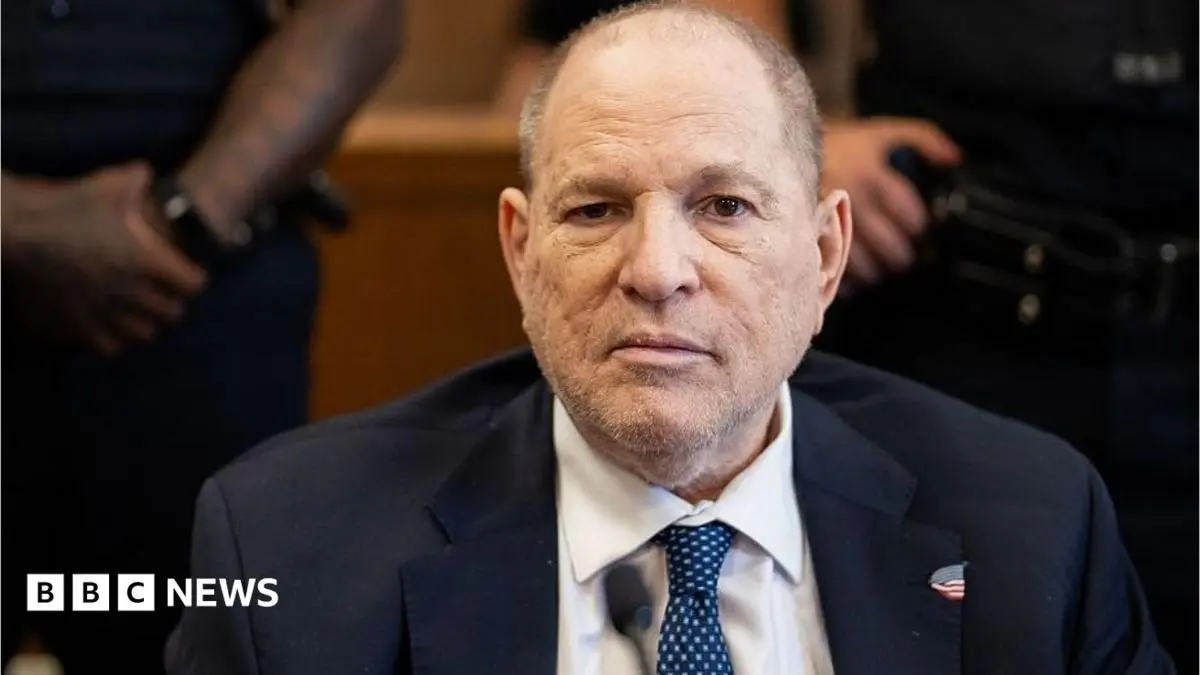
Disgraced Hollywood titan Harvey Weinstein has been sentenced to 15 years in state prison, bringing a pivotal chapter of one of the most consequential legal reckonings in modern entertainment history to a dramatic courtroom climax. The sentence, handed down on Wednesday by New York State Supreme Court Justice Curtis Farber, follows a retrial last year in which a Manhattan jury found the 74-year-old former producer guilty of committing a criminal sexual act against a former television production assistant, Miriam Haley.
The sentencing represents a complex legal milestone for a prosecutor’s office that has spent nearly a decade navigating labyrinthine appeals, landmark reversals, and high-stakes courtroom battles. Weinstein, once the towering figure behind Miramax Films and the architect of critical and commercial blockbusters like Shakespeare in Love and Pulp Fiction, appeared in court in a wheelchair. Beset by a series of compounding medical ailments that have recently required his confinement within the prison ward of New York’s Bellevue Hospital, Weinstein maintained his innocence while offering a heavily qualified apology to those affected by his professional conduct.
Yet, Judge Farber offered no quarter during the sentencing hearing, delivering a scathing rebuke of the former producer’s lifelong pattern of predatory behavior and acute lack of remorse. “You took what you wanted by force and you have never accepted responsibility,” Farber declared from the bench, cementing a sentence that all but ensures Weinstein will spend the remainder of his life behind bars.
This new prison term arrives after a tumultuous procedural journey. Weinstein was originally convicted of sex crimes in the same New York courtroom in 2020—a verdict that catalyzed the global #MeToo movement. However, in a stunning reversal in 2024, New York’s highest court, the Court of Appeals, overturned that landmark conviction, ruling that the trial court had erred by admitting testimony regarding uncharged allegations, thereby depriving Weinstein of a fair trial. Undeterred, the Manhattan District Attorney’s Office moved swiftly to secure a retrial, culminating in last year’s guilty verdict on a single count of a criminal sexual act against Haley, stemming from an assault in his Manhattan apartment in 2006.
As the legal fallout continues to reverberate across coast-to-coast jurisdictions—with pending sentencing adjustments in a separate California sexual assault conviction—this latest development offers both a sense of profound vindication for his accusers and a sobering reminder of the systemic hurdles inherent in prosecuting historical sexual violence within the American judicial system.
Detailed Chronology: From Miramax Mountaintop to Courtroom Downfall
The Zenith of Power (1990s–2010s)
For nearly three decades, Harvey Weinstein reigned as the undisputed kingmaker of independent cinema. Alongside his brother, Bob Weinstein, he founded Miramax Films in 1979—later selling it to The Walt Disney Company in 1993 while remaining at its helm—and subsequently launched The Weinstein Company in 2005. Under his stewardship, these studios revolutionized Hollywood, accumulating dozens of Academy Awards and turning independent art-house fare into mainstream global commodities. However, behind the veneer of artistic prestige and aggressive Oscar campaigns lay a decades-long pattern of intimidation, coercion, and alleged sexual assault directed against subordinates, aspiring actresses, and industry professionals.
The Reckoning and the Exposing of a Predator (October 2017)
The structural pillars of Weinstein’s empire crumbled in October 2017, when investigative exposés published by The New York Times and The New Yorker detailed decades of credible allegations of sexual harassment, assault, and attempted rape spanning the 1980s to the 2010s. The reporting unveiled a systemic culture of complicity, non-disclosure agreements, and corporate hush money designed to shield Weinstein from public exposure. Within days of the publications, Weinstein was fired from his own company, expelled from the Academy of Motion Picture Arts and Sciences, and subjected to international condemnation. The disclosures immediately unlocked a cultural floodgate, giving birth to the viral #MeToo movement and empowering hundreds of women and men worldwide to break their silence regarding workplace abuse.
The 2020 New York Trial and Initial Conviction
Following a sprawling multi-jurisdictional grand jury investigation, Weinstein surrendered to the New York City Police Department in May 2018. His landmark criminal trial commenced in Manhattan in early 2020. The prosecution centered its case on the testimonies of several women, most notably Miriam Haley—a former production assistant on the hit reality television series Project Runner—who testified that Weinstein forcibly performed a criminal sexual act upon her in his Manhattan apartment in 2006.
In February 2020, a New York jury found Weinstein guilty of a criminal sexual act in the first degree against Haley and third-degree rape against an aspiring actress, Jessica Mann. In March 2020, Justice James Burke sentenced Weinstein to 23 years in state prison, marking a monumental legal victory for survivors of sexual violence.
The 2022 California Conviction
While serving his sentence in New York, Weinstein was extradited to Los Angeles to face a separate indictment involving five charges of rape and sexual assault lodged by four women, stemming from incidents in Los Angeles hotels between 2004 and 2013. In December 2022, a California jury convicted him of rape and forcible oral copulation against an unnamed Italian actress and model, while acquitting him of other charges and deadlocking on remaining counts. In February 2023, a Los Angeles judge sentenced Weinstein to an additional 16 years in prison, to be served consecutively to his New York term.
The 2024 Court of Appeals Reversal
The legal foundation of Weinstein’s accountability suffered a severe jolt in April 2024. In a 4-3 ruling, the New York Court of Appeals overturned his 2020 conviction, determining that the trial judge had committed reversible error by permitting women whose allegations were not part of the formal charges to testify about uncharged acts. The high court ruled that this testimony unfairly prejudiced the jury by painting Weinstein as a general bad actor rather than strictly evaluating him on the specific charges at hand. Despite the profound disappointment expressed by survivors and advocates, the ruling did not exonerate Weinstein; rather, it mandated a complete retrial in Manhattan.
The Retrial and 15-Year Sentence
Undeterred by the appellate setback, Manhattan prosecutors marshaled their evidence for a high-stakes retrial. Taking the stand once more, Miriam Haley delivered compelling and resilient testimony, later telling the BBC that her decision to face her abuser again was driven by an absolute moral imperative. "I just thought, I have to stand up for myself. I have to stand up for truth," she stated.
Last year, a fresh Manhattan jury returned a verdict of guilty on a single count of a criminal sexual act against Haley, while declining to convict on separate charges related to other accusers. On Wednesday, Justice Curtis Farber officially closed this chapter of the New York proceedings by imposing the 15-year prison sentence.
Supporting Context & Metrics
The prosecution of Harvey Weinstein has generated a mountain of quantitative and qualitative data that illustrates both the scope of his alleged crimes and the unprecedented institutional strain required to secure his conviction.
- Total Accusers: Over 80 women publicly came forward between 2017 and 2020 with allegations ranging from sexual harassment and groping to forcible rape.
- Geographic Scope: Criminal investigations, civil lawsuits, and grand jury indictments spanned three primary jurisdictions: New York, Los Angeles, and London, England.
- Financial Settlements: Prior to the criminal trials, civil litigation involving former employees, studios, and victims culminated in a $17 million settlement fund approved in 2021 to compensate Weinstein’s victims, alongside separate insurance payouts exceeding $25 million.
- Age and Health Metrics: At 74 years old, Weinstein’s ongoing incarceration has been continuously punctuated by severe health concerns. He has suffered from chronic cardiac issues, diabetes, spinal stenosis, and complications following eye surgery, necessitating extended stays within the prison ward of Bellevue Hospital in New York City.
- Appellate Hurdles: The 2024 New York Court of Appeals decision marks one of the most high-profile reversals of a #MeToo-era conviction, establishing a strict legal precedent regarding the admissibility of "prior bad acts" testimony in sexual assault prosecutions across New York State.
Official Statements and Courtroom Testimonies
The gravity of Wednesday’s sentencing was underscored by the emotional and unyielding statements delivered inside the Manhattan courtroom by both the victim and the presiding jurist.
Miriam Haley, whose courage sustained the core of the Manhattan prosecution through two grueling trials and a landmark appellate reversal, delivered a searing victim-impact statement. She detailed the profound, enduring psychological and professional toll inflicted by the assault.
"The assault had a devastating effect on my life and sense of security that may never go away," Haley told the court, capturing the lingering trauma experienced by survivors of systemic abuse. Reflecting on her decision to return to the witness stand for the retrial, Haley reinforced her commitment to accountability, noting in previous interviews: "I just thought, I have to stand up for myself. I have to stand up for the truth."
Harvey Weinstein, appearing frail and confined to a wheelchair, addressed the court prior to the sentencing. While continuing to deny the specific allegations leveled against him by Haley, Weinstein offered a carefully hedged expression of remorse directed toward the wider circle of individuals affected by his personal and professional behavior.
"I am sorry to anyone I may have hurt by my actions," Weinstein stated, though legal analysts and observers immediately noted the absence of an explicit admission of guilt regarding the crimes for which he stands convicted.
Presiding Judge Curtis Farber systematically dismantled Weinstein’s defense during his sentencing remarks, leaving no ambiguity regarding the court’s assessment of the former mogul’s character and actions.
"You took what you wanted by force and you have never accepted responsibility," Judge Farber rebuked Weinstein from the bench before officially handing down the 15-year prison term.
Future Outlook: Legal Horizons and Lasting Legacy
As the prison doors close on Harvey Weinstein following this 15-year sentence, his legal battles are far from entirely concluded. The appellate reversal in New York directly impacted his legal standing on the West Coast, prompting an appellate court in California to order a re-sentencing in his 2022 Los Angeles conviction. Legal scholars and defense attorneys anticipate that Weinstein’s defense team will continue to exploit every available procedural avenue to appeal both the Manhattan retrial verdict and the forthcoming California re-sentencing, pointing to his advanced age and deteriorating physical health as factors for compassionate release or modified confinement.
Yet, the broader societal and cultural legacy of the Weinstein prosecution transcends the confines of any single courtroom. The cascading revelations of 2017 permanently transformed the operational landscape of the global entertainment industry, prompting sweeping structural reforms, the implementation of mandatory sensitivity and anti-harassment training, the rewriting of corporate codes of conduct, and the establishment of independent reporting mechanisms across major Hollywood studios and talent agencies.
Furthermore, the legal strategies forged by prosecutors in New York and Los Angeles have provided a modern playbook for handling historical sexual assault cases, where physical forensic evidence is scarce and credibility battles between accusers and powerful defendants define the trial record. Despite the procedural twists, appellate reversals, and emotional exhaustion endured by survivors, the ultimate imposition of a 15-year prison term on a once-untouchable corporate potentate signals an enduring shift in the balance of power within institutional American life—proving that even the most deeply entrenched titans of industry are not entirely beyond the reach of the law.