Executive Overview
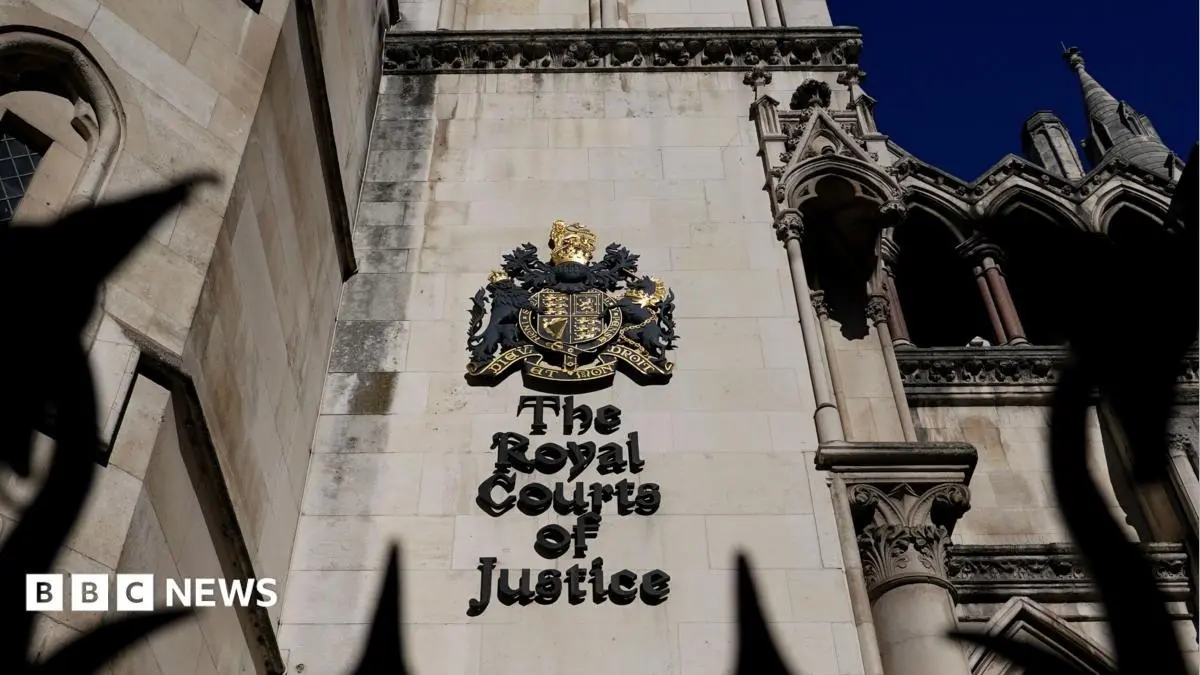
London’s High Court is currently presiding over a landmark legal showdown that places the intense public interest in journalistic investigations on a direct collision course with the preservation of human life and mental health. A prominent public figure, whose identity remains strictly shielded by legal anonymity orders, has launched an urgent bid to secure a permanent injunction against two of the United Kingdom’s most respected news organizations: Independent Television News (ITN) and Guardian News & Media (GNM).
The applicant, described in court documents as a "well-known" individual, is desperately seeking to prevent the media outlets from publishing a cascade of grave, multi-faceted allegations concerning his personal conduct over a span of several years. Chief among these claims are serious allegations of a sexual nature.
However, what sets this high-stakes privacy and free-speech litigation apart from standard injunction applications is the severity of the medical evidence presented to the bench. Lawyers representing the unnamed public figure submitted clinical documentation asserting that the dissemination of these allegations would "almost certainly" trigger a fatal mental health crisis, leading the individual to attempt to take his own life. The court was gravely informed that the mere prospect and impending threat of publication have already precipitated two separate suicide attempts.
Conversely, the media coalition—encompassing ITN (which produces premier news programming for ITV and Channel 4) and Guardian News & Media (publisher of The Guardian)—is aggressively contesting the injunction. Legal counsel for the publishers argued before Mr Justice Nicklin that judicial intervention to gag the press would be fundamentally wrong. They maintained that the British legal and healthcare framework provides robust, specialized mechanisms—managed directly by NHS mental health professionals—to safeguard individuals facing acute psychological distress and suicide risks, without necessitating the wholesale suppression of matters of profound public interest.
With the High Court set to deliver its definitive verdict following a full trial later this month, this case raises profound questions regarding the ethical boundaries of investigative journalism, the procedural balancing act between Article 8 (Right to Respect for Private and Family Life) and Article 10 (Freedom of Expression) of the European Convention on Human Rights, and the legal protocols governing suicide prevention arguments in civil litigation.
Detailed Chronology of Events
To fully comprehend the gravity of the ongoing proceedings at the Royal Courts of Justice, it is essential to trace the chronology that has brought this high-profile dispute before Mr Justice Nicklin.
Phase 1: The Multi-Year Investigation
For an extended period, investigative journalists working in tandem across ITN and Guardian News & Media conducted a rigorous, deep-dive inquiry into the conduct of the well-known individual. The joint journalistic endeavor involved extensive fact-checking, the gathering of documentary evidence, and the identification of multiple sources and witnesses. Among these sources are individuals who have come forward to allege severe misconduct, culminating in claims that strike directly at the integrity and professional standing of the public figure.
Phase 2: The Right-to-Reply and Spring 2026 Letters
Adhering strictly to the standards of the Independent Press Standards Organisation (IPSO) regulatory framework and established journalistic best practices, the investigative teams finalized the core components of their findings by early 2026. In the spring of 2026, formal correspondence—commonly referred to in legal and journalistic circles as "put-up letters"—was dispatched to the well-known individual.
These detailed letters outlined the precise nature of the allegations compiled against him, giving him a fair and reasonable opportunity to respond, contextualize, or refute the claims before any public dissemination.
Phase 3: The Legal Response and Medical Intervention
Rather than providing a standard rebuttal, the individual’s legal and medical representatives responded by issuing categorical denials of all substantive allegations. Crucially, however, the response shifted dramatically toward the applicant’s acute medical vulnerability.
The legal team submitted comprehensive medical reports and psychiatric evaluations warning that the public revelation of the allegations would destabilize the individual’s fragile psychological state. The documentation stated unequivocally that the release of the reportage posed an immediate, existential threat to his life, asserting that he had already endured two suicide attempts directly linked to the psychological pressure of the impending publication.
Phase 4: Emergency Injunction Hearings and Interim Protections
Faced with the imminent threat of publication and the accompanying medical warnings, the individual’s legal representatives approached the High Court of England and Wales to secure emergency interim relief. During preliminary hearings, presiding judges granted temporary anonymity orders to protect the identity of the well-known individual, ensuring that public or media speculation could not inadvertently trigger the very crisis the medical teams were working to prevent.
Furthermore, Mr Justice Nicklin extended anonymity protections to other key participants in the litigation. This included two journalistic sources who had consented to have their identities revealed in any eventual published reports by ITN and GNM, but who nevertheless required interim protection during the ongoing court proceedings. A third source, a woman who alleges she was the direct victim of a sexual offense committed by the well-known individual, was similarly granted anonymity to protect her identity from premature public exposure while the legal arguments are resolved.
Supporting Context & Metrics: Balancing Free Speech and Suicide Risk
The legal clash between ITN, Guardian News & Media, and the anonymous applicant touches upon several complex intersections of English tort law, human rights jurisprudence, and medical ethics.
Legal Precedents and Privacy Law
In English law, individuals possess a reasonable expectation of privacy under the tort of misuse of private information, bolstered by Article 8 of the European Convention on Human Rights. However, this right is not absolute; it must be weighed against Article 10, which protects freedom of expression.
When a media organization seeks to publish allegations of serious wrongdoing—particularly those involving sexual misconduct by a public figure—the courts apply a "ultimate balancing test." Historically, the courts have been exceptionally cautious when confronted with medical evidence demonstrating a credible risk of suicide. However, legal authorities also emphasize that the courts cannot allow the threat of self-harm to become a veto mechanism by which powerful individuals perpetually suppress legitimate investigative journalism.
The Role of NHS Mental Health Frameworks
A central pillar of the defense mounted by ITN and GNM’s legal teams during the recent injunction hearings was the argument that the judiciary is neither equipped nor intended to act as a primary mental health triage system.
Lawyers for the media organizations argued before Mr Justice Nicklin that it would be legally and procedurally wrong for the court to "restrain publication" indefinitely based on suicide risk alone. They emphasized that the UK legal and welfare system "provides for a detailed and well-established scheme by which the interests of those at risk of suicide is specially protected by NHS mental health professionals."
This argument posits that if an individual is experiencing severe psychological crisis, the appropriate remedy lies in immediate clinical intervention, hospitalization, and psychiatric support managed by the state’s health services, rather than the judicial suppression of matters that command a high public interest threshold.
The Anonymity Paradox
The case also highlights the intricate legal gymnastics required when balancing the rights of all parties involved in high-stakes media litigation:
- The Applicant: Granted anonymity to protect his life and mental health from catastrophic collapse pending a full trial.
- The Accusers/Sources: Multiple sources, including a woman alleging a sexual offense, granted interim anonymity to preserve the integrity of the legal process and prevent witness intimidation or public trial by media.
- The Media: Fighting for the ultimate transparency of open justice and the public’s right to be informed about the alleged conduct of a prominent figure.
Official Statements and Legal Arguments
While the courtroom doors have occasionally been subject to reporting restrictions regarding specific identifying details, the broad outlines of the legal arguments presented by both sides reveal the profound gravity of the dispute.
The Position of the Well-Known Individual
Represented by a specialist team of media and privacy barristers, the applicant’s legal strategy rests on two foundational pillars:
- Denial of Wrongdoing: The individual maintains his complete innocence, asserting that the allegations compiled by ITN and The Guardian are entirely false, misleading, or distorted.
- The Preponderance of Harm: The legal team argued that the preservation of human life must override all other considerations. Pointing to the clinical evidence—including the two documented suicide attempts—counsel argued that publishing the allegations before a court has tested their veracity constitutes an irreversible harm that no subsequent legal victory or retraction could ever remedy.
The Position of ITN and Guardian News & Media
Counsel for the media coalition adopted a robust stance, defending the rigorous investigative processes undertaken by both organizations over a multi-year period. Their key submissions included:
- Public Interest Justification: The publishers maintain that the allegations concern matters of substantial public importance, and that the public has a legitimate right to be informed about the conduct of a well-known public figure.
- Flawed Preventative Mechanics: Challenging the efficacy and appropriateness of perpetual injunctions based on psychological threats, the publishers’ lawyers argued that the courts must not set a precedent where the threat of self-harm effectively grants a blanket shield against journalistic scrutiny.
- Reliance on State Support: Emphasizing the availability of the National Health Service and specialized mental health crisis teams, the media argued that the state possesses comprehensive mechanisms to protect vulnerable individuals without compromising the fundamental democratic principle of a free press.
Future Outlook: The Road to Trial
The immediate legal battle culminated in interim rulings by Mr Justice Nicklin, who carefully managed the competing demands of open justice and human safety by maintaining temporary reporting restrictions while the core legal questions are addressed.
However, the definitive resolution of this high-stakes dispute is fast approaching. A comprehensive trial is scheduled to take place later this month at the High Court in London.
What the Trial Will Decide
During the upcoming trial, the court will not merely rule on temporary interim protections; it will make a definitive, binding determination on whether ITN and Guardian News & Media will be permanently prevented from naming the well-known individual and from publishing the detailed allegations compiled against him.
The outcome of this trial will send shockwaves through the British media landscape. A ruling in favor of the applicant would establish a powerful precedent regarding how the courts weigh acute suicide risks against freedom of expression in the digital age. Conversely, a ruling in favor of ITN and The Guardian would affirm that investigative journalism into serious misconduct cannot be permanently gagged by threats of psychological harm, provided robust public interest thresholds and journalistic standards are met.
As the legal teams finalize their submissions and the judiciary prepares to weigh the delicate balance between human life and the public’s right to know, all eyes remain fixed on London’s High Court as it confronts one of the most sensitive and challenging media law cases of the decade.
If you or someone you know has been affected by any of the issues raised in this story—including domestic abuse, sexual trauma, or acute psychological distress—confidential information, guidance, and support can be accessed through professional support networks, or via specialized resources such as the BBC Action Line.