Executive Overview
Pop music is caught in the crossfire of an ideological culture war, and Tinashe is stationed squarely on the front lines. As the 2020s barrel past their halfway mark, the mainstream landscape has calcified around two distinct, hyper-homogenized archetypes of female pop stardom. On one side stand the confessional, guitar-toting singer-songwriters whose aesthetic remains perpetually frozen in high-school diary introspection. On the other are the debaucherous, hedonistic party girls trading in manufactured shock value, pursuing liberation and cultural relevance through sex, substance, and surface-level rebellion.
Conspicuously absent from this narrow duopoly are Black female pop artists who utilize Black musical traditions as the foundational architecture of their art rather than treating them as transient, stylistic accessories or muted background samples. The policing of who gets to claim—and who is publicly permitted to embody—the elusive title of "pop star" is a historical battleground. From Al Sharpton’s notorious, disparaging labeling of Whitney Houston as "Whitey Houston" ahead of her being audibly booed at the 1989 Soul Train Music Awards, to recent, vitriolic social media discourse surrounding Ravyn Lenae’s assertion of the "pop" label for her Blue Island era, the gatekeeping of pop music has run rampant for decades.
Eight albums into a remarkably resilient career, Tinashe is tackling this systemic gatekeeping head-on. Released on September 25 via Nice Life, Atlantic, and Tinashe Music, her eighth studio album, POPSTAR, is a meticulously engineered, hyper-intentional masterclass in sonic subversion. Arriving as the official follow-up to her widely celebrated 2024 project Quantum Baby, the 16-track, 40-minute record does not merely participate in the contemporary pop conversation—it aggressively rewrites the dictionary.
Detailed Chronology: A Decade of Invisible Blueprints and Triumphant Returns
To understand the seismic cultural weight of POPSTAR, one must map the trajectory of Tinashe’s career, which has quietly and profoundly shaped the architecture of global pop music for over ten years. While mainstream radio and major-label machinery were slow to fully grasp her visionary lane, her fingerprints have been unmistakable across the pop landscape since the mid-2010s.
Her sun-drenched, meticulously choreographed 2016 music video for "Superlove" served as an undeniable, foundational touchstone for the late-2010s K-Pop visual boom, establishing aesthetics that would later be replicated by major international acts. Three years later, the arresting, high-concept artwork and mood-board styling for her 2019 independent breakout Songs for You laid down the definitive visual blueprint for the early-2020s alternative pop movement.
Despite this immense, often uncredited influence, Tinashe spent years navigating industry hurdles as an independent artist before engineering a career renaissance. The Quantum Baby era acted as the catalyst, turning her underground goodwill into mainstream chart dominance and landing her back on the Billboard Hot 100 for the first time in a decade.
- The Viral Phenomenon: The slinky, infectious lead single "Nasty" caught fire via a massive, inescapable user-generated TikTok dance trend, ultimately peaking at No. 61 on the Hot 100.
- The Club Takeover: Capitalizing on that momentum, "No Broke Boys" soared to No. 36, propelled by a blistering Disco Lines remix that transformed EDM clubs, warehouse raves, and festival main stages across the globe throughout the summer.
Speaking to Rolling Stone ahead of POPSTAR’s release, Tinashe reflected on this long-awaited shift in cultural tide. "There’s a lot of attention, there’s a lot of discussion," she noted. "People are ready for it, which is a new feeling." That newfound readiness provided the green light for an album that refuses to pander, opting instead to confront the industry’s stunted, unimaginative definitions of what pop music can sound, look, and feel like.
Supporting Context & Metrics: The Visuals, The Sounds, and The Stakes
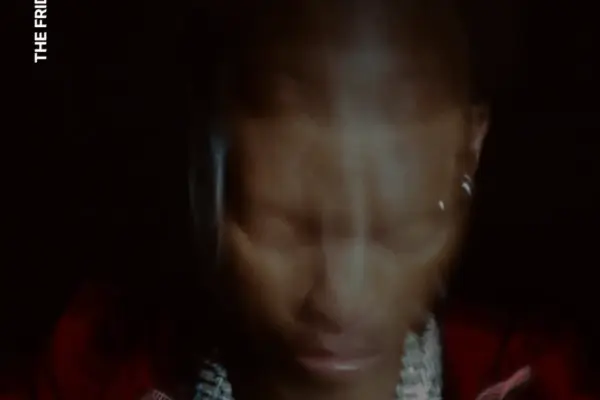
The cultural confrontation begins before a single note is played. The cover art for POPSTAR features a stark, unfiltered, and unapologetically unglamorous close-up of Tinashe: wearing over-ear studio headphones, gazing into the distance with literal stars in her eyes. The image immediately drew ire and confusion from online stan communities accustomed to the hyper-processed, hyper-sexualized, and aggressively polished imagery typical of modern pop rollouts.
Yet, that discomfort is entirely the point.
- The Headphones: A direct tribute to Tinashe’s under-discussed, elite-tier production and engineering skills. She is an architect in the studio, not just a vocal performer.
- The Stars: Symbolizing the dizzying, often blinding allure and delusion of pop stardom.
- The Expression: Straddling a complex tightrope between awe, bewilderment, relentless determination, and childlike wonder.
Musically, the 16-track runtime reflects this nuanced deconstruction. Surveying a jaw-dropping sonic ecosystem, POPSTAR seamlessly weaves together hyper-pop, contemporary R&B, driving dance music, ambient jazz, new age textures, bedroom pop, and even subtle, unexpected nods to country. Over a tight 40-minute runtime—which somehow packs in more narrative substance than her previous two projects combined—Tinashe proves her mastery of album sequencing.
The record is anchored by profoundly disarming, deeply vulnerable lyricism. Cuts like the hauntingly introspective "Empty Stadiums" and the emotional purgation of "Heavy Weight" ground the album’s lofty, avant-garde ambitions in raw, human reality. Tinashe demonstrates that a true pop star can pull references from Janet Jackson and Britney Spears just as liberally as she honors Santigold, Ciara, and Dawn Richard. If the end goal is to translate the hyper-personal into the universal via undeniable, earworm hooks, Tinashe executes it with surgical precision.
Official Statements and Industry Reception
The release of POPSTAR has forced music critics and industry insiders to reckon with the systemic limitations placed on Black women operating within genre-defined boundaries. For years, Tinashe has spoken candidly about the boxes she was forced into early in her major-label tenure—pigeonholed strictly as an "R&B urban act" despite making music explicitly designed for pop radio dominance.
In her profile with Rolling Stone, Tinashe emphasized that POPSTAR is an assertion of creative sovereignty. By taking full control of her narrative, she is dismantling the invisible walls that separate Black artists from the mainstream pop conversation. Industry analysts have pointed out that the album’s rollout is a masterclass in independent positioning, leveraging major-label distribution (via Atlantic and Nice Life) while retaining complete artistic autonomy.
Critics have been quick to praise the album’s biting wit. POPSTAR is sneakily sarcastic, dripping in glorious, well-earned sass. But what separates Tinashe from her contemporaries is her execution: she has the technical vocal ability, the multi-instrumental background, the production savvy, and the relentless work ethic to back up every satirical jab and genre-bending experiment.
Future Outlook: Redefining the Next Era of Pop
As POPSTAR reverberates across streaming platforms and ignites fierce debates among music critics and fans alike, its long-term cultural impact is already taking shape. Tinashe is no longer waiting for permission at the gates of the mainstream; she has kicked the doors off their hinges and invited a new standard of artistry inside.
The success of POPSTAR signals a vital paradigm shift for the 2020s pop landscape. It proves that audiences—particularly younger, digitally native listeners—are suffering from genre fatigue and craving artists who refuse to be neatly categorized. By bridging the gap between underground club culture and pristine pop hooks, Tinashe is mapping out a blueprint that future generations of independent Black artists will follow.
As she takes these new tracks on the road and continues to scale the charts, one thing is abundantly clear: the conversation around who gets to be a pop star has permanently changed. Tinashe hasn’t just earned her place at the top of the marquee—she has redefined what the marquee stands for entirely.