Executive Overview
In a landmark ruling underscoring South Korea’s uncompromising enforcement of national defense mandates, a Seoul court has sentenced K-pop star Song Min-ho to a suspended one-year prison term for systematic violations of the country’s Military Service Act. Song, a 33-year-old prominent member of the acclaimed YG Entertainment boy band Winner—widely known by his stage name Mino—was convicted following an extensive judicial review that revealed a staggering pattern of absenteeism during his alternative public service tenure.
The verdict, handed down on Thursday, carries a two-year probationary period. This stipulation allows the musician to evade immediate incarceration provided he commits no further legal infractions over the next 24 months. However, the ruling marks a severe institutional and reputational blow to an artist who once sat at the pinnacle of the East Asian music industry.
Judicial proceedings revealed that Song, who fulfilled his mandatory obligation through alternative public sector assignments due to pre-existing health assessments, accumulated 102 unauthorized absences over a 21-month period between 2023 and 2024. Operating out of a designated community center in Seoul, the performer systematically bypassed his professional obligations, aided by a supervising official who actively falsified attendance records to mask his routine truancy.
The case has reignited a fierce national debate regarding the equitable enforcement of military conscription laws, illuminating systemic vulnerabilities within the alternative service framework. Furthermore, it highlights the intense socio-cultural friction that occurs when the insulated world of celebrity privilege collides with South Korea’s deeply ingrained civic duties. As public backlash mounts and entertainment industry analysts evaluate the long-term viability of Song’s career, this high-profile conviction serves as an unequivocal warning to other public figures attempting to circumvent the nation’s foundational conscription framework.
Detailed Chronology: From Enlistment to Indictment
The unraveling of Song Min-ho’s civic obligations began years before the recent judicial verdict, tracing a trajectory from standard bureaucratic assignment to criminal indictment and prosecution.
The Alternative Service Appointment (2023)
In alignment with South Korea’s rigorous conscription statutes, all able-bodied male citizens are mandated to complete a minimum of 18 months of military service. Individuals who do not meet the strict physical criteria for active-duty deployment—often due to psychological, orthopedic, or chronic medical conditions—are systematically reassigned as social service personnel. These workers are embedded within municipal agencies, transit authorities, and community centers to perform vital public administrative tasks.
Following a comprehensive medical evaluation, Song was deemed eligible for alternative service rather than standard active-duty deployment. In early 2023, he reported to a municipal community center in Seoul, marking the official commencement of his mandatory service window. Within the fast-paced K-pop industry, where a hiatus for military duty typically disrupts commercial momentum, Song’s placement allowed him to maintain a degree of civilian visibility, albeit under strict administrative constraints.
The Breakdown of Duty and Systematic Truancy (2023–2024)
Over the ensuing 21 months, rather than fulfilling the rigorous civic duties expected of a public servant, Song engaged in a calculated pattern of evasion. Court documents presented during the trial detailed how the artist treated his official assignment with casual disregard.
Utilizing his celebrity status and leveraging a compromised supervisory relationship, Song began missing scheduled shifts with increasing frequency. Investigative findings indicate that the singer recorded a staggering 102 unauthorized absences over his service period. To conceal these blatant violations from regional military manpower administration audits, Song’s direct supervisor at the community center actively fabricated work logs, forging signatures and falsifying digital entries to create the institutional illusion that the pop star was diligently reporting to work.
Discharge, Media Scrutiny, and Investigation (2024)
Song’s tenure as a social service agent officially concluded in 2024. However, the institutional protection he enjoyed unraveled almost immediately upon his discharge. Investigative journalists from local South Korean media outlets, acting on anonymous tips and examining municipal oversight reports, uncovered glaring discrepancies in Song’s attendance records.
The initial exposés detailed a pattern of excessive, unverified sick leave and chronic absenteeism that starkly contradicted official logs. Facing mounting public pressure and undeniable circumstantial evidence, South Korean law enforcement and military manpower authorities launched a formal, independent investigation into the singer’s conduct. The probe quickly expanded beyond Song himself, zeroing in on the administrative mechanisms that facilitated his months of truancy.
The Judicial Reckoning (Present Day)
The investigation culminated in formal criminal charges under the Military Service Act. Throughout the subsequent trial at the Seoul Central District Court, Song elected to fully cooperate with prosecutors, formally admitting to all charges and issuing repeated statements expressing profound remorse.
On Thursday, the presiding judge delivered the verdict: a one-year prison sentence, suspended for two years, coupled with the conviction of his primary administrative accomplice. The swift conclusion of the trial brings legal closure to the immediate criminal proceedings, yet it opens a turbulent new chapter of professional uncertainty and public alienation for the disgraced artist.
Supporting Context & Metrics: Conscription Culture and Legal Precedents
To fully comprehend the gravity of Song Min-ho’s conviction, one must examine the unique socio-historical weight of military service in South Korea, alongside historical precedents of celebrity evasion.
The Architecture of South Korean Conscription
Conscription in South Korea is not merely a legal requirement; it is a profound patriotic and existential duty born out of the unresolved state of war with North Korea. Established under the Military Service Act, the system demands unwavering compliance from its populace. Evasion is viewed not simply as a regulatory infraction, but as an act of treasonous selfishness that undermines national security and social equity.
+-----------------------------------------------------------------+
|               SOUTH KOREAN CONSCRIPTION FRAMEWORK               |
+-----------------------------------------------------------------+
|                                                                 |
|  [ Able-Bodied Citizens ] -------> Active Duty (18+ Months)     |
|                                                                 |
|  [ Medical Exemptions / ] ------> Social Service Personnel      |
|    Health Conditions              (Municipal / Public Admin)    |
|                                                                 |
+-----------------------------------------------------------------+
While active-duty soldiers endure rigorous military training and barracks life, alternative service personnel—often colloquially referred to as public service workers—shoulder civilian-facing administrative burdens. Despite the less physically punishing nature of these roles, the legal statutes governing attendance, conduct, and accountability are identically rigorous.
Historical Precedents: Celebrities Under Scrutiny
Song Min-ho is far from the first high-profile South Korean entertainer to face the severe consequences of mismanaging mandatory service obligations. The intersection of celebrity culture and military law has historically produced some of the nation’s most explosive entertainment scandals.
- Psy (2003–2007): The global phenomenon behind Gangnam Style faced severe institutional backlash early in his career. In 2003, Psy completed his mandatory service as an industrial technical specialist. However, following investigations by the Military Manpower Administration, it was revealed that he had continued his commercial music activities and concert performances during his service window. A Seoul court ruled that he had failed to properly execute his duties, forcing the singer to re-enlist and serve a second, full term of active-duty service starting in 2007.
- Steve Yoo / Yoo Seung-jun (2002): Representing the most catastrophic downfall in K-pop history, Steve Yoo was one of the undisputed kings of Korean pop music in the late 1990s. In 2002, just weeks before he was scheduled to fulfill his conscription duties, Yoo renounced his South Korean citizenship and acquired a United States passport, effectively evading the draft. The public reaction was instantaneous and unforgiving. The South Korean government invoked immigration laws to deport Yoo and permanently bar him from entering the country—a ban that remains strictly enforced to this day, decades later.
These historical milestones illustrate a clear societal rule: within South Korea, institutional fame, international success, and commercial capital do not confer immunity against the foundational requirements of national defense.
Official Statements and Judicial Rationale
The severity of the judicial response to Song Min-ho’s offenses was articulated directly through the statements issued by the presiding court during Thursday’s sentencing hearing, juxtaposed against the public contrition expressed by the defendant.
The Court’s Verdict and Stance on Accountability
In delivering the one-year suspended prison sentence, the bench emphasized the non-negotiable nature of public duty, drawing a sharp line between ordinary citizens and privileged public figures.
"Military service is a fundamental duty to be performed with absolute faithfulness by every eligible citizen, and social service agents are granted no exception," the court declared in its official judgment.
The judges noted that Song’s systematic exploitation of his alternative service assignment—characterized by 102 separate unauthorized absences—represented a profound betrayal of public trust. The court specifically condemned the premeditated nature of the truancy, which relied on the active complicity of a municipal supervisor to forge attendance logs.
However, the bench also outlined the mitigating factors that spared the artist from immediate incarceration. The court formally acknowledged that Song had entered a plea of absolute confession, fully cooperating with investigators and exhibiting visible remorse throughout the judicial process. This contrition, coupled with the absence of prior criminal convictions, justified the implementation of a two-year probationary suspension rather than direct imprisonment.
The Accomplice’s Liability
Crucially, the legal fallout was not confined to the K-pop star alone. The municipal supervisor at the Seoul community center who orchestrated the falsification of attendance records received a parallel suspended jail sentence. The court ruled that administrative officials who actively facilitate draft evasion or duty shirking violate their foundational oath of public office, establishing that institutional enablers will face identical criminal culpability alongside the evading celebrities.
Song Min-ho’s Public Apology
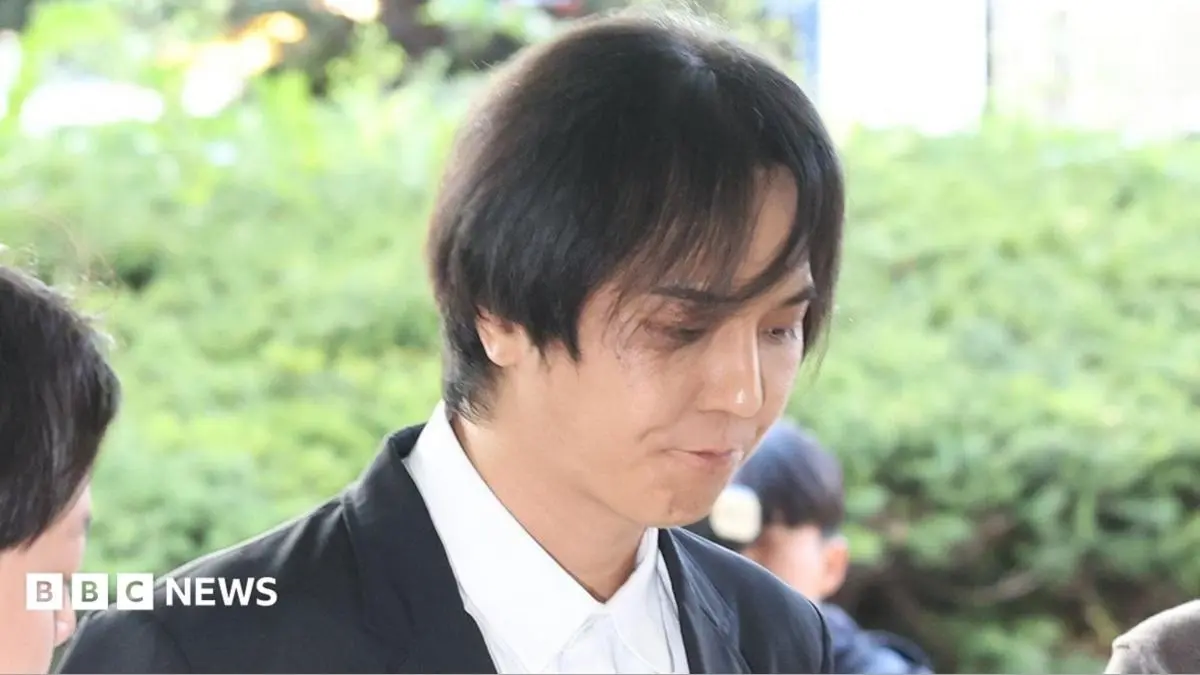
Ahead of the judicial proceedings on Thursday, Song addressed the assembled media outside the Seoul Central District Court. Visibly subdued and dressed in formal attire, the artist issued a brief, direct apology to his supporters.
"I deeply regret my actions, and I am sincerely sorry toward the people who gave me so much love and support throughout my career," Song stated, as reported by the Seoul Economic Daily.
Despite his expressions of remorse, the artist maintained a guarded silence when pressed by reporters on critical logistical questions. When explicitly asked whether he intended to re-enlist to properly fulfill the remaining, unfulfilled portion of his mandatory service obligations, Song declined to comment, leaving his long-term military status shrouded in administrative ambiguity.
Future Outlook: Career Implications and Industry Fallout
The conviction of Song Min-ho sends shockwaves through the upper echelons of the South Korean entertainment industry, casting a long shadow over the future of both the artist and his agency, YG Entertainment.
The Commercial and Reputational Collapse
For an idol operating within the hyper-competitive K-pop ecosystem, reputation is the primary currency. While artists frequently survive temporary hiatuses, drug scandals, or dating controversies, legal infractions involving national security and draft evasion occupy a uniquely toxic category in the South Korean public consciousness.
The public’s rejection of draft evaders is historically absolute. Figures like Steve Yoo remain cultural pariahs decades after their infractions, entirely locked out of domestic broadcast networks, streaming revenue, and mainstream commercial partnerships. While Song’s sentence is suspended rather than active, the cultural stigma attached to a criminal conviction for military evasion threatens to permanently alienate his core domestic consumer base.
Implications for Winner and YG Entertainment
Song’s legal troubles also deal a severe blow to the ongoing activities of Winner, the four-member boy band that has enjoyed sustained commercial success since its debut in 2014. The group has spent the past several years navigating the staggered enlistment schedules of its members. With Song’s legal battles culminating in a criminal record, the prospect of a complete group reunion with synchronized musical releases has grown increasingly remote.
Furthermore, management agencies like YG Entertainment face mounting pressure from shareholders and consumer advocacy groups to implement more rigorous internal compliance monitoring. The ease with which Song allegedly bypassed his civic duties for months without immediate internal detection highlights systemic vulnerabilities in how entertainment conglomerates manage their rosters during public service hiatuses.
Conclusion: A Definitive Cultural Boundary
The sentencing of Song Min-ho serves as an uncompromising reaffirmation of South Korea’s social contract. In an era where globalization and digital connectivity often elevate cultural icons above traditional civic structures, this ruling demonstrates that the state’s foundational institutions retain ultimate authority. For Song Min-ho, the path forward is fraught with intense public scrutiny, professional exile, and unresolved military obligations—serving as a stark, cautionary tale for the entire entertainment landscape.