Executive Overview
The professional audio landscape is undergoing a silent yet profound evolution, driven by the relentless pursuit of workflow efficiency without compromising sonic integrity. For over a decade and a half, Vienna-based audio manufacturer LEWITT has carved out an enviable reputation in this space, building a diverse catalog of high-performance microphones and audio interfaces. Their hardware has become a staple in modern production environments, capturing award-winning performances on landmark releases such as Sabrina Carpenter’s ubiquitous 2024 album Short n’ Sweet and Bad Bunny’s acclaimed 2026 tour-de-force DeBí TiRAR MÁS FOTOS.
Until now, however, LEWITT’s footprint was strictly anchored to the capture stage and digital conversion. That paradigm has officially shifted.
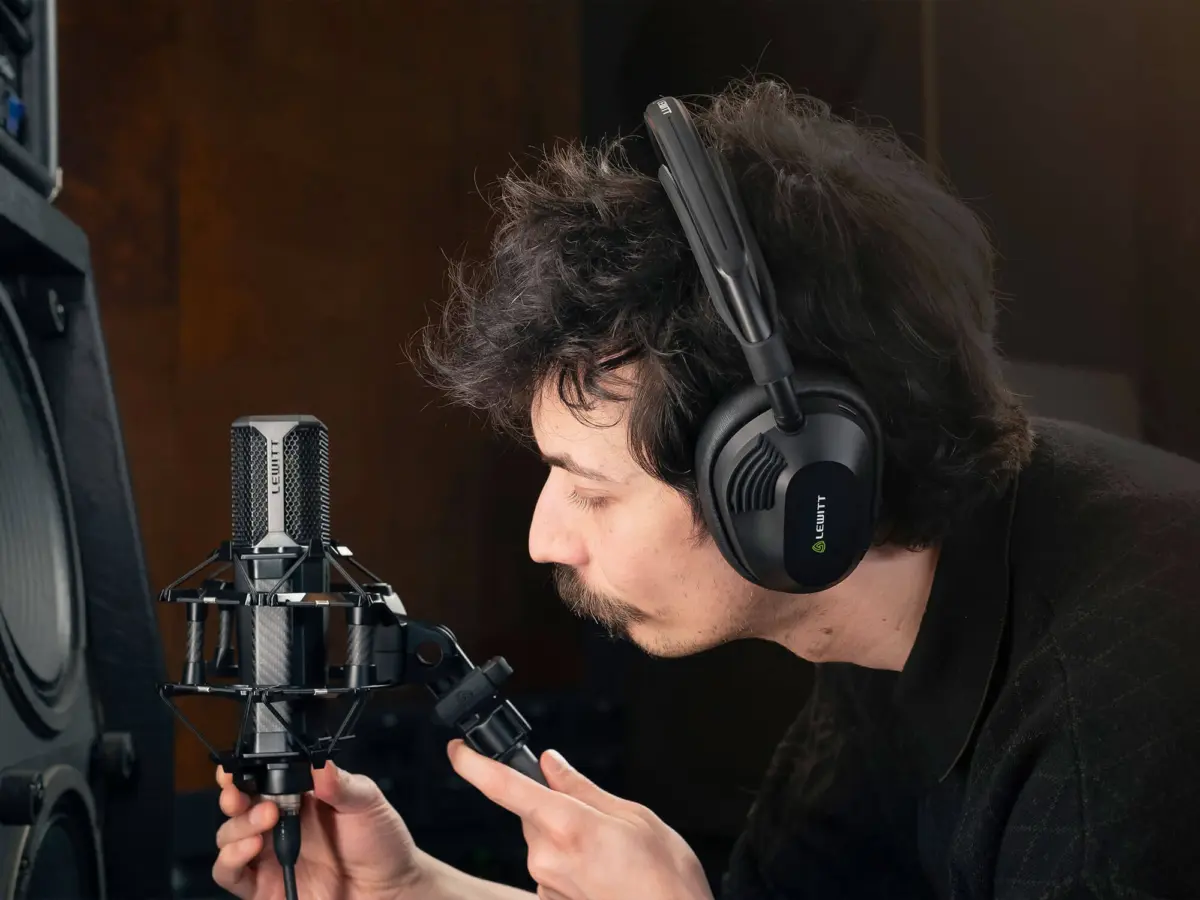
With the announcement and immediate release of the LEWITT LW6 Professional Wireless Studio Headphones, the company is stepping boldly into uncharted territory. Priced at €599 / £520 / $699, the LW6 cans represent far more than a brand expansion; they are a direct challenge to the dogma that has governed studio monitoring for decades. For as long as recording studios have existed, engineers and producers have been tethered to mixing consoles and interfaces by copper cables. While these wired connections guaranteed pristine, uncompressed audio and zero latency, they introduced physical constraints that often disrupted creative flow.
The LW6 aims to rewrite these rules. Designed from the ground up for professional mixing, mastering, and tracking environments, these closed-back headphones combine uncompressed, ultra-low-latency wireless transmission (clocking in at under 6 milliseconds) with reference-grade acoustic performance. Moreover, they integrate sophisticated onboard Digital Signal Processing (DSP), virtual studio monitor simulations, and hardware-level safety features. By bridging the gap between uncompromising studio performance and the physical freedom of wireless mobility, LEWITT is asking a provocative question: Is the studio cable finally a relic of the past?
Detailed Chronology: From Vienna Roots to Wireless Innovation
To understand the engineering ambition behind the LW6, one must examine the trajectory of LEWITT Audio since its inception. Founded in Vienna, Austria—a city steeped in classical music heritage and acoustic engineering excellence—in 2009, the brand refused to rest on the laurels of traditional microphone design. Instead, LEWITT focused on modernizing workflow, embracing contemporary manufacturing tolerances, and delivering crisp, transparent sound signatures that resonated with a new generation of platinum-selling producers, mix engineers, and bedroom hitmakers alike.
As LEWITT expanded its product ecosystem to include advanced audio interfaces, the company maintained a rigorous R&D pipeline. Behind closed doors, engineering teams in Vienna began conceptualizing a product that would address what they identified as one of the last major mechanical bottlenecks in modern music production: the cable.

While consumer wireless audio has advanced in leaps and bounds via codecs like aptX Adaptive and LDAC, the professional audio world has historically rejected Bluetooth and standard wireless protocols. The reasons are multifold: unpredictable latency, audio compression artifacts, phase smearing, and insufficient transient response render consumer wireless gear entirely unfit for critical mixing and mastering decisions.
LEWITT’s R&D strategy for the LW6 centered on solving these technical hurdles. Rather than relying on standard Bluetooth codecs for critical studio tasks, the engineering team developed a proprietary approach anchored by the included RealSound transmitter. By plugging this dedicated hardware module directly into an audio interface or computer USB port, the LW6 establishes a direct, uncompressed wireless link.
Over a multi-year development cycle, the engineering team refined this transmission protocol to achieve an astonishingly low latency threshold of under 6 milliseconds, operating within a dependable 5-meter (16-foot) range. This breakthrough effectively removes the audio delay barrier that has historically plagued wireless monitoring, allowing producers to step away from the mixing desk to play an instrument, adjust room dampening, or collaborate closely with an artist in the tracking room without ever breaking acoustic contact or tripping over a cable.
Supporting Context & Metrics: Under the Hood of the LW6
While the wireless novelty captures immediate attention, a pair of professional monitoring headphones ultimately lives or dies by its acoustic fidelity, feature set, and ergonomic endurance. LEWITT has packed the LW6 with an array of professional-grade tools designed to integrate seamlessly into complex mixing workflows.
Acoustic Architecture and Isolation
The LW6 features a closed-back acoustic design optimized to deliver "reference-grade sound quality." In a tracking environment, closed-back headphones are essential for preventing audio bleed from spilling into sensitive vocal or acoustic microphones. LEWITT has engineered a two-way sound isolation system that tightly seals against external noise while containing the monitor mix within the earcups.
Comfort is inextricably linked to critical listening; an uncomfortable headphone will inevitably cause listening fatigue and compromise mixing decisions during marathon sessions. To mitigate this, LEWITT outfitted the LW6 with thick, high-density memory foam earcups that simultaneously enhance passive noise isolation and distribute clamping force evenly. Combined with an adjustable headband engineered to conform naturally to diverse head shapes, the headphones are built to withstand 12-hour mixing sessions.

Onboard DSP and Customization
One of the most innovative aspects of the LW6 architecture is its standalone processing power. The headphones feature built-in DSP (Digital Signal Processing) coupled with onboard sound customization. Users can construct and deploy a fully parametric five-band EQ directly onto the headphones.
Crucially, this is managed via LEWITT’s dedicated desktop software or mobile app, but the resulting custom profiles are stored directly on the hardware. This means that once your curve is saved, the headphones retain their EQ profile even when switched between different host devices, requiring zero background software overhead or DAW plugin instances during playback.
Advanced Monitoring and Virtual Studio Acoustics
Mixing on headphones has historically presented a well-documented spatial challenge: exaggerated stereo separation and the absence of cross-feed often lead to mixes that translate poorly to physical speakers. To combat this, the LW6 introduces a native "virtual studio monitor" feature. By simulating the acoustic response of professional studio monitors in a finely tuned mixing room, the headphones artificially yet accurately uplift stereo realism, helping engineers make more reliable balancing and panning decisions.
Furthermore, the feature set includes utility functions tailored specifically for mix verification:
- Mono and Side-Stereo/Side-Mono verification modes to check phase correlation and mono-compatibility instantly.
- Left-Right swap for rapid diagnostic checks.
- Built-in Loudness Guard, a safety protocol that allows engineers to define a strict threshold level, actively protecting their hearing from dangerous audio peaks during high-volume playback.
Battery Life and Power Management
Adopting a wireless workflow inevitably introduces power management requirements. The LW6 houses a rechargeable battery engineered to deliver up to 21 hours of continuous playback on a single charge—more than enough to get through multiple intensive tracking or mixing blocks. When power runs low, a rapid-charging protocol provides 3 hours of playback from a mere 15-minute charge, minimizing downtime. For situations where wireless connectivity is neither required nor permitted (such as ultra-secure facilities or dead battery emergencies), the headphones can also be utilized for casual listening via standard Bluetooth connectivity.
Official Statements and Industry Impact
The announcement of the LW6 has sent ripples through the pro-audio community, challenging long-held assumptions about hardware interoperability. In company launch statements, LEWITT emphasized that the goal was never to create a consumer gadget with studio branding, but rather to "finally make wireless part of the professional studio world."

Industry analysts and early-access beta testers have noted that the timing of the LW6 aligns perfectly with changes in modern production workflows. As home studios, hybrid writing rooms, and mobile recording rigs become increasingly prevalent, the demand for adaptable, space-efficient gear has skyrocketed. Producers are no longer confined to static mixing desks; they write on couches, record in vocal booths, and collaborate in dynamic spaces where physical tethers are a distinct hindrance.
By maintaining strict uncompressed audio transmission, sub-6ms latency, and a robust feature set that includes acoustic simulation and parametric EQ, LEWITT has positioned the LW6 not as a compromise, but as an upgrade to the traditional studio headphone paradigm.
Future Outlook: The Next Frontier in Studio Monitoring
As the pro-audio sector digests LEWITT’s entrance into the headphone market, broader questions emerge regarding the future of studio design and equipment integration. Will other heritage microphone and interface manufacturers follow LEWITT’s lead, developing proprietary low-latency wireless protocols for their own monitoring ecosystems?
The technical benchmark has now been established. At €599 / £520 / $699, the LW6 sits firmly in the professional tier, targeting working engineers, producers, and serious creators who view their tools as investments in workflow optimization. If the LW6 successfully proves that wireless monitoring can match the reliability and precision of copper cabling without introducing latency or compression artifacts, it could catalyze a broader industry migration away from wired studio cans.
For LEWITT, the launch of the LW6 marks the transition from a specialized microphone and interface brand into a comprehensive studio ecosystem provider. Having conquered the art of capturing sound on elite records for artists like Bad Bunny and Sabrina Carpenter, the Viennese innovator is now empowering creators to listen to, shape, and master that sound with unprecedented freedom. The studio cable’s monopoly on professional monitoring may finally be coming to an end.