Executive Overview
Two decades after its initial release, Amy Winehouse’s monumental sophomore album, Back to Black, continues to cast a long, luminous shadow over contemporary popular music. To mark the 20th anniversary of the record that permanently shifted the axis of soul, R&B, and pop, the historic Roundhouse venue in Camden, North London, played host to a poignant, one-night-only tribute concert on Wednesday, October 21, 2026.
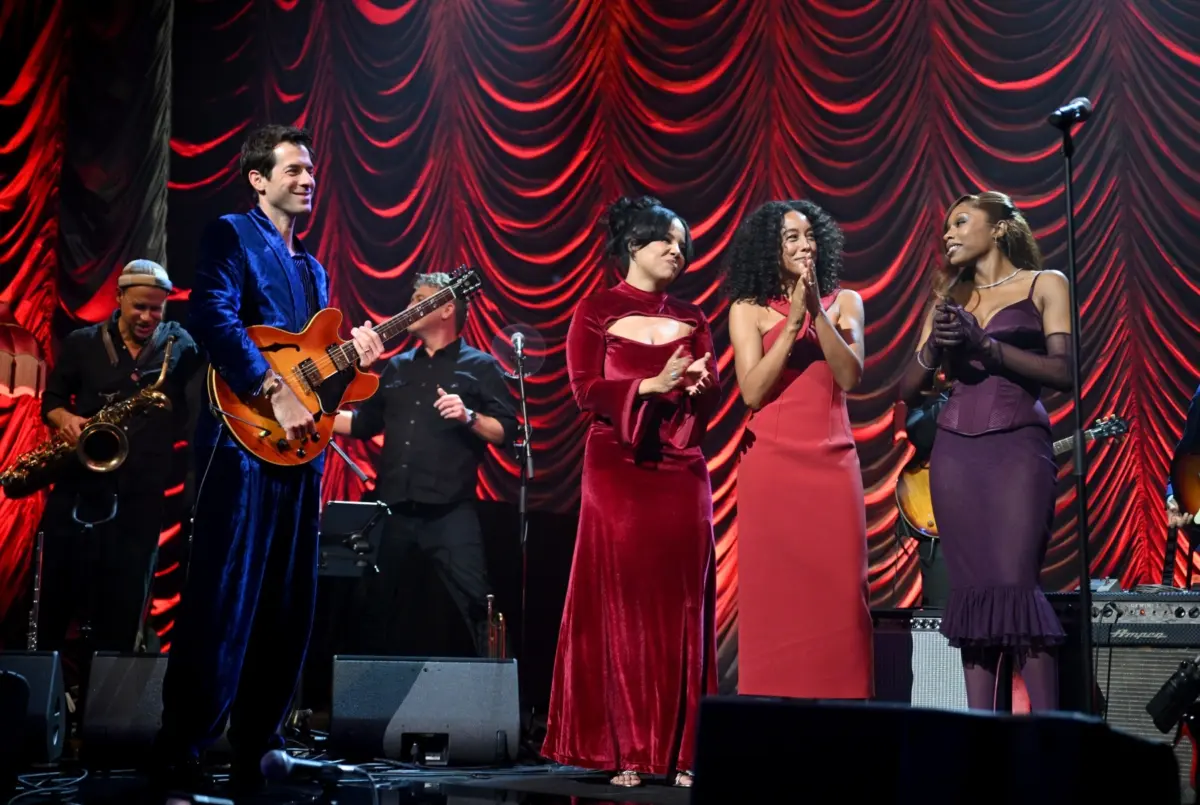
The event was more than a mere nostalgia trip; it was a communal reckoning and a celebration of a local girl who transformed into a global icon. Organized by key architects of her musical legacy—including producers Mark Ronson and Salaam Remi, alongside longtime musical director Dale Davis and the original Amy Winehouse Band—the evening brought together a stellar lineup of contemporary vocalists. Artists such as Jorja Smith, FLO, Corinne Bailey Rae, and Sasha Keable stepped up to interpret Winehouse’s deeply confessional catalog.
Against the backdrop of Camden—a borough etched with her graffiti, anchored by her bronze statue, and soaked in the musical history she helped define—the concert served as a stark reminder of both her irreplaceable genius and the tragic brevity of her life. As the music reverberated through the packed hall, it became abundantly clear that while Winehouse tragically joined the 27 Club in July 2011, her voice, her distinct aesthetic, and her lyrical candor remain entirely immortal.
Detailed Chronology: From Camden Pubs to Brooklyn Studios and Global Stardom
To understand the magnitude of Back to Black, one must trace the geography of Amy Winehouse’s life and career, a trajectory tethered fundamentally to the grit and charm of North London.
The Camden Roots
Camden has always belonged to Amy Winehouse. "This is her house," Mark Ronson declared from the Roundhouse stage, echoing the sentiments of the thousands in attendance. Long before she was a multi-Grammy-winning phenomenon, Winehouse was a fixture of Camden’s local pubs and jazz clubs. It was a borough that raised her, celebrated her triumphs, and ultimately mourned her passing.
The venue itself carried a profound emotional weight. While Winehouse’s 2003 jazz-infused debut album, Frank, firmly established her credentials among critical tastemakers, the Roundhouse was also the site of her final public appearance. In July 2011, she stepped onto the stage to support her goddaughter, Dionne Bromfield, during the iTunes Festival. Just three days later, Winehouse passed away from accidental alcohol toxicity at the age of 27. Returning to Camden for this 20th-anniversary celebration meant confronting the ghosts of her final days while celebrating the vibrant, enduring spirit of her artistry.
The Brooklyn Sound
While the lyrical DNA and raw emotional vulnerability of Back to Black were forged in the pubs of London, its distinct sonic architecture was built across the Atlantic in Brooklyn, New York.
It was at the Dap-Kings’ all-analog Daptone Studios that Winehouse, alongside producers Mark Ronson and Salaam Remi, crystallized the record’s signature sound. Eschewing the hyper-polished digital production trends of the mid-2000s, the team opted for a brassy, vintage soul and jazz-club grandeur. The marriage of Winehouse’s brutally honest, modern lyricism with the timeless, organic instrumentation of the Dap-Kings created a sonic hybrid that sounded simultaneously retro and hyper-modern.
When the album officially dropped on October 27, 2006, it immediately captured the global consciousness. It peaked at No. 2 on the Billboard 200 in the United States and dominated charts across Europe. Her subsequent touring cycle cemented her status as a magnetic, if fragile, live performer, capturing festival crowds from SXSW to a legendary, sun-drenched set at Coachella in 2007, where Dap-Kings saxophonist Neal Sugarman recalls she was universally hailed as "the toast of the festival."
Supporting Context & Metrics: The Undeniable Impact of Back to Black
The legacy of Back to Black is not merely anecdotal; it is empirically staggering. In an era when the music industry was undergoing a turbulent transition from physical CD sales to early digital downloading, Winehouse’s sophomore effort proved to be a commercial titan.
- Chart Performance: In the United States, the album peaked at No. 2 on the Billboard 200, representing a massive breakthrough for a British soul artist at a time when American R&B and hip-hop dominated domestic charts.
- Grammy Dominance: At the 50th Annual Grammy Awards in 2008, Winehouse tied the record at the time for the most wins by a female artist in a single night, taking home five Grammys: Record of the Year, Song of the Year, and Best Pop Vocal Album (for Back to Black), Best New Artist, and Best Female Pop Vocal Performance (for "Rehab").
- U.K. Sales Milestones: In her home country, Back to Black stands as one of the best-selling albums of all time. It has accumulated more than 4.6 million chart units to date, maintaining a permanent presence in the cultural fabric of British music.
Beyond the numbers, the album’s cultural ripple effect is immeasurable. It single-handedly paved the way for a massive commercial resurgence of British female soul and pop vocalists—a lineage that directly includes artists like Adele, Duffy, and later, performers such as Jorja Smith and Lianne La Havas. By laying bare her struggles with heartbreak, addiction, and self-doubt over irresistible Motown-inspired grooves, Winehouse established a new blueprint for confessional songwriting in pop music.
Official Statements and Production Insights
Bringing Back to Black back to the live stage for its 20th anniversary required meticulous planning and a deep sense of reverence. The October 21 concert at the Roundhouse was masterminded by a coalition of Winehouse’s longtime collaborators, close friends, and industry stakeholders.
Hosted by BBC Radio 2 DJ Jo Whiley, the evening featured the original Amy Winehouse Band, spearheaded by longtime musical director and bassist Dale Davis. The guest vocalists were hand-picked by a creative committee comprising Mark Ronson, Salaam Remi, Paul O’Duffy, p*nut, and former Island Records president Darcus Beese OBE.
Speaking prior to the event, Salaam Remi noted his curiosity regarding how a new generation of artists would approach the material:
"I was curious to see what these ladies bring to their own versions of the songs."
Remi’s curiosity was swiftly rewarded. Rather than devolving into derivative impersonations or karaoke-style tributes, the diverse lineup—spanning established stars and rising luminaries—brought fresh perspectives to the material. The evening featured powerhouse performances from Corinne Bailey Rae, Jorja Smith, Lianne La Havas, Yebba, Jessie Reyez, and Terri Walker, alongside newer voices like Nia Smith, Skye Newman, Sasha Keable, Baby Rose, and the acclaimed girl group FLO.
Mark Ronson encapsulated the emotional weight of the evening during his address to the audience, reminding everyone that Camden would forever remain the spiritual home of Amy’s music. The collaborative spirit of the event ensured that the focus remained squarely on the integrity of the songs, treating the catalog not as museum pieces, but as living, breathing compositions capable of evolving through new interpretations.
Future Outlook: Preserving the Flame for Generations to Come
As the celebrations surrounding the 20th anniversary of Back to Black unfold—including a special broadcast of the Roundhouse concert scheduled to air on U.K. television—the discourse naturally turns toward the long-term preservation of Amy Winehouse’s legacy.
In an era where pop culture frequently chews through artists and discards them with alarming velocity, Winehouse’s work has proven remarkably resilient. Her estate, in collaboration with cultural institutions, family members, and longtime collaborators, continues to find thoughtful ways to honor her memory without exploiting it. Educational initiatives, charitable foundations supporting youth mental health and addiction recovery (such as the Amy Winehouse Foundation), and carefully curated archival releases ensure that her philanthropic footprint matches her artistic one.
Furthermore, the participation of younger artists—many of whom were mere children when Back to Black was first released in 2006—signals a generational handover. Performers like FLO and Jorja Smith are not merely paying homage; they are actively integrating the sonic and emotional lessons of Winehouse’s writing into their own contemporary sounds.
Ultimately, the 20th-anniversary tribute at the Roundhouse proved that Amy Winehouse’s story is no longer solely defined by its tragic conclusion, but by the overwhelming, joyful, and eternal resonance of her music. In the heart of Camden, surrounded by the people who knew her best and the fans who loved her from afar, the lioness of British soul roared once more—proving that her house will forever be filled with the sound of her undeniable truth.