Executive Overview
In the contemporary landscape of improvised music, few pianists approach their craft with the philosophical detachment and rigorous anatomical curiosity of Malcolm Braff. For Braff, the piano is not an altar for ego or virtuosic display, but a familiar extension of the body—a vehicle to initiate physical actions, spark visceral reactions among fellow players, and alter the listener’s perception of time itself. His latest collaborative endeavor, the captivating and convention-defying release Outside, captures this ethos in micro-dose form.
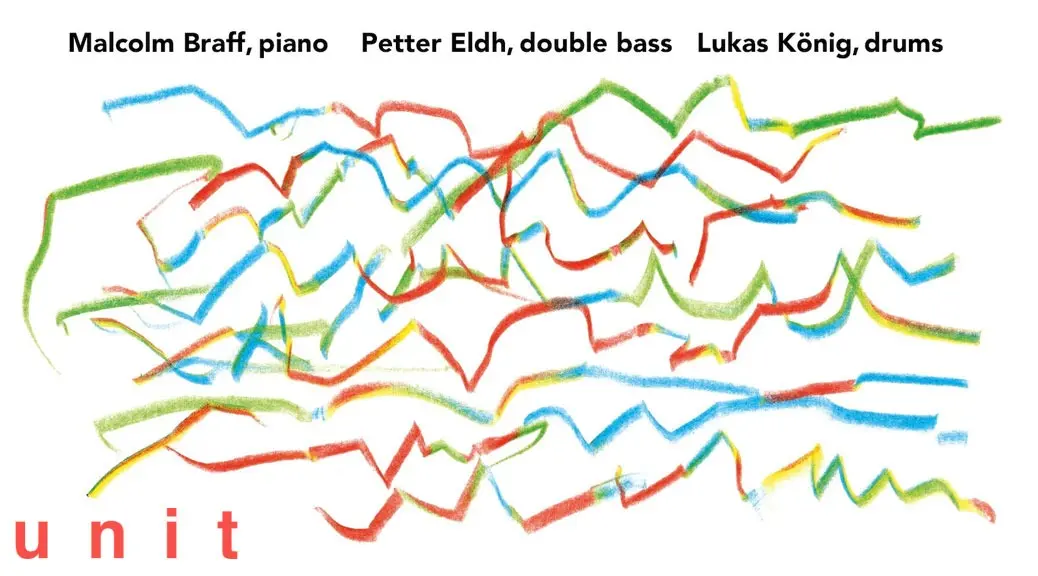
Clocking in with the brisk duration of an extended play (EP) rather than a traditional long-player (LP), Outside nonetheless looms large over the current avant-garde jazz circuit. Featuring the inspired transatlantic partnership of Swedish bassist Petter Eldh and Austrian drummer Lukas König, the album is a masterclass in sonic architecture. It challenges conventional notions of linear time, utilizing Braff’s meticulously researched "Generalized Theory of Swing" to dismantle and rebuild the rhythmic foundations of modern trio playing.
Written by James Read, this deep dive explores the philosophical underpinnings of Braff’s artistry, his nomadic upbringing, his decades of rhythmic research at Jazzcampus Basel, and the electrifying chemistry that defines Outside. From the jarring textures of its opening track to the inverted time-feel of "3TOES," this recording proves that musical innovation requires neither bloated running times nor orthodox structures to leave an indelible emotional impact.
Detailed Chronology: From Rio to Basel and Beyond
To understand the singular voice of Malcolm Braff on Outside, one must trace a geographical and artistic trajectory as diverse as any in modern improvised music. Born in Rio de Janeiro, Brazil, to a missionary father, Braff’s early life was defined by cultural displacement and cross-pollination. Growing up across vastly different landscapes—including stints in Cape Verde and Senegal—exposed him to a polyrhythmic world far removed from the Eurocentric confines of traditional classical piano training. Though he doesn’t necessarily wear the badge of a "citizen of the world," his internal metronome bears the indelible fingerprints of these early global encounters.
Eventually settling in Switzerland, Braff developed into one of Europe’s most distinctive jazz pianists. However, his formative musical partnership—and arguably his most profound stylistic awakening—occurred during a decade-long collaboration with Yaya Ouattara, a master percussionist from Burkina Faso. Ouattara’s djembe effectively took the place of a traditional drum kit in Braff’s trio configurations, most notably captured on the critically acclaimed, highly appealing 2006 live album Yele, released via Unit Records. This foundational relationship cemented Braff’s lifelong fascination with African rhythmic concepts, cyclical time, and the physical mechanics of groove.
Over the subsequent two decades, Braff channeled this practical percussion experience into intense academic and theoretical research. Dedicating more than twenty years to investigating the "mechanics of swing," he sought to codify what jazz musicians usually leave to intuition. This deep dive culminated in his appointment at Jazzcampus Basel, where he folded his research into a witty yet fiercely ambitious conceptual framework known as the "Generalized Theory of Swing."
This theoretical foundation directly informs the music on Outside. Rather than approaching swing as a rigid, swinging triplet subdivision, Braff treats it as an elastic medium—a tool capable of distorting time as perceived by the listener. When Braff, Eldh, and König entered the studio, this twenty-year research project finally found its ideal sonic sandbox.
Supporting Context & Metrics: Deconstructing Outside
Clocking in at a length that brushes against the boundaries of an EP, Outside avoids the trap of filler tracks, presenting a concentrated burst of creative synergy. In the realm of experimental jazz, where bloated double-albums frequently dilute an artist’s vision, Braff’s economical curation is refreshing. As the adage goes, time is relative, and the emotional weight packed into these tracks renders debates over duration entirely obsolete.
The album’s personnel represents a dream-team alignment of contemporary European jazz innovators. Petter Eldh, renowned for his relentless curiosity, hyper-articulate phrasing, and elastic basslines, brings a vibrant energy that pushes the trio into unpredictable territories. Opposite him sits Lukas König, an Austrian drummer celebrated for his whiplash styling, visceral textures, and fearless percussive assaults. Together, Eldh and König form a rhythm section that operates not as a backing unit for a soloist, but as equal partners in a tripartite conversation.
Musically, Outside is an exploration of time perceived as waves rather than a straight line. The record opens with a striking culinary-metaphorical piece titled "Viennese Gröt à la Berlinaise." The track is immediately arresting: König’s percussive attack hits the listener like a gunshot, stirring seamlessly into the warm, viscous gloopiness of Eldh’s low-end vibrations. Meanwhile, Braff’s bouncing piano figures act as the binding glue, holding the contrasting elements in a state of suspended animation.
Following this avant-garde opening is "3TOES," a track where Braff’s decades of swing research are quite literally dismantled and turned inside out. Here, the traditional hierarchy of the jazz piano trio is completely dissolved. König’s frenetic rim clicks and Eldh’s thrumming vibrations are granted ample negative space—intermittent intervals carved out by Braff’s exuberant, shape-shifting approach to time and groove. The result is a disorientating yet deeply pleasurable listening experience that defies standard expectations.

Official Statements and Philosophical Frameworks
To fully appreciate Outside, one must examine Malcolm Braff’s unique philosophy regarding performance, ego, and the collective body of the trio. Unlike many virtuosos who view the instrument as an extension of their personal identity, Braff maintains a deliberate, philosophical distance from his own playing.
In reflections on his artistic process, Braff has articulated a distinct lack of self-absorption on the bandstand:
"This is not what I am, just something I enjoy doing."
Instead of listening inwardly to evaluate his own technique, Braff focuses entirely on the ripple effects of his notes:
"What power am I having on the music?"
He evaluates his performance based on the immediate feedback loop between his physical actions and the reactions of his fellow musicians. By focusing on the pure physical action of playing a familiar instrument, Braff bypasses over-intellectualization during the act of creation. He notes that getting "out of the way" allows him to forget himself and simply engage with the moment. Furthermore, Braff views the traditional trio configuration not as three distinct soloists vying for space, but as a single, multi-limbed organism—a singular instrument played collectively.
This internal detachment translates directly into his relationship with musical theory. While Outside is underpinned by his deeply analytical "Generalized Theory of Swing"—a concept that investigates the "distortion of time as perceived by the listener"—Braff remains a soulful improviser at heart. The music succeeds precisely because it makes an immediate emotional connection before the listener’s conscious mind even begins to question the complex mechanics playing out beneath the surface.
Future Outlook and Legacy
As Outside makes its way into the ears of contemporary jazz enthusiasts, critics, and scholars, it signals a vital evolutionary step for Malcolm Braff, Petter Eldh, and Lukas König. In an era where modern jazz often swings wildly between hyper-traditionalist revivalism and cold, academic abstraction, Braff’s trio strikes a rare, luminous balance. They offer music that is uncompromisingly experimental and adventurous, yet profoundly listenable and grounded in groove.
Looking forward, Braff’s work at Jazzcampus Basel and his ongoing formulation of the "Generalized Theory of Swing" promise to influence a new generation of European improvisers. By demystifying the physical and temporal mechanics of swing—moving away from rigid dogmas and toward a fluid, wave-like understanding of time—Braff is opening doors to entirely new rhythmic vocabularies.
Whether Outside serves as a standalone conceptual statement or the precursor to a larger body of recorded work with Eldh and König, its legacy is secure. It stands as proof that when master musicians strip away ego, abandon linear temporal constraints, and trust in the collective pulse of a unified trio, the results are nothing short of transformative. For listeners willing to surrender their expectations of how swing should feel, stepping Outside is an exhilarating, expectation-defying ride well worth taking.