Executive Overview
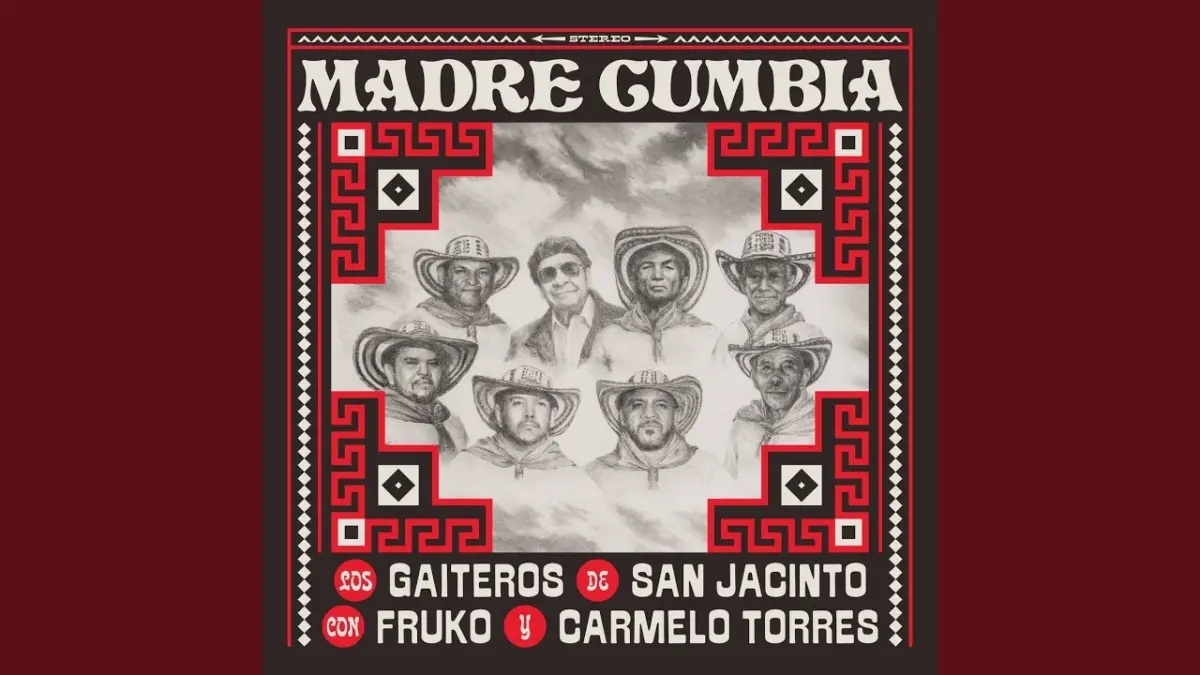
In an unprecedented convergence of Colombian musical royalty, legendary custodians of traditional folklore Los Gaiteros de San Jacinto, salsa architect and Discos Fuentes mastermind Fruko, and accordion maestro Carmelo Torres have joined forces for a landmark collaborative album. Titled Madre Cumbia, the ten-track record is slated for release on October 20 via the San Diego-based indie label Bad Vibes Good Friends.
The album’s lead single and opening track, "Magdalena Ruiz," serves as an evocative portal into the cultural heartbeat of the Montes de María. Named after a legendary local dancer whose presence alone could electrify a failing celebration, the song captures the essence of cumbia sabanera—a vibrant, rural genre rooted in Colombia’s Caribbean plains. Recorded live in Bogotá with nine musicians sharing the same room, Madre Cumbia is far more than a nostalgic retrospective; it is a masterclass in living history. Spanning nearly a century of accumulated musical wisdom, this historic collaboration bridges the gap between ancient indigenous-African folk traditions and the golden era of tropical orchestration, reminding the global listener that when the gaita plays, the soul of Colombia awakens.
Detailed Chronology: From the Montes de María to the Bogotá Studio
The Legend of Magdalena Ruiz and San Jacinto
To understand the significance of the opening track on Madre Cumbia, one must travel north to San Jacinto, a municipality nestled within the rugged, sun-drenched hills of the Montes de María in Colombia’s Bolívar department. Long before the era of recorded sound, this region was a crucible where indigenous flute-making traditions merged seamlessly with African percussion and Spanish lyricism.
Out of this rich cultural soil emerged figures who turned local folklore into national treasure. Among them was Magdalena Ruiz, a dancer whose name became synonymous with the raw kinetic energy of the rueda de cumbia. As elderly gaiteros recalled with fondness, Ruiz possessed a radiant white smile and an effortless, hypnotic grace. Whenever a gathering in San Jacinto threatened to lose its momentum, the arrival of Magdalena changed everything. The atmosphere instantly lifted, drawing musicians, dancers, the young, and the elderly into a collective euphoria.
The late, great Adolfo Pacheco—one of the foundational pillars of Colombian coastal music—immortalized her in verse, singing:
“Si no llegaba Magdalena, se enfriaba de la gaita el son.”
(If Magdalena didn’t arrive, the gaita’s rhythm would grow cold.)
Pacheco’s poignant invocation—“Ahora la evoco en mi cantar” (Now I call her up in my song)—establishes the thematic foundation of Madre Cumbia. She is not merely a memory; she is the spirit of the dance itself.
The Anatomy of a Rueda de Cumbia
The gatherings that Ruiz frequented took the traditional, circular form of the rueda de cumbia. In this participatory ritual, musicians stand at the absolute center, anchoring the space with hypnotic polyrhythms. Encircling them are women clad in long, sweeping skirts, holding lit candles aloft to illuminate the night and trace graceful, hypnotic patterns on the ground.
The caja (a traditional hand drum) and the gaita (indigenous vertical duct flutes) dictate the rhythmic and melodic progression, while the surrounding crowd claps and sings along in call-and-response. When Magdalena Ruiz stepped into the clearing, the circle naturally expanded to welcome her, symbolizing the inclusive, communal ethos of the Caribbean coast.
The Genesis of Madre Cumbia
The creation of Madre Cumbia represents a monumental alignment of musical lineages. Scheduled for an October 20 release through Bad Vibes Good Friends, the ten-song tracklist reads like a historical map of cumbia sabanera. The album features three compositions by the legendary Andrés Landero—the undisputed accordion king of the sabanas—alongside a brand-new piece written by Carmelo Torres himself, complemented by works from esteemed writers such as Rafael Pérez and Betty Ochoa.
For the first time in their storied careers, Los Gaiteros de San Jacinto, Fruko, and Carmelo Torres entered a studio together. Under the executive direction of Gabriel Torregrosa and the production guidance of Rory Morison, the ensemble bypassed modern, isolated digital tracking techniques in favor of a vintage, organic approach. Nine musicians gathered in a Bogotá studio, bleeding their instruments into the same room microphones, capturing the raw, breathing dynamics of a live coastal performance.
On "Magdalena Ruiz," this chemistry is instantly palpable. The melody is driven by Iván Salcedo’s gaita corta—the sharp, piercing short flute that forms the melodic spine of San Jacinto cumbia. Answering Salcedo’s soaring calls is Carmelo Torres on the accordion, weaving intricate counter-melodies, while Fruko anchors the bottom end with a deep, pulsating bassline. Behind them, a battery of percussion—including the caja, conga, guacharaca, and maracas—propels the rueda forward, while lead vocalist Rafael Castro delivers Pacheco’s lyrics with reverence, grit, and soulful authenticity.
Supporting Context & Metrics: Titans of Tropical Music
To fully appreciate the weight of Madre Cumbia, one must examine the monumental stature of the three primary entities converging on this project. Together, they hold nearly a century of institutional memory regarding the evolution of Colombian tropical music.
| Artist / Entity | Era of Prominence | Primary Contribution / Legacy |
|---|---|---|
| Los Gaiteros de San Jacinto | 1940s – Present | Institutional standard-bearers of traditional gaita music; Latin Grammy winners; global ambassadors of Afro-Colombian coastal folklore. |
| Fruko (Julio Ernesto Estrada) | 1960s – Present | Legendary bassist, bandleader, and producer; the creative powerhouse behind Discos Fuentes’ golden era; pioneer of Colombian salsa and tropical fusion. |
| Carmelo Torres | 1970s – Present | Direct musical disciple of Andrés Landero; virtuoso accordionist dedicated to preserving the purest forms of cumbia sabanera. |
Los Gaiteros de San Jacinto: The Living Archives
Founded in the 1940s, Los Gaiteros de San Jacinto are not merely a band; they are a living anthropological archive. Emerging from the Montes de María, the group took the ancestral sounds of indigenous Zenú flute-playing and blended them with African percussion brought over during the colonial slave trade. Over the decades, generations of musicians have rotated through the collective, yet the core aesthetic—defined by the reedy, haunting harmonies of male-female pairs of gaitas (gaita hembra and gaita macho) and the relentless driving force of the caja—has remained fiercely uncompromised. Their decades of dedication were internationally validated when they won a Latin Grammy in 2007 for their album Un Fuego de Sangre Pura, proving that traditional folkloric music commands profound global relevance.
Fruko: The Architect of the Tropical Golden Age
Julio Ernesto Estrada, universally known as Fruko, represents the urban counterpoint to the rural folk traditions of San Jacinto. As a bassist, composer, and chief in-house producer for Medellín’s legendary Discos Fuentes during its 1970s golden era, Fruko shaped the auditory landscape of Latin America. Through projects like Fruko y sus Tesos, he synthesized New York salsa, Cuban son, and Colombian tropical rhythms into an explosive, highly marketable sound that conquered dance floors from New York to Buenos Aires. His involvement in Madre Cumbia bridges the gap between raw, rural folklore and the sophisticated, polished arrangements of Colombia’s mid-century record industry.
Carmelo Torres: The Heir to Andrés Landero
The accordion is relatively young compared to the ancient gaita, yet it became central to the cumbia narrative through masters like Andrés Landero, known as the Rey de la Cumbia. Carmelo Torres was Landero’s direct student, absorbing not just the physical technique of button-accordion playing, but the deep philosophical and stylistic nuances of cumbia sabanera. Torres has dedicated his life to ensuring that the accordion styles of the northern plains do not succumb to commercial homogenization. By bringing his instrument into the fold with Los Gaiteros and Fruko, Torres acts as the connective tissue between the accordion-led cumbia of the lowlands and the flute-led folklore of the hills.
Official Statements & Production Insights
The collaborative nature of Madre Cumbia has generated significant buzz within the international music community, particularly among ethnomusicologists, crate-diggers, and lovers of roots music.
Producer Rory Morison, speaking on the recording sessions in Bogotá, emphasized the importance of spatial and interpersonal chemistry during the project:
"When you bring nine master musicians into a single room—artists who carry decades of oral history in their fingers and vocal cords—you don’t over-produce them. You simply set the stage, capture the bleed of the room, and let the tradition breathe. What you hear on ‘Magdalena Ruiz’ is not a constructed digital collage; it is a real-time conversation between the gaita, the accordion, and the drum."
Executive Director Gabriel Torregrosa noted that the album bridges generational divides that have historically segmented Colombia’s musical landscape:
"For too long, coastal folk purists and urban tropical producers existed in separate spheres. With Madre Cumbia, we are tearing down those walls. Having Fruko’s foundational bass work supporting Carmelo’s accordion and the ancestral gaitas of San Jacinto creates a continuum. It tells the listener that cumbia is not a museum piece—it is a living, evolving ecosystem."
Future Outlook: The Global Resurgence of Cumbia Roots
The release of Madre Cumbia on October 20 via Bad Vibes Good Friends arrives at a critical juncture for traditional Latin American music. In recent years, global electronic and dance music scenes have experienced a massive surge of interest in organic, acoustic-rooted tropical rhythms. Underground club nights, independent record labels, and festival circuits across Europe, North America, and South America have increasingly embraced the hypnotic, mid-tempo sway of cumbia.
However, amidst the proliferation of digital, electronic-infused "nu-cumbia," projects like Madre Cumbia serve as an essential anchor to the genre’s acoustic roots. By documenting the direct lineage between the 1940s folkloric preservation of Los Gaiteros, the mid-century recording genius of Fruko, and the accordion mastery of Carmelo Torres, this album establishes a gold standard for cross-generational collaboration.
As "Magdalena Ruiz" echoes across digital streaming platforms and vinyl turntables worldwide, it proves that the cultural memory of the Montes de María cannot be extinguished. Just as Magdalena’s arrival once rescued a fading celebration in San Jacinto, this landmark album breathes new life into the global cumbia community—ensuring that the gaita never goes cold, and that the song of the ancestors continues to inspire generations to come.