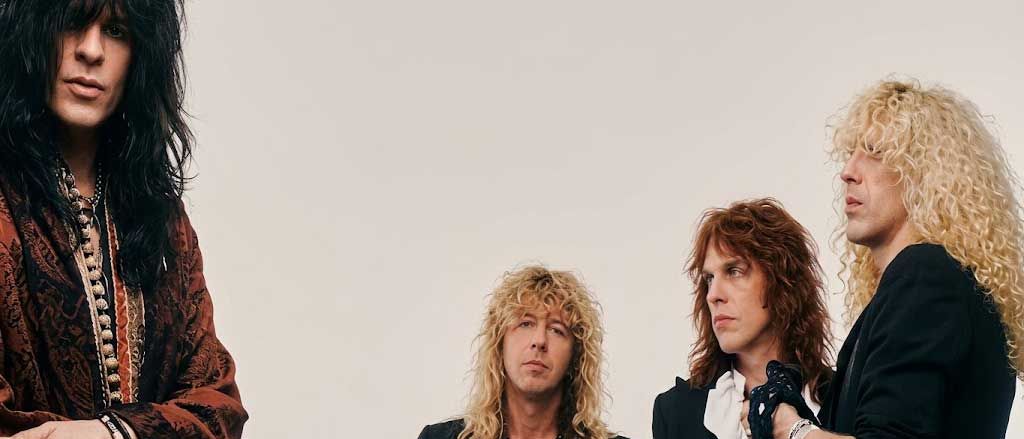
In the volatile landscape of late 1980s heavy metal, success was often as fleeting as record label loyalty. Few projects illustrate the brutal whims of corporate music politics more vividly than Desperado—the short-lived, power-packed band formed in 1988 by former Twisted Sister frontman Dee Snider. Joined by an elite lineup comprising ex-Iron Maiden drummer Clive Burr, legendary guitarist Bernie Tormé (Gillan, Ozzy Osbourne), and bassist Marc Russell, Desperado was designed to shed the cartoonish, theatrical aesthetic of 1980s glam metal in favor of a gritty, blues-infused, Western-themed heavy metal sound.
Despite recording a complete, highly polished debut album slated for a May 1990 release by Elektra Records, the project was abruptly shelved just weeks before reaching store shelves. Caught in a crossfire of corporate infighting, executive maneuvering, and a rapid industry shift toward grunge, Desperado was quietly dropped, leaving their debut to survive for over a decade as a mythic bootleg.
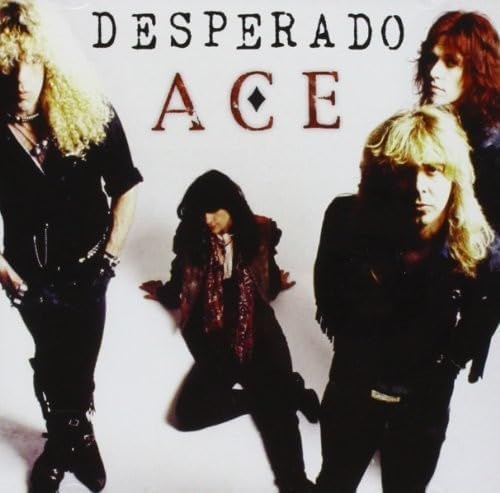
Officially rescued from the vault and released in 2006 under the title Ace (and periodically known as Bloodied, But Unbowed), the record stands as one of hard rock’s most compelling "what-if" stories. This comprehensive analysis re-examines the tumultuous history of Desperado, evaluates the album’s critical re-assessment by modern rock historians, and unpacks the legacy of an all-star band denied its moment in the spotlight.
Detailed Chronology: From Supergroup Genesis to Shelved Master Tapes
   1988               May 1990            1990–2005             2006                Present
    |                    |                    |                  |                     |
Formed by          Shelved by           Circulated as      Official Master      Re-evaluated by
Dee Snider         Elektra Records       Bootleg Classic    Tape Release          Rock Historians
(ex-Twisted Sister)                     ("Bloodied...")    ("Ace")                & Fans
1. The Post-Twisted Sister Shift (1987–1988)
Following the 1987 breakdown of Twisted Sister—exacerbated by commercial exhaustion and the critical misstep of Love Is for Suckers—Dee Snider sought a complete creative pivot. Moving away from the oversized hair, makeup, and stadium-anthem formulas that defined his early career, Snider aimed to craft a more mature, musically complex hard rock outfit.
To achieve this, he assembled an extraordinary roster of talent:
Bernie Tormé: The Irish guitar virtuoso whose explosive fuzz-driven style had elevated Ian Gillan’s solo band and famously filled the void left by Randy Rhoads in Ozzy Osbourne’s touring lineup in 1982.
Clive Burr: The powerhouse British drummer whose driving, propulsive rhythms defined Iron Maiden’s seminal first three albums (Iron Maiden, Killers, and The Number of the Beast).
Marc Russell: A versatile, rock-solid bassist who provided the anchor for the band’s groove-heavy rhythm section.
2. Studio Sessions & Corporate Sabotage (1989–1990)
In 1989, Desperado entered the studio to record their debut album for Elektra Records. The creative synergy between Snider and Tormé yielded a unique sonic palette: heavy metal anchored by outlaw Western motifs, bluesy hooks, and raw, soulful vocal arrangements.
However, as the scheduled May 1990 release date approached, catastrophe struck behind corporate doors. Elektra underwent internal executive realignments. According to industry accounts and band recollections, the album fell victim to petty label politics—specifically, corporate retaliation surrounding an A&R executive who had recently departed Elektra for a rival label. Compounded by executive panic over the emerging Seattle grunge movement, Elektra shelved the completed master tapes, dropped the band, and refused to sell the recordings back to Snider.
3. The Underground Bootleg Era (1990–2005)
For over fifteen years, Desperado’s music existed strictly in heavy metal purgatory. Dubbed by fans as Bloodied, But Unbowed, low-quality cassette and CD bootlegs circulated extensively throughout Europe and North America. Despite the lack of an official push, the album developed a cult status among rock purists who recognized that Snider and Tormé had crafted something genuinely special.
4. Resurrecting the Masters: The 2006 Release
In 2006, working through independent reissue labels Angel Air and Deadline Music, the original master tapes were finally secured. Officially titled Ace, the album was given its legitimate pressings, featuring original artwork and insightful liner notes from Snider detailing the heartbreak and triumph behind the sessions.
       DESPERADO: OFFICIAL TRACKLISTING ("ACE")
 ---------------------------------------------------
  1. Hang 'Em High                8. Made For Trouble
  2. Gone Bad                     9. Ride Thru the Storm
  3. The Maverick                10. Son Of A Gun
  4. The Heart Is a Lonely Hunter11. Emaheevol
  5. Calling For You             12. Easy Action
  6. See You At Sunrise          13. Heart of Saturday Night
  7. There's No Angels Here
Supporting Context & Metrics: Critical Evaluation & Data
To assess the album’s standing decades after its intended release, music historians and fan communities—such as the Album of the Week Club—have subjected Ace to rigorous retrospective analysis.
Performance & Score Metrics
Based on compiled polling data from contemporary listeners and rock archivists, Desperado’s Ace holds a verified consensus rating reflecting a strong, sub-genre cult classic status:
Retrospective reviews single out Ace as containing some of Dee Snider’s finest vocal work. Free from the screeching, over-the-top theatrical demands of Twisted Sister’s anthems, Snider utilized a lower, raspy, and emotional vocal register. Tracks like "The Heart Is a Lonely Hunter" and "Calling For You" demonstrated a soulful semi-ballad sensitivity rarely heard on mid-80s MTV.
2. The Bernie Tormé Factor
Guitar enthusiasts frequently cite Tormé as the standout performer on the record. Utilizing a signature blend of hendrixian feedback, punk aggression, and late-80s hard rock flare, Tormé’s work on songs such as "See You At Sunrise" (featuring a celebrated, blistering outro solo) and "Hang ‘Em High" injected a raw energy that contrasted sharply with the slick, over-produced hair metal of 1990.
3. Clive Burr’s Dynamic Rhythm Engine
Ace serves as a poignant reminder of Clive Burr’s immense talent prior to his health battles with multiple sclerosis. Unlike typical heavy metal drummers who synced strictly to bass guitar lines, Burr approached Desperado’s tracks by playing off Snider’s vocal melodies, adding intricate fills and a distinct swing that elevated the album’s rhythm section above standard hard rock tropes.
Official Statements and Retrospective Insights
The narrative surrounding Desperado is deeply intertwined with first-hand accounts from the artists themselves and the broader music journalism community.
Dee Snider on the Desperado Experience
Writing in the definitive liner notes for the 2006 release, Dee Snider expressed both immense pride and lingering frustration regarding the album’s fate:
"Very proud of the Desperado album, some of my best songwriting. Painful to think about what might have been. I found a real partner in Bernie; it resulted in magic. The creativity of the rhythm section, too."
"Clive is the only drummer I’ve ever worked with who works off the vocals; to finish his parts, he works off the melody, where most drummers work off the guitar or bass. Doing that record, creatively, was the best moment in my life to that time. Bernie plays like I think; it opened me up as a writer and shared the burden… A real blossoming as a writer and creator."
"We bonded, we got on great, and it breaks my heart that we didn’t get to tour and really be onstage together."
                     CREATIVE COLLABORATION MATRIX

      DEE SNIDER                       BERNIE TORMÉ
  [Emotional Melodies &] <===========> [Fuzz-Bomb Riffs &]
  [Outlaw Lyricism     ]  Shared Burden[Punk/Blues Hybrid]
            ^                               ^
            |                               |
            v                               v
    (Vocal-Driven Fills)            (Rhythmic Anchor)
      CLIVE BURR                       MARC RUSSELL
Critical Media Consensus
Archival reviews from prominent rock publications reflect a unified view: Ace was a victim of terrible timing rather than poor quality.
Encyclopaedia Metallum:"This album sounds far less commercial than Twisted Sister did around the time of the breakup. Though bluesy, rocky, and often with hooks, it feels like Dee and co doing what they want to do… Dee writes awesome, soulful, semi-ballads and hard rockers, coming across as genuine and well-seasoned."
Sea Of Tranquillity:"From the heavy blues rock of ‘Hang ‘Em High’, the kick-ass metal of ‘Run Wild Run Free’, to the powerful ballad ‘The Heart Is A Lonely Hunter’, there’s one winner after another here… Had this record been released when it was initially intended, I think guitarist Tormé would really have gotten the recognition worldwide that he deserves."
Metal Nose:"What a pleasant surprise this turns out to be. Heavy, raw rock music, with enough subtlety, excellent melodies and great musicianship. Dee Snider’s vocals are a revelation. None of the over-the-top screaming from his Twisted Sister days, but some very powerful, and at times really emotional singing."
Fan & Community Retrospectives
The consensus among music historians often touches upon the narrative of Dee Snider’s post-80s legacy, particularly when evaluating whether he was merely an "80s nostalgia act" or a frustrated artist blocked by industry mechanics.
Chris Downie (Music Historian/Reviewer):"Assembling a lineup featuring ex-Gillan guitarist Bernie Tormé and ex-Iron Maiden drummer Clive Burr, this project saw a more direct, less theatrical heavy metal approach… What is equally clear from this album is what a loss Clive Burr was to the heavy metal scene… Had it been released in 1987, or even 1989, this could and should have done big business."
Gary Claydon (Rock Analyst):"An enjoyable chunk of Western-hued hard rock… Snider does some fine work and the rhythm section is solid, but it’s Bernie Tormé who is the star turn. Shooting from the hip with his fuzzbomb guitar, Tormé rarely allows the energy levels to dip."
Future Outlook: The Legacy of a Lost Relic
As time reassesses the output of hard rock’s golden eras, Desperado’s Ace is increasingly recognized not as a failed vanity project, but as a classic "lost album" that deserved a far better fate.
                  THE HISTORICAL TRAJECTORY OF 'ACE'

  [1990: Corporate Shelving] ──> [1990s: Underground Bootlegs]
                                          │
  [Legacy Preserved]       <── [2006: Official Reissue]
Key Factors Shaping Its Modern Legacy:
Re-evaluating Dee Snider’s Range:Ace serves as tangible proof that Snider possessed songwriting depth and vocal adaptability far beyond the boundaries of 1980s hair metal. It bridges the gap between his glam-era stardom and his later work with Widowmaker and his solo metal releases.
Honoring Lost Icons: With the tragic passings of drummer Clive Burr in 2013 and guitarist Bernie Tormé in 2019, Ace stands as a vital historical document showcasing two of metal’s greatest instrumentalists operating at the peak of their creative powers.
The Demand for Audiophile Remasters: While the 2006 Angel Air release restored the music to the public, collectors and audiophiles continue to advocate for a definitive, high-definition box set re-release featuring restored artwork, unreleased studio jams, and complete historical liner notes.
Ultimately, Desperado’s Ace remains an essential chapter for heavy metal historians. It captures a moment when four veteran musicians defied commercial formulas to create something raw, genuine, and timeless—only to be silenced by the very industry that commissioned it. Thanks to digital preservation and dedicated fan communities, the outlaw album that refused to die finally rides high in the annals of hard rock history.