Executive Overview
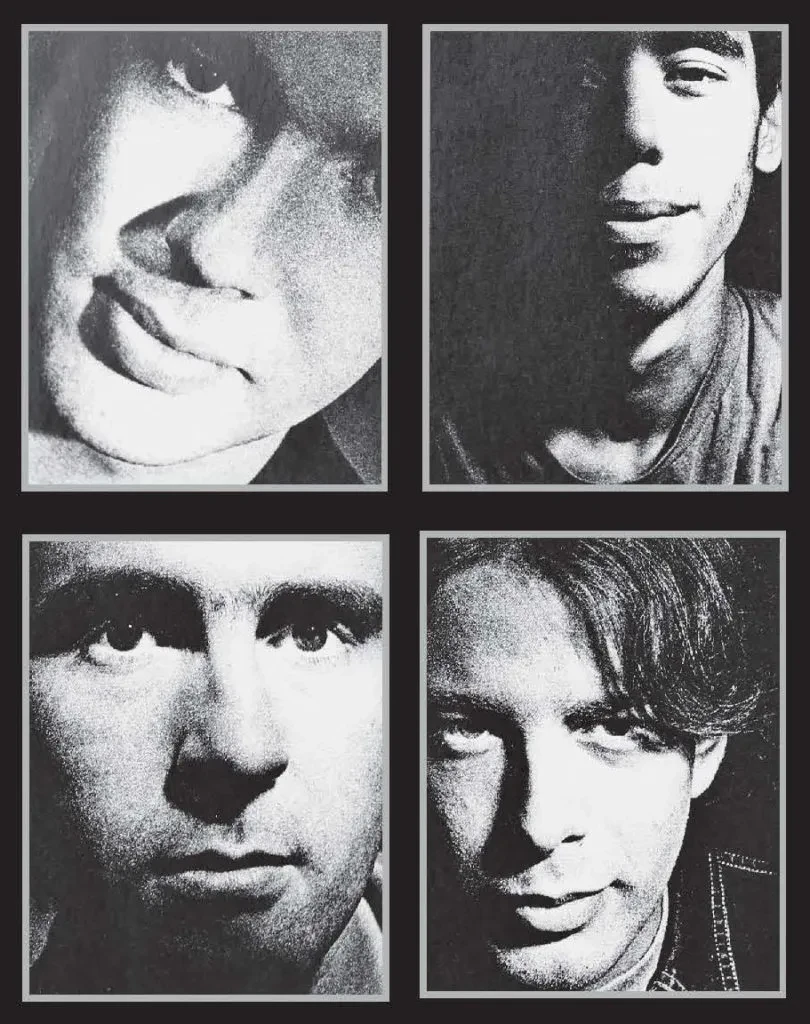
Four decades after its unassuming genesis in the classrooms and back-alley squats of London, Bark Psychosis remains one of modern alternative music’s most enigmatic, influential, and mercurial entities. Formed in 1986 by schoolfriends Graham Sutton and John Ling when they were just 14 years old, the outfit would go on to help birth and define the post-rock movement long before the genre had even acquired a name.
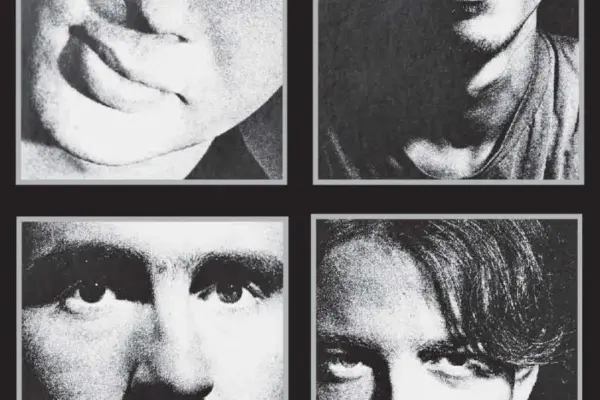
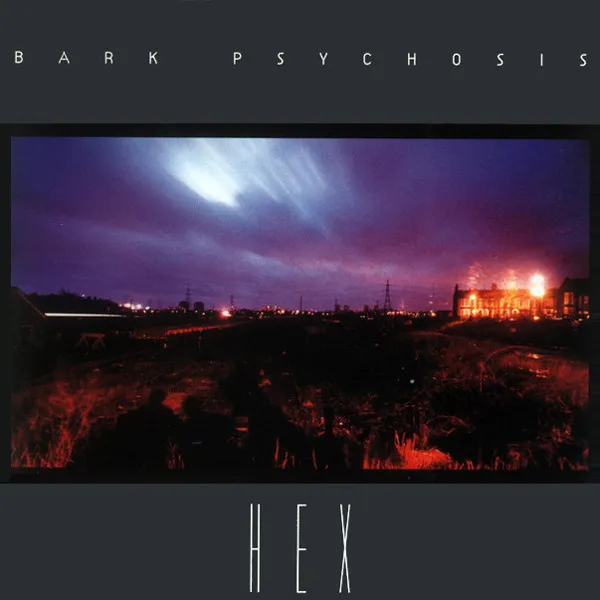
Their 1994 debut full-length, Hex, stands as a monumental achievement in acoustic-electronic hybridity—a gloomy, glimmering masterclass that effortlessly traversed ambient introspection and intricate, explosive crescendos. Yet, the creation of Hex came at an unsustainable personal and creative cost, effectively splintering the band at the moment of its greatest triumph.
It would take a staggering 20 years for a true follow-up, ///CODENAME: dustsucker, to materialize, with Sutton serving as the sole constant anchor through shifting line-ups, label disputes, and a successful reinvention as an in-demand producer for the likes of These New Puritans and British Sea Power.
In a candid, retrospective interview, frontman and creative architect Graham Sutton reflects upon a life dictated not by the commercial imperatives of the music industry, but by a visceral, uncompromising devotion to sound. Looking back from the vantage point of forty years since the band’s inception, Sutton explores the raw origins, destructive perfectionism, and pure motives that built a legacy which continues to cast a long, reverent shadow across contemporary experimental music.
Detailed Chronology: From Schoolboy Mania to Post-Rock Pioneers
Genesis and the Squatter Years (1986–1990)
The story of Bark Psychosis is inextricably linked to the youthful zeal of its founders. Growing up surrounded by a household rich in classic vinyl—his mother’s copy of Rubber Soul played to exhaustion, alongside the twilight drift of Sgt. Pepper’s Lonely Hearts Club Band—Sutton developed an early, unbreakable tether to recorded music.
"There was always music in my house," Sutton recalls. "Music has been this thread that’s pulled me through life."
By age 14, this passive appreciation curdled into an active, burning obsession. Teaming up with fellow schoolmate John Ling, Sutton treated the formation of their nascent musical project with absolute urgency. "It was like this mania. I thought: this is what I’m here to do."
The pair began experimenting primitively with a tape recorder and a drum machine, culminating in their live debut at a Campaign for Nuclear Disarmament (CND) benefit hosted at the Sir George Robey pub in Finsbury Park. Galvanized by the performance, Sutton made a life-altering decision: he left formal education immediately after completing his GCSEs, persuading Ling to commit entirely to the band.
To facilitate their ambitions, Sutton relocated from East London to Edgware in North London, regularly commuting back and forth to plot their trajectory. Their immediate objective was securing a percussionist. An advertisement pinned to the bulletin board of a local music shop yielded drummer Mark Simnett. Realizing that the daily commute was logistically untenable, Sutton joined Ling in squatting, eventually cementing their base of operations in a notorious creative commune on Claremont Road in Leyton.
It was within the chaotic, bohemian ecosystem of the Leyton squat that the band crossed paths with vocalist Sue Page, whose ethereal stylings would grace their earliest recordings. Simultaneously, a chance platform encounter at South Woodford station introduced Sutton to Nick Allport and Vinita Joshi, the operators of an independent fanzine and boutique micro-label named Cheree. Struck by an impromptu conversation, the couple effectively took the young musicians under their wing.
The Cheree Singles and the 3rd Stone Interlude (1990–1992)
In 1990, Bark Psychosis released their debut 12-inch records via Cheree: All Different Things and Feelings. These early releases established the group’s trademark sonic architecture—spacious, drifting, atmospheric rock that fused the cavernous textures of dub with the driving momentum of post-punk.
Encouraged by the underground buzz, Cheree pushed the band to record a full-length album. However, tensions flared when the label brought in external financial backers whose creative vision and corporate sensibilities clashed fundamentally with the band’s insular ethos.
Salvation arrived via Gerald Palmer, a seasoned manager best known for steering Spaceman 3. Palmer successfully extracted Bark Psychosis from their Cheree obligations, paving the way for a signing with 3rd Stone Records. Bolstered by the addition of keyboardist Daniel Gish, the band unleashed the Manman EP and the monumental 21-minute single Scum in 1992. Scum was a sprawling, uncompromising epic that seamlessly bridged experimental noise-rock with serpentine, jazz-inflected soundscapes.
Reflecting on this fiercely independent era, Sutton notes:
"A lot of it came from being quite wilful, wanting to do something that was our own and nobody else’s. Nothing was guided by any sort of idea of a career; it was just, ‘How does this feel? Do we feel good doing this?’ For better or worse, it was done with the purest of motives."
The Masterpiece and the Meltdown: Hex (1994)
Buoyed by their underground reputation, Bark Psychosis signed to Circa, a subsidiary of Virgin Records, to record their debut album. Emboldened by the atmospheric success of Scum—which had been recorded live inside the resonant stone architecture of St John’s Church in Stratford—Sutton engineered an intensely meticulous, multi-tiered recording methodology for the forthcoming LP.
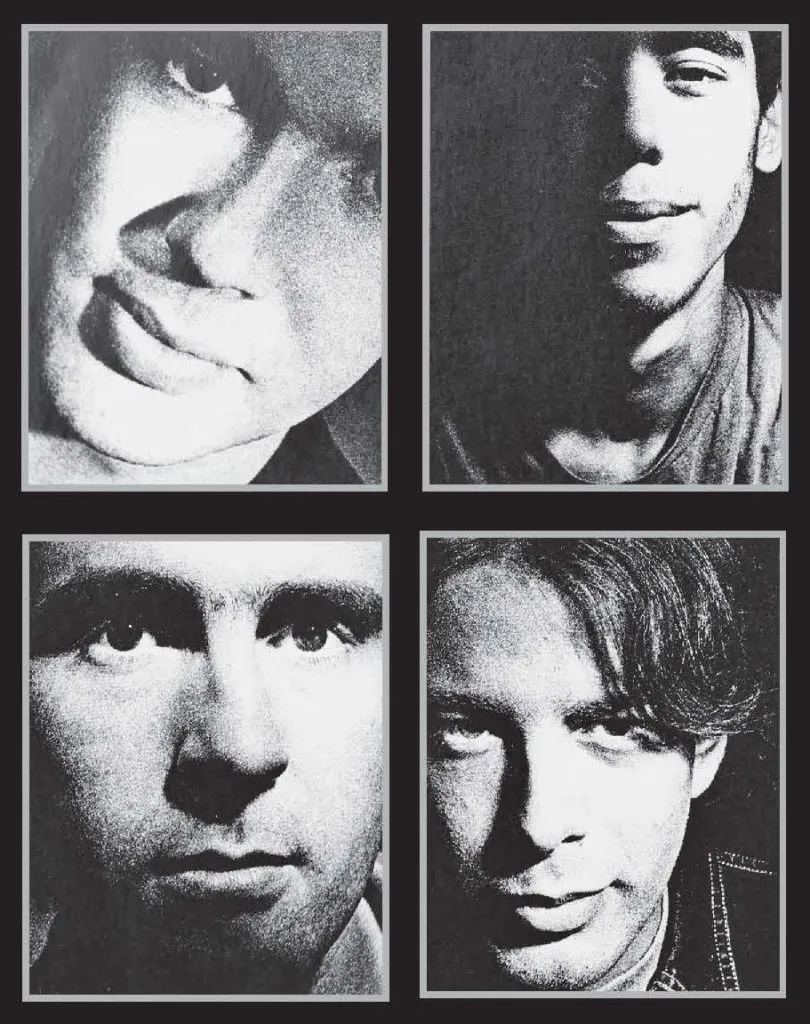
"I came up with the idea that we’d lay down some frameworks, then there’d be a stage of overdubbing in the church," Sutton explains. "Then there’d be a further process of sequencing. Finally, there would be touch-ups and vocals, then we’d mix it."
A pivotal catalyst in this process was Sutton’s burgeoning fascination with newly accessible digital sampling technology, which allowed the band to weave found-sound textures and hyper-detailed ambient beds into their organic instrumentation.
Released in 1994, the resulting album, Hex, was an unqualified critical triumph. It captured a delicate balance between glacial ambient introspection and sudden, crushing emotional crescendos. Yet, its commercial reception was modest, peaking at number 48 on the UK Independent Albums chart. More crucially, the agonizingly intricate production process exacted a devastating toll on the band’s internal chemistry.
"It took such a lot out of us," Sutton recalls. "I felt very strongly that this might be our only shot at this, so I’m going to give it my absolute everything. The process of making it destroyed the band."
Daniel Gish departed during the sessions, and John Ling followed suit immediately upon the album’s completion. Though Sutton and Simnett attempted to keep the live incarnation afloat briefly, the band as a cohesive unit had effectively disintegrated under the weight of its own perfectionism.
The Electronic Detour and ///CODENAME: dustsucker (1997–2004)
Following the collapse of Bark Psychosis, Sutton found himself irresistibly drawn to the frantic, subterranean rhythms of the burgeoning UK drum ‘n’ bass scene. Shifting gears entirely, he adopted the moniker Boymerang and released the critically acclaimed electronic album Balance Of The Force through Parlophone in 1997.
True to his mercurial nature, however, Sutton’s tenure in electronic music was short-lived. "Almost overnight, something was telling me, I’ve got to do something else now."
This inner compulsion triggered the genesis of a long-awaited second Bark Psychosis record. The decision was met with friction from Parlophone, who expected a continuation of his drum ‘n’ bass output. "Parlophone weren’t very happy, but I felt like I didn’t have any choice. If it doesn’t feel right, I can’t do it."
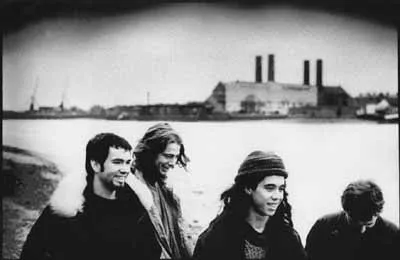
A protracted legal battle ensued as the label refused to release the material. It took Sutton years to claw back the rights to the recordings. Ultimately, ///CODENAME: dustsucker saw the light of day in 2004 via Fire Records, featuring Sutton collaborating with a rotating cast of musicians to maintain the group’s uncompromisingly sophisticated, experimental DNA.
Supporting Context & Metrics
To fully understand the cultural footprint of Bark Psychosis, one must analyze the institutional and commercial landscape they inhabited and subsequently transcended:
- Timeline Span: Formed in London in 1986; active across distinct waves (1986–1994, and intermittently post-2004).
- The Post-Rock Vanguard: Along with contemporaries such as Talk Talk (whose late-period albums Spirit of Eden and Laughing Stock share a spiritual kinship with Hex), Bark Psychosis are widely credited by musicologists with coining and shaping the lexicon of "post-rock"—a term originally used to describe rock bands utilizing rock instrumentation for non-rock compositional purposes (ambient structures, jazz dynamics, and electronic textures).
- Chart Performance: Despite retrospective canonization as a masterwork of 1990s alternative music, Hex peaked at a modest No. 48 on the UK Independent Albums Chart, demonstrating the disconnect between critical foresight and immediate commercial appetite.
- The Twenty-Year Gap: The span between the release of Hex (1994) and ///CODENAME: dustsucker (2004) spans a full decade of dormancy for the primary moniker, though Sutton’s detour under the Boymerang alias filled the interim years with vital electronic experimentation.
- Production Footprint: Sutton’s post-band career transitioned into a prolific career as a record producer and mixer, expanding from an initial cheeky prompt by Rough Trade’s Geoff Travis ("Can you make me a hit?") to shaping landmark records for The Delays (Faded Seaside Glamour, 2004), These New Puritans (Crooked Wing / Beat Pyramid), and British Sea Power.
Official Statements & Direct Quotations
The integrity of Sutton’s artistic journey is underscored by his unwavering commitment to creative autonomy. Key statements from his retrospective interview highlight this philosophy:
- On Musical Destiny: "It was like this mania. I thought: this is what I’m here to do… Music has been this thread that’s pulled me through life."
- On Creative Purity: "A lot of it came from being quite wilful, wanting to do something that was our own and nobody else’s. Nothing was guided by any sort of idea of a career; it was just, ‘How does this feel? Do we feel good doing this?’ For better or worse, it was done with the purest of motives."
- On the Price of Perfection: "I felt very strongly that this might be our only shot at this, so I’m going to give it my absolute everything. The process of making it destroyed the band."
- On Artistic Instincts: "Parlophone weren’t very happy, but I felt like I didn’t have any choice. If it doesn’t feel right, I can’t do it."
- On Retrospective Gratitude: "It’s enormously gratifying that people still ask me about Hex, because I know how much went into it, and it was done for no other reason, no other purpose, than to try and do something as good as we could make it. So, the fact that people get something out of it, well, that’s nice."
Future Outlook: Will Bark Psychosis Return?
Decades removed from the suffocating pressure-cooker environment that produced Hex, Graham Sutton occupies a comfortable, highly respected niche within the British independent music infrastructure. Balancing his production duties for critically revered acts like These New Puritans and British Sea Power with his own ongoing sonic curiosities, he has little inclination toward nostalgia or forced reunions.
When pressed on whether music fans can ever expect a third canonical Bark Psychosis full-length album, Sutton responds with characteristic pragmatism and a smile:
"I don’t know. I’m just enjoying doing what I’m doing… I haven’t got the time!"
Ultimately, whether the Bark Psychosis banner is ever raised again is immaterial. The band’s permanent imprint has already been etched into the bedrock of modern alternative music. Through a combination of adolescent mania, monastic studio discipline, and an absolute refusal to pander to commercial expectations, Graham Sutton and his collaborators constructed a monument of sound that time cannot erode. Hex and dustsucker stand not as relics of a bygone era, but as timeless explorations of shadow, light, and the enduring power of pure acoustic exploration.