Executive Overview
Since its inception by France Football magazine in 1956, the Ballon d’Or has evolved from a relatively modest European sporting honor into football’s most prestigious individual accolade. For nearly two decades, the award’s modern narrative has been overwhelmingly shaped by a duopoly. The era of the superstar has been defined by Argentina’s Lionel Messi and Portugal’s Cristiano Ronaldo, who collectively claimed 13 Ballon d’Or titles between 2008 and 2023. This duopoly transformed the award into a global spectacle characterized by immense personal branding, staggering commercial valuations, and a celebrity-driven hierarchy that mirrors Hollywood more than it does the traditional terraces of European football.
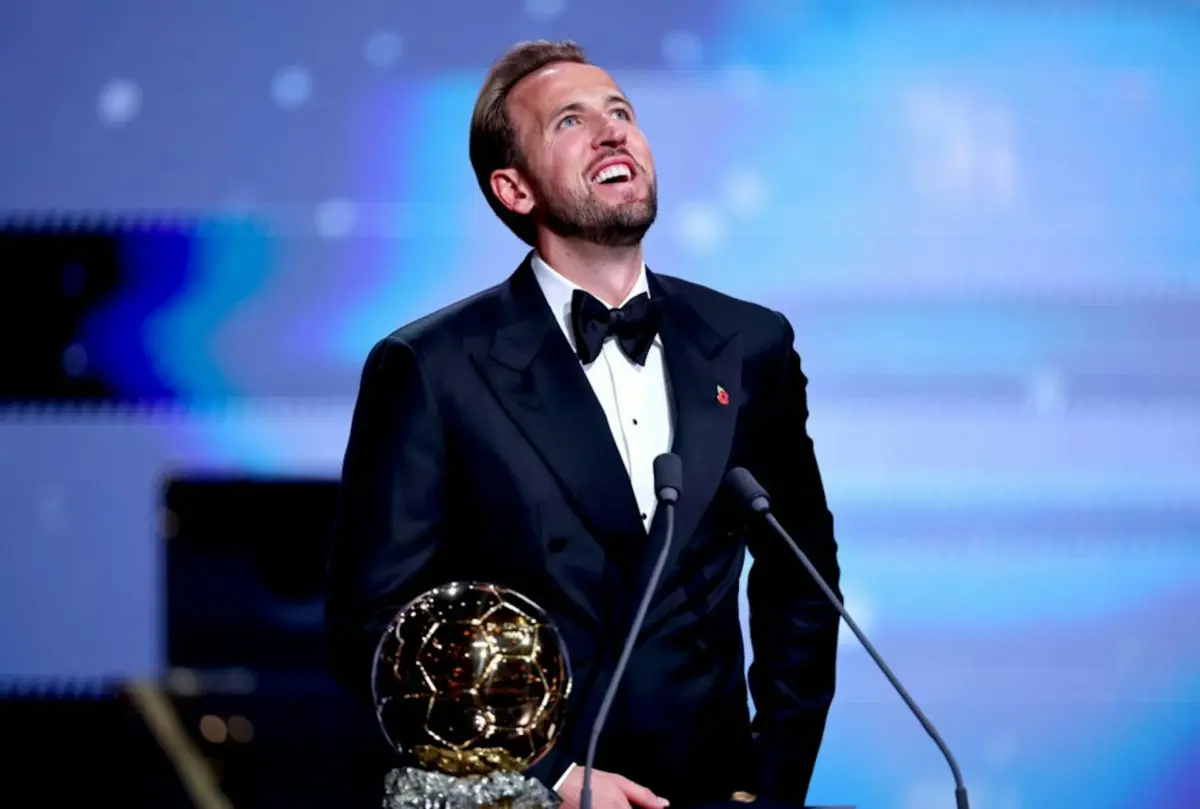
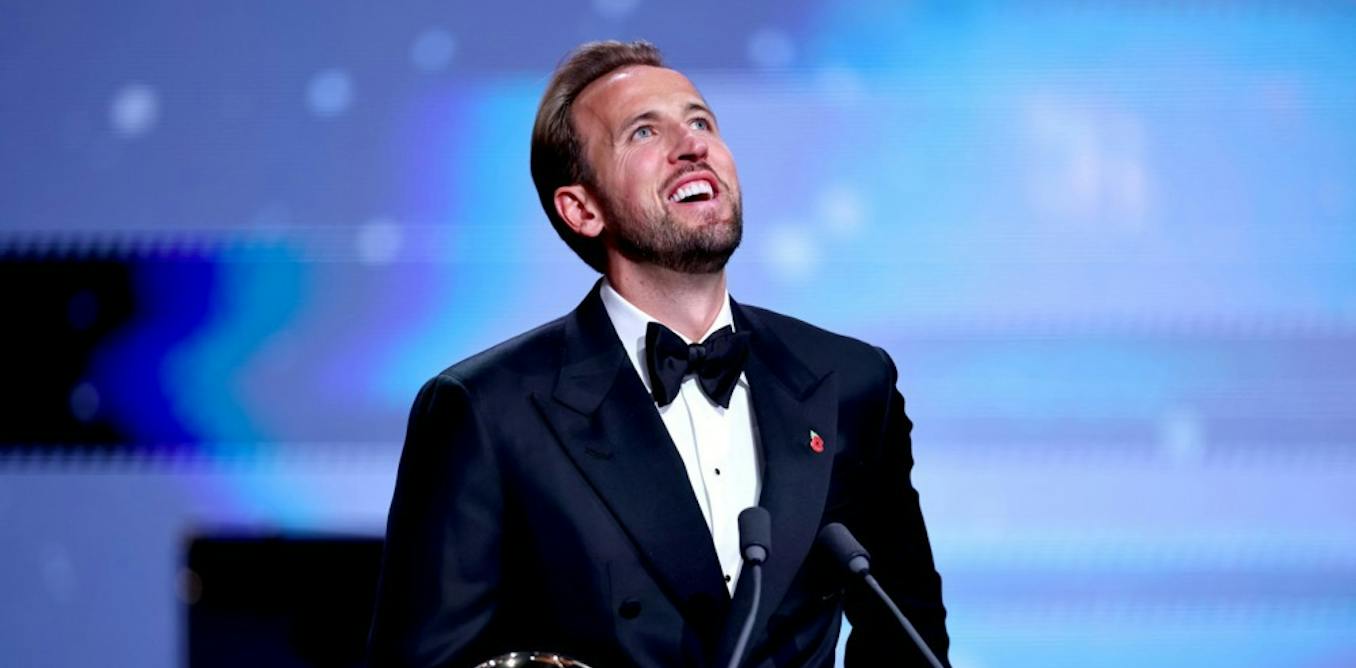
Yet, the announcement naming England and Bayern Munich striker Harry Kane as the men’s Ballon d’Or winner sent a profound wave of emotion across the footballing landscape. Kane became the first Englishman to lift the golden trophy since Michael Owen in 2001, cementing his legacy not just as a statistical phenomenon, but as a cultural counterweight to the hyper-commercialized modern game.
Far from merely rewarding goals and assists, Kane’s victory serves as a vital touchstone for what the sport’s broader community values. Drawing upon research into football support as a living cultural heritage, this victory represents a conceptual turning point. It challenges the relentless march of manufactured celebrity culture, proving that humility, collective devotion, and understated craftsmanship can still conquer the most conspicuous symbols of modern football’s entertainment complex.
Detailed Chronology: The Evolution of an Icon and the Path to Paris
To understand the weight of Harry Kane’s Ballon d’Or triumph, one must trace the trajectory of both the award and the player.
- 1956: France Football introduces the Ballon d’Or, originally designed to honor the European Footballer of the Year based on performances over the preceding calendar year. Stanley Matthews of Blackpool claims the inaugural award.
- 2001: Liverpool and England forward Michael Owen wins the Ballon d’Or, standing as the last Englishman to achieve the feat for over two decades.
- 2008–2023: The Messi-Ronaldo era commences. Over this 15-year span, the award becomes intrinsically linked to the off-field commercial empires, digital media dominance, and astronomical personal brands of the two global icons.
- The Modern Era (Tottenham to Bayern Munich): Kane establishes himself as Tottenham Hotspur’s all-time record goalscorer and the undisputed talisman of the England men’s national team. Despite breaking records, his career is historically defined by a team-first ethos and a relentless, unflashy dedication to self-improvement.
- The Transition to Bavaria: Relocating to the German Bundesliga with Bayern Munich, Kane elevates his all-around game, blending ruthless goalscoring efficiency with elite playmaking and spatial awareness.
- October 2026: In a glittering ceremony broadcast globally, Harry Kane is officially announced as the recipient of the Ballon d’Or, subverting the expectations of an entertainment industry that had long favored louder, high-concept personal brands.
Supporting Context & Metrics: The Economics of Celebrity vs. The Reality of the Pitch
The modern game exists in a tense duality: it is simultaneously a hyper-localized, intergenerational cultural tradition and a borderless, multi-billion-dollar entertainment product. To fully grasp the significance of Kane’s victory, one must analyze the economic and cultural ecosystem surrounding contemporary football icons.
The Financial Stratosphere of Modern Superstars
The commercialization of football has elevated individual players into multinational corporations. By 2025, legendary figures such as Cristiano Ronaldo and Lionel Messi continued to pull away from the rest of the sporting world, commanding an estimated US$120 million (£90 million) annually from off-field commercial activities alone.
This financial stratosphere creates an ecosystem where the player is inseparable from the brand. Social media impressions, bespoke clothing lines, global sponsorship portfolios, and meticulously cultivated public personas often threaten to overshadow the sporting endeavor itself. For millions of fans who view football through the traditional lens of community identity and collective sacrifice, this shift can induce a profound sense of marginalization.
Statistical Brilliance vs. The Unassuming Artist
Against this backdrop of conspicuous wealth, Harry Kane’s statistical output and playing style offer a stark contrast. As England’s all-time leading male goalscorer, Kane’s metrics are elite by any historical standard. However, numbers alone fail to capture his technical depth.
Described by tactical analysts as a footballing artist, Kane pairs lethal finishing with an extraordinary passing range and deep spatial awareness. His style is deceptively ordinary—there are no step-overs designed for viral TikTok clips, nor dramatic public campaigns engineered to court media favor. His leadership is expressed through quiet discipline, an obsession with his craft, and an unwavering commitment to the collective success of his team.
+-------------------------------------------------------------------------+
|                       THE DUALITY OF MODERN FOOTBALL                    |
+-----------------------------------+-------------------------------------+
|      The Celebrity Model          |     The Heritage/Craft Model        |
+-----------------------------------+-------------------------------------+
| - High off-field commercial focus | - Focus on collective output        |
| - Manufactured personal branding  | - Understated leadership & humility |
| - Global entertainment product    | - Living cultural tradition         |
| - High-ostentation ceremonies     | - Grounded professionalism          |
+-----------------------------------+-------------------------------------+
Official Perspectives and Academic Research
The implications of Kane’s win extend far beyond the sports pages, drawing interest from sociologists and cultural historians who study the game as living heritage.
Football as Living Heritage
Academic research examining football support emphasizes that a club’s or a sport’s heritage is not merely a collection of historic stadiums, rusted turnstiles, or bronze statues of past heroes. Instead, heritage lives and breathes within the relationships, shared memories, oral traditions, and values that supporters sustain and transmit across generations.
Heritage is fundamentally active; it involves deciding what society values from the present and what it wishes to safeguard for the future. By bestowing its highest individual honor upon a player defined by professionalism, humility, and team-first ethics, the footballing establishment—whether intentionally or not—endorsed a specific set of values.
Dr. [Researcher Name], a leading cultural heritage scholar focusing on supporter authenticity, notes:
"The danger facing modern football is not commercialization in and of itself, but the risk that its identity as a global entertainment product will ultimately swallow its significance as a living cultural tradition. When fans feel alienated by the circus of celebrity, figures like Harry Kane serve as an essential anchor. They remind us of what the game can and should represent."
The Reaction to an Unostentatious Victory
Observers noted a palpable sense of incongruity when Kane stepped forward to accept the trophy—an award historically prone to ostentation and Oscar-esque campaigning. His reaction—marked by a shiny-eyed appreciation, an unscripted grin, and a distinct lack of interest in the surrounding circus—resonated deeply with audiences tired of manufactured perfection.
In official post-award commentary, pundits and former players alike emphasized that Kane’s triumph was a victory for the "working artist" of football—the player who allows their boots to speak more eloquently than any public relations team.
Future Outlook: What Kane’s Ballon d’Or Means for the Next Generation
As football looks toward the horizon, the ripples of this Ballon d’Or decision will likely influence how young athletes perceive success, and how supporters evaluate greatness.
- Redefining Role Models for Academies: Across youth development systems in Europe and beyond, academy directors often battle the pressure young players face to build social media followings before they have even kicked a ball professionally. Kane’s success provides clubs with a definitive blueprint: elite achievement can still be built on quiet diligence, physical conditioning, tactical intelligence, and collective responsibility.
- The Re-enchantment of the Supporter Experience: As ticket prices rise and globalization continues to distance fans from the boardroom realities of their clubs, symbolic victories matter. Knowing that the game’s highest individual accolade can still be claimed by a player who embodies traditional sporting values helps heal the rift between the hyper-commercialized elite tier and the grassroots community.
- A Shift in Award Criteria: While goal tallies and trophy counts will always dictate the shortlist, the emotional resonance of Kane’s victory may encourage voting panels (comprising international journalists, coaches, and captains) to place a higher premium on sportsmanship, tactical versatility, and character.
Conclusion
Harry Kane’s Ballon d’Or victory is a wonderfully paradoxical triumph. A deeply traditional, grounded, and unostentatious footballer has conquered the most conspicuous symbol of modern football’s celebrity culture. In doing so, he has offered fans a fleeting yet powerful glimpse into a more authentic future. For one glorious evening, the qualities and values that supporters cherish most in football—humility, endurance, and communal joy—won the day, ensuring that the soul of the game endures against the relentless tide of modern commerce.