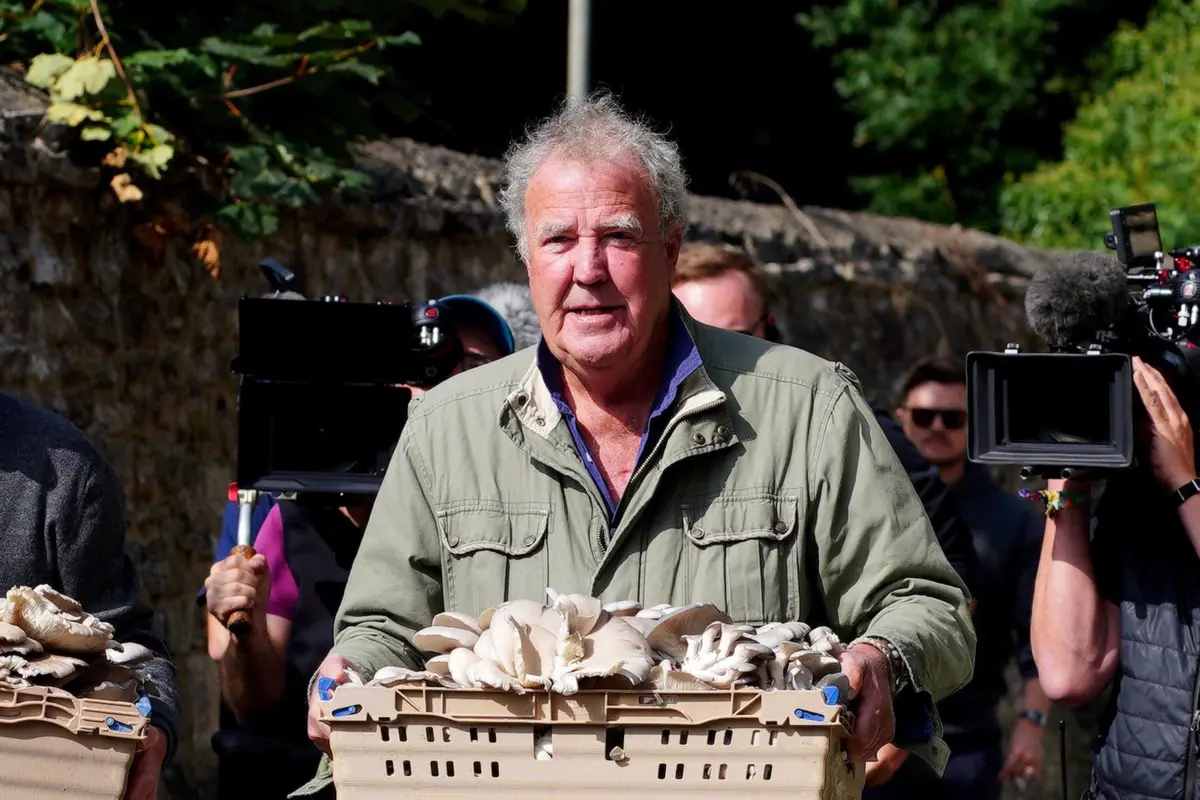
The protracted and highly publicized saga between television broadcaster Jeremy Clarkson and the West Oxfordshire District Council (WODC) has entered a critical new phase, with wider implications extending far beyond the rolling hills of the Cotswolds. At the heart of the latest dispute is a seemingly modest bureaucratic hurdle: securing permission to lay hardcore—crushed stone and aggregate—to prevent the car park of Clarkson’s recently established pub, The Farmers’ Dog, from devolving into an impassable quagmire during the winter months.
However, beneath the surface of this local planning dispute lies a much larger systemic grievance. Clarkson, whose immensely popular Amazon Prime Video series Clarkson’s Farm has turned his agricultural ventures into a global cultural phenomenon, warns that administrative delays, stringent local ordinances, and systemic planning gridlock threaten the operational viability of his diverse commercial enterprises. According to the presenter, the livelihoods of nearly 300 employees hang in the balance, caught in a perpetual loop of bureaucratic uncertainty.
This article explores the anatomy of Clarkson’s ongoing battle with local authorities, the crippling inefficiencies he highlights within the British planning system, the broader economic pressures facing modern British agriculture, and the responses from both local government bodies and the embattled star himself.
Detailed Chronology: A History of Red Tape at Diddly Squat
The friction between Jeremy Clarkson and the West Oxfordshire District Council is far from a recent development. Ever since the star of Top Gear and The Grand Tour purchased the 1,000-acre Chadlington farm—renamed Diddly Squat—in 2008, his attempts to diversify operations have routinely run aground against local planning regulations. These ongoing conflicts have formed a central narrative arc of Clarkson’s Farm, capturing the public’s imagination and thrusting rural planning politics into the national spotlight.
The Early Skirmishes: Farm Shop and Restaurant Rejections
Tensions escalated significantly following the opening of the Diddly Squat Farm Shop, which drew unprecedented crowds of fans, causing local traffic congestion and friction with some residents. Eager to expand the farm’s commercial offerings and provide a market for his locally produced crops and livestock, Clarkson submitted a planning application in 2022 to construct a dedicated restaurant and expand the existing car park facilities.
West Oxfordshire District Council swiftly rejected the proposal, citing concerns over the intensification of rural traffic, the impact on the Cotswolds Area of Outstanding Natural Beauty (AONB), and breaches of local planning policies. The refusal sparked a protracted appeal process and a wave of public debate regarding the rigidity of rural planning laws versus the economic vitality of rural diversification.
The Parking and Pub Hurdles
Parking has remained a persistent battlefield between the farm’s management and the local authority. Last year, Clarkson was informed that he would need to successfully navigate a series of stringent regulatory hurdles to secure permanent, lawful use for expanded parking facilities. The council argued that previous temporary measures did not constitute an "established lawful use," leaving visitors and management in a recurring state of limbo.
Following the acquisition and launch of his latest venture, the countryside pub The Farmers’ Dog, Clarkson sought to preempt similar logistical issues. Anticipating the inevitable autumnal and winter weather, he attempted to secure prompt authorization to lay down hardcore material to stabilize the ground in the pub’s designated parking field.
Instead of a swift approval, however, Clarkson encountered institutional silence. Writing in his weekly column for The Sunday Times, the 66-year-old presenter expressed profound frustration:
"So I’m sitting here today, with the rain falling, and we can’t get permission. We’ve rung. We’ve begged. We’ve pleaded. We’ve explained that if we don’t do the work now we will lose the hardcore and, all winter, our customers will be dragging tons of mud onto the roads. And all what we get back is silence."
Supporting Context & Metrics: The Human and Economic Toll
While the public often views these disputes through the lens of entertainment—largely due to the comedic yet high-stakes framing of Clarkson’s Farm—the underlying economic realities are sober and serious. Clarkson notes that his various business enterprises—spanning agricultural production, retail, hospitality, and merchandising—now provide direct employment to approximately 300 individuals.
The 300-Job Dilemma
The lack of operational predictability has begun to weigh heavily on the workforce. In his recent commentary, Clarkson highlighted the psychological and professional toll that continuous regulatory uncertainty inflicts upon his staff:
"Nearly 300 people are employed by my various enterprises these days. And all of them want to know if their jobs are secure. And all we can ever tell them is: ‘We don’t know.’"
This administrative paralysis, Clarkson argues, is symptomatic of a deeply flawed national infrastructure. He contends that the British planning system is fundamentally broken because it grants far too many disparate agencies, statutory consultees, and local stakeholders the power to obstruct commercial and agricultural initiatives.
Recalling the bureaucratic labyrinth he navigated simply to open a restaurant on his land, Clarkson detailed the extensive list of entities that demanded consultation and review:
The local police force
The Environment Agency
Historic England
Natural England
The local parish council
The regional water company
The highways department
The county council
"We cannot allow the current system to go on," Clarkson asserted. "We cannot allow so many ill-informed people to have the ability to stop projects."
The Wider Crisis in British Agriculture
The regulatory burdens faced by Diddly Squat do not exist in a vacuum. They coincide with a uniquely challenging macroeconomic and climatic environment for British farming at large. Earlier this year, addressing attendees at the Conservative Party Conference in Birmingham, Clarkson delivered a stark assessment of the state of the agricultural sector, declaring that farmers are being "attacked" from all sides by escalating operational expenses and volatile weather patterns.
Reflecting on the preceding farming season, Clarkson described it as an "absolute disaster":
"We worked really hard all year and we ended up with, I think I’m right in saying, three ounces of hen food. It was an absolute disaster on the farming side but, I mean, luckily we’ve got other projects going on now. But the farming is very, very difficult – very, very difficult at the moment."
Rising costs for fertilizer, fuel, and machinery, compounded by unpredictable rainfall and tightening government subsidies, have left many traditional family farms operating on razor-thin margins. For Clarkson, diversified income streams—such as the farm shop, merchandising, and the pub—have served as financial buffers against agricultural losses, making the local council’s regulatory resistance all the more impactful on his overall business model.
Official Statements and Institutional Responses
In light of the public criticism and media inquiries surrounding the delayed planning permission for the pub’s car park, West Oxfordshire District Council issued a formal response defending its administrative processes.
A representative for West Oxfordshire District Council told The Independent:
"The planning application is currently under consideration and remains within the statutory determination timeframe. We have been in contact with the applicant’s representatives and continue to keep them updated. As this is an ongoing planning application, it would not be appropriate to comment further."
Local authorities frequently maintain that planning policies must be applied uniformly and impartially, regardless of the celebrity status or media profile of the applicant. Councils are bound by statutory frameworks designed to balance rural economic development with environmental preservation, traffic management, and the protection of residential amenity.
Critics of Clarkson’s approach argue that his high-profile public commentary amounts to an attempt to pressure local planning officers and circumvent standard democratic procedures. Conversely, his supporters maintain that the council’s rigid adherence to bureaucracy stifles vital rural enterprise at a time when regional economies desperately need investment and job creation.
Future Outlook: The Road Ahead for Diddly Squat
Despite the ongoing bureaucratic friction, the Diddly Squat brand shows no sign of slowing its commercial momentum, nor is the media machine surrounding it abating.
In September, confirmation arrived that Clarkson’s Farm has been renewed for a sixth series, with production reportedly nearing completion on the subsequent chapters of the documentary series. The enduring popularity of the show ensures that every twist and turn of Clarkson’s administrative battles will continue to be broadcast to millions of viewers worldwide, keeping issues of rural planning, farming subsidies, and council oversight at the forefront of the national conversation.
As the winter months set in across the Cotswolds, the immediate practical issue of the pub’s car park remains unresolved. Whether West Oxfordshire District Council will approve the hardcore application before the mud renders the field unusable—and whether the broader systemic complaints raised by Clarkson will prompt any meaningful review of the UK’s planning framework—remains to be seen.
For now, Jeremy Clarkson and his team find themselves locked in a familiar routine: waiting on administrative decisions, managing the delicate balance between public popularity and local governance, and hoping that their workforce of 300 can secure the stability they so urgently seek.