Executive Overview
The intersection of popular music and global geopolitics has reached a volatile flashpoint. For decades, artists navigated a relatively compartmentalized landscape where entertainment offered a sanctuary from international discord. However, the contemporary music industry—pressured by hyper-polarized digital ecosystems, corporate-controlled infrastructure, and deep-seated ideological fractures—can no longer keep the outside world at bay.
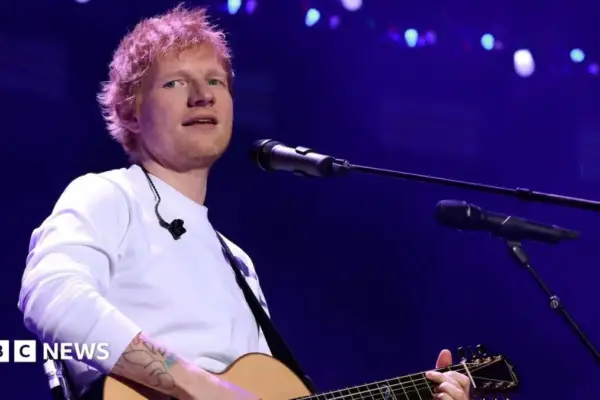
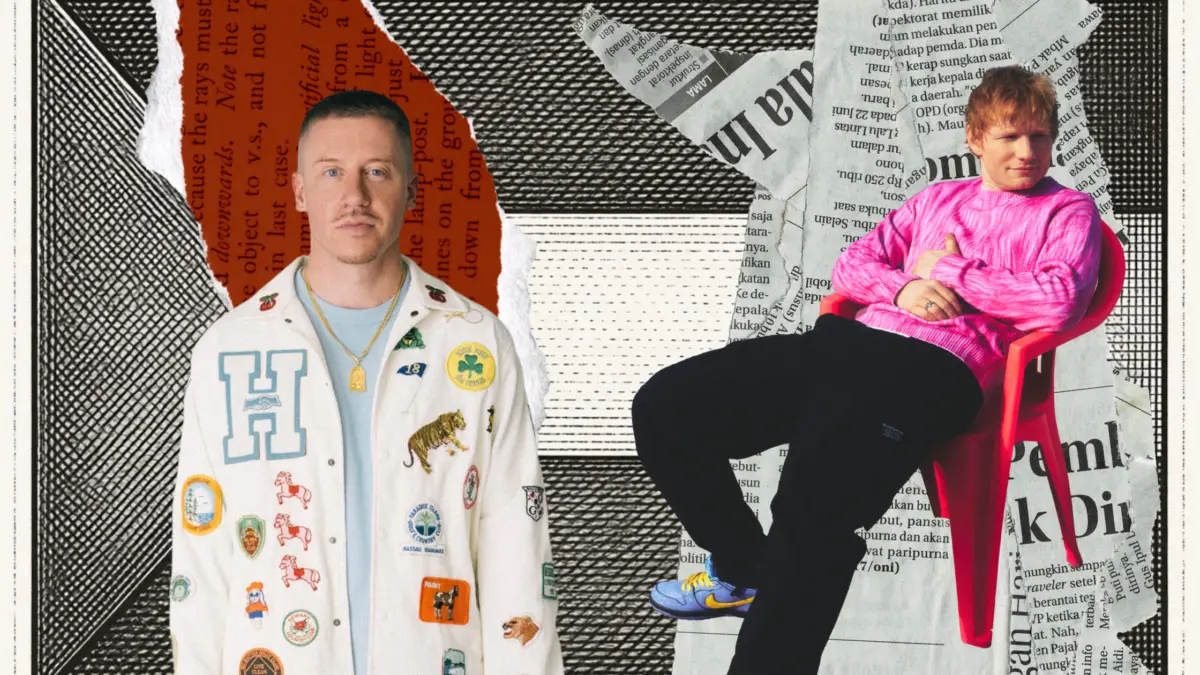
This tension crystallized on a massive scale during Ed Sheeran’s ongoing U.S. "Loop" tour. Following a high-profile censorship controversy involving rapper Macklemore, Sheeran’s tour became ground zero for a fierce debate regarding free speech, corporate stadium ownership, and the moral responsibilities of global headliners. The fallout extended far beyond a single tour stop at Philadelphia’s Lincoln Financial Field. Across the broader music landscape, artists like Zara Larsson and the indie-electronic duo Sylvan Esso have found themselves ensnared in high-stakes ethical dilemmas, forced to weigh their artistic principles against stark economic realities, canceled contracts, and fracturing personal relationships.
As the industry looks toward the latter half of the decade, the question is no longer whether music and politics can remain separate. Rather, it is how artists, promoters, and fans will survive an era where taking a stand—or refusing to take one—carries an increasingly devastating professional and personal cost.
Detailed Chronology: The Anatomy of a Tour in Crisis
The crisis enveloping Ed Sheeran’s U.S. "Loop" tour did not materialize overnight, but its escalation during a single week in 2026 exposed the fragile ecosystem holding modern arena-scale tours together.
The Macklemore Boycott and the Philadelphia Show
The trouble began when venue owners—spearheaded by billionaire sports mogul and Gillette Stadium owner Robert Kraft—objected to Macklemore’s vocal on-stage support for Palestine during earlier concert stops. Yielding to intense pressure from venue operators and ideological lobbies, tour organizers made the decision to axe Macklemore from the lineup.
The reaction from the support acts was swift and uncompromising. In an unprecedented show of solidarity, every single support artist scheduled for the tour pulled out, followed closely by members of Sheeran’s own backing band, Beoga. The walkout forced organizers to scramble, delaying the start of the Lincoln Financial Field stadium show in Philadelphia while Sheeran fought to salvage the performance.
Rather than canceling the date, Sheeran cobbled together a replacement band on three days’ notice—including violinist Alicia Enstrom—and took to the stage to deliver a carefully scripted, highly anticipated address to the tens of thousands of fans in attendance.
Sheeran’s On-Stage Defense and Balancing Act
Stepping up to the microphone in Philadelphia, Sheeran acknowledged the turbulence of the previous seven days. "I’ve had to take and make difficult decisions in the last week," he told the crowd, admitting frankly, "I am making mistakes."
Reflecting on the nature of the backlash, Sheeran noted that while he was accustomed to criticism regarding his music, "this week the criticism was about something much more important." Stressing that he had "never wanted to be an activist musician," he conceded that recent events had thrust him squarely into "the middle of an important and passionate argument about freedom of speech and the most complex political issue on the planet."
On the subject of free speech, Sheeran voiced deep unease regarding the censorship of performers. "I am deeply worried about the idea of venues pre-approving content of performers," he stated, emphasizing that while such practices occurred globally, they "should never happen in the free world." Notably, however, Sheeran stopped short of directly criticizing Robert Kraft or the network of stadium owners responsible for ousting Macklemore.
Turning to the geopolitical core of the controversy, Sheeran attempted a meticulously balanced statement regarding the conflict in Israel and Palestine. Acknowledging the pain of both sides, he stated:
"What happened in Israel and at the Nova music festival on October 7 was horrific and compounded centuries of Jewish pain… But on the other hand, what is happening in Gaza is catastrophic and unjustifiable and disproportionate. My heart has been broken by the scale of devastation and loss of civilians’ lives, of children’s lives, and the systemic injustice we’re seeing unfold in the West Bank cannot be overlooked."
Sheeran concluded this portion of his address by noting that he was actively listening and engaging with individuals across the political spectrum to figure out how to make a constructive contribution.
Later in the evening, speaking more informally, Sheeran revealed the profound personal toll the week had taken. He recounted how "so many people" had advised him to cancel the tour entirely, while long-term friends and colleagues had quietly distanced themselves. Addressing his replacement musicians, Sheeran noted that they had agreed to share the stage "with the knowledge that the world may hate them too for standing on stage with me."
Supporting Context & Metrics: The Ripple Effects Across the Industry
While Sheeran bore the brunt of the immediate media storm, the geopolitical pressures confronting artists are systemic, manifesting across different genres, territories, and digital platforms.
Aaron Rowe’s Counter-Critique
As the debate raged online, departing support act Aaron Rowe published a scathing social media statement redirecting the public’s fury away from Sheeran and toward the corporate gatekeepers of live entertainment.
"I think you are all focusing on the wrong person here," Rowe wrote. "All I keep hearing is Ed Sheeran this, Ed Sheeran that. When you really should be focusing on the likes of Robert Kraft." Rowe urged fans and activists to target Zionist lobbies and stadium magnates who attempt to stifle pro-Palestinian speech. "That’s what you should be using your energy on, not fucking Ed Sheeran, for fuck’s sake."
Zara Larsson and the Abu Dhabi Grand Prix
The entanglement of music and state-level politics was further highlighted when Swedish pop star Zara Larsson officially withdrew from her scheduled performance at the Abu Dhabi Grand Prix. The cancellation followed intense fan scrutiny regarding the United Arab Emirates’ alleged backing of the Rapid Support Force—a paramilitary group implicated in mass atrocities and urban sieges during the ongoing Sudanese civil war.
The pressure on Larsson intensified due to the parallel Sheeran tour controversy, which reminded cultural observers of Macklemore’s prior cancellation of a 2024 Dubai concert over similar geopolitical concerns. Though Larsson initially responded bluntly to a fan inquiry on social media with "I will not be going to Abu Dhabi," her subsequent formal statement revealed a more nuanced internal struggle. She emphasized her desire to spread joy through music across all nations, noting that "no single person is their government." Ultimately, however, she concluded that withdrawing from the event "aligns with me the most right now, for many different personal reasons beyond politics."
Sylvan Esso’s Reluctant Return to Spotify
Geopolitical and corporate friction is not confined to the live touring sector; it dictates the terms of digital distribution. Amelia Meath, co-founder of indie-electronic duo Sylvan Esso, announced that the group was reluctantly restoring its catalog to Spotify after a year-long boycott.
The band had originally pulled their music in protest against investments made by Spotify co-founder and Executive Chairman Daniel Ek into Helsing, a European artificial intelligence and defense technology company specializing in military applications.
Reflecting on the economic realities of the modern music business, Meath admitted that while maintaining the boycott "felt really, really good," it proved economically unsustainable. Because Spotify commands roughly 82% of the global streaming market, continuous exclusion jeopardized the livelihoods of the band’s crew and extended team. "It has become more and more apparent that if we are going to continue to employ everyone that we employ, it is unsustainable for us to not be on that platform," Meath explained.
Expressing deep frustration, she urged fans to seek out alternative platforms while acknowledging the harsh financial imperatives of the digital age: "I don’t like it, and I’m really frustrated by this reality. But the financial reality is the reality right now."
Official Statements & Industry Reactions
The cascading events of the past week have triggered a profound soul-searching exercise within the global music community. Promoters, artist managers, and labor advocates are increasingly alarmed by the precedent set by venue owners exercising veto power over an artist’s on-stage political expression.
Legal and industry analysts point out that corporate-owned sports stadiums—which double as multi-purpose entertainment complexes—operate in a legal gray area when it comes to the First Amendment. Because these venues are privately owned or operated under complex municipal-corporate leases, owners like Robert Kraft retain broad discretion over who is permitted to perform. This corporate gatekeeping effectively empowers billionaires to act as arbiters of global discourse, dictating which geopolitical viewpoints are acceptable within mainstream arenas.
Conversely, artist advocacy groups have expressed mounting anxiety over the weaponization of social media mobs against performers who attempt to maintain a neutral stance, as well as those who speak out. The prevailing sentiment within artist management circles is one of deep vulnerability. As Sheeran’s experience demonstrated, even pop megastars operating at the absolute pinnacle of commercial success are susceptible to sudden logistical collapse if venue operators and touring personnel lock horns over international conflicts.
Future Outlook: The New Reality of Politicized Performance
The events surrounding Ed Sheeran, Zara Larsson, and Sylvan Esso signal a permanent shift in the operational landscape of the entertainment industry. The illusion of the "apolitical pop star" has been thoroughly shattered.
As the industry moves forward, several long-term structural changes are anticipated:
- Stricter Rider and Venue Contract Clauses: Legal teams representing major touring acts are expected to draft increasingly rigorous force majeure and cancellation clauses to protect artists from sudden cancellations triggered by venue owners objecting to sociopolitical commentary.
- Decentralized Touring Infrastructure: Independent and mid-tier artists may increasingly pivot toward independent venues, outdoor spaces, and alternative promoters less beholden to billionaire sports franchise owners and corporate conglomerates.
- Heightened Scrutiny of International Bookings: Performances in politically sensitive regions—such as the Gulf states or nations involved in active proxy conflicts—will face intense pre-announcement vetting by artist fan bases, forcing management teams to conduct thorough human rights and geopolitical risk assessments before signing contracts.
- The Ongoing Streaming Dilemma: The compromises made by acts like Sylvan Esso highlight the desperate need for structural reform in digital music economics, proving that independent artists cannot easily afford moral stands against platform monetization without systemic alternative funding models.
Ultimately, the 2026 tour season will be remembered as the moment the music industry was forced to grow up. The firewall between art and international politics has collapsed, leaving artists, promoters, and fans to navigate a complex, high-stakes landscape where every chord struck and every ticket sold carries undeniable global weight.