Executive Overview
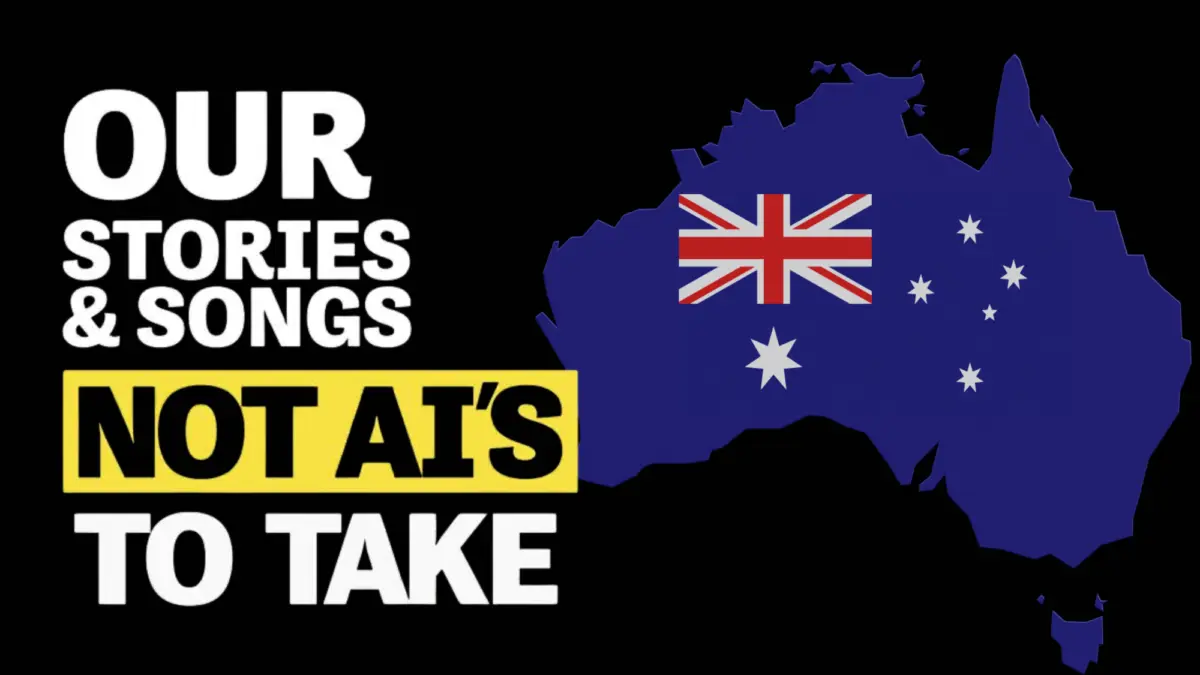
Australia’s creative, publishing, and media sectors have formed an unprecedented, unified front to push back against anticipated legislative changes that could severely undermine intellectual property rights. Ahead of the high-profile ARIA Awards ceremony, a broad-scale coalition has launched the “Not AI’s To Take” campaign, aiming to pressure the federal government into resisting heavy-handed lobbying from big tech corporations.
At the center of this brewing political and cultural storm is a contentious policy pivot. While Australian officials previously insisted they would protect local artists from uncompensated content scraping, recent reports indicate that Canberra may be quietly considering copyright reforms. These potential changes would effectively permit artificial intelligence firms to train their models on Australian copyrighted material without explicit, prior permission—provided creators actively "opt-out" or rely on mandatory collective licensing schemes.
The campaign highlights a massive economic engine. According to the initiative’s core manifesto, Australia’s creative and media industries contribute a staggering $70.3 billion to the national economy and sustain nearly 600,000 jobs. For local musicians, authors, journalists, filmmakers, and visual artists, the prospect of foreign tech conglomerates free-riding on generations of cultural output is not merely a legal disagreement—it is an existential threat to their livelihoods.
Detailed Chronology: The Escalating Fight Over AI and Copyright
To understand how Australia arrived at this legislative crossroads, it is necessary to examine the rapid evolution of the global and domestic debate surrounding generative artificial intelligence and copyright law.
The Global Spark: Fair Use vs. Unauthorized Scraping
For years, technology companies have argued that the very nature of machine learning requires ingesting vast, unchecked repositories of human creativity. Whether through text, images, video, audio, or musical compositions, AI developers have scraped the internet to feed large language models (LLMs) and generative media tools.
- The United States: Tech firms have leaned heavily on the legal doctrine of "fair use," asserting that processing copyrighted material to train transformative AI systems does not require licensing or compensation. This defense has triggered dozens of massive class-action lawsuits from authors, musicians, and news publishers.
- International Jurisdictions: In other regions, tech lobbyists have pushed for specific copyright exemptions—most notably Text and Data Mining (TDM) exceptions—which would legally carve out AI training from traditional copyright protections.
The UK Blueprint and Backtrack
The playbook currently being whispered
about in Canberra bears an uncomfortable resemblance to maneuvers witnessed in the United Kingdom. In late 2024, the UK government proposed a controversial TDM copyright exception that would have permitted AI training on copyrighted works unless creators explicitly opted out.
The backlash from the British creative community was swift and fierce. Facing coordinated resistance from musicians, actors, writers, and publishers, the UK government ultimately scrapped the proposal earlier this year, recognizing that undermining copyright law would irreparably damage the nation’s cultural export economy.
Australia’s Mixed Messages
Australia’s trajectory on this issue has been characterized by stark contradictions, oscillating between hardline defense of creators and quieter, behind-the-scenes capitulations to tech lobbying.
- October 2024: Federal Attorney-General Michelle Rowland offered an unambiguous pledge to the Australian Broadcasting Corporation (ABC), stating that while copyright law required review in the digital age, “we are making it very clear that we will not be entertaining a text and data mining exception.”
- July 2025: Prime Minister Anthony Albanese delivered a rallying cry for local artists, declaring that "no company should use Australian books, music, art or news to build or train AI without the artist’s control. That includes the artist’s control of the price and value of their work. Anything less, is theft.”
- Late 2025: Despite these unequivocal statements, recent intelligence suggests that heavy lobbying from the tech sector has swayed internal government discussions. While officials may avoid using the toxic label of a "TDM exception," they are reportedly weighing systems that mandate "opt-out" mechanisms or institute compulsory collective licensing. Under these alternatives, AI companies could freely harvest works unless creators jump through administrative hoops to protect them—a policy shift that industry leaders argue achieves the exact same harmful outcome by another name.
Supporting Context & Metrics: The Economic Weight of Australian Creativity
The "Not AI’s To Take" campaign grounds its moral arguments in unassailable economic reality. Far from being a fringe group asking for special treatment, the creative industries form a foundational pillar of Australia’s modern economy.
Key Economic Indicators
- Economic Contribution: The creative and media sectors inject $70.3 billion annually into the Australian economy.
- Employment: The ecosystem supports nearly 600,000 workers, spanning everything from rural folk musicians and independent book publishers to major metropolitan newsrooms and high-tech screen production crews.
- Global Powerhouses: Major international players in artificial intelligence routinely reach multi-trillion-dollar valuations. By contrast, the average Australian creator operates on razor-thin margins, relying entirely on the enforceable value of their intellectual property to sustain their craft.
The Licensing Feasibility Debate
Big tech firms argue that negotiating individual licenses for billions of data points is an insurmountable administrative hurdle that will stifle innovation and drive AI investment away from Australian shores.
The creative industries roundly reject this narrative. Representatives point out that robust, sophisticated licensing frameworks already exist globally and domestically. If tech giants can spend tens of billions of dollars constructing data centers and acquiring computing hardware, they possess more than enough capital to negotiate fair market value for the raw ingredients that make their platforms valuable in the first place.
Official Statements and Industry Coalition
The launch of the "Not AI’s To Take" campaign has unified a historically fragmented sector. A vast alliance of music organizations, collecting societies, and professional guilds has mobilized to present a united front.
APRA and the Call for Commercial Realism
Dean Ormston, CEO of music collecting society APRA, cut straight to the heart of the matter in a scathing critique of big tech’s entitlement:
"A mutually beneficial relationship between big tech and the world’s creative industries should be a no-brainer. But that’s not being achieved because big tech assumed it could avoid asking permission or paying for the most important ingredient in its platforms: creative content."
Ormston emphasized that government intervention should not be used as a shield to protect tech conglomerates from basic commercial realities:
"The job of the government isn’t to shield AI companies from the consequences of taking creators’ work. Instead, it should seek to get AI companies to the negotiating table to secure the relevant licences. If a deal falls over because the terms don’t stack up or creators won’t opt in, that’s a commercial consequence, not a reason to rewrite the law."
A Broad Front: Supporting Organizations
The campaign draws its strength from a comprehensive coalition of Australian arts and media institutions. Participating bodies span the entire spectrum of intellectual property production:
- APRA AMCOS & PPCA (Music collecting and licensing societies)
- ARIA (Australian Recording Industry Association)
- Artists Alliance Of Australia
- Association Of Artist Managers (AAM)
- Australasian Music Publishers’ Association (AMPA)
- Australian Guild Of Screen Composers (AGSC)
- Music Producer & Engineers’ Guild (MPEG)
- Australian Independent Record Labels Association (AIR)
These organizations are joined by parallel advocacy networks representing book publishers, screenwriters, visual artists, and journalists, all determined to replicate the successful containment strategies deployed in the United Kingdom.
Future Outlook: What Lies Ahead for Australian Copyright Law?
As the entertainment world descends on the ARIA Awards, the timing of the "Not AI’s To Take" campaign could not be more strategic. It forces politicians, industry elites, and the public to confront an uncomfortable truth: the gleaming promises of artificial intelligence are currently being built on the uncompensated expropriation of human talent.
The Legislative Battleground
Over the coming months, the federal government will face a stark choice. Will Prime Minister Anthony Albanese and Attorney-General Michelle Rowland stand by their previous commitments—categorically rejecting any legislative mechanism that strips creators of upfront control over their work? Or will they yield to the relentless economic pressure and lobbying power of Silicon Valley, implementing opt-out schemes and compulsory licenses that effectively legalize data theft under a bureaucratic veneer?
Global Implications
Australia’s decision will not happen in a vacuum. As jurisdictions around the world grapple with the copyright fallout of the generative AI boom, the outcome of this legislative tug-of-war will set a vital precedent for the global South and middle-income cultural economies.
For Australian creators, the message remains clear and uncompromising: their art, their music, and their words are not raw data to be harvested by foreign algorithms. They are the cultural heartbeat of the nation, and they are not AI’s to take.