Executive Overview
For over six decades, the cinematic incarnation of James Bond has served as a cultural barometer, meticulously reflecting the shifting political anxieties, economic climates, and evolving social mores of the Western world. From Sean Connery’s swaggering, post-Second World War confidence to Daniel Craig’s brooding, trauma-laden introspection, 007 has continually morphed to fit the zeitgeist of his era.
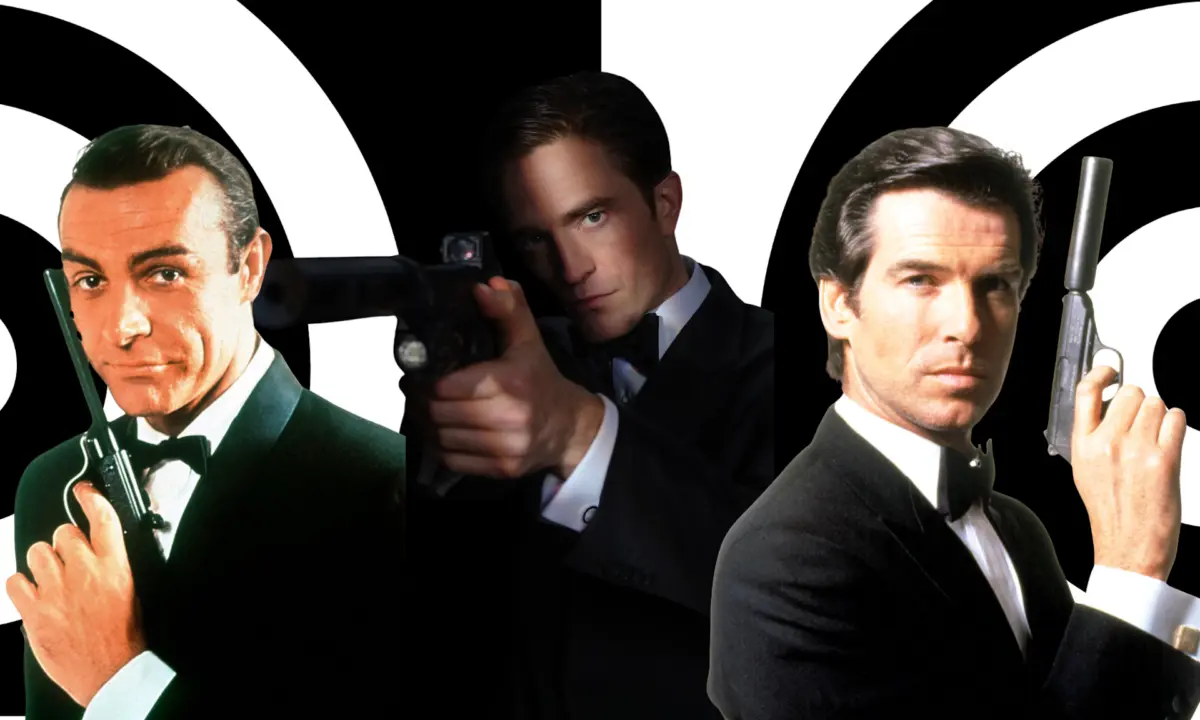
Now, as the legendary spy franchise stands on the precipice of its next major iteration, industry speculation and critical analysis point toward a fascinating potential successor: Robert Pattinson.
Pattinson—an actor whose career has defied traditional Hollywood leading-man trajectories in favor of daring, psychologically complex, and frequently eccentric choices—represents a radical yet logical evolution for the character. Paired with the narrative ambitions of screenwriter Steven Knight (Peaky Blinders), a Pattinson-led Bond could bridge the gap between traditional action spectacle and contemporary discourse surrounding toxic masculinity, male vulnerability, and systemic power dynamics. However, stepping into the Tuxedo comes with distinct hurdles, ranging from age demographics to the daunting legacy of Craig’s gritty 15-year tenure. This report explores the cultural lineage of James Bond, the unique actor-profile Pattinson brings to the table, and how a new era of 007 might navigate the cultural minefield of the 21st century.
Detailed Chronology: The Evolution of Cinematic Masculinity Through 007
To understand where the James Bond franchise could go next, it is essential to trace how previous actors shaped the character to mirror their respective decades.
The Cold War Pioneers (1962–1989)
- Sean Connery (1962–1967, 1971): Connery’s definitive portrayal embodied the confident Western post-Second World War masculinity of the early Cold War. He was ruthless, unflappable, and unapologetically dominant, projecting imperial confidence at a time when Britain was grappling with its declining global superpower status.
- George Lazenby (1969): In his sole outing in On Her Majesty’s Secret Service, Lazenby brought an unexpected emotional vulnerability to light. Reflecting the countercultural upheavals of the late 1960s, his Bond experienced heartbreak, grief, and genuine romantic devotion, temporarily shattering the invulnerable playboy myth.
- Roger Moore (1973–1985): Moore shifted the franchise toward camp humor, theatricality, and escapism. Navigating the economic and political disillusionment of the 1970s, his Bond relied on raised eyebrows, pun-heavy dialogue, and fantastical gadgets, turning 007 into a globetrotting pop-culture fantasy.
- Timothy Dalton (1987–1989): In keeping with Ian Fleming’s psychologically complex literary creation, Dalton brought a darker, more ruthless Bond to the screen. Stripping away the Moore era’s comedy, his portrayal foregrounded moral ambiguity and emotional intensity, reflecting late-Cold-War anxieties as geopolitical certainties began to unravel.
The Modern Transitions (1995–2021)
- Pierce Brosnan (1995–2002): Brosnan incarnated a glamorous, high-tech post-Cold War masculinity. His lingering sexism was sharply teased out by Samantha Bond’s witty Moneypenny and the groundbreaking casting of Judi Dench as M, the iron-willed female head of MI6 who openly labeled Bond a "sexist, misogynist dinosaur."
- Daniel Craig (2006–2021): Craig’s 007 redefined the character for the post-9/11 landscape. Physically formidable yet profoundly damaged, his wounded body and scarred mind linked emotional detachment directly to childhood trauma, culminating in an unprecedented narrative arc that ended with the character’s definitive death in No Time to Die.
Supporting Context & Metrics: The Pattinson Paradox
Enter Robert Pattinson. With a filmography spanning blockbuster franchises and avant-garde auteur cinema, Pattinson represents one of the most established and versatile actors ever considered for the role.
+-------------------------------------------------------------------------+
                    PATTINSON’S CINEMATIC TRAJECTORY
+-----------------------------+-------------------------------------------+
| Era / Genre                 | Key Projects                              |
+-----------------------------+-------------------------------------------+
| Commercial Stardom          | Twilight Saga (2008–2012), Tenet (2020)   |
| Indie Auteur Thrillers      | Good Time (2017), The Lighthouse (2018)   |
| Blockbuster Reinvention     | The Batman (2022)                         |
| Satire & Period Pieces      | Damsel (2018), The King (2019)            |
+-----------------------------+-------------------------------------------+
Versatility Meets Visual Heritage
Pattinson’s post-Twilight career has been a masterclass in subverting expectations. From the sweat-soaked, desperate psychological intensity of Josh and Benny Safdie’s Good Time (2017) to Robert Eggers’ claustrophobic, gothic nightmare The Lighthouse (2018), he consistently selects characters who are anything but straightforward leading men. Even when stepping back into major studio tentpoles—such as Matt Reeves’ brooding, introspective The Batman (2022)—he favors shadows and inner turmoil over charismatic bravado.
Visually, Pattinson is nearly a composite of previous 007 actors. Crowned scientifically as "the world’s most handsome man" in 2020, he possesses the chiselled, classic facial symmetry of Pierce Brosnan. While initially lacking Sean Connery’s natural, heavy-set brawler physique, the brutal physical training regimen he underwent for Batman proves he possesses the discipline required for the demanding physical choreography of an action franchise.
The Age and Demographic Factor
However, casting Pattinson comes with logistical hurdles. At 40 years old, he is approximately ten years older than former producer Barbara Broccoli anticipated the next Bond actor would be when she discussed the franchise’s future direction in 2024. Furthermore, as a white Englishman whose public image is closely tied to upper-middle-class, heteronormative cultural signifiers, he might superficially appear to be a safe, traditional choice.
Yet, looking past the surface reveals an actor uniquely equipped to interrogate and dismantle those exact tropes.
Official Statements & Creative Direction: Subverting the Blueprint
Ian Fleming famously conceived of his secret agent as an "unobtrusive… neutral figure—an anonymous blunt instrument." Translating that blank slate into the 2020s requires a delicate narrative balancing act. Screenwriter Steven Knight now faces the monumental challenge of using Bond to highlight the widening chasm between the character’s archaic roots and modern cultural sensitivities.
Exploring Queer Desire and Fragile Masculinity
Like Daniel Craig before him, Pattinson has shown a fearless willingness to explore the instabilities of masculine identity and queer desire on screen. In Little Ashes (2008), he portrayed a young Salvador Dalí, exploring the artist’s intimate, complex relationship with poet Federico García Lorca.
Furthermore, Pattinson brings a secret weapon to the table that Craig’s era occasionally lacked: sharp, self-aware comedy.
Beneath his brooding screen presence lies a nuanced comic performer with a history of puncturing male vanity:
- In Damsel (2018): He played an inept, deluded cowboy whose masculine confidence catastrophically outstripped his capabilities.
- In The King (2019): He delivered a darkly camp, peacocking rendition of Louis the Dauphin.
- In short films like Fear & Shame (2017): He actively satirized his own global heartthrob status.
By injecting this brand of dark, self-deprecating humor into the franchise, a Pattinson-led Bond could playfully interrogate contemporary cultural preoccupations with toxic masculinity, shifting standards of sexual consent, and male vulnerability without alienating traditional action fans.
Future Outlook: Will the Franchise Sink or Swim?
As the James Bond franchise maps out its post-Craig future, the success of the next era will not rest solely on the shoulders of its leading man. To remain culturally relevant, the surrounding ecosystem of the films must undergo a parallel evolution.
The Supporting Cast Imperative
Future installments would benefit immeasurably from a more diverse supporting cast whose backgrounds are woven naturally into the narrative fabric rather than introduced as superficial check-box exercises. Key areas for structural growth include:
- Female Characters: Moving entirely away from traditional "Bond girls" defined solely by their romantic or sexual relationship with 007, favoring complex allies and rivals with their own distinct agency.
- Antagonists: Introducing villains who actively challenge Bond’s institutional elitism, imperialist baggage, and license to kill.
- World-Building: Expanding the queer and minority representation within MI6 and the geopolitical underworld to complicate Bond’s historically monochromatic and heteronormative reality.
Ultimately, while the villains and supporting players will dictate the texture of the upcoming films, the ultimate responsibility falls upon Robert Pattinson—assuming he takes up the mantle—and his creative collaborators. By weaponizing his penchant for strange, vulnerable, and darkly humorous characters, the franchise has a rare opportunity to transform James Bond from a relic of the Cold War into a profound, self-aware mirror for the modern age. Whether the studio embraces this bold subversion or retreats to safe, nostalgic formulas will determine whether 007 sinks or swims in the decades to come.