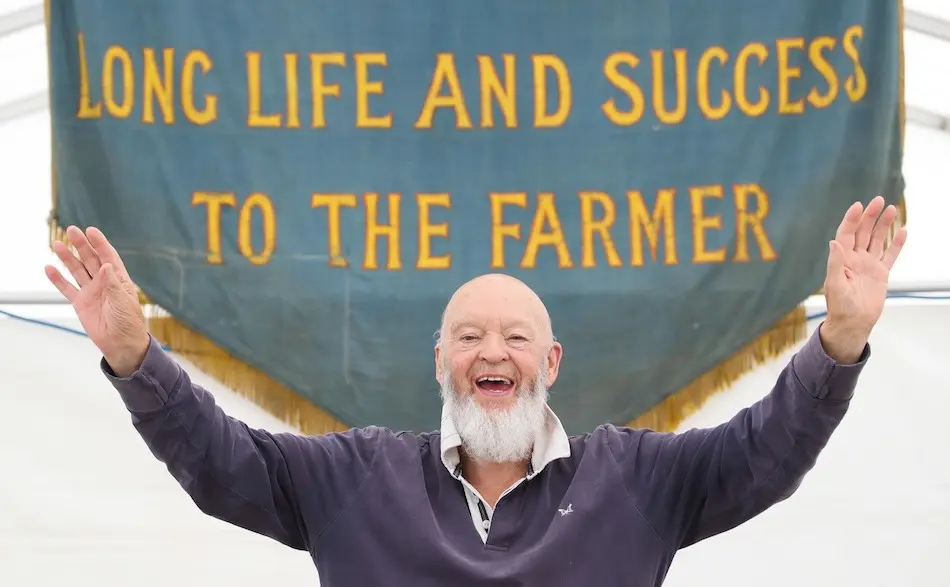
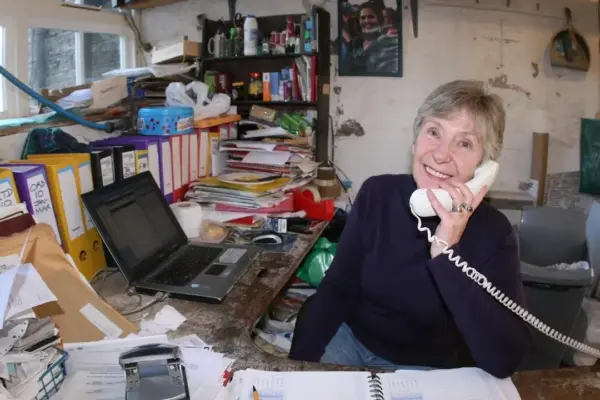
To mark the momentous 90th birthday of Sir Michael Eavis—the visionary founder of the world-renowned Glastonbury Festival—we sat down with him at his home in Pilton, Somerset. Spanning over half a century of counter-cultural history, agricultural grit, and unmatched artistic triumph, Eavis reflects on a lifetime that defies conventional categorization.
From locking horns with local magistrates and local authorities in the festival’
s precarious early decades to witnessing Worthy Farm cheddar stocked on supermarket shelves nationwide, Eavis remains a towering figure of resilience and radical optimism. As the festival navigates its scheduled fallow year, this comprehensive retrospective examines how a Somerset dairy farmer transformed a modest, 1970 Worthy Farm gathering into a global cultural phenomenon, leaving behind a legacy anchored not just in music, but in radical philanthropy, social housing, and community activism.
Detailed Chronology: From 1970 to a Global Phenomenon
The Humble Beginnings (1970)
The Glastonbury story began in September 1970, when a 35-year-old Michael Eavis paid £1 to see Led Zeppelin at the Bath Festival of Blues and Progressive Music. Inspired, he decided to host his own event at Worthy Farm. Originally billed as the Pilton Pop, Folk & Blues Festival, admission was £1 and included free milk from the farm. Roughly 1,500 people attended to watch artists like T. Rex. It was an audacious start, born from a blend of artistic passion and agricultural pragmatism.
The Wilderness and Resistance Years (1970s–1980s)
The road to permanence was fraught with institutional hostility. Eavis recalls his early days not with nostalgia for smooth operations, but with clear-eyed acknowledgement of the fierce battles fought against the establishment.
"In those days, I was always at war with the council and the village and the local magistrates and the police," Eavis reflects.
Threats to the festival’s existence were a constant shadow. Famously, the chairman of the magistrates once issued a chilling ultimatum: "If you do this again, you’ve had it." Yet, Eavis credits this friction as the fuel that drove the festival forward. The adversarial climate forced the organizers to tighten operations, forge community bonds, and ultimately build an impenetrable institutional resilience.
Maturation and Cultural Ascendancy (1990s–2010s)
As decades passed, the festival evolved from a bohemian gathering of hippies and alternative travelers into the beating heart of the global music calendar. Headline acts transformed from regional favorites to legendary global superstars. Despite scaling up to capacities exceeding 200,000 attendees, Eavis maintained a razor-sharp focus on the ethos of the event. Through political activism, environmental campaigns, and substantial charitable donations to organizations like Greenpeace, Oxfam, and WaterAid, Glastonbury cemented its identity as more than just a music party—it became a temporary utopian society with a conscience.
The Modern Era and the Fallow Year (2025)
Entering its late-stage evolution, Glastonbury continues to break boundaries. Reflecting on the most recent festival cycle, Eavis points to a Saturday night performance by Neil Young as a personal highlight, praising the artist’s deep affinity for Worthy Farm.
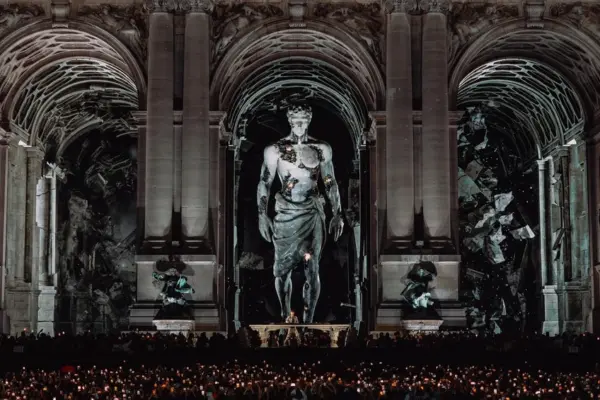
Although 2025 marks a scheduled "fallow year"—a necessary pause designed to allow the land to recover, the grass to regenerate, and the local wildlife and soil to breathe—Eavis is far from resting. Recent weeks have seen him collaborating with creative masterminds like Joe Rush and the immersive performance art collective Arcadia, proving that his appetite for artistic innovation remains entirely unquenched.
Supporting Context & Metrics: The Dual Legacies of Farming and Philanthropy
While the world knows Michael Eavis as the undisputed king of festival promoters, his roots remain deeply embedded in the rich soil of Somerset agriculture.
The Worthy Farm Agricultural Engine
The dairy operation at Worthy Farm continues to thrive alongside the festival infrastructure. Eavis’s herd produces substantial quantities of milk daily, much of which is supplied directly to Wyke Farms to produce the celebrated Worthy Farm Reserve Cheddar. What began as a local agricultural venture is now a nationally recognized retail product. Eavis fondly recalls a moment of surreal validation while visiting Scotland:
"A couple of years ago, we went to Scotland on the train. When we got off in Glasgow, there was a Co-op shop just over the road. So I decided to pop across just to see if they had the cheese… It was all over the shelves! Isn’t that wonderful?"
Social Impact and Pilton Housing Initiative
Beyond the gates of Worthy Farm and the glow of the Pyramid Stage, Eavis’s most enduring local legacy may well be his commitment to affordable housing. Recognizing the housing crisis facing rural communities, Eavis spearheaded the construction of 52 social houses in Pilton, explicitly designed to ensure local families are not priced out of their ancestral home village.
The initiative gained national acclaim when former professional footballer and broadcaster Gary Lineker visited Pilton to officially open the homes, subsequently producing a widely shared documentary feature highlighting the project’s profound social value. For Eavis, this accomplishment bridges the personal and the communal:
"I think my mother would be proud of me for the houses too. They look lovely on a sunny day. I drive that way out of the village, you know, and I see the sun shining out on them and think, ‘How did all this happen?’"
Official Statements and Reflections
On Leadership, Methodism, and the Political Soul of Glastonbury
When asked about the enduring political and spiritual conscience of the festival, Eavis acknowledges the foundational role of his upbringing and personal beliefs. Raised in a devout Methodist household, his moral compass has persistently guided the festival’s ethos.
"There will always be a political angle there. And I think people expect that… [My Methodism] is key to that, I’m sure it is."
This moral clarity has transformed Glastonbury into a megaphone for global issues, from nuclear disarmament and climate change to human rights and economic inequality. It is this unwavering commitment to social justice that prevents the festival from sliding into pure commercialism.
On Scale, Demand, and the "Always the Best" Philosophy
When queried about whether the festival could theoretically expand infinitely—speculating that a million tickets could go on sale and still sell out instantly—Eavis acknowledges the staggering demand: "They probably would!"
Yet, rather than leaning into corporate expansionism, Eavis maintains a philosophy rooted in the immediacy of the present. Asked to name his favorite festival out of the dozens held since 1970, his answer is immediate and egalitarian:
"I always think that the most recent one is the best one. I really do."
Future Outlook: Celebrating 90 Years "My Way"
As Sir Michael Eavis marks his 90th milestone, celebrations are set to remain intimate and deeply rooted in the community he loves. Eschewing grand national galas, his birthday will be celebrated with a village party attended by close family, lifelong friends, and local residents in Pilton.
True to his legendary status as a showman, the agricultural icon has planned a musical finale: taking to the stage to perform a three-song set with his band. While the exact setlist remains a closely guarded secret, speculation is rife. When gently prodded about whether Frank Sinatra’s defiant anthem “My Way” will feature, Eavis smiles, acknowledging it as a fair guess.
Few individuals in modern British cultural history could claim to have lived life so entirely on their own terms. From fighting local magistrates over acoustic bleed and field licenses to standing proudly among fields that host the globe’s finest artists—while simultaneously producing award-winning cheddar and building homes for his neighbors—Sir Michael Eavis has done it all.
As the sun sets over Worthy Farm during this fallow year, the dairy farmer from Pilton looks back on nine decades of relentless energy, chaos, and creation. He did it his way—and in doing so, he forever changed the landscape of modern culture.