Executive Overview
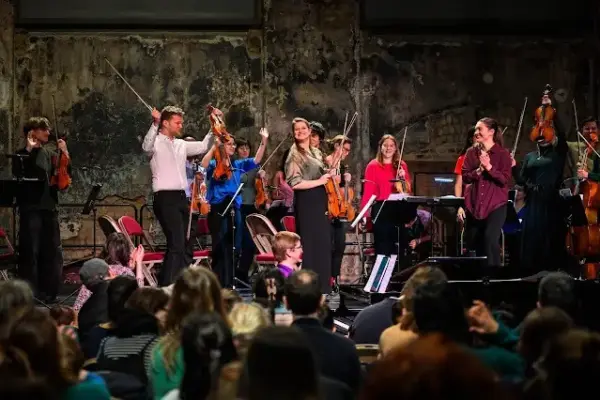
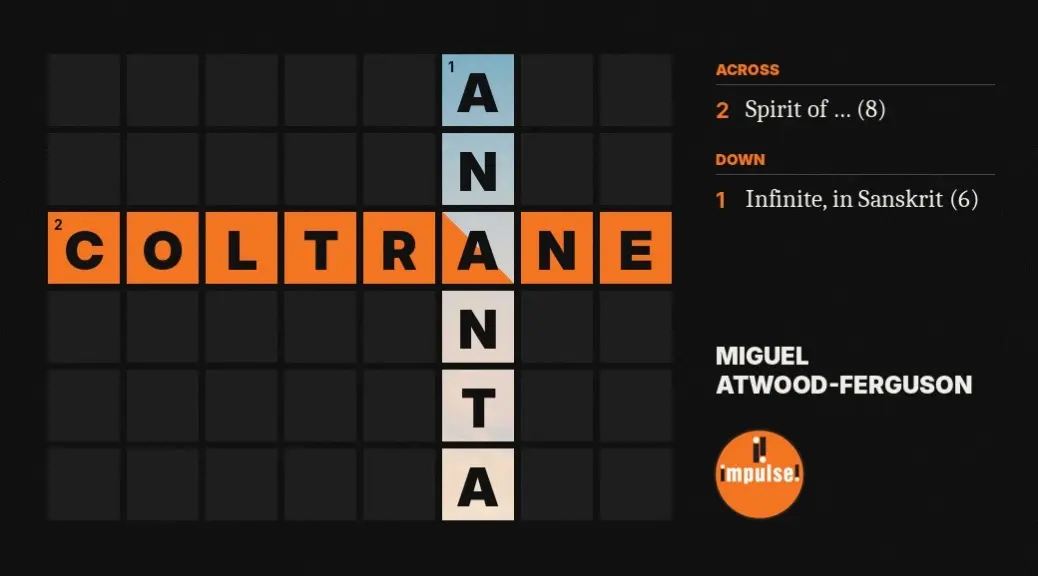
In the sprawling, often reverential landscape of modern jazz tributes, few projects carry the weight, ambition, and profound historical resonance of ANANTA: Spirit of Coltrane. Spearheaded by acclaimed Los Angeles-based violinist, violist, and arranger Miguel Atwood-Ferguson—widely celebrated for his masterwork Suite for Ma Dukes, the orchestral tribute to J Dilla—this new long-player is much more than a collection of covers. It is a living, breathing songbook that engages directly with the restless, evolving genius of John Coltrane.
The title itself derives from the Sanskrit word ananta, meaning "that which has no end"—a thematic echo of the posthumous 1972 Impulse! release Infinity, wherein Alice Coltrane integrated her late husband’s archival tapes with sweeping orchestral strings and her own harp. ANANTA bridges decades, bridging the historical lineage of Coltrane’s classic Atlantic and Impulse! eras with a modern constellation of improvisers, visionaries, and legacy torchbearers.
Featuring an astonishing cast that includes saxophonist Azar Lawrence, harpist Brandee Younger, pianist David Virelles, vibraphonist Joel Ross, and producer-artist Flying Lotus, the album re-examines Coltrane’s towering catalog not as a sacred museum piece, but as an open-ended framework for contemporary exploration. In doing so, Atwood-Ferguson proves himself to be a master architect, capable of honoring history while forging an entirely new sonic path.
Detailed Chronology & Track-by-Track Breakdown
To understand the architecture of ANANTA, one must look backward to a telling moment in jazz history. Early in 1962, Down Beat’s yearbook named John Coltrane its Jazzman of the Year. In an accompanying profile by Barbara Gardner, Coltrane revealed a surprising mood of creative dissatisfaction for a man sitting at the absolute pinnacle of his art. He admitted to Gardner that he could not find the right songs to play; nothing fitting his internal frequency came from listening to other groups, records, or even the members of his own band. "I just have to write the tunes myself," he confessed, noting that composition had always historically taken a backseat to his mastery of the horn.
ANANTA is built on this very realization—that Coltrane was ultimately pushed into composition out of sheer necessity. The album’s program neatly straddles the pivotal eras of his creative evolution, bridging the structural elegance of his Atlantic recordings with the cosmic, expansive frontiers of his Impulse! years.
Side A: The Legacy of the Quartet and the Power of the Voice
Side A sets an immediate, arresting tone, relying heavily on the profound institutional memory embedded in its personnel.
The most monumental casting choice on the record—and perhaps its most potent game-changer—is the inclusion of tenor and soprano titan Azar Lawrence. While a casual glance at the album’s promotional sleeve might omit his name, Lawrence’s presence anchors the entire first half of the record. Lawrence was only fourteen when Coltrane passed away, yet by twenty, he was holding his own in Elvin Jones’s band. Jones subsequently passed him along to McCoy Tyner, with whom Lawrence recorded landmark albums such as Enlightenment, Sama Layuca, and Atlantis, before Miles Davis drafted him for Carnegie Hall (Dark Magus). Because Tyner and Jones were the pianist and drummer on Coltrane’s epochal 1960 recording of "My Favorite Things," Lawrence is uniquely qualified to channel this music; no other guest artist possesses that direct, unbroken lineage to the core Coltrane rhythm section. Here, Atwood-Ferguson’s arrangement stays true to the Atlantic outline while granting Lawrence soaring, ardent blowing room on soprano saxophone—a masterclass in executing tradition with contemporary fire.
The album opens with a breathtaking rendering of "Naima." On the original 1959 recording, Coltrane took no solo at all, leaving the improvisational space entirely to pianist Wynton Kelly over shifting chords anchored by a held bass note. In Atwood-Ferguson’s hands, "Naima" is instantly recognizable yet utterly transfigured. Javier Santiago’s piano and the lush string orchestra establish a calm, charismatic foundation before Joel Ross’s vibraphone enters, creating a sonic landscape that no other contemporary arranger could forge.
The momentum shifts toward the spoken word and social consciousness with "A Force," which closes Side A. The track features music by Atwood-Ferguson and searing poetry by aja monet, constructed in part from the collected sayings of John and Alice Coltrane. The title itself is drawn from Coltrane’s famous 1966 remark to interviewer Frank Kofsky, wherein he expressed his desire to be "a force for real good" in direct opposition to the forces of suffering in the world. Backed by Justin Brown’s masterful drumming and Brandee Younger’s impeccably resonant harp, the piece brings Side A to a poignant, transcendent close, bookending the side with works outside Coltrane’s pen while setting the stage for an all-Coltrane second half.
Side B: Structural Puzzles and Cosmic Exploration
If Side A explores narrative and lineage, Side B dives deep into Coltrane’s structural wizardry and spiritual quests.
The side opens with "Giant Steps," a legendary chord puzzle from its inception. An initial studio attempt in March 1959 featuring pianist Cedar Walton was originally shelved, and no live concert recording of Coltrane playing the piece has ever surfaced; it was designed as an absolute compositional study for the studio. Atwood-Ferguson treats the piece to a radical transplant, slowing the tempo down into a sprawling ballad driven by Shabaka Hutchings’s cavernous bass clarinet and Joel Ross’s shimmering vibes. While it is an ambitious reinterpretation that challenges listener expectations, it finds a historical precedent in Coltrane’s own output: eighteen months after "Giant Steps," he applied the same harmonic architecture—key centers stepping down by major thirds—to write "Central Park West," a delicate ten-bar ballad originally performed on soprano. Atwood-Ferguson bookends Side B precisely with these two interlocking compositional puzzles.
Between them lies "After The Rain," which retains its suspended, ethereal theme. Featuring the sensitive interplay of guitarist Jeff Parker and flutist Elena Pinderhughes, the track nods subtly to history: the 1963 original featured Roy Haynes deputising for Elvin Jones, and here, Haynes’s grandson, Marcus Gilmore, contributes to the broader recording ecosystem.
"Resolution," drawn from the 1965 masterpiece Meditations—the final studio stand for McCoy Tyner and Elvin Jones within Coltrane’s classic quartet—offers a high-velocity workout. Drummer Justin Brown delivers a breathtaking, career-defining performance that serves as the rhythmic heartbeat of the track, complemented by Javier Santiago’s dazzling piano work.

The journey concludes with "Central Park West," opening with a delicate, introspective solo piano introduction by David Virelles before the harp and reeds gently float into the mix, anchored by Ryoma Takenaga’s immaculate double bass. It encapsulates all the warm, searching, transcendent characteristics of the John and Alice Coltrane canon.
Supporting Context & Production Metrics
Beyond the notes on the page, the physical manifestation of ANANTA demands attention from audiophiles and collectors alike. The LP is pressed in Germany—a crucial quality-control detail for serious vinyl enthusiasts. In recent years, Universal Music’s Czech pressing plants have faced widespread scrutiny from the audiophile community for inconsistent quality control, an issue that major labels have been forced to slowly rectify. The German pressing secured for ANANTA guarantees a silent background, wide dynamic range, and the sonic depth necessary to capture the complex, multi-layered orchestrations of Atwood-Ferguson’s arrangements.
The personnel roster reads like a generational who’s who of modern creative improvised music:
- Arrangements & Strings: Miguel Atwood-Ferguson (Violin, Viola, Conductor)
- Pianos & Keyboards: Javier Santiago, David Virelles
- Reeds & Woodwinds: Azar Lawrence, Immanuel Wilkins, Devin Daniels, Shabaka Hutchings (Bass Clarinet), Elena Pinderhughes (Flute)
- Guitars & Strings/Harp: Jeff Parker, Brandee Younger (Harp)
- Percussion & Rhythm: Justin Brown (Drums), Marcus Gilmore, Ryoma Takenaga (Double Bass), Joel Ross (Vibraphone)
- Spoken Word: aja monet
This synthesis of jazz elders—exemplified by Azar Lawrence—and the vanguard of the modern jazz scene (including Immanuel Wilkins, Joel Ross, and Shabaka Hutchings) ensures that ANANTA operates as a cross-generational dialogue rather than a static historical reenactment.
Official Statements & Critical Perspectives
In reflecting on the creation of ANANTA, critics and participants alike have emphasized the necessity of treating Coltrane’s work not as a sacred relic, but as an ongoing conversation.
Miguel Atwood-Ferguson’s approach has consistently been defined by an ethos of deep listening and structural empathy. Rather than attempting to outplay Coltrane on his own turf—an impossible feat—Atwood-Ferguson uses the orchestra to illuminate the emotional and harmonic underpinnings of the compositions. As jazz scholar and critic Steve Williams notes in his assessment of the project:
"Coltrane told Barbara Gardner in 1962 that he had not found what he was looking for, and a record named for the endless takes him at his word in his centenary year. It is proof of how distinctive and brilliant Atwood-Ferguson is. Bringing Azar Lawrence into the studio was the game-changer."
The inclusion of voices like aja monet further connects Coltrane’s universal message of spiritual healing and political resistance to the ongoing struggles of the present day. By quoting Coltrane’s desire to be "a force for real good," the album explicitly links the avant-garde jazz explorations of the 1960s with contemporary movements for social justice and creative autonomy.
Future Outlook & Cultural Impact
As the jazz world looks ahead to the broader cultural impact of ANANTA: Spirit of Coltrane, the album stands as a defining benchmark for how historical legacies ought to be handled in the 21st century. Too often, tribute albums lean heavily on pastiche or safe, note-for-note transcriptions that drain the music of its original danger and vitality. Atwood-Ferguson has resolutely chosen the harder path: treating Coltrane’s music with the same fearless, searching spirit that drove the saxophonist to constantly tear up his own blueprint and start anew.
The ripples of this release are expected to reverberate across the global improvised music community. By placing veterans like Azar Lawrence side-by-side with artists defining the current underground and commercial jazz renaissance—such as Shabaka Hutchings, Immanuel Wilkins, and Brandee Younger—ANANTA establishes a vital educational and cultural bridge.
Furthermore, the project signals a maturation in Miguel Atwood-Ferguson’s career as a bandleader and conceptualist. Following the monumental success of his orchestral tributes to hip-hop royalty, ANANTA firmly solidifies his stature as one of the premier arrangers and orchestrators working in contemporary music today—someone capable of navigating the hallowed halls of jazz history without losing his own distinct artistic voice.
In a centenary era crowded with commercial reissues and uninspired retrospectives, ANANTA: Spirit of Coltrane stands tall as a blazing, uncompromised beacon of what happens when reverence meets unbridled creative courage. It is, quite simply, music without end.