EXECUTIVE OVERVIEW
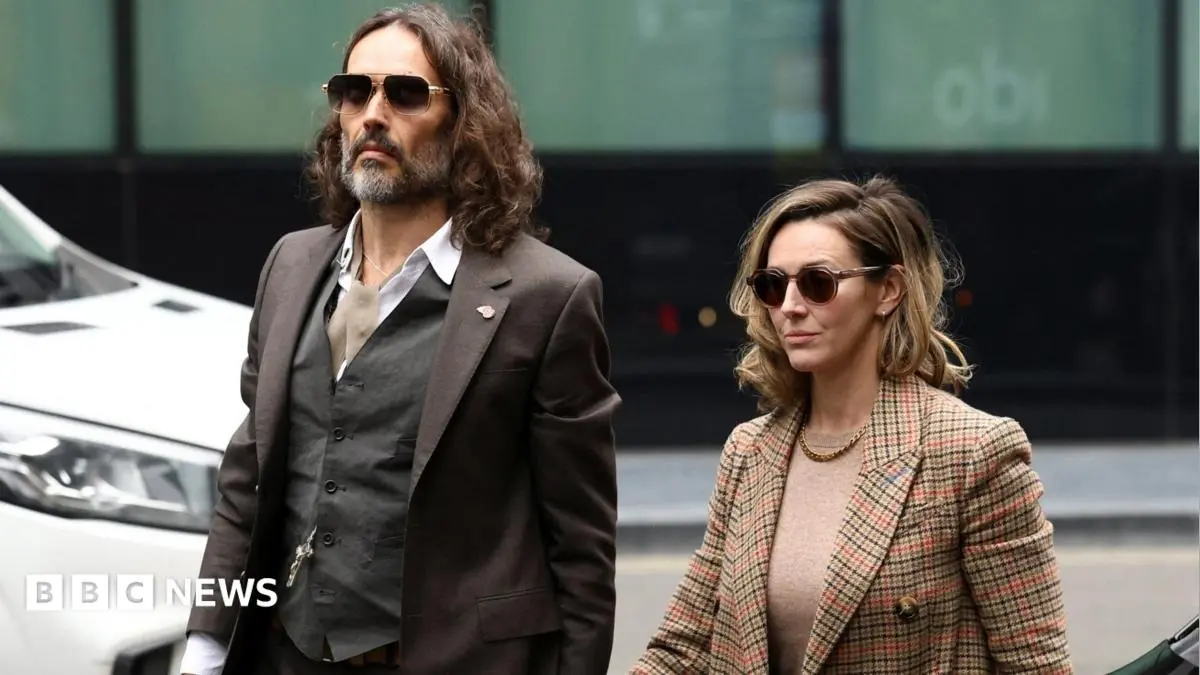
Downing Street has launched an urgent government investigation into a controversial broadcast by incarcerated comedian and media personality Russell Brand, in which he publicly professed his innocence following a landmark conviction for multiple sexual offenses. Brand, who is currently serving a ten-and-a-half-year prison sentence after being found guilty of rape and three counts of sexual assault, bypassed standard penal regulations by having his wife read a pre-recorded statement on their joint YouTube channel, the Sunday Service.
The broadcast—which featured Laura Brand seated before a burning candle holding a Bible—has drawn swift, universal condemnation from government ministers, victims’ advocates, and anti-abuse campaigners. Officials at No. 10 Downing Street have stated that prisoners are strictly prohibited from utilizing intermediaries to disseminate statements intended for the public or designed to cause distress to victims. Justice Secretary Alex Norris termed the action "completely unacceptable" and confirmed that disciplinary measures are under active review.
Simultaneously, the fallout from Brand’s high-profile trial has catalyzed a broader national conversation regarding systemic power imbalances within the creative industries and urgent legislative gaps concerning the legal age of consent. Culture Secretary Lisa Nandy has convened emergency talks with major media, arts, and sports executives to eradicate institutional cultures of harassment. Meanwhile, survivors of historical abuse have stepped forward to campaign for a "staggered age of consent" to protect vulnerable 16- and 17-year-olds from predatory adults—a proposal now facing serious governmental review.
DETAILED CHRONOLOGY: FROM CONVICTION TO PROHIBITED BROADCAST
The Trial and Sentencing
Russell Brand’s downfall culminated in a severe prison sentence following a rigorous criminal proceeding that exposed decades of predatory behavior masked by counter-cultural celebrity status. Convicted of one count of rape and three counts of sexual assault, Brand was handed a custodial sentence of ten and a half years. Legal analysts and victims’ rights advocates noted that the trial underscored the profound difficulties victims face when confronting powerful public figures who weaponize their platform and fame to discredit allegations.
Following his sentencing, Brand was initially housed at HMP Wandsworth, a Category B facility in South London. Over the weekend, authorities transferred him to HMP Littlehey in Cambridgeshire, a Category C prison predominantly housing sex offenders, which features specialized rehabilitation and offender behavior programs tailored to individuals convicted of sexual offenses. The transfer has itself drawn public scrutiny, with Foreign Office minister Stephen Doughty publicly acknowledging on LBC that moving a high-profile offender to a lower-security facility "is not a good look" and does not align with public expectations regarding appropriate punitive measures for heinous crimes against women.
The YouTube Broadcast
Despite his incarceration, Brand attempted to maintain a digital footprint by leveraging his pivot to Christian social media influencing. On Sunday’s installment of the Sunday Service podcast, broadcast via YouTube, his wife Laura Brand delivered a direct message from the convicted rapist to his remaining digital followers.
In the video—stylized with religious iconography, including a burning candle and a Bible—Laura Brand relayed her husband’s words: "I am not guilty of the offences I have been jailed for." The message added that Brand was "OK and is praying," while thanking prison staff at HMP Littlehey whom he allegedly described as "strong," "kind," and "dedicated." He also appealed to his supporters to look after his wife and family.
The utilization of a family member to circumvent strict penal communication bans has exposed critical vulnerabilities in how digital-era inmates interact with the public. Under UK prison rules, inmates are strictly barred from issuing public statements that cause distress to victims, and media interviews or broadcasts are restricted to extraordinary circumstances requiring explicit gubernatorial authorization.
OFFICIAL STATEMENTS AND POLITICAL REACTION
The political establishment responded to the broadcast with immediate indignation, crossing party lines to condemn both the content of the message and the circumvention of prison rules.
- No. 10 Downing Street: The Prime Minister’s official spokesman issued a stern rebuke, stating: "Prisoners are strictly banned from making statements that cause distress to victims and speaking to the media is only permitted in exceptional circumstances. Prisoners cannot get around these rules by having someone else publish their comments." No. 10 confirmed that if Brand is found to have violated prison regulations, definitive disciplinary action will follow.
- Justice Secretary Alex Norris: Taking to social media platform X, Norris wrote: "Prisoners are rightly banned from making statements that cause distress to victims. This is being urgently investigated, and I expect action to be taken if he is found to have broken the rules." He categorized the broadcast as "completely unacceptable."
- Foreign Secretary Ed Miliband: Speaking to Sky News, Miliband delivered an unsparing assessment of Brand’s conduct: "His crimes are heinous and awful. I think it’s revolting, by the way, that he shows no remorse today in his comments. No remorse, no sympathy for the victims. Just disgusting comments."
- Foreign Office Minister Stephen Doughty: Addressing his transfer to HMP Littlehey on LBC, Doughty remarked: "I think people want to see him facing the appropriate punishment for what are appalling crimes against women and others and I think the whole episode is shocking."
SUPPORTING CONTEXT & METRICS: VICTIM IMPACT AND PENAL REGULATIONS
Re-Traumatization and the Psychological Toll
The decision by Brand to broadcast assertions of innocence from behind bars has been widely condemned for its psychological impact on survivors. Andrea Simon, the Victims’ Commissioner for London, warned that Brand’s actions would cause profound harm.
Appearing on the BBC Radio 4 Today programme, Simon stated: "The claims will certainly retraumatise his victims and other survivors of rape who have to hear it. The victims during the sentencing hearing highlighted how his denials and ongoing media fame over two decades had added to their pain and trauma. The fact survivors are still having to hear this now is really problematic and very concerning that we can’t do more to protect them from it."
Simon argued that while freedom of expression permits individuals to assert their innocence, digital platforms must enforce stricter terms of service to curb the amplification of convicted sex offenders. Furthermore, she called for a comprehensive review of prison policies to explicitly bar incarcerated criminals from transmitting messages for broadcast without explicit, written permission from the prison governor.
Penal Rules and Potential Disciplinary Sanctions
Under the UK prison framework, inmates who breach communication rules face tangible disciplinary penalties. Prison governors possess the authority to enforce several punitive measures, including:
- Restriction of Social Visits: Curtailing the frequency and duration of face-to-face contact with family and friends.
- Privilege Revocation: Stripping access to enhanced living conditions, such as additional gym time, in-cell televisions, or private study materials.
- Communication Controls: Imposing targeted restrictions on telephone access, including blocking specific phone numbers, implementing heightened call monitoring, or restricting correspondence to ensure the protection of victims and maintain institutional security.
INDUSTRY-WIDE REFORMS AND THE FIGHT AGAINST ABUSE
In parallel with the fallout from Brand’s broadcast, the UK government is intensifying efforts to dismantle toxic cultures within entertainment, media, arts, and sports sectors. Culture Secretary Lisa Nandy recently convened a high-level summit with senior corporate and organizational leaders to address systemic power imbalances that have historically enabled serial abusers to operate with impunity.
During the summit, Nandy interrogated industry executives on three core pillars:
- Cultural Accountability: Concrete measures being undertaken to challenge bullying, harassment, and sexual abuse within their respective domains.
- Whistleblower Empowerment: Systems designed to protect and embolden individuals who report misconduct, ensuring they face no professional retaliation.
- Freelance Safeguarding: The extension of robust safeguarding protocols to protect freelance and precarious workers who frequently fall outside standard corporate HR protections.
The Department for Culture, Media and Sport (DCMS) confirmed that attendees have been given a strict deadline to report back with comprehensive action plans within the coming weeks.
FUTURE OUTLOOK: LEGISLATIVE REFORM AND THE AGE OF CONSENT DEBATE
The Brand case has triggered an unprecedented legislative debate regarding the legal protections afforded to minors, with prominent campaigners and survivors calling for an overhaul of the age of consent laws in England and Wales.
The Push for a Staggered Age of Consent
Mia Latter, who has publicly alleged that she was raped by Russell Brand when she was 16 years old, has waived her anonymity to campaign for legislative change. Latter was one of six women who came forward in 2023 during a joint journalistic investigation by The Times, The Sunday Times, and Channel 4’s Dispatches. Although none of the women who participated in that media investigation were complainants in Brand’s subsequent criminal trial, their disclosures illuminated systemic patterns of behavior.
In an interview with LBC, Latter clarified the nuance behind her advocacy: "We don’t want to criminalise anybody under the age of 18 [including] 16, 17-year-olds, 18-year-olds having sex with each other… I think healthy relationships are important, and they’re important in helping you develop and grow." However, she advocated for a strict age "threshold" to prevent predatory adults from legally exploiting teenagers.
Her sentiments were echoed by Layla Stone, founder of the campaign group Close the Consent Gap. Stone is lobbying parliament to amend the Sexual Offences Act to establish strict age disparities: barring 16-year-olds from engaging in sexual relationships with anyone older than 19, and restricting 17-year-olds from dating individuals older than 20. Speaking to BBC Breakfast, Stone emphasized: "Predators know exactly what they are doing."
Parliamentary Response and Jurisdictional Hurdles
The government has indicated a willingness to engage in these sensitive discussions. Foreign Secretary Ed Miliband acknowledged the bravery of the victims, noting that their advocacy has rightly forced a national reassessment of existing laws.
Shadow Education Secretary Laura Trott welcomed the debate on a staggered age of consent, though she cautioned that implementing such models can be legally complex, pointing to administrative difficulties encountered in certain US states. She added that raising the universal age of consent to 18 is a conversation worth having, though it "probably isn’t practical."
Meanwhile, Anna Edmundson, Director of Policy & Social Change at the NSPCC, underscored the urgency of systemic evaluation: "We urgently need a review of what is and isn’t working to ensure 16 and 17-year-olds are fully protected in law from this predatory behaviour. However, closing these gaps will only be part of the solution. We must question why adults have been able to exploit teenagers in plain sight for so long, and look at what further action is needed to help people recognise the signs of exploitation."
Any legislative changes enacted as a result of these reviews will apply exclusively to England and Wales. Scotland and Northern Ireland maintain separate legislative competencies regarding the age of consent—which stands at 16 in both jurisdictions. The Scottish Government has stated it currently has no plans to alter its laws, though it remains open to evaluating formal legislative proposals.
As the government’s investigation into Russell Brand’s prison broadcast unfolds, the convergence of penal accountability, institutional reform, and victim-led legislative campaigns marks a watershed moment in the UK’s legal and cultural reckoning with sexual violence.