Years of Transforming Lives Through Education
Executive Overview
In an era where arts funding faces unprecedented pressures and regional disparities in cultural investment continue to widen, grassroots philanthropic initiatives have never been more vital. Marking a major milestone in its operational history, The Richard Shephard Music Foundation has released its comprehensive 2025/26 Impact Report, celebrating five years of dedicated service to children across York, North Yorkshire, and the wider North East.
Since its inception, the Foundation has championed a singular, powerful premise: that access to high-quality music education is a fundamental right, not an arbitrary privilege dictated by geography or socioeconomic background. Over the past half-decade, the organization has delivered structured weekly music lessons to more than 13,334 children, engaged 5,490 students through high-profile free community events like the annual Make Music Day, and successfully spearheaded the recruitment and specialized pedagogical training of over 15 primary music educators.
However, these impressive statistics exist against a stark backdrop of systemic inequality within the British charitable sector. Recent policy documents from the UK Government underscore a profound regional imbalance: while overall charitable giving nationwide reached staggering heights—with over £14 billion donated in 2025 alone—these resources remain heavily concentrated. London currently absorbs more than one-third of all funding distributed by the UK’s largest philanthropic foundations and commands four times the value of Gift Aid donations relative to the national average.
By operating directly within underserved regional communities, The Richard Shephard Music Foundation serves as a vital counterweight to this metropolitan centralization. Through strategic partnerships, rigorous curriculum integration, and an unwavering commitment to schools with the highest levels of need, the Foundation is actively rewriting the narrative of cultural access in Northern England. This article explores the journey, methodology, profound qualitative impact, and future strategic roadmap of an organization proving that music has the power to transform not just individuals, but entire communities.
Detailed Chronology: Five Years of Grassroots Impact
The trajectory of The Richard Shephard Music Foundation is a testament to the power of targeted, community-centric philanthropy. To understand how the Foundation achieved its current scale, it is essential to examine its evolutionary timeline over the past five years.
Inception and the Foundation Vision (2020–2021)
Established in honor of the late composer, scholar, and educationalist Dr. Richard Shephard, the Foundation was launched with a clear mandate: to enrich the lives of young people through music in the regions he so deeply loved and served. The initial phase focused on forging institutional partnerships, identifying primary schools with the most acute musical deficits, and laying the groundwork for a scalable, sustainable educational delivery model. Amid the disruptions of the global pandemic, the Foundation recognized that creative outlets would be more crucial than ever for children’s post-lockdown recovery.
Pilot Expansion and Curriculum Integration (2021–2022)
Partnering with Sing Education—a premier specialist education provider—the Foundation rolled out its flagship weekly music program. Rather than offering sporadic, one-off workshops, the initiative embedded specialist teachers directly into partner schools, ensuring that music became a core, continuous component of the weekly timetable. During this period, the framework expanded from a handful of pilot institutions to a robust network across York and North Yorkshire, establishing baseline metrics for student engagement and teacher collaboration.
Scaling Up and Community Outreach (2022–2023)
As the operational model matured, the Foundation broadened its scope beyond the classroom walls. This era marked the introduction of large-scale public initiatives, most notably its active participation in and support for Make Music Day. By bringing children out of their classrooms and into public spaces to perform, the Foundation began shifting the cultural consciousness of the region, demonstrating that young people from the North East could command center stage. Concurrently, the organization intensified its focus on workforce development, initiating targeted training programs to help cultivate the next generation of primary music specialists.
Deepening Regional Reach and Targeting Need (2023–2024)
By its fourth year, the Foundation’s strategic focus sharpened acutely on socio-economic equity. Recognizing that funding cuts had decimated creative arts provisions in schools serving economically disadvantaged areas, the Foundation redirected its resources. It prioritized institutions where over 30%—and in some cases, over 50%—of the student body relied on Free School Meals. This period cemented the Foundation’s reputation not merely as a music provider, but as an essential social welfare and educational equity partner.
The 2025/26 Milestone and Impact Consolidation (2025–2026)
Culminating in the release of its landmark 2025/26 Impact Report, the Foundation paused to reflect on five years of quantifiable achievement. Having surpassed 13,000 students reached weekly and cemented a network of specialized educators, the organization is no longer a localized experiment, but a mature, authoritative institution in regional arts education. The current phase is characterized by an ambitious look forward, aimed at institutionalizing its successes and dismantling systemic barriers to cultural participation for good.
Supporting Context & Metrics: Data Behind the Transformation
The success of The Richard Shephard Music Foundation is not measured solely in the passage of time or the enthusiasm of its participants; it is substantiated by rigorous quantitative and qualitative data.
Rebalancing the Scales: The Philanthropic Landscape
To fully appreciate the Foundation’s operational environment, one must examine the broader economic realities of UK philanthropy. According to the UK Government’s policy paper, "Our place to give: a plan for growing place-based philanthropy" (published April 13, 2026), glaring geographic disparities plague the charitable sector:
- The Capital Bias: London absorbs more than 33% of all funding disbursed by the UK’s largest philanthropic foundations.
- Gift Aid Disparities: The value of Gift Aid donations in London stands at four times the national average.
- The Regional Deficit: Children in regions like North Yorkshire and the North East face structural disadvantages due to the concentration of wealth and corporate philanthropy in the South East.
The Richard Shephard Music Foundation operates precisely where these systemic funding gaps are widest. By channeling philanthropic capital directly into Northern schools, it actively combats the geographic lottery that dictates a child’s access to the arts.
Reaching the Most Vulnerable Schools
The Foundation’s operational strategy is anchored in equity. It deliberately directs its resources toward schools and communities experiencing the highest levels of deprivation:

- 50% of partner schools report that more than 30% of their pupils are eligible for Free School Meals (FSM).
- 5% of partner schools report FSM eligibility exceeding a staggering 50%.
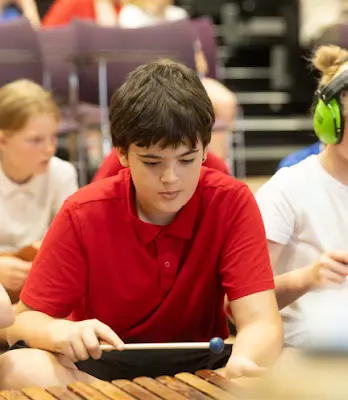
Through its partnership with Sing Education, the Foundation provides a turnkey solution that includes comprehensive curricula, expert educators, and ongoing teacher training. The pedagogical journey begins as early as nursery and Reception, where children build foundational confidence and musical comprehension through joyful singing and active, hands-on music-making. This developmental scaffolding ensures that by the time children progress through their primary years, music is an intuitive, empowering language rather than an intimidating academic subject.
The Metrics of Wellbeing and Aspiration
The 2025/26 Impact Report reveals extraordinary outcomes reported by educators and students alike:
- 94% of schools observed a measurable improvement in their pupils’ mental and emotional wellbeing.
- 99% of schools reported a significant increase in general pupil confidence.
- 90% of pupils affirmed that music actively makes them feel positive, directly reinforcing mental health and emotional resilience.
- 88% of pupils were able to clearly articulate a future aspiration, identifying something specific they would like to pursue next in music.
(Of course, this enthusiasm occasionally tests the patience of domestic life—as evidenced by the wry note in the report regarding the parent who may soon have to endure daily practice sessions from a newly inspired harmonica enthusiast!)
Official Statements and Stakeholder Perspectives
The true impact of the Foundation is best understood through the voices of those who deliver the programs, govern its mission, and witness the daily transformation in classrooms across the North East.
The Pedagogical Partner: Structuring Musical Joy
Speaking on the delivery model, representatives from Sing Education emphasize the philosophy underpinning the curriculum. "Music is not an optional extra or a peripheral luxury; it is a vital cognitive and emotional anchor," notes a lead curriculum coordinator. By introducing structured, joyful singing and active music-making at the earliest stages of early years education, the program lays down neural pathways that benefit broader academic learning, emotional regulation, and social cohesion.
Teachers within the partner network have repeatedly noted that the structured presence of specialist music educators relieves pressure on generalist primary teachers while elevating the entire school environment. Children who are often quiet or disengaged in traditional academic settings frequently find their voice through the Foundation’s lessons, emerging as confident leaders among their peers.
Community and Trustee Reflections
The Foundation’s leadership board views the five-year milestone not as a destination, but as a robust platform for broader advocacy. Reflecting on the government’s recent findings regarding place-based philanthropy, Foundation trustees have consistently argued that regional identity should never dictate cultural destiny.
“When we look at the data showing the immense concentration of philanthropic wealth in London and the South East, it reinforces why our work is so urgently necessary,” notes a representative from the Foundation’s advisory board. “A child growing up in rural North Yorkshire or an industrial town in the North East deserves the exact same cultural starting line as a child anywhere else in the United Kingdom. Over the past five years, we have proven that our model works. The challenge now is ensuring that systemic barriers do not prevent us—or the children we serve—from reaching our full potential.”
Future Outlook: Levelling the Playing Field
As The Richard Shephard Music Foundation looks toward its next strategic chapter, its leadership is actively formulating a visionary set of priorities designed to cement and expand its regional footprint.
Championing Inclusive Music-Making
The core ethos guiding the Foundation’s future endeavors is captured in a simple yet profound guiding principle: "Children can’t choose something they’re not offered."
Too often, musical instrument tuition, ensemble participation, and exposure to live performance are treated as consumer goods available only to families who can afford private fees. The Foundation’s upcoming strategic roadmap is dedicated to systematically dismantling these barriers. By expanding its reach into more schools, increasing the frequency of its community-wide events, and scaling up its educator training pipeline, the Foundation aims to ensure that every child—regardless of postcode or parental income—is given a genuine, unhindered choice to engage with music.
Broadening the Regional Footprint
Building upon the success of training over 15 primary music specialists over the past five years, the Foundation plans to intensify its workforce development initiatives. Empowering local teachers with the skills and confidence to deliver high-quality music education ensures long-term institutional sustainability within schools, safeguarding arts provisions against fluctuating educational budgets and shifting political priorities.
A Call to Action
Achieving these ambitious future goals requires sustained partnership and collective investment. In an economic climate where regional philanthropy remains critically underfunded compared to the capital, community support is the ultimate lifeline.
The Richard Shephard Music Foundation invites educators, policymakers, arts advocates, and members of the public to examine the full scope of its achievements in the complete 2025/26 Impact Report, available now on the official RSMF Website. Furthermore, as the Foundation embarks on its next five-year mission to level the cultural playing field for thousands more children, readers are warmly encouraged to consider supporting its ongoing mission by visiting the RSMF Donation Portal.
Through sustained commitment, visionary philanthropy, and the universal joy of music, The Richard Shephard Music Foundation is ensuring that the cultural heartbeat of the North remains strong, vibrant, and open to all.