Executive Overview
Where the untamed, primordial green of Italy’s Val Grande National Park converges with the meticulously manicured gardens of Lake Maggiore’s historic aristocratic estates lies Verbania—a geographic coordinate and a conceptual threshold. It is also the titular anchor of a groundbreaking, immersive acoustic work by trumpeter Tom Arthurs, sound designer and electronic composer Isambard Khroustaliov (Sam Britton), and interdisciplinary visual artist Britt Hatzius.
Originally commissioned as Augmented Nature: Verbania Edition for the CROSS Festival at Villa Simonetta, the project underwent a deliberate linguistic distillation. Eschewing loftier, heavily burdened academic tags such as "rewilding the imagination," the trio ultimately settled simply on the toponym: Verbania. This gesture reflects a broader ethos running through the project—a deep-seated wariness of semantic baggage and colonial or romanticized projections onto the natural landscape.
Released as a limited-edition double vinyl set, Verbania captures four live, nearly unedited performances recorded during the CROSS Festival run. Rejecting traditional notions of jazz or commercial composition, the work utilizes field recordings of the lakeside—water, wind, avian fauna—intertwined with nuanced electronic montages and distant, breath-like trumpet interventions. Verbania serves not merely as a sonic document of a specific place, but as a critical, meditative intervention into contemporary sound art, offering listeners an antidote to the cacophony of modern urban existence.
Detailed Chronology: From Lisbon Walks to the Shores of Lake Maggiore
The genesis of Verbania can be traced through a meticulous evolutionary trajectory that bridges solo electroacoustic exploration, site-specific institutional commissions, and collaborative cross-media residency work.
1. The Genesis: Solo Explorations and Augmented Nature
The project’s conceptual roots lie in Tom Arthurs’ solo release on the Confront label. This initial iteration paired the fragile, intimate timbre of the piccolo trumpet with intricate binaural field recordings captured during extended walks through Lisbon and the rural expanse of Alentejo. Arthurs sought to construct an intimate dialogue between acoustic breath and urban-rural sonic environments, laying the groundwork for what would become an ongoing exploration of "augmented nature."
2. The Alpine Interlude: Ufenau and Lake Zürich
Building upon the conceptual framework established in Portugal, Arthurs partnered with Isambard Khroustaliov. Their creative synergy had already yielded notable studio albums, including Vaucanson’s Muse (2015) and Hangkerum (2018).
Commissioned by Musiksommer am Zürichsee, the duo expanded their methodological toolkit. They decamped to the historic island of Ufenau in Lake Zürich, capturing the island’s sonic identity using both conventional air microphones and hydrophones—underwater microphones designed to record aquatic frequencies. This residency culminated in a site-specific performance within Ufenau’s 12th-century Chapel of St. Martin, later immortalized as a duo album in 2023.
3. The Italian Convergence: Villa Simonetta and CROSS Festival
Verbania represents the logical zenith of this trajectory, moving the project from one Alpine lake to another while expanding the collaborative triad to include Britt Hatzius. Commissioned by the CROSS Festival—an eclectic multidisciplinary platform pairing dance, performance art, and spiritual workshops rather than conforming to rigid jazz paradigms—the piece was presented across four intimate performances over two evenings at Villa Simonetta.
The resulting double-vinyl release meticulously preserves these live iterations across four unedited sides, simply cataloged as "Side A" through "Side D."
Supporting Context & Metrics: The Interdisciplinary Architecture of the Trio
To fully understand the rigorous texture of Verbania, one must examine the diverse artistic lineages and theoretical frameworks brought to the project by its three principals.
Tom Arthurs: The Ethnographer-Trumpeter
Born in Northamptonshire, Arthurs was a foundational member of the experimental Not Applicable collective until its closure in late 2015. Jazz aficionados recognize his nuanced phrasing from the Julia Hülsmann Quartet’s ECM release In Full View, or from his tenure as one of the inaugural jazz artists on BBC Radio 3’s prestigious New Generation Artists scheme (2008–2010).
However, Arthurs’ artistic output is deeply informed by academic rigor. Since 2018, he has served as head of the jazz and contemporary music department at HKB (Bern University of the Arts). His doctoral research centered on an ethnography of improvised music in Berlin. This sociological background manifests directly in Verbania through the project’s acute awareness of its own vocabulary, refusing to lean on exhausted tropes of "pastoral purity" or "ambient escapism."

Isambard Khroustaliov (Sam Britton): The Architect of Sound
Performing under the moniker Isambard Khroustaliov, Sam Britton’s foundational training as an architect at London’s Architectural Association profoundly influences his approach to sound design. Moving seamlessly from structural architecture into composition, software development, and spatial sound installations—including prestigious residencies at IRCAM in Paris and STEIM in Amsterdam—Britton treats acoustic environments much like physical buildings. His work with electronic montages on Verbania maps the spatial geometry of the lakeside, manipulating wind, water, and atmospheric pressure with structural precision.
Britt Hatzius: The Visual Deconstructor
Britt Hatzius’s practice spans film, video, sound, and performance art, turning pivotally on the mechanics of language, semiotic interpretation, and the inevitable slippages of human communication. Her collaborative history with Arthurs and Britton dates back to the early London days of the Not Applicable collective.
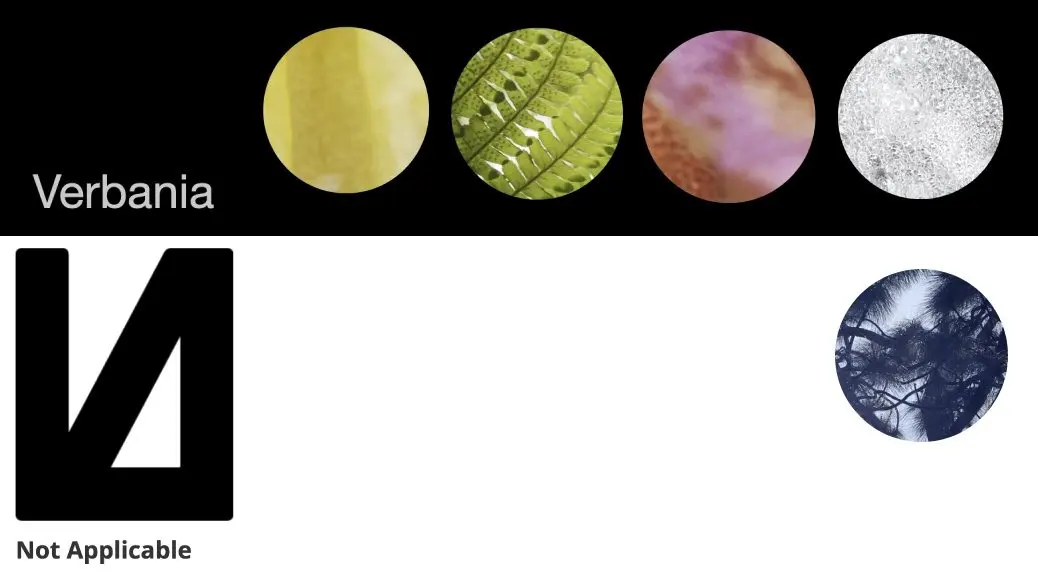
During the live performances at Villa Simonetta, Hatzius’s macro-cinematic film montages—featuring hyper-close-ups of water droplets, drifting fluid particles, and semi-abstract natural details washed in pink hues—ran parallel to the audio performance. While the trio ultimately decided that the full immersive audiovisual experience could not be satisfactorily replicated in a physical video format, Hatzius’s visual sensibility permeates the physical album packaging through extensive original artwork.
Official Statements and Critical Breakdown of the Vinyl Sides
The double-vinyl release of Verbania eschew traditional track titles, presenting four uninterrupted sonic documents that function as a continuous psychoacoustic journey.
Side A: The Distant Horizon
Opening with the crisp, intimate clatter of water dripping interwoven with sustained gusts of wind, Side A immediately establishes a cinematic, meditative space. The physical trumpet is deliberately mixed deep into the sonic background, obscured behind a dense auditory thicket of rustling trees, distant rain, and avian calls. Arthurs eschews traditional melodic phrasing, treating his instrument as an ambient timbrel extension of the meteorological environment.
Side B: The Micro-Storm
As the stylus transitions to Side B, the delicate drip-drop of the previous movement escalates into an intense cascade—resembling heavy runoff tumbling off the roof of a remote forest shack. The local fauna retreats, leaving a vacuum filled by the low, resonant bellows and muted distress calls of the trumpet. As the piece resolves, the tempest breaks: brilliant sunlight filters through the audio spectrum against a backdrop of twittering birds and the steady murmur of a passing stream.
Side C: Industrial and Organic Synthesis
Side C introduces a jarring yet harmonious friction: alongside ecstatic avian choruses and a calming stream, distant industrial artifacts pierce the soundscape—specifically, the high-frequency metallic shriek of a distant train braking. Here, the trumpet emerges from the acoustic underbrush, engaging with the scratching sounds of wood before finally coalescing into a coherent, sustained melodic tone.
Side D: Resolution and Departure
The concluding side maintains the liquid momentum of the stream while the trumpet pursues its ultimate thematic resolution. The work winds down into its calmest movement, characterized by birdsong and an ambiguous acoustic artifact—perhaps a gate swinging shut as Arthurs and Khroustaliov conclude their residency and prepare for the journey back to the studio.
Future Outlook: Live Presentations and Ongoing Trajectories
While Verbania remains a finite physical artifact locked in vinyl grooves, the conceptual framework underpinning the project continues to evolve through live performance offshoots.
The aesthetic methodologies developed during the Lake Maggiore and Lake Zürich residencies inform the artists’ ongoing solo and collaborative endeavours. Notably, Isambard Khroustaliov’s ongoing collaborative work maintains a direct link to this milieu. An upcoming performance at London’s Total Refreshment Centre pairs Khroustaliov with percussionist Maurizio Ravalico, alongside a solo set by experimental trumpeter Alex Bonney and DJ sets by Tamar Osborn. This event underscores the vibrant, cross-pollinating network of contemporary UK and European sound artists who draw inspiration from the territories mapped out by the Not Applicable diaspora.
Ultimately, Verbania offers a timely counter-proposal to the relentless velocity of modern life. In an era saturated by political volatility, ecological anxiety, and relentless urban noise, the trio provides a radical antithesis encapsulated in three understated concepts: pause, puddles, and peace.