Executive Overview
In an era dominated by hyper-compressed digital production, algorithm-driven pop formulas, and fleeting streaming trends, a dedicated collective on Australia’s Gold Coast is looking backward to move forward. The Dub Surrection, a heavyweight roots-dub outfit founded by bassist and producer Brook Rees, represents a meticulous act of sonic preservation and reinvention. Modelled explicitly on the seismic, bass-heavy sound system culture of 1970s Jamaica, the ensemble has crafted a transnational identity by welding authentic Caribbean production ethos with the diverse musical pedigree of the Australian and international touring circuits.
At the vanguard of this movement is their debut single, “The Last Light The First Fire,” extracted from their self-released introductory EP, Heavy Weight Sound System. The track is not merely an homage to the golden age of dub; it is a living, breathing exercise in analog space, heavy one-drop rhythms, and militant Rastafarian imagery. Born out of a post-pandemic sojourn in Japan, refined across multiple recording studios on Australia’s east coast, and brought to life by a lineup of heavyweight players—including veterans of Damian Marley’s touring band and The Melbourne Ska Orchestra—The Dub Surrection has positioned itself as a formidable new force in modern reggae.
This report provides an exhaustive investigation into the creation of Heavy Weight Sound System, exploring the transnational inspirations behind Brook Rees’s composition, the technical mastery of the recording process, the deep-rooted cultural and spiritual symbolism of the single, and the broader implications of keeping authentic, analog sound system culture alive in the 21st century.
Detailed Chronology: From the Streets of Nishinomiya to the Gold Coast
The Japanese Genesis: A Cyclist’s Soundtrack
The genesis of Heavy Weight Sound System can be traced thousands of miles away from the sun-drenched beaches of Australia’s Gold Coast, finding its initial spark in the quiet, orderly streets of Nishinomiya, Japan. In the immediate wake of the global COVID-19 pandemic, founder Brook Rees spent four transformative months living abroad.
For Rees, daily life during this period involved a routine familiar to many expatriates and traveling parents: cycling his two young daughters to their respective primary school and preschool every morning. However, the auditory backdrop to these mundane domestic journeys would ultimately dictate the creative direction of his musical future. As he navigated the Japanese urban landscape on two wheels, Rees plugged into his headphones, immersing himself deeply in the foundational works of 1970s roots reggae and dub architects such as Augustus Pablo and Lee “Scratch” Perry.
This daily ritual of cycling through foreign infrastructure while enveloped in the heavy, reverb-drenched echoes of King Tubby-era Jamaica created a unique psychological juxtaposition. The precision and tranquility of Nishinomiya contrasted sharply with the apocalyptic, bass-heavy frequencies vibrating in Rees’s ears. It was during these commutes that the structural blueprints for what would become The Dub Surrection were drawn. The hypnotic, spatial arrangements of classic dub albums—where the mixing desk becomes an instrument in its own right—began to percolate in Rees’s mind, planting the seeds for a project that would reject modern computer-based grid production in favor of organic, live-feel performance.
Returning to Australian Shores: Assembly and Production
Upon returning to Australia, Rees wasted no time translating his Japanese inspirations into tangible musical compositions. Recognizing that authentic roots dub requires more than mere computer emulation, he set about assembling a stellar collective of musicians whose backgrounds spanned reggae, soul, and jazz.
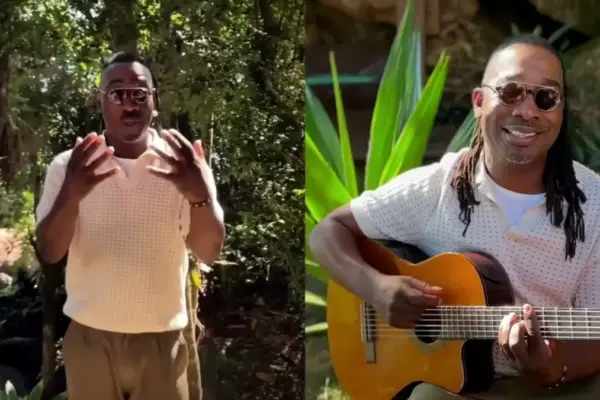
Rees enlisted Australian-Fijian drummer Lisa Purmodh, a powerhouse rhythmic force whose resume includes high-profile international collaborations with reggae royalty such as Damian Marley, Stephen Marley, and Bunny Wailer. To anchor the vocal duties, the collective secured Californian soul singer Jamie Allensworth, a respected artist known widely for his work with Bobby Alu.
The ensemble was rounded out by a formidable three-piece horn section designed to deliver the soaring, melancholy, and triumphant counter-melodies characteristic of classic Jamaican sides. This section brought together trumpeters Nick Garbett and Peter Hunt, alongside celebrated trombonist James Greening of The Melbourne Ska Orchestra.
With the lineup solidified, the production phase commenced in earnest. Rees collaborated closely with co-producers Scott French and Jason Karabash to flesh out the raw demos born on the streets of Nishinomiya. The recording process was split across two primary hubs of creative energy on Australia’s east coast: LoveStreet Studios in Currumbin and The Nest in Sydney.
Crucially, the production ethos prioritized live instrumentation and tactile board manipulation. During the sessions at LoveStreet, co-producer Scott French took on the daring task of playing the drum dubs live directly on the mixing console, manipulating filters, delays, and spring reverbs in real-time. This technique mirrors the legendary dub mixes of the 1970s, where engineers acted as co-creators, shaping the sonic landscape spontaneously rather than programming parameters into a digital audio workstation post-facto.
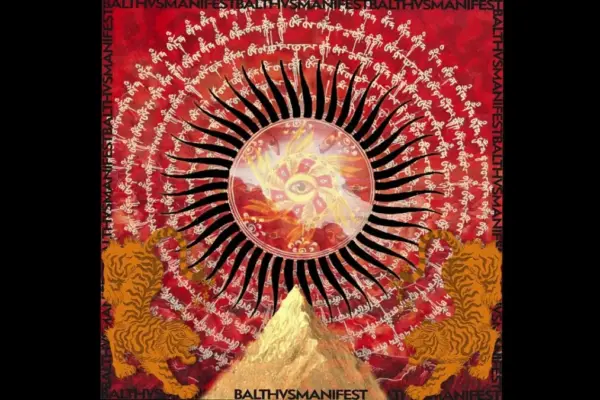
On September 21, the culmination of these transcontinental journeys and rigorous studio sessions materialized as Heavy Weight Sound System, anchored by its lead single, “The Last Light The First Fire.”
Supporting Context & Metrics: The Anatomy of a Modern Sound System Record
Deconstructing the Sound: Instrumentation and Arrangement
“The Last Light The First Fire” operates on a deliberate, unhurried sonic architecture designed to test the limits of physical sound systems. The track is anchored by a slow, plodding one-drop rhythm—the quintessential reggae drum-and-bass pattern where the emphasis falls heavily on the third beat of the measure, leaving the first beat empty and expectant.
In this mix, the bass guitar is deliberately pushed up front, acting as the primary melodic and emotional driver of the track rather than a mere low-frequency filler. This production choice pays direct homage to the Jamaican sound system tradition, where dances were judged by the physical impact of the bass pulsing through massive, custom-built speaker stacks.
Weaving through the cavernous low end is a masterclass in atmospheric instrumentation. Brook Rees himself steps up to play the melodica—the pocket keyboard wind instrument that the legendary Augustus Pablo elevated from a scholastic teaching tool to the mystical emotional core of roots reggae. The melodica lines drift in and out of the mix, coated in thick layers of tape delay and spring reverb, creating a dense, ghostly atmosphere.
Elevating the track’s emotional peak is the aforementioned three-piece horn section. Garbett, Hunt, and Greening weave intricate, soulful counter-melodies that converse directly with Allensworth’s lead vocal. However, the arrangement also relies heavily on the power of subtraction. In a brilliant structural choice midway through the song, the horns and rhythm guitars suddenly drop out entirely. This daring mix-down strips the track to its bare essentials—leaving only the vocalist suspended over a cavernous bassline and kick drum. This technique creates a moment of immense sonic tension before the full band crashes back into the refrain, washing the listener in a wave of collective sound.
Thematic and Spiritual Significance: The Rites of Fire
Beyond its technical and structural brilliance, “The Last Light The First Fire” carries profound philosophical weight rooted in Rastafari theology. Throughout the track, vocalist Jamie Allensworth delivers an impassioned, recurring plea: a demand for the fire to be lit and kept burning.
In Rastafari tradition, fire is far more than a physical element; it is a potent cosmic and spiritual force. It represents the ultimate cleansing agent, purposed with burning away "Babylon"—the corrupt, materialistic, and oppressive socio-political system that the faith fundamentally rejects and critiques. Furthermore, the fire symbolizes spiritual endurance, inner strength, and righteous energy in the face of systemic adversity.
Allensworth’s vocal delivery taps directly into this rich metaphorical tradition. His repeated refrain functions as a modern rallying cry, urging listeners to keep their spiritual faith alive and to maintain the sociopolitical and cultural fight against oppression. By pairing this militant, consciousness-raising lyricism with the heavy, hypnotic pulse of 1970s dub, The Dub Surrection successfully bridges the gap between historical Caribbean resistance music and contemporary global struggles for justice and identity.
Official Statements and Industry Insights
The emergence of The Dub Surrection and the release of Heavy Weight Sound System have generated significant chatter within the broader Australian and international roots music communities. While traditional press releases outline the technical parameters of the release, the underlying philosophy of the collective speaks volumes about the current state of independent music production.
In reflections surrounding the formation of the band, producer Brook Rees has consistently emphasized the importance of physical authenticity over digital convenience. Sound system culture, by its very definition, is rooted in the physical movement of air, the warmth of analog mixing boards, and the tangible tactile experience of spinning original vinyl records.
“Collecting original 1970s Jamaican pressings is not just a hobby; it’s an education in frequency and space,” industry analysts note regarding the band’s aesthetic. By immersing himself in these vintage recordings—first while cycling through the quiet suburbs of Japan and later translating those lessons into studio sessions with engineers like Scott French—Rees sought to bypass the sterile perfectionism of modern Pro Tools grids.
Furthermore, the involvement of seasoned touring veterans like Lisa Purmodh and James Greening lends the project immense institutional credibility. Purmodh, having shared stages and studios with foundational reggae legends like Bunny Wailer and the Marley family, brings a deep, intuitive understanding of the Jamaican pocket that cannot be taught in a textbook. Similarly, James Greening’s contributions via The Melbourne Ska Orchestra ensure that the horn arrangements possess both the raw grit of Kingston studio session players and the sophisticatedity of modern jazz-infused improvisation.
Jamie Allensworth’s vocal performance has likewise been singled out by critics as a masterclass in emotive delivery. Rather than adopting an affected, imitation-Jamaican patois—a trap that many non-Caribbean reggae acts unfortunately fall into—Allensworth leans entirely into his authentic Californian soul and R&B roots. This choice grounds the music in a universal human emotional register, proving that the spiritual message of roots reggae transcends geographical and cultural boundaries.
Future Outlook: The Road Ahead for The Dub Surrection
As Heavy Weight Sound System makes its way into the hands of vinyl collectors, sound system operators, and roots music enthusiasts worldwide, the trajectory for The Dub Surrection points toward expansion and live performance.
The self-released nature of the EP underscores the band’s commitment to artistic independence. In an industry increasingly dominated by major-label conglomerates and algorithmic playlist curation, independent dub collectives rely heavily on direct-to-fan distribution, grassroots community building, and sound system sessions. Platforms like Bandcamp have served as vital lifelines for this niche yet fiercely dedicated global subculture, allowing physical vinyl and high-resolution digital dub plates to reach listeners directly without corporate intermediaries.
Looking forward, the primary objective for Brook Rees and his collective will be translating the immersive, studio-crafted soundscapes of Heavy Weight Sound System into live sound system environments. Given the pedigree of the lineup—combining world-class rhythm section players, top-tier brass arrangers, and soul-drenched vocalists—The Dub Surrection is uniquely positioned to deliver powerful, chest-rattling live performances reminiscent of the legendary dub sessions held in Kingston, London, and Tokyo.
For music lovers weary of disposable pop trends and digital fatigue, The Dub Surrection offers a welcome sanctuary. Through meticulous analog production, deep spiritual resonance, and an unyielding commitment to the sonic traditions of the 1970s, Heavy Weight Sound System proves that the fire lit decades ago in Jamaica continues to burn brightly across the globe.
Essential Links & Further Exploration
- Stream the Single: Experience "The Last Light The First Fire" directly via The Dub Surrection’s Official Bandcamp.
- Purchase the EP: Secure your copy of Heavy Weight Sound System on physical media or digital download through The Dub Surrection Bandcamp Album Page.
- Connect with the Collective: Follow the artists behind the project on Instagram: Brook Rees & The Dub Surrection, drummer Lisa Purmodh, vocalist Jamie Allensworth, trumpeters Nick Garbett and Peter Hunt, and trombonist James Greening.