Executive Overview
The global resurgence of African roots music has found its latest torchbearers in Amamere, an eight-piece highlife ensemble hailing directly from the historic coastal city of Cape Coast, Ghana. Steeped in the rich musical lineage of a region that famously birthed legendary innovators such as Ebo Taylor and C.K. Mann, Amamere does not merely emulate the past—they inhabit it. Playing with the unhurried, hypnotic swing and razor-sharp arrangements of Ghana’s iconic 1970s guitar bands, the group has captured the imagination of world music enthusiasts and purists alike.
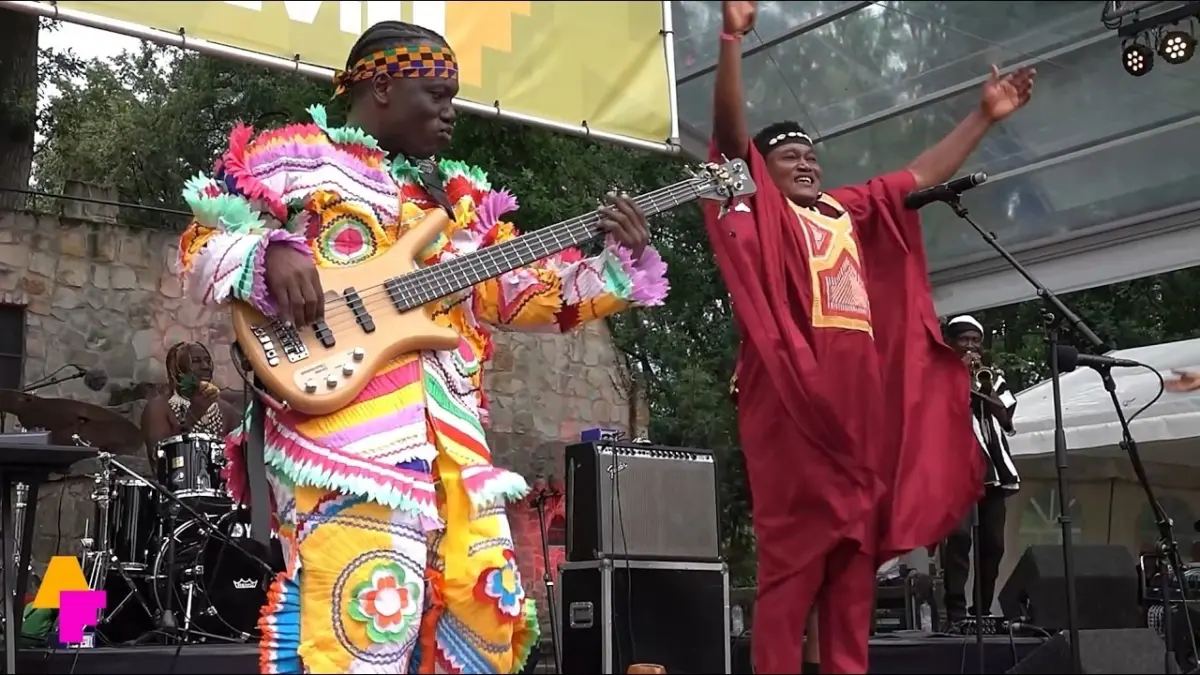
This cultural momentum reached a crescendo on July 4, 2026, when Amamere took the stage at the prestigious Afrika Festival Hertme in the Netherlands. Marking a major milestone in the band’s trajectory, this European appearance formed part of their debut international tour—an eight-piece migration of sound carrying the heavy, joyful burden of Ghanaian musical heritage beyond domestic borders. Among the highlights of that performance was a rapturous live rendition of “Kokonsani,” the opening track from their acclaimed 2025 debut studio album, Man Shall Be Free, released via the Afro Urban Project.
What makes Amamere more than just a nostalgic throwback is their deep, almost cellular connection to the architects of highlife. The band is a living tapestry of musical royalty: featuring Rim Akandoh Jnr., whose father anchored the rhythm sections for C.K. Mann, and Emmanuel Adjei, grandson of the legendary Mac Tontoh of Osibisa. By seamlessly weaving the traditional rhythms of osode—the raw, percussion-driven music of Fante fishing communities—with sophisticated horn arrangements and stinging lead guitar work, Amamere is charting a vital course for the preservation and evolution of African music on the global stage.
Detailed Chronology: From the Shores of Cape Coast to European Stages
The Crucible of Cape Coast
To understand the sophisticated musicianship of Amamere, one must first understand Cape Coast. As a primary port and cultural hub in Ghana, the city has long served as a melting pot of indigenous Fante traditions, colonial-era brass band music, and imported Caribbean and Afro-Cuban rhythms. It was here that highlife—a genre characterized by syncopated guitar rhythms, complex horn sections, and infectious basslines—evolved into a national art form during the mid-20th century.
Amamere absorbed these environs as second nature. Long before stepping onto international festival stages, the individual members cut their teeth in local gig circuits, backing veterans and mastering the intricate mechanics of vintage highlife. The band’s formation was born out of a shared desire to rescue the organic, analog warmth of 1970s guitar-band highlife from the digital sheen of contemporary pop production.
The Genesis of Man Shall Be Free (2025)
The pivotal moment in Amamere’s contemporary narrative arrived in 2025 with the release of their debut full-length record, Man Shall Be Free, distributed by the Afro Urban Project. The album served as an immediate wake-up call to world music critics, who praised its dedication to historical accuracy combined with a fresh, youthful vitality.
The album’s opening track, “Kokonsani” (derived from the Twi word meaning “gossip”), quickly established itself as a fan favorite. Featuring sharp social commentary wrapped in an irresistible groove, the song demonstrated the group’s ability to use traditional storytelling formats to address contemporary social dynamics. The album also served as an artistic bridge across generations, reinterpreting classic compositions written by veteran bandleaders while injecting them with modern studio clarity and explosive live energy.
The Breakthrough European Tour and Afrika Festival Hertme (July 2026)
The summer of 2026 marked a watershed moment for Amamere: their maiden voyage outside the borders of Ghana. Navigating the logistical and financial hurdles that frequently restrict African touring acts from reaching European audiences, the eight-piece ensemble secured bookings at prominent summer festivals, bringing their thunderous live show to new listeners.
On July 4, 2026, the band arrived at the picturesque Afrika Festival Hertme in the Netherlands—a revered institution on the European world music calendar known for championing authentic African artistry. Performing on the open-air stage, Amamere delivered a masterclass in highlife performance. Captured on professional video and broadcast to a global audience, their live rendition of “Kokonsani” showcased a tight, telepathic musical unit.
From Eric Asiedu Agyekum’s searing, melodic lead guitar lines cutting through the Dutch summer air, to the soaring interplay of the tenor saxophone and trumpet, the performance was a triumph of cross-cultural communication through rhythm.
Supporting Context & Metrics: Lineage, Instrumentation, and Cultural Impact
A Lineage Etched in Vinyl: The Family Tree of Amamere
What elevates Amamere from a talented covers or revival band to an institution of cultural preservation is its astonishing pedigree. The group’s lineup reads like a historical directory of Ghana’s golden musical era:
- Rim Akandoh Jnr. (Drums): Sitting firmly behind the drum kit, Akandoh Jnr. brings a relentless, swinging groove born of pedigree. He spent the late 2010s drumming for the legendary highlife pioneer Ebo Taylor, absorbing the nuanced dynamics required to drive a large ensemble. Furthermore, his father, Rim Akandoh Snr., was a foundational figure in Ghanaian music history, having drummed for C.K. Mann before stepping up to lead the celebrated Prince Sparrows Band.
- Emmanuel Adjei (Trumpet): Providing the brass brilliance that sits atop Amamere’s sonic architecture, Adjei carries forward an extraordinary legacy as the grandson of Mac Tontoh, the legendary trumpeter and co-founder of Osibisa—one of Africa’s most successful and globally influential Afro-pop bands.
- Dominic Ansah (Ga Kpanlogo & Congas): Operating right beneath the drum kit, Ansah anchors the rhythm section with traditional Ga kpanlogo drums and congas, injecting the deep, polyrhythmic pulse native to coastal West Africa into the band’s highlife framework.
- Eric Asiedu Agyekum (Lead Guitar): Asiedu Agyekum commands the front line with a guitar style that channels the iconic, circular fingerpicking and blues-infused phrasing of 1970s Ghanaian guitar gods.
Unpacking the Sound: Osode and Highlife
Musically, Amamere’s output on Man Shall Be Free heavily incorporates osode, the traditional music of Fante fishing communities. Historically, C.K. Mann and other coastal innovators took these earthy, communal rhythms and electrified them, blending them with Western jazz horns and electric guitars.
Amamere honors this evolution by digging deep into the archives. Much of their debut album reworks compositions originally penned by Rim Akandoh Snr. and other period luminaries. Yet, they avoid sounding like a museum piece. Songs like “Kokonsani” feature original lyrics penned by the younger generation, proving that the traditional highlife template remains a living, breathing vehicle for contemporary commentary.
Official Statements & Critical Reception
The global music community has responded to Amamere’s rise with overwhelming critical acclaim, recognizing the band as a vital corrective to the homogenization of modern African popular music.
"Amamere do not simply play highlife; they channel the ghosts of Cape Coast’s golden era with a fiery, youthful conviction that proves the genre’s golden age is not behind us, but continuously unfolding." — Global Roots Music Review
Speaking on the cultural importance of the band’s debut international tour, festival organizers at Afrika Festival Hertme noted:
"Hosting Amamere for their first-ever European shows has been an absolute honor. In an era dominated by heavily produced, synthetic sounds, watching an eight-piece ensemble deliver organic, high-octane highlife with this level of historical depth is nothing short of transformative for our audiences."
Musicologists and ethnomusicologists have similarly praised the group for bridging generational divides within Ghana’s music industry. By embedding the sons and grandsons of legendary performers directly into the ensemble, Amamere has created an intergenerational dialogue that preserves oral and practical traditions that might otherwise have been lost to time.
Future Outlook: The Global Resurgence of Highlife
As Amamere wraps up their historic 2026 international touring cycle and looks toward the horizon, the broader outlook for authentic Ghanaian highlife has never looked more promising. The success of Man Shall Be Free and viral live footage from venues like Afrika Festival Hertme point toward several key developments in the world music landscape:
- The Analog Revival: Just as European and American markets experienced a massive swing toward vinyl records and analog warmth in the 2010s and 2020s, global audiences are increasingly turning away from quantized, computer-generated Afro-pop in favor of live-band instrumentation, complex horn arrangements, and organic percussion.
- Archival Reinterpretations: With generations of classic Ghanaian master tapes either deteriorating or remaining obscure to international listeners, bands like Amamere serve as vital living archives. Their willingness to reinterpret the lost or under-recorded catalogs of bandleaders like Rim Akandoh Snr. opens the door for retrospective box sets, documentary projects, and academic interest in West African musical history.
- Expanded International Footprint: Building on the triumph of their debut European tour, Amamere is slated to enter discussions for subsequent international routing, bringing their Cape Coast sound to festival stages across North America, the UK, and beyond.
Ultimately, Amamere stands as proof that the heartbeat of highlife remains unbroken. By honoring the sweat, swing, and storytelling of their fathers and grandfathers while speaking to the realities of the modern world, this Cape Coast collective has secured not only their own place in music history but the enduring legacy of highlife itself.
To experience the studio craftsmanship of Amamere, stream the studio cut of “Kokonsani” via their Bandcamp Page, and order physical or digital copies of their debut album, Man Shall Be Free, directly through the Afro Urban Project.