Executive Overview
In the modern landscape of digital audio workstations (DAWs), endless plugin libraries, and an ever-expanding market of hardware synthesizers, MIDI controllers, and outboard gear, music producers face a psychological hurdle previously unknown to earlier generations of artists: option paralysis.
While the democratization of music production technology has lowered the barrier to entry, allowing bedroom producers to achieve major-label fidelity from a laptop, it has simultaneously introduced an insidious creative paradox. When you can have any sound, any virtual instrument, and any effect chain instantly, the pressure to choose the "right" one can completely derail the creative process.
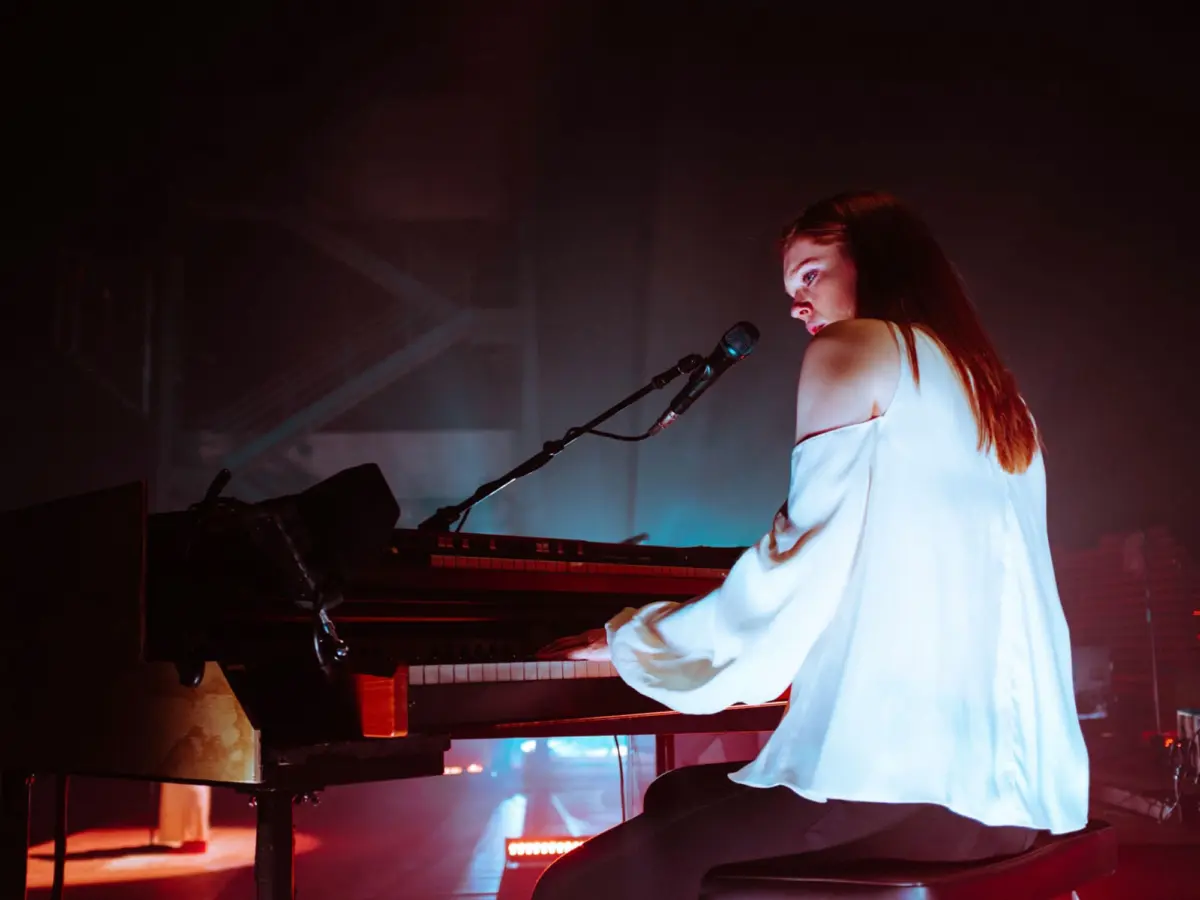
Enter Hazel Mills—acclaimed singer, songwriter, session musician, and frequent collaborator with global superstars like Kylie Minogue and Florence + The Machine. Appearing as a featured guest on the latest season of MusicTech’s popular podcast, My Forever Studio (produced in partnership with Audient), Mills offered a radical antidote to the endless gear-acquisition cycle that plagues modern creators. Rather than chasing the next big plugin release or hardware upgrade, Mills champions a philosophy of deliberate restriction: learning to deeply master a single piece of gear over the course of a year.
This in-depth feature explores Mills’ insights on option paralysis, the psychological burden of endless choice, and why imposing strict creative limitations might just be the most powerful production tool you aren’t using.
Detailed Chronology: The Evolution of Choice and the Birth of Option Paralysis
To fully understand why modern musicians suffer from option paralysis, it is helpful to trace how the studio environment has transformed over the past half-century.
The Era of Physical Limitations (1970s–1990s)
Decades ago, recording studios were defined entirely by their physical and financial limitations. A producer working in the 1970s or 1980s did not have access to thousands of preset sounds at the turn of a dial. Instead, they worked with a fixed console, a handful of outboard compressors, a limited number of tape tracks, and perhaps a couple of iconic synthesizers (such as the Minimoog or Roland Juno-106).
If a producer wanted a specific reverb tail, they often had to commit it to tape during tracking, or rely on the natural acoustics of the live room. These limitations forced efficiency, decisive action, and deep technical mastery. Engineers and musicians knew every quirk, sweet spot, and limitation of their gear because they had no other choice.
The Digital Revolution and the Infinite Workspace (2000s–Present)
As computing power surged and software emulation advanced, the physical studio began to shrink, ultimately migrating entirely inside the computer. Suddenly, a producer could run fifty instances of a virtual synthesizer simultaneously, layer an infinite number of vocal tracks, and audition hundreds of different compressor plugins on a single snare drum within seconds.
While this technological leap revolutionized workflow speed and editing precision, it fundamentally altered the human psychology of music-making. Behavioral psychologists have long noted that when faced with an overwhelming array of choices, human decision-making efficiency plummets. In the context of music production, this manifests as endless tweaking, second-guessing, and aborted song ideas—a state where the search for a sound overshadows the creation of the music itself.
The My Forever Studio Intervention
Recognizing this modern creative malaise, MusicTech launched Season 8 of its flagship podcast, My Forever Studio. The premise is simple yet challenging: invite top-tier producers, songwriters, and session players to design their ultimate, lifelong dream studio. However, there is a catch. Guests are subjected to a strictly limited inventory of items, forcing them to prioritize quality, versatility, and emotional connection over sheer quantity.
When Hazel Mills stepped up to the microphone for the latest episode, her perspective on gear curation immediately struck a chord with producers drowning in digital clutter.
Supporting Context & Metrics: The Psychology of Over-Curation
Hazel Mills’ warning against the perils of endless gear accumulation is backed up by broader trends in modern consumer psychology and workflow management.
The Paradox of Choice
Coined by psychologist Barry Schwartz in his seminal 2004 book The Paradox of Choice, the core premise is that while autonomy and choice are fundamental to human welfare, too much choice produces psychological distress and decision paralysis. In creative fields, this effect is amplified. When a producer spends three hours scrolling through kick drum samples or virtual piano patches, they deplete the cognitive resources required for higher-level artistic choices, such as melody writing, arrangement, and emotional delivery.
The "Surface-Level" Trap
Mills articulated this phenomenon during her My Forever Studio appearance, noting how easy it is to remain trapped on the surface of your tools:

"I’m a real advocate of limitations, meaning that you can actually be more creative rather than having all these different pieces of gear [that you] only ever really learn on the surface. Whereas if you’ve got one piece of gear that you use for a year, you really get to know it."
When creators constantly pivot to new gear, they never move past the preset banks. They fail to understand the underlying architecture of a synth, the specific harmonic distortion characteristics of a preamp, or how a particular microphone responds to dynamic vocal changes.
Building a Relationship With Your Tools
One of the most profound takeaways from Mills’ interview is the idea that instruments and gear are not merely utilitarian objects; they are creative partners. She elaborates:
"You don’t just get to know how to use it, you also get to know what your relationship is with it, and what your voice is when you’re using it."
When an artist uses a single keyboard, synthesizer, or workstation for an extended period, that piece of gear becomes an extension of their musical identity. The workflow shifts from conscious problem-solving ("How do I program this filter envelope?") to intuitive expression ("This is how I sound").
Official Statements & Insights from Hazel Mills
To gain a deeper appreciation of Mills’ philosophy, it helps to examine her operational approach within high-pressure professional environments. Having collaborated with pop royalty like Kylie Minogue and alternative icons Florence + The Machine, Mills understands the delicate balance between technical preparedness and creative spontaneity.
Curating the Mobile Environment
Despite having access to a vast array of high-end equipment through her professional network, Mills chooses a minimalist approach to her day-to-day setup:
"Option paralysis is very real. I don’t often have all of the gear that I have access to set up and ready to go at once. And I could do that if I wanted to, but I almost don’t want to. I’d rather just have combinations good to go."
By pre-selecting specific signal chains and keeping her workspace uncluttered, Mills eliminates friction at the onset of a session. This deliberate restriction allows her to channel her energy directly into performance and composition rather than technical troubleshooting or routing configurations.
The Power of "No Bundles"
The ethos of My Forever Studio mirrors Mills’ philosophy. By imposing hard caps on the number of items guests can include in their dream studio—and strictly forbidding massive plugin bundles—the podcast forces artists to evaluate what truly matters to their sound. It strips away the marketing hype of modern gear culture and refocuses the spotlight on fundamental musicianship.
Future Outlook: Reclaiming Creativity in an Era of Infinite Possibilities
As the audio technology industry continues to evolve—with artificial intelligence entering the digital audio workspace, adaptive plugins becoming commonplace, and hardware manufacturers pushing out new iterations at breakneck speed—the need for intentional creative constraints will only grow more urgent.
The Minimalist Production Movement
We are already beginning to see a counter-movement among modern producers. A growing cohort of artists are voluntarily returning to hardware-only "dawless" setups, limiting themselves to four-track tape recorders, or restricting their plugin folders to a curated handful of trusted tools.
By following Hazel Mills’ blueprint—committing to a single piece of gear for a prolonged period—producers can break free from the cycle of consumerism and reclaim the deep artistic satisfaction that comes from true mastery.
Key Takeaways for Producers Looking to Beat Option Paralysis:
- Audit Your Plugin Folder: Hide or uninstall plugins you haven’t used in the last six months. Force yourself to learn the stock plugins inside your DAW inside and out.
- Limit Your Setup: Do not leave your entire studio connected at once. Set up a modular, portable rig or a fixed signal chain for the week and commit to it.
- Give Gear Time: Before deciding a piece of gear or virtual instrument doesn’t work for you, spend at least a few months writing entire tracks with it. Master its limitations and find its unique sweet spots.
- Prioritize Workflow Over Specs: The newest hardware or highest sample-rate plugin will not fix a weak arrangement or an uninspired melody. Focus on tools that inspire emotional connection.
To hear Hazel Mills discuss her creative philosophy in full, along with her unique picks for her ultimate setup, listen to the latest episode of MusicTech’s My Forever Studio podcast, available now on Apple Podcasts and Spotify.