Executive Overview
In the modern landscape of audio production, few processors are as ubiquitous, indispensable, and frequently misunderstood as the compressor. Whether tracking a delicate vocal, gluing together a dense drum bus, or driving a master track to commercial loudness standards, compression remains the invisible hand shaping contemporary sound. At its core, an audio compressor is an automated volume control device designed to reduce the dynamic range of a signal—narrowing the gap between the softest and loudest passages.
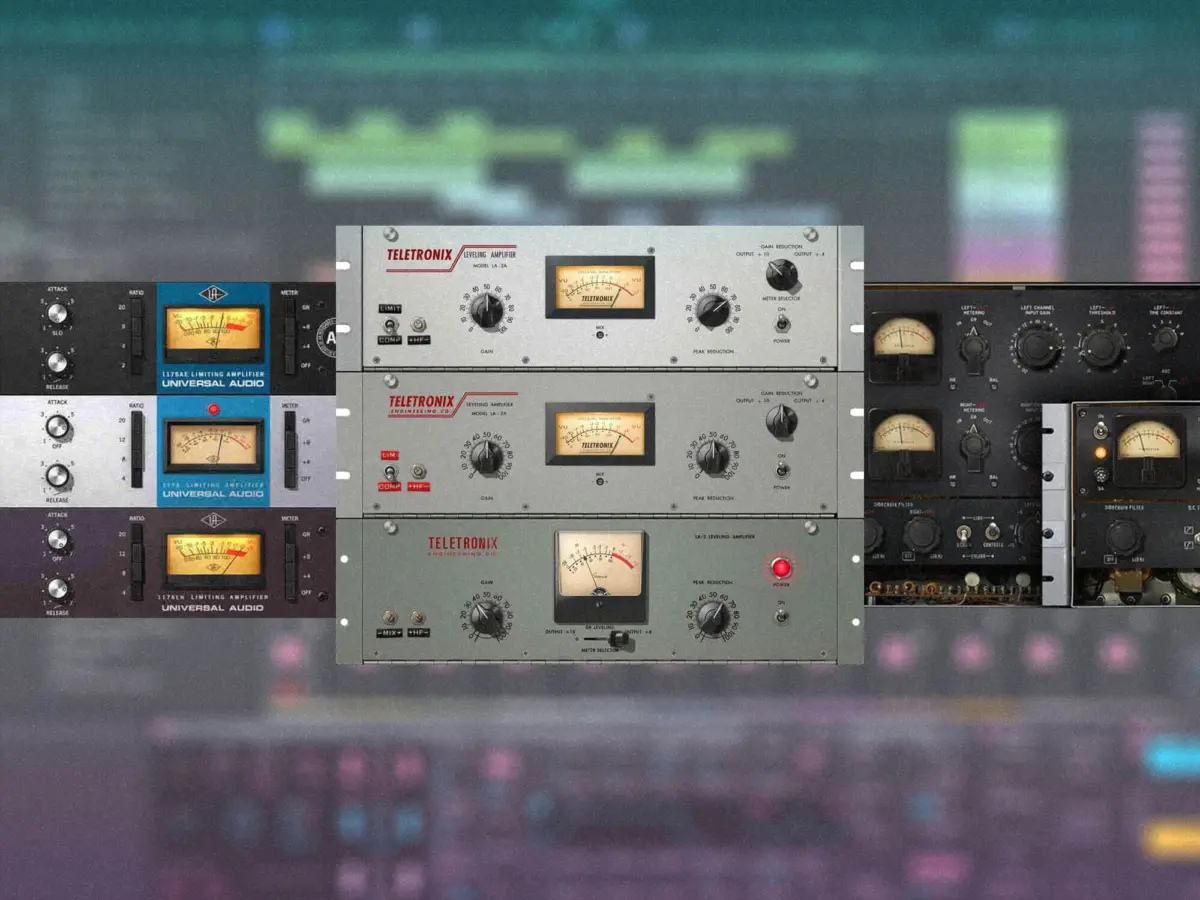
While its foundational mathematical concept is straightforward, the artistic and technical deployment of compression is an intricate discipline. Producers, mixing engineers, and mastering gurus spend decades mastering its nuances. It is not merely a utility tool to tame runaway peaks; it is a creative instrument that imparts color, punch, character, and emotional weight to music. As digital audio workstations (DAWs) have democratized access to world-class dynamic processors—from meticulous software emulations of legendary analog hardware like the Universal Audio 1176 and LA-2A to ultra-transparent digital algorithms—understanding the mechanics, applications, and strategic implementation of compression is more critical than ever.
This comprehensive guide explores the multi-faceted role of compression across every stage of the audio lifecycle. From tracking and mixing to final mastering and platform-specific delivery optimization, we examine how compression achieves dynamic control, sonic solidity, and professional cohesion.
Detailed Chronology & Evolution: From Vacuum Tubes to Intelligent Neural DSP
To fully appreciate the role of compression in modern workflows, one must understand how this technology evolved from bulky, room-sized laboratory equipment into the sleek software plugins that populate modern DAW sessions.
The Analog Dawn (1930s–1950s)
Dynamic range control originated out of sheer necessity in the telecommunications and broadcasting industries. In the early days of radio and telephony, engineers needed a way to prevent high-amplitude audio signals from overloading transmitters and causing distortion or equipment failure.
In the 1930s, the variable-mu (variable amplification) tube compressor was born. Devices like the legendary Fairchild 670 utilized vacuum tubes to alter gain dynamically based on the input signal’s amplitude. When music production shifted from direct-to-disc cutting to magnetic tape recording in the post-WWII era, these circuits were repurposed by forward-thinking recording engineers who realized that squashing a signal’s dynamics could make instruments sound larger-than-life, thicker, and more aggressively present.
The Solid-State and Optical Revolutions (1960s–1970s)
As transistors replaced vacuum tubes, compressor design entered a golden era of innovation. The 1960s introduced optical (opto) compression, famously embodied by the Teletronix LA-2A. By coupling a glowing electroluminescent panel with a light-dependent photoresistor, optical compressors introduced a naturally smooth, program-dependent release time that made them absolute classics for smoothing out vocals and bass lines.
Simultaneously, the pursuit of lightning-fast transient response led to the creation of Field Effect Transistor (FET) compressors, epitomized by the Urei 1176 in 1967. Capable of attack times measured in microseconds, FET compressors brought aggressive punch, grit, and attitude to rock and roll drums and electric guitars. Shortly thereafter, VCA (Voltage Controlled Amplifier) compressors—such as the SSL bus compressor—offered pristine transparency and reliability, becoming the secret weapon for gluing entire mixes together on British console desks.
The Digital Era and Plugin Emulation (1980s–Present)
The advent of digital signal processing (DSP) in the late 20th century transformed compressors from physical hardware units into lines of code. Early digital compressors were praised for their clinical precision and zero distortion, though some engineers missed the nonlinear harmonic saturation of analog circuits.
Today, component-level modeling allows software developers to recreate the exact electrical quirks, transformer hums, and nonlinear distortions of vintage hardware with staggering accuracy. Furthermore, modern machine learning and neural DSP are pushing the boundaries further, offering intelligent compressors that listen to audio and suggest optimal settings in real-time. Yet, despite these technological leaps, the core psychoacoustic principles governing how we perceive dynamics remain entirely unchanged.
Supporting Context & Metrics: How Compressors Work Under the Hood
To wield a compressor effectively, one must look past the interface and understand the parameters governing its behavior. Conceptually, a compressor acts as an extremely fast, tireless assistant riding a channel fader. When the incoming audio signal crosses a user-defined threshold, the processor automatically attenuates the volume by a predetermined ratio. Once the signal falls back below that threshold, the fader returns to unity gain.
Key Parameters and Their Sonic Impact
- Threshold (dB): The critical trigger point. Any audio signal that exceeds the threshold level will be subjected to gain reduction. Signals falling below the threshold pass through untouched. Lowering the threshold catches more of the audio signal, resulting in more consistent overall compression.
- Ratio (% or x:1): The degree of attenuation applied once the signal crosses the threshold. A ratio of 2:1 means that for every 2 dB the input signal exceeds the threshold, the output is allowed to rise by only 1 dB. Higher ratios (e.g., 10:1 or infinity:1, known as limiting) squash the dynamic range aggressively, turning the compressor into a rigid brickwall ceiling.
- Attack Time (Milliseconds): How quickly the compressor reacts after the signal crosses the threshold. Fast attack times (sub-millisecond) clamp down immediately on fast transients (like the sharp crack of a snare drum), subduing initial impact but creating heavy energy density. Slow attack times allow the initial transient to pass through uncompressed before clamping down, preserving natural punch and life.
- Release Time (Milliseconds): How long it takes for the compressor to stop reducing gain and return the signal to its uncompressed state once it falls back below the threshold. Setting the release time in time with the tempo of the track (pumping in rhythm with the groove) is a hallmark of professional mixing technique.
- Makeup Gain (dB): Because compression turns down the loudest parts of a signal, the overall perceived volume drops. Makeup gain allows the engineer to boost the output level of the compressed signal back up, compensating for the lost headroom and yielding a louder, denser, more present signal.
Deep Dive: Applications Across the Audio Production Lifecycle
Compression is deployed at four distinct stages of music production, with unique objectives at every step: recording, tracking, mixing, and mastering.
+-----------------------------------------------------------------+
|                    THE COMPRESSION LIFECYCLE                    |
+-----------------------------------------------------------------+
          |                                     |
          v                                     v
   [ 1. RECORDING ]                      [ 2. MIXING ]
   - Tame unexpected peaks               - Smooth sub-mixes
   - Capture stronger signals            - Glue instruments together
          |                                     |
          v                                     v
   [ 3. MASTERING ]                      [ 4. DISTRIBUTION ]
   - Final cohesion & weight             - Meet platform LUFS targets
   - Commercial loudness                 - Spotify vs. Vinyl requirements
1. Recording (Tracking)
During the tracking phase, applying a light touch of hardware or software compression—often referred to as "tracking on the way in"—serves two vital purposes. First, it catches unexpected, explosive dynamic spikes from a vocalist or instrumentalist, protecting the recording chain (particularly analog-to-digital converters) from clipping distortion.

Second, by shaving off unruly peaks, tracking engineers can apply higher overall gain to the preamplifier, capturing a hotter, stronger signal with a superior signal-to-noise ratio. This establishes a rock-solid foundation that requires far less corrective processing later down the line.
2. Tracking and Sub-Mixing
As the multi-track session grows, compression is deployed to bring cohesion to individual instrument groups. A vocal track that swings wildly between whispered intimacy and roaring belts can easily get lost in a dense arrangement. Without compression, the quiet passages vanish while the loud passages pierce the eardrums. While manual volume automation (or "fader riding") is an alternative, a well-tuned compressor handles these micro-dynamics seamlessly, keeping the vocal front and center.
Similarly, on drum buses and sub-mixes, gentle bus compression introduces an effect known as "glue." By forcing interdependent instruments to react to the same overarching dynamic envelope, the mix stops sounding like a collection of isolated tracks and starts feeling like a unified, cohesive band playing in a physical space.
3. Mastering
The mastering stage represents the final polish before commercial release. Here, multiband or stereo bus compressors are applied to add a final layer of solidity, weight, and glue across the entire mix. Mastering compression must be handled with supreme delicacy; over-compression at this stage can suck the life, air, and emotional variance out of a carefully balanced mix, resulting in listener fatigue and digital distortion.
4. Distribution and Platform Optimization
A critical modern challenge is tailoring dynamic range to meet the technical requirements of various distribution channels. The way audio translates across different platforms varies dramatically:
- Streaming Services (Spotify, Apple Music, Tidal): These platforms utilize normalization algorithms (measured in LUFS—Loudness Units Full Scale) that automatically turn down overly compressed, hyper-loud files. Consequently, crushing a mix to extreme loudness no longer guarantees a competitive advantage; instead, it sacrifices transient punch and dynamic breathing room for no sonic gain.
- Vinyl Records: Unlike digital files, physical vinyl grooves have absolute mechanical limitations. Excessive low-frequency energy or over-compressed, square-wave peaks can cause the playback stylus to jump out of the groove. Vinyl mastering requires careful dynamic management to ensure physical translatability.
- Broadcast and Cinema: Television and film distribution networks enforce strict peak and loudness limits (such as EBU R128 or ATSC A/85) to ensure comfortable listening volumes for audiences, necessitating precise downward compression and limiting.
Official Statements and Industry Insights
Top-tier mix and mastering engineers continually emphasize that compression is as much an artistic choice as it is a technical necessity.
Andrew Scheps, legendary mix engineer for artists like Adele, Red Hot Chili Peppers, and Metallica, frequently notes that compression should be used to dictate the energy and emotional delivery of a performance rather than merely correct technical flaws. "If a track isn’t exciting, turning it up won’t fix it," Scheps notes in masterclasses. "Compression allows you to change the attitude of an instrument—making it feel closer, more aggressive, or more driving."
Similarly, mastering icons point out that the democratization of digital plugins has led to a common pitfall among amateur producers: over-compression. Bob Katz, prominent mastering engineer and author of Mastering Audio: The Art and the Science, has long cautioned against the "loudness wars," advocating for preserving dynamic contrast. "Dynamics are the heartbeat of music," Katz explains. "When you compress everything to the point of flatline flatness, you rob the listener of the emotional peaks and valleys that make music compelling."
Industry data underscores this shift. With the global adoption of streaming loudness normalization standards by major tech companies over the past decade, the industry has seen a gradual retreat from extreme, brickwall limiting. Modern chart-topping productions are increasingly embracing dynamic headroom, proving that breathability and impact can coexist harmoniously in contemporary mixes.
Future Outlook: Intelligent Processing and the Next Generation of Dynamics
As music technology continues its relentless march forward, the future of compression is being shaped by artificial intelligence, machine learning, and spatial audio formats.
AI-Assisted and Adaptive Compression
Modern producers increasingly utilize intelligent plugins that analyze audio material in real-time, parsing spectral balance, transient density, and dynamic range to suggest optimal threshold, ratio, and envelope settings. While these tools do not replace the artistic ear of a human engineer, they serve as powerful accelerators, eliminating guesswork for emerging producers and streamlining high-pressure commercial workflows.
Spatial Audio and Immersive Mixing
With the explosive growth of Dolby Atmos and immersive spatial audio formats, compression techniques are evolving beyond traditional stereo buses. Mixing engineers must now manage dynamics not just across two channels, but across three-dimensional soundstages. Spatial compressors that operate independently on bed channels, object channels, and height layers are becoming standard issue in high-end studios, ensuring that dynamic control remains pristine and coherent even when translated from stereo to 7.1.4 immersive setups.
Conclusion
Compression remains one of the absolute pillars of professional audio engineering. Far from being a mere technical remedy for uneven performances, it is a creative paintbrush that defines the weight, punch, clarity, and emotional impact of recorded music. By mastering its parameters—from attack and release times to ratio and threshold—and understanding how dynamic control influences everything from tracking to streaming delivery, producers can unlock the full potential of their mixes. As audio technology marches into an era of intelligent processing and immersive sound, the fundamental principles of compression will continue to anchor the craft of great record-making.