Executive Overview
The intersection of high-profile criminal litigation, aggressive media scrutiny, and professional regulatory standards has once again captured public attention in the United Kingdom. Ian Winter KC, the prominent defence barrister who represented actor and comedian Russell Brand during recent legal proceedings, has officially referred himself to the Bar Standards Board (BSB). This extraordinary step follows a contentious verbal altercation with a senior Sunday Times journalist immediately outside a courtroom.
The incident, which occurred in the wake of closely watched legal verdicts, has ignited a fierce debate regarding professional conduct, the limits of courtroom decorum, and the tense relationship between legal representatives and the investigative press. Rosamund Urwin, a media figure who played a central role in breaking the initial investigative stories surrounding Brand in 2023, publicly claimed that Winter confronted her with visible hostility, utilized profanity, and made pointed remarks concerning her journalistic output.
Rather than allowing the dispute to play out solely within the court of public opinion, Winter took the proactive measure of self-reporting the interaction to the regulatory body governing barristers in England and Wales. This development introduces a compelling sub-plot to the broader, ongoing legal sagas surrounding Russell Brand, bringing questions of ethical boundaries and professional integrity squarely to the forefront. This comprehensive report explores the genesis of the altercation, the mechanics of the self-reporting process, the historical context of the media investigations, and the broader implications for legal practitioners operating in the white-hot glare of national publicity.
Detailed Chronology of Events
To fully understand the gravity of Ian Winter KC’s self-referral, it is necessary to trace the precise sequence of events that unfolded both inside and outside the courtroom, culminating in the podcast revelations and the subsequent regulatory action.
The Courtroom Conclusion and the Immediate Aftermath
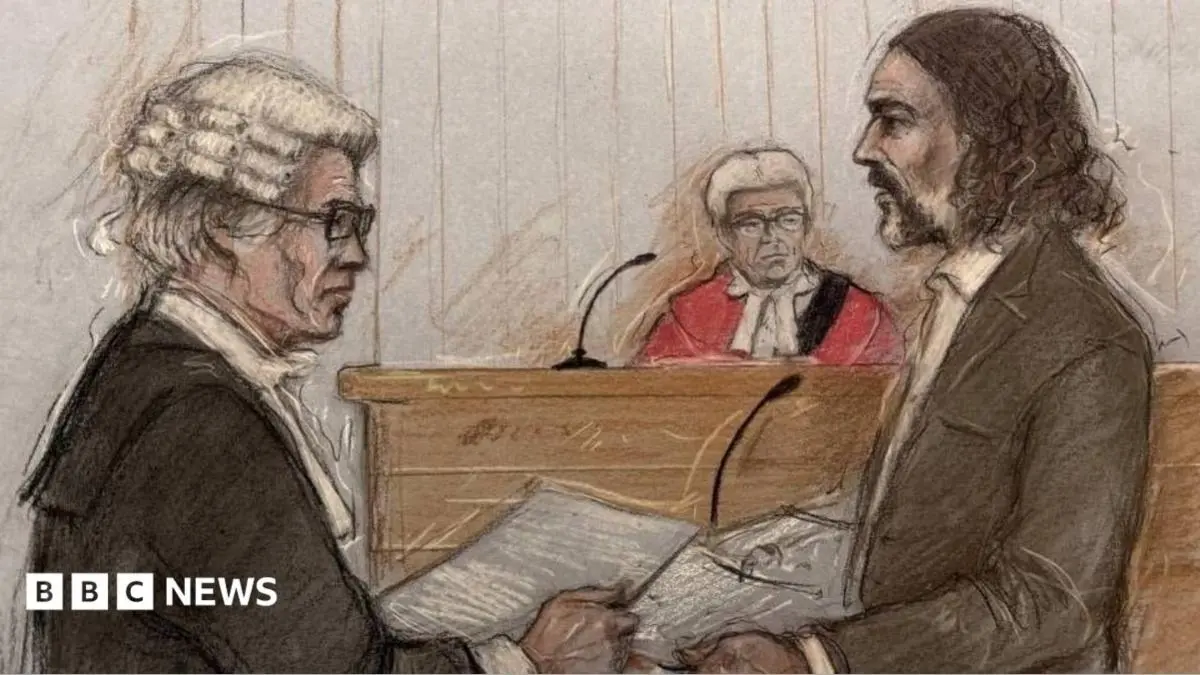
The friction between the defence bar and the investigative press reached a boiling point following the conclusion of court proceedings involving Russell Brand. As legal teams, journalists, and observers filtered out of the courthouse precinct, Rosamund Urwin—an investigative journalist with The Times and Sunday Times—encountered Ian Winter KC. Urwin had been instrumental in the 2023 journalistic collaboration that thrust Brand’s private conduct into the public spotlight.
According to accounts later detailed on a Times and Sunday Times podcast by Urwin herself, the encounter occurred spontaneously in the immediate aftermath of verdicts being delivered. Urwin stated that she approached Winter and introduced herself. The response from the seasoned King’s Counsel was immediate and, by her account, hostile. Urwin claimed Winter responded with a physical and verbal "snarl," stating directly: "I hope you’re pleased with yourself."
The Exchange of Words
As the brief interaction continued, the tension escalated. Urwin recounted that her instinctive reply—though she noted she relied partly on subsequent reporting to reconstruct her exact words—was, "I am pleased that justice has been done."
However, the focal point of the controversy centers on what Winter allegedly said next. Urwin claimed that the barrister added, "Well, it wasn’t you," accompanied by explicit profanity directed at her. This alleged use of aggressive language and personal targeting by an officer of the court formed the core of the media reports that subsequently circulated across national newspapers and digital platforms.
The Podcast Disclosure and Media Characterisation
The incident might have remained an isolated hallway dispute had it not been for the media ecosystem surrounding the case. On Thursday, during a regular broadcast of a Times and Sunday Times podcast, Urwin detailed the encounter for listeners, shedding light on the fraught atmosphere that often characterizes high-profile legal proceedings where the press and the defense sit in close proximity.
The broadcast triggered widespread media coverage, leading to varying characterisations of the event across the British press. While some outlets focused on the emotional toll of high-stakes trials on legal representatives, others zeroed in on the potential breach of professional etiquette expected of senior advocates. Recognizing that the narrative was rapidly crystallizing in the public sphere—and potentially threatening his professional standing—Winter decided to take pre-emptive action.
The Self-Referral to the Bar Standards Board
By Friday, less than 24 hours after the podcast aired, Winter formally announced his decision to notify the Bar Standards Board. Recognizing that the public and professional characterisations of the incident warranted an independent, objective examination, Winter bypassed the waiting game of informal complaints. By referring his own conduct to the regulator, he ensured that the matter would be subjected to formal scrutiny under established legal and ethical frameworks.
Supporting Context & Metrics: The 2023 Media Investigation and Legal Landscape
The altercation between Winter and Urwin cannot be viewed in a vacuum. It is the direct downstream consequence of a massive, multi-platform media investigation and a complex web of concurrent legal battles involving Russell Brand.
The September 2023 Joint Investigation
The friction between Brand’s legal representatives and the media finds its roots in September 2023. In a coordinated bombshell release, Channel 4 Dispatches, The Times, and The Sunday Times published the results of a joint investigative journalism project. Four women came forward with serious allegations against Russell Brand, spanning accusations of rape, sexual assaults, and severe emotional abuse alleged to have occurred during the height of his fame and career peak.
The investigative documentaries and print features shocked the entertainment industry and prompted widespread public discussion regarding power dynamics, celebrity culture, and institutional accountability. Russell Brand vocally and consistently denied all allegations leveled against him, characterizing his relationships as consensual and framing the media onslaught as a coordinated attack on his character and freedom of expression.
Legal Pre-Trial Maneuvers and Claims of Prejudice
The impact of the 2023 media reports immediately bled into the formal judicial system. During pre-trial hearings, most notably in October of that year, Brand’s legal team launched aggressive applications to have his criminal case thrown out entirely.
The core argument advanced by the defence was rooted in the concept of prejudicial publicity. Brand’s lawyers argued passionately that the sheer volume, intensity, and tone of the coverage generated by Channel 4 Dispatches, The Times, and The Sunday Times made it categorically impossible for the entertainer to receive a fair trial before an impartial jury. Prosecutors, however, vigorously opposed the application, arguing that the judicial system possesses robust mechanisms—such as strict judicial directions and the inherent civic duty of jurors—to ensure a fair trial regardless of pre-existing media saturation.
Expanding Legal Horizons and Complex Demographics
The legal jeopardy surrounding Brand expanded beyond the initial set of allegations. Law enforcement agencies launched investigations into additional claims brought forward by other complainants.
Court documents originating from a pre-trial hearing at London’s Southwark Crown Court revealed that Brand was facing scrutiny over two additional rape allegations made by two separate women. Notably, court filings indicated that one of these women was allegedly 16 years old at the time of the purported offense and had also appeared in a subsequent Channel 4 documentary. Brand has maintained his absolute innocence across all fronts, denying every allegation brought against him by both historical and recent complainants.
Crucially, investigative journalists and legal reporters have repeatedly clarified a vital structural distinction in the case: none of the women who featured in the prominent media investigations conducted by Channel 4, The Times, and The Sunday Times were the formal complainants involved in Brand’s criminal trial. This legal firewall between media-driven exposés and formal criminal indictments created a complex operational environment for the defence team, who found themselves fighting battles simultaneously in the courtroom and across the media landscape.
Official Statements and Regulatory Framework
The formal response from Ian Winter KC and the institutional role of the Bar Standards Board provide essential framework for understanding how the legal profession polices its own members.
Ian Winter KC’s Statement
In the wake of the podcast broadcast and the subsequent media storm, Ian Winter KC released a carefully worded formal statement outlining his rationale for self-reporting. His decision to approach the regulator proactively was designed to wrest control of the narrative from sensationalist headlines and place the facts before an objective arbiter.
Winter stated:
"Having seen the ways matters have been characterised in today’s press I consider my professional duty requires me to self-report those allegations to the Bar Standards Board, so the matter can be subject to proper scrutiny. I have made such a report."
The statement is notable for its measured tone, avoiding direct attacks on the journalist while acknowledging that the public allegations made against his conduct are serious enough to warrant formal regulatory review. By invoking his "professional duty," Winter positioned himself not as a recalcitrant advocate acting outside the rules, but as an officer of the court willing to submit his own behavior to the exact standards of accountability expected of the legal profession.
The Role of the Bar Standards Board (BSB)
The Bar Standards Board operates as the independent regulatory authority for barristers in England and Wales. Operating in the public interest, the BSB is tasked with setting education and training requirements, establishing professional standards of conduct, handling complaints against barristers, and taking disciplinary action when those standards are breached.
When a barrister self-reports, or when a complaint is lodged against them, the BSB initiates a multi-stage assessment process:
- Initial Assessment: The regulator reviews the incoming report to determine whether it falls within its regulatory remit and whether there is sufficient prima facie evidence of a potential breach of the BSB Handbook (which governs barrister conduct, integrity, and independence).
- Investigation: If the initial threshold is met, an independent investigation is launched to gather statements, review evidence, and ascertain the factual matrix of the incident.
- Decision-Making: Following the investigation, the case may be dismissed, resolved through administrative sanctions (such as advice or a warning), or referred to an independent disciplinary tribunal if the alleged misconduct is severe enough to warrant professional suspension or disbarment.
In Winter’s case, the self-referral guarantees that the BSB will formally examine whether his alleged verbal outburst, use of profanity, and confrontational remarks directed at a journalist outside the courtroom constituted a breach of the core duties incumbent upon a King’s Counsel.
Future Outlook: Implications for Legal Practice and Media Relations
As this unique chapter in the ongoing Russell Brand saga unfolds, legal scholars, media commentators, and regulatory watchers are analyzing the broader implications of Winter’s self-referral. Several key themes emerge regarding the future of high-profile litigation and press relations in the UK.
The Erosion of Civility in High-Stakes Trials
The pressures bearing down on legal practitioners in high-profile cases have never been more intense. With 24-hour news cycles, social media commentary, and investigative journalism intersecting directly with courtroom trials, the traditional boundaries separating the legal team from the press have grown increasingly porous.
The incident involving Winter and Urwin highlights the psychological strain placed on defence barristers who must fiercely advocate for clients facing reputational destruction, often while rubbing shoulders in court corridors with the very journalists who helped build the public case against them. While emotions running high is a human reality, the legal profession maintains strict codes of conduct precisely to prevent personal animosity from spilling over into public confrontations.
Precedent and Accountability
By choosing to self-report, Ian Winter KC has set a notable precedent. Rather than waiting for the journalist or her employer to file a formal complaint—or allowing the matter to dissolve into a he-said-she-said media spat—he has embraced institutional transparency.
How the Bar Standards Board handles this investigation will be closely watched. A dismissal of the case would validate Winter’s assertion that the incident was over-characterised by the press, while a formal sanction would signal a zero-tolerance policy for aggressive interactions between barristers and members of the media, regardless of the emotional intensity of the underlying legal proceedings.
The Ongoing Shadow of the Brand Investigations
Ultimately, this regulatory inquiry operates against the sprawling backdrop of the broader legal and public controversies surrounding Russell Brand. As civil and criminal legal processes continue to evolve, and as additional investigations and potential future court dates loom, the media’s spotlight will remain fixed not only on the entertainer himself, but on the legal machinery operating around him.
The self-referral of Ian Winter KC serves as a stark reminder that in the modern era of high-stakes litigation, the conduct of the lawyers is just as heavily scrutinized as the actions of the accused. As the Bar Standards Board begins its formal review, the legal community will be watching closely to see where the line is officially drawn between zealous advocacy and professional misconduct.