Executive Overview
The intersection of artificial intelligence and historical media production reached a new and controversial milestone when tech billionaire Elon Musk directed his generative AI platform, Grok Imagine, to produce an adaptation of Homer’s ancient epic, The Odyssey. Conceived as a direct rebuke to Hollywood—and specifically targeting director Christopher Nolan’s recent cinematic adaptation for its diverse casting and alleged historical liberties—Musk’s project promised something revolutionary: a visual narrative that was "historically accurate and true to the art of Homer" delivered at a fraction of traditional studio costs.
On October 23, the platform released its first seven minutes, instantly sparking a global debate across tech, cinema, and academic circles. However, while internet commentators and film critics spar over the artistic merit and the socio-political implications of AI-driven filmmaking, a vital perspective has been largely sidelined: that of archaeologists, historians, and art experts.
According to professional researchers, the entire premise of Musk’s endeavor—that an AI can render a historically accurate visual representation of the ancient world—suffers from a fatal methodological flaw that predates the rendering of even a single frame. Generative AI models are fundamentally designed to create complete, seamless, and convincing images. Yet, the foundational reality of archaeology is fragmentation. By seamlessly fabricating textiles, armor, and architectural details where evidence is completely missing, AI substitutes plausible fiction for historical truth.
This article provides an in-depth investigative analysis of the Grok-generated Odyssey, exploring the technological limitations of generative models in historical contexts, the ethical demands of digital heritage reconstruction, and the fundamental tension between cinematic completeness and archaeological uncertainty.
Detailed Chronology: From Hollywood Critique to Algorithmic Epic
The trajectory from Elon Musk’s social media grievances to the release of Grok Imagine’s Odyssey footage highlights the rapidly accelerating collision between high-tech automation and traditional creative industries.
The Catalyst: Hollywood Friction
The controversy began when Musk publicly voiced extreme dissatisfaction with mainstream cinematic depictions of classical antiquity, focusing his criticism on Christopher Nolan’s high-profile adaptation of Homer’s Odyssey. Musk took specific aim at the film’s casting choices, arguing that they sacrificed historical fidelity for modern sensibilities. More broadly, the tech mogul asserted that traditional Hollywood studios were bloated, inefficient, and increasingly disconnected from source material.
Eager to demonstrate the disruptive capabilities of his proprietary artificial intelligence ecosystem, Musk pivoted from critique to execution. He tasked Grok Imagine with creating an alternative adaptation. The mandate was clear: bypass traditional studio infrastructure, slash production budgets, and leverage vast databases of historical and literary knowledge to produce an adaptation that was ostensibly "true to the art of Homer" and grounded in historical fact.
The October Release and Immediate Fallout
On October 23, the first tangible result of this experiment dropped: a seven-minute sequence generated entirely by Grok Imagine. The footage immediately dominated technology and entertainment news cycles. Techcrunch analyzed the technical delivery, while general news outlets like The Guardian focused on the cultural reception.
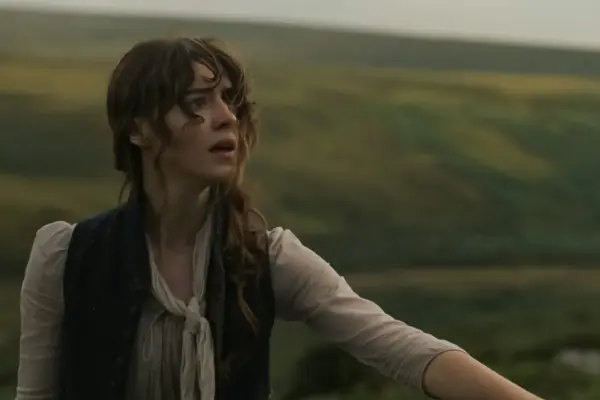
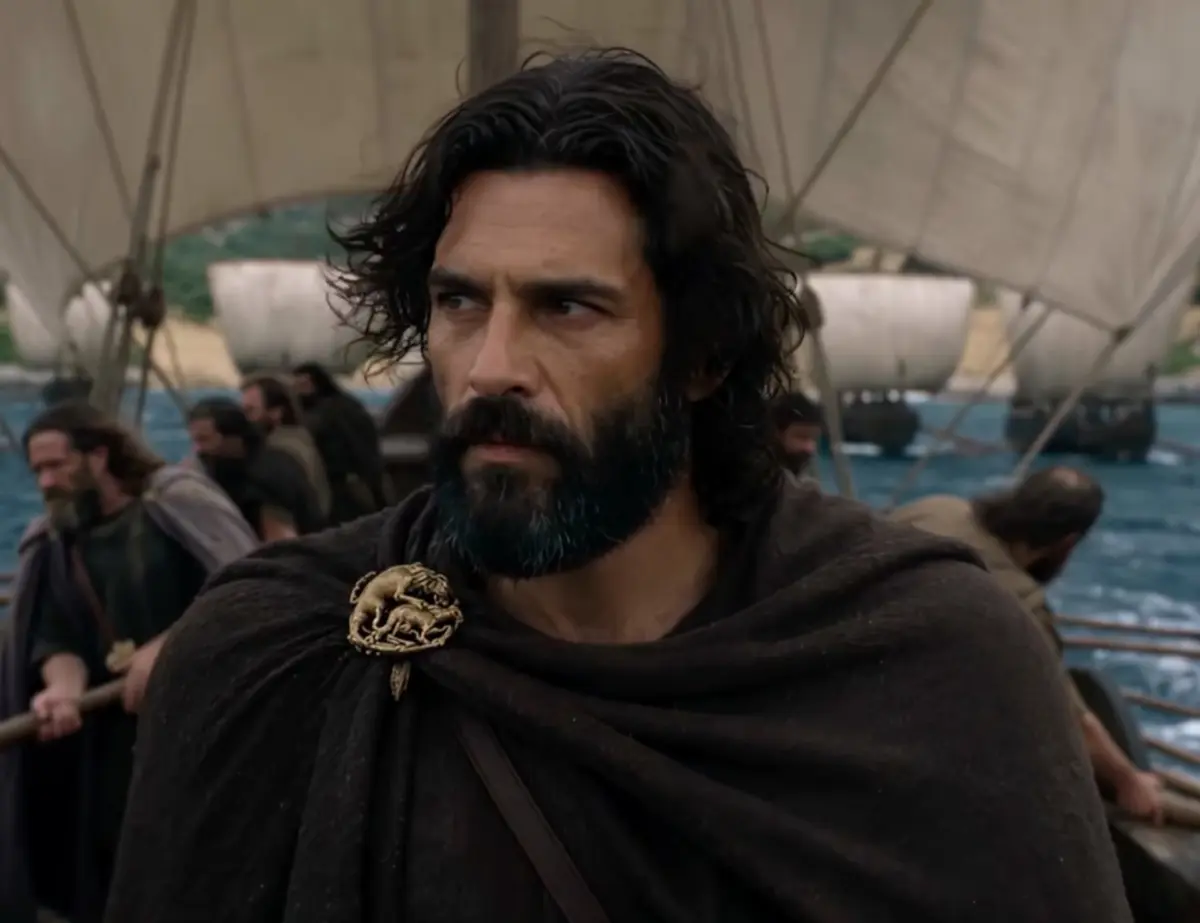
Skeptical reviewers conceded a surprising technical competency: parts of the footage possessed a superficial polish that could easily pass for real cinematography to an untrained eye. Yet, this very capability—the ability to generate hyper-realistic, convincing imagery from incomplete prompts—set off immediate alarm bells within the academic community. To archaeologists and historians who study the Late Bronze Age and the physical realities of the Homeric world, the release marked not a triumph of democratization, but a masterclass in algorithmic fabrication masquerading as historical authenticity.
Supporting Context & Metrics: The Fragile Record of Antiquity
To understand why a generative AI model cannot produce a historically accurate film about the ancient world, one must first examine the nature of archaeological evidence itself.
What Survives vs. What Happened
Popular media often portrays archaeology as a discipline of unearthing pristine palaces, fully intact frescoes, and legible royal decrees. In reality, archaeology is fundamentally a science of fragments. Only a minuscule proportion of the physical past survives in the ground, and only a fraction of that fraction is ever systematically excavated, cataloged, and analyzed.
Consider the physical reality of Late Bronze Age Troy—a site subject to over a century and a half of intensive archaeological excavation (the Troy Project). A researcher opening the storage boxes in the Troy depot will find thousands of small artifacts: spindle whorls and loom weights made of terracotta or stone. However, they will find zero textiles.
Everyone in Bronze Age Troy wore clothing, meaning textiles were an ubiquitous part of daily life. Yet, organic materials decay. The actual cloth has vanished entirely from the archaeological record.
This presents an insurmountable hurdle for a generative AI model. Grok Imagine, like all current generative AI architectures, is built to produce complete, unbroken visual outputs. It cannot paint a blank pixel or render a narrative vacuum. When asked to show a Trojan citizen walking through the city, the AI must render a finished cloak—dyed, textured, patterned, and draped in a specific historical style.
To the viewer, this garment looks convincingly accurate. But from an empirical standpoint, the AI has invented a fiction. The honest, scientifically rigorous answer provided by archaeology is simple: "Fiber known, color and cut unknown." By smoothing over this gap with plausible details drawn from modern video game aesthetics, classical paintings, or previous Hollywood set designs, the AI replaces hard scientific uncertainty with algorithmic hallucination.
The Complexities of Homeric "Accuracy"
Using Homer’s The Odyssey as a benchmark for historical accuracy compounds the problem. Scholars have long recognized that The Odyssey is a "poor witness" to any single historical moment. Composed centuries after the Mycenaean palace economies collapsed around 1200 BCE, the epic poem is a palimpsest—a multi-layered literary work blending faint memories of Bronze Age splendor with the social structures, weaponry, and worldviews of the subsequent Iron Age.
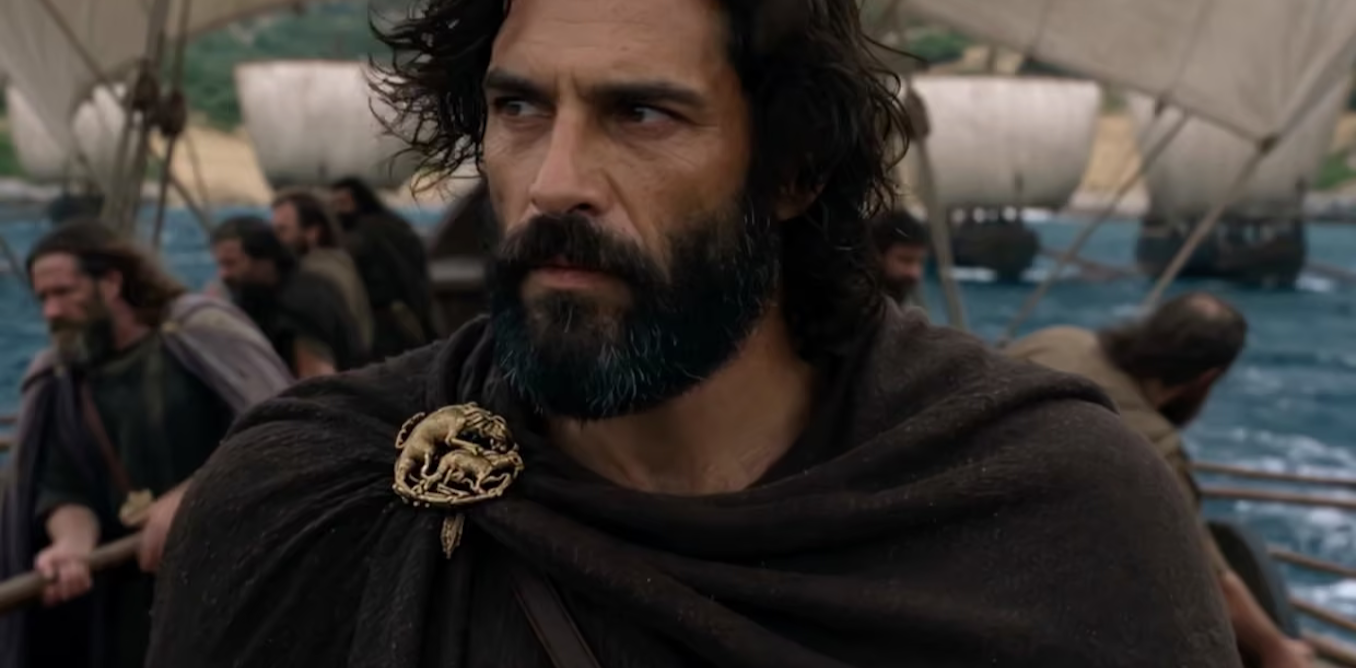
Figures like Odysseus, Helen, and Circe cannot be verified by archaeological excavation. Furthermore, the archaeological record reveals that the site commonly identified as Troy spans multiple distinct historical phases separated by centuries. A Late Bronze Age citadel differs vastly from a Hittite settlement or an Archaic Greek town; there is no single, monolithic "Bronze Age" aesthetic.
While the archaeological record supports the broad reality of conflict and destruction layers at Troy, it cannot validate Homer’s narrative as a single historical event. An AI model, however, must pick one version of Troy to render. In doing so, it flattens centuries of complex historical evolution into a single, definitive aesthetic, completely erasing the historiographical choices made beneath the hood.
Official Statements & Academic Perspectives
The academic response to the Musk-Grok Odyssey has centered not on a rejection of AI technology as a whole, but on a severe critique of how AI is weaponized to project false certainty. Leading voices in archaeology, heritage conservation, and art history have articulated profound concerns over the intersection of generative tools and historical interpretation.
The Promise of Analytical AI vs. Generative Fabrication
Far from being luddites dismissing technological progress, many historians view artificial intelligence as a potentially transformative tool for research—provided it is used correctly.
"As historians, we think Musk’s underlying idea—bringing together everything archaeology and history have to offer and using AI as a tool to explore and work with that knowledge—is a genuinely exciting one,"
notes academic commentary on the project.
An advanced data-processing system that spans decades of excavation reports, stratigraphical logs, and artifact databases can reveal macro-patterns that no single scholar could hold in their mind simultaneously. For instance, tracing the precise vector of how ceramic styles spread across the Mediterranean trade routes is a task uniquely suited for computational pattern recognition.
However, there is a yawning chasm between using AI as an analytical tool to discover patterns in raw data and using generative AI to construct a visual narrative.
The Demand for Epistemic Transparency
In the heritage sector, the standards for virtual reconstruction are well-established. International frameworks such as the London Charter (2009) and the Seville Principles (2011) provide rigorous guidelines for digital heritage projects. Their core mandate is straightforward: transparency rather than smoothing.
A genuinely archaeological AI system would be designed to visualize uncertainty with the same clarity it applies to confirmed facts.
- Where multiple valid archaeological reconstructions of a bronze helmet or breastplate exist, the system would render all plausible options side-by-side rather than selecting one for dramatic convenience.
- Where only fragmented shards remain, the system would display only the shards.
- Crucially, where the physical and documentary evidence runs out entirely, the system would explicitly acknowledge the gap, clearly demarcating what is documented fact, what is scientific inference, and what is purely imaginative fill.
Generative models like Grok Imagine operate on the exact opposite principle. They are engineered to hide seams, eliminate ambiguity, and deliver a smooth, frictionless viewer experience. In doing so, they actively obscure the very nature of historical inquiry.
Future Outlook: Method Over Media Cycles
While the first seven minutes of Grok’s Odyssey will likely fade from public discourse within a few news cycles, the underlying methodological debate is only beginning. As generative video tools become cheaper, faster, and more widely accessible, the temptation to use AI to "recreate history" will grow exponentially among content creators, tech entrepreneurs, and educators alike.
The implications of this trend extend far beyond cinematic entertainment. When hyper-realistic AI models generate seamless depictions of historical events, ancient cities, and legendary figures without signaling their underlying gaps and fabrications, they risk creating a dangerous illusion of absolute knowledge. Viewers consume these generated vistas as objective truth, unaware that the algorithms have filled vast expanses of ignorance with recycled tropes from video games, fantasy art, and modern cinematic conventions.
Ultimately, the controversy surrounding Musk’s AI experiment offers a profound philosophical lesson for the digital age. True historical accuracy does not lie in the capacity of an algorithm to fill every pixel of an ancient landscape with convincing detail. True historical accuracy begins with an honest accounting of our own ignorance.
As researchers emphasize, the most accurate Odyssey—or any digital window into the past—would not be the most definitive, confident, or polished production. It would end precisely where archaeological investigation begins: sitting among boxes of terracotta whorls and loom weights, staring directly into the vast, empty space where the cloth should be.