Executive Overview
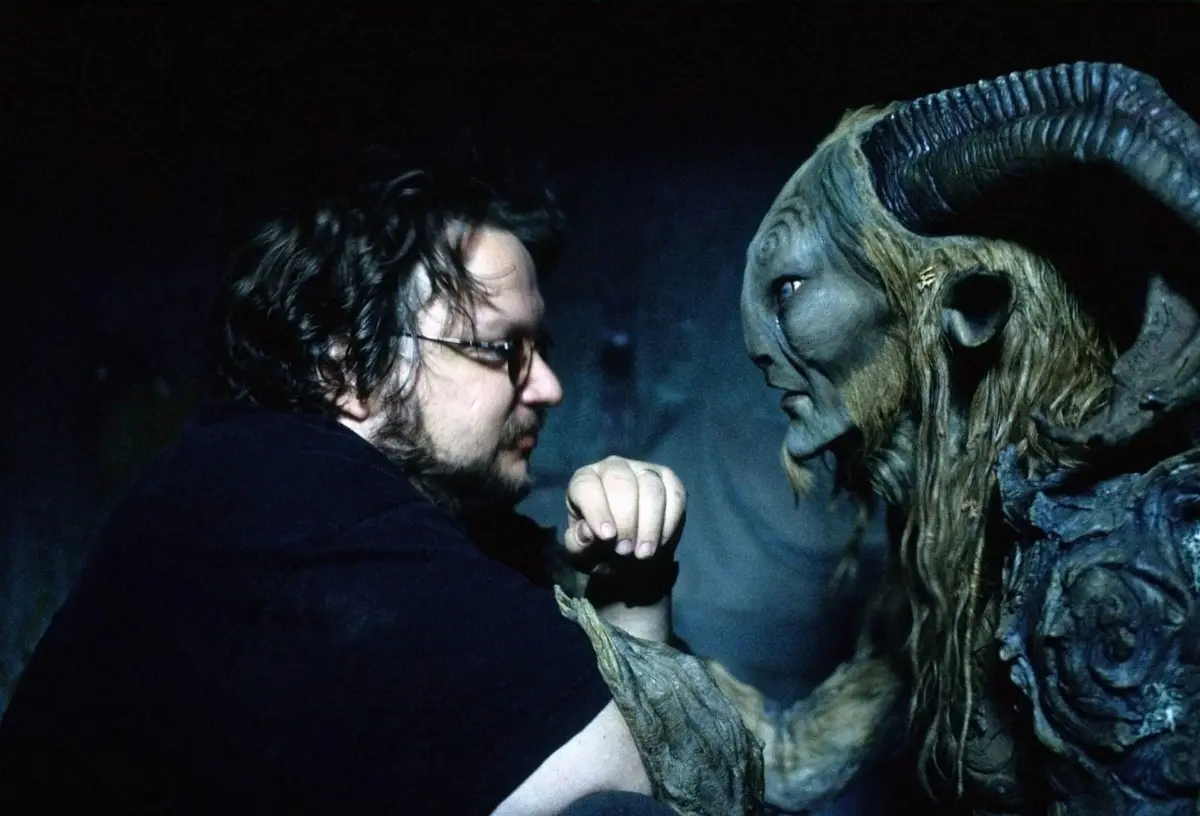
Two decades after its initial theatrical release, Guillermo del Toro’s dark fairy-tale masterwork Pan’s Labyrinth (El laberinto del fauno) has returned to cinemas worldwide to mark its 20th anniversary. Released originally in 2006, the film swiftly cemented its status as a landmark of modern dark fantasy. Yet, a contemporary re-examination reveals a startling structural reality: the explicitly supernatural elements that define the film’s enduring cultural footprint occupy a mere 28 minutes of its 119-minute running time.
Despite boasting an illustrious subsequent filmography—including his Academy Award-winning 2017 triumph The Shape of Water—Pan’s Labyrinth remains, for many critics and cinephiles, Guillermo del Toro’s definitive magnum opus. The film operates as an intricate, genre-defying synthesis. It weaves together the stark, unyielding brutality of a historical war drama with a rich, mythic undercurrent set against the backdrop of Francoist Spain in the summer of 1944.
This anniversary re-release offers a timely opportunity to investigate the architectural genius of the film’s dual-world narrative. By filtering the historical traumas of post-Civil War Spain through the psyche of an 11-year-old child, del Toro crafted a cinematic experience that trades sprawling fantasy exposition for surgical, high-impact imagery. The result is a timeless exploration of choice, obedience, fascism, and rebellion that feels as urgently relevant today as it did twenty years ago.
Detailed Chronology: The Anatomy of a Mythic World
Historical Foundations and the Summer of 1944
The narrative bedrock of Pan’s Labyrinth is planted firmly in the historical reality of Francoist Spain. Set in 1944—five years after the conclusion of the devastating Spanish Civil War—the story tracks the iron-fisted campaign of General Francisco Franco’s regime as it systematically hunts down and suppresses the lingering Republican resistance, known as the maquis.
Into this volatile environment steps Ofelia, portrayed with aching vulnerability by Ivana Baquero. Alongside her heavily pregnant, ailing mother, Carmen, Ofelia is relocated to a remote military outpost commanded by her new stepfather, Captain Vidal (Sergi López). Vidal, a narcissistic, authoritarian militarist, embodies the cold machinery of fascist power. He is tasked with exterminating the anti-Francoist guerrilla fighters hiding in the nearby mountains, treating the assignment with ruthless efficiency and psychopathic cruelty.
The Mythic Parallel and Ofelia’s Quests
Refusing to passively absorb the grim reality of her surroundings, Ofelia discovers an ancient, overgrown labyrinth near the mill. Here, she encounters a mysterious Faun (Doug Jones), who reveals a startling truth: Ofelia is not merely a captain’s stepdaughter, but the long-lost Princess Moanna of the underground realm.
To reclaim her rightful throne and secure immortality, Ofelia must successfully navigate three distinct, perilous quests before the next full moon. These trials mirror the harsh realities of her waking world with astonishing precision:
- The First Trial: Ofelia must retrieve a golden key from the bloated, chitinous belly of a giant toad feeding beneath the roots of a dying fig tree. This harrowing task parallels the desperate, high-stakes efforts of the maquis rebels to secure vital storeroom keys from Vidal to feed their starving forces.
- The Second Trial: Armed with magic chalk and a timer, Ofelia enters the lair of the Pale Man—an anthropomorphic, child-eating monster with his eyes set into the palms of his hands. Instructed strictly not to consume anything from the sumptuous banquet table, Ofelia yields to temptation, eating two grapes. This act of disobedience triggers a terrifying chase sequence that echoes classic horror conventions while cementing the film’s thematic exploration of choice and consequence.
The Climax and Cinematic Lineage
The convergence of the historical and the mythical reaches its devastating zenith as Vidal closes in on the resistance fighters, and Carmen succumbs to complications from her pregnancy. The final act sees Ofelia making the ultimate sacrifice to protect her newborn half-brother, bringing the narrative to a heart-wrenching, morally ambiguous resolution.
In constructing this world, del Toro drew upon a rich tapestry of cinematic influences. The film shares DNA with Jim Henson’s 1986 fantasy classic Labyrinth (which celebrates its 40th anniversary), echoing Sarah’s trials of growth, doubt, and temptation. Furthermore, the chalk portal evokes the practical effects wizardry of Tim Burton’s Beetlejuice (1988), while the climactic, breathless pursuit through the garden maze recalls the psychological claustrophobia of Stanley Kubrick’s The Shining (1980).
Supporting Context & Metrics
To fully appreciate the cinematic economy of Pan’s Labyrinth, one must examine the distribution of its runtime and the deliberate choices made by its director during pre-production.
Runtime Breakdown and Visual Economy
- Total Running Time: 119 minutes
- Supernarrative/Fantasy Sequences: Approximately 28 minutes
- Historical/Real-World Drama: Approximately 91 minutes
Despite occupying less than a quarter of the film’s total duration, the fantasy sequences—specifically those featuring the Faun and the Pale Man—dominate audience retention and cultural memory. This phenomenon underscores a fundamental rule of cinematic design: sparse, highly focused supernatural imagery, when executed with absolute precision, leaves a far deeper psychological imprint than continuous, CGI-heavy world-building.
The Economics of Artistic Integrity
Del Toro’s commitment to his singular vision required immense personal sacrifice. Facing studio pressure to dilute the film’s dark edges, alter its tragic ending, or demand concessions regarding language (the film is entirely in Spanish), del Toro took the extraordinary step of waiving his director’s salary entirely. This financial forfeiture ensured that every frame of Pan’s Labyrinth remained uncompromised, allowing the director to preserve the precise tonal balance between historical atrocity and dark fairy tale.
Official Statements and Director’s Philosophy
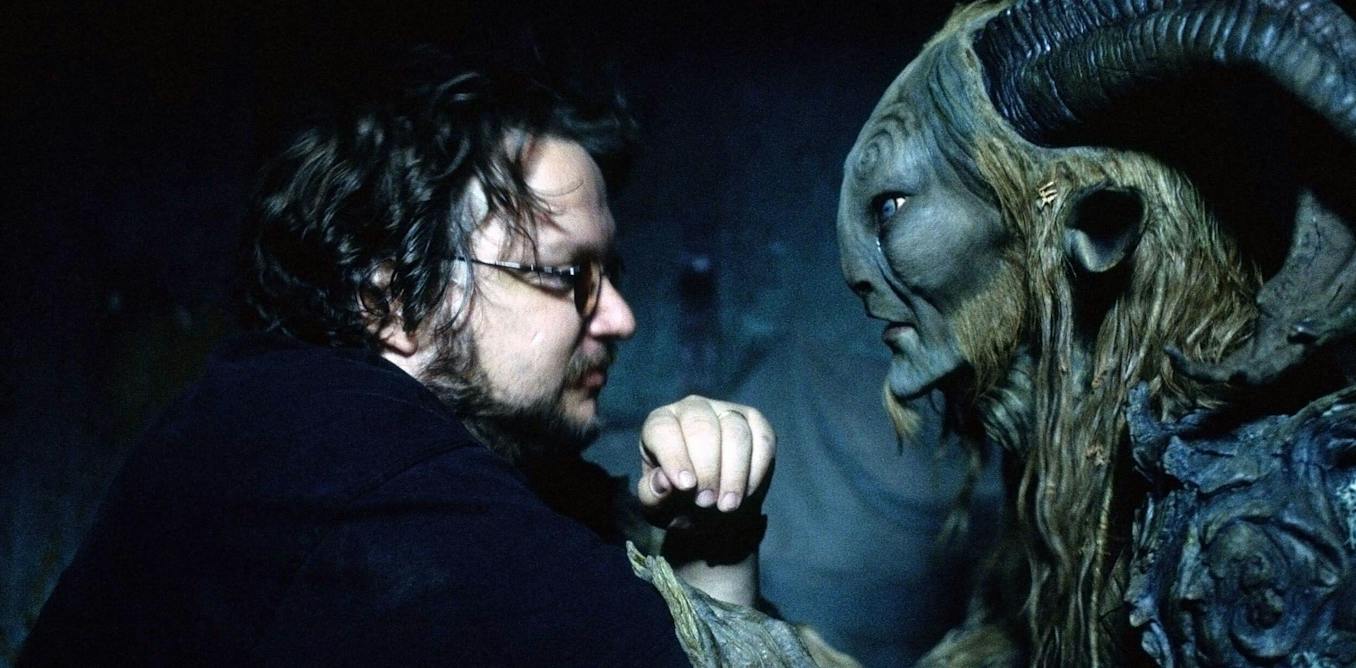
Guillermo del Toro has frequently articulated the deeper philosophical underpinnings of Pan’s Labyrinth, particularly regarding the structural difference between mazes and labyrinths, as well as his complex, lifelong engagement with religious iconography.
Mazes vs. Labyrinths
In promotional interviews surrounding the film’s original 2006 release, del Toro drew a sharp semantic and spatial distinction between two often-confused concepts:
"A maze is a place where you get lost," del Toro observed. "A labyrinth is essentially a place of transit."
This distinction is crucial for interpreting Ofelia’s journey. The labyrinth is not designed to trap her, but to transform her. It represents a transitional space of agency, allowing an 11-year-old girl to exercise free will in a historical moment defined by what del Toro termed an "institutional lack of choice" under fascism.
Religion, Temptation, and Subversion
Raised within a strict Catholic upbringing before later describing himself as a "lapsed" Catholic, del Toro has continuously infused his filmography with religious motifs—while actively subverting their traditional meanings.
The parallels between Ofelia’s encounter with the Pale Man and biblical myth are striking:
- The Stigmata: The bloody, skin-slit palms of the Pale Man, through which he inserts his eyes to see, visually evoke the stigmata of Christ.
- The Fall of Man: Ofelia’s consumption of the forbidden grapes from the banquet table mirrors Eve partaking of the forbidden fruit in the Garden of Eden, resulting in immediate, catastrophic consequences.
However, del Toro refuses to construct a tidy Christian allegory. Instead, religious symbolism is stripped of its redemptive comfort and repurposed into something murky, ambiguous, and inextricably bound to structures of earthly power and trauma. This subversion was evident even before Pan’s Labyrinth entered production; del Toro famously declined an offer to direct Disney’s 2005 adaptation of The Chronicles of Narnia: The Lion, the Witch and the Wardrobe, citing a personal discomfort with the explicit, tidy mechanics of Aslan’s resurrection.
Future Outlook: The Legacy of Pan’s Labyrinth in Modern Cinema
As Pan’s Labyrinth completes its second decade in the cultural consciousness, its influence on contemporary speculative fiction and dark fantasy cannot be overstated.
The visual and thematic DNA of del Toro’s work echoes loudly through modern streaming hits. One cannot examine the design of the Demogorgon in Netflix’s juggernaut series Stranger Things (2016–2025) without acknowledging the direct lineage tracing back to Doug Jones’s portrayal of the Pale Man. Both creatures rely on faceless, biological terror paired with an uncanny, anthropomorphic silhouette that disrupts the boundary between the mundane world and a monstrous alternate dimension (the "Upside Down").
Furthermore, the film has fundamentally shifted how contemporary filmmakers approach mature fairy tales. By proving that audiences will enthusiastically embrace foreign-language, historically grounded dark fantasy that treats children’s perspectives with absolute gravity and respect, Pan’s Labyrinth paved the way for subsequent cinematic explorations of trauma through the lens of myth—ranging from J.A. Bayona’s The Orphanage to Guillermo del Toro’s own later masterpieces like The Shape of Water and his stop-motion triumph Pinocchio (2022).
Ultimately, twenty years after its premiere, Pan’s Labyrinth stands as an indestructible monument to uncompromising artistry. In an era increasingly dominated by algorithmic content and sanitized franchises, del Toro’s dark fable remains a blazing reminder of what cinema can achieve when a visionary artist refuses to compromise—proving that the most terrifying monsters, and the most enduring forms of courage, are those that mirror our own reality.