Executive Overview
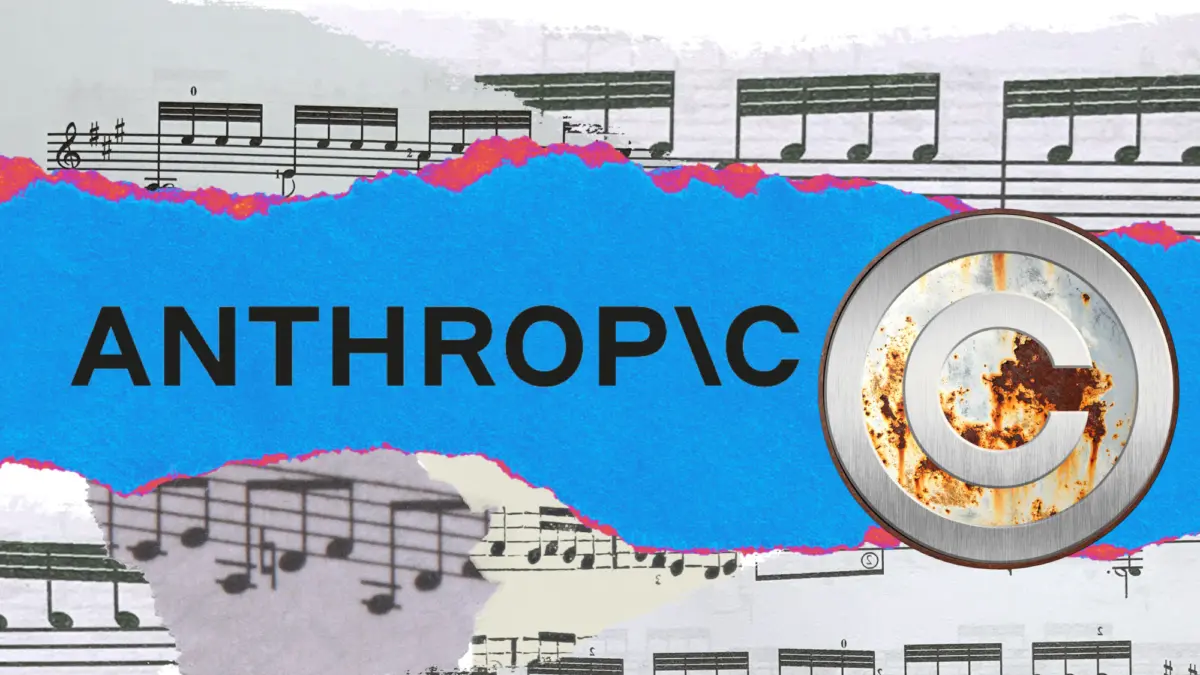
The collision course between artificial intelligence and intellectual property rights reached a critical juncture in a U.S. courtroom, marking the first time the foundational question of "fair use" in AI training is being deeply tested within the context of the music industry—specifically regarding lyrics.
In this high-stakes legal battle, major music publishers Universal, Concord, and ABKCO are squaring off against AI powerhouse Anthropic. Both legal teams are actively pressing U.S. District Judge Eumi Lee for summary judgments in their favor. At the heart of the dispute is a question that threatens to reshape the digital economy: Does the ingestion of copyrighted works to train generative AI models constitute fair use under American copyright law?
If Judge Lee rules that AI training falls under fair use, Anthropic will be legally empowered to copy existing works to compile training datasets for its advanced AI models—such as the Claude ecosystem—without seeking permission or paying licensing fees to copyright holders. Because this fair use defense is the linchpin of nearly every copyright lawsuit filed against generative AI companies in the United States, yesterday’s proceedings carry monumental implications. The outcome will inevitably cast a long shadow over other ongoing legal battles, including the music industry’s coordinated assaults against dedicated AI music generators like Suno and Udio.
Detailed Chronology: The Road to the Courtroom Showdown
To understand the gravity of yesterday’s hearing, one must trace the timeline of legal precedents and procedural maneuvers that have defined the generative AI litigation landscape over the past two years.
The Author Precedents and the Piracy Caveat
The legal framework currently being stress-tested in Judge Lee’s courtroom builds upon the first two generative AI copyright cases to reach trial in the United States—both of which involved literary authors suing tech companies (one targeting Meta, the other targeting Anthropic).
In those initial trials, federal judges largely accepted the fair use defenses put forward by the tech companies. However, those victories came with vital, restrictive caveats:
- The Anthropic Author Case: The presiding judge ruled that AI training could only be classified as fair use if the AI company began its process with legitimately sourced copies of each work. This proved problematic for Anthropic, whose early training datasets infamously relied on millions of pirated ebooks—a cache that conveniently included digital copies containing the music publishers’ copyrighted lyrics.
- The Meta Author Case: While the judge accepted Meta’s fair use defense, he explicitly noted that the defense remained vulnerable and could theoretically be defeated on market dilution grounds if plaintiffs presented compelling, data-driven arguments.
Procedural Hurdles and the Second Lawsuit
Recognizing the fatal flaw exposed in the earlier author litigation, Universal, Concord, and ABKCO attempted to amend their initial Anthropic lawsuit to sharply hone in on the tech firm’s alleged reliance on pirated source materials.
When the presiding judge denied those amendments, the publishers were forced to pivot. Earlier this year, they filed a completely separate, second lawsuit specifically targeting Anthropic’s acquisition and use of pirated source materials. Consequently, that secondary line of attack was not the focus of yesterday’s hearing, which remained strictly centered on the core fair use and market dilution arguments associated with Claude’s text-generation capabilities.
Supporting Context & Metrics: The Market Dilution Debate
The most gripping and legally significant segment of yesterday’s hearing revolved around a classic copyright litmus test: market dilution.
When courts evaluate whether the use of a protected work constitutes fair use, they examine four statutory factors, with the economic impact on the original creator’s market traditionally holding immense sway. If an AI system’s utilization of a work—or the output generated by that system—negatively impacts the market value of the original, the defense of fair use rapidly collapses.
The Publishers’ Case: Scale and Saturation
Speaking on behalf of the music publishers, attorney Matthew J. Oppenheim argued fiercely that Claude’s lyrical outputs are actively eroding the economic foundations of the music publishing business and the streaming market. Oppenheim also asserted that Anthropic’s systematic refusal to secure commercial licenses for its training data is crippling the development of the music industry’s emerging AI licensing ecosystem.
Citing data referenced by Law360, Oppenheim drew Judge Lee’s attention to the sheer volume of generative AI outputs. He revealed that evidence indicates Anthropic’s Claude received nearly 120,000 requests for what he termed "synthetic lyrics" over a mere six-month period.
"What’s crucial is Claude’s scale here," Oppenheim argued, warning the court that unchecked, AI-generated music and lyrics "could easily overwhelm the market."
Countering the Scale Narrative
While 120,000 requests sound imposing in isolation, context quickly deflates the publishers’ alarmism. Industry reports indicate that Anthropic now commands an active user base of approximately 30 million weekly users.
When viewed against that massive scale, 120,000 requests for synthetic lyrics spread across half a year appear remarkably modest—representing a tiny fraction of a percent of total user interactions.
Seizing upon this evidentiary gap, Judge Lee pressed the publishers for tangible, empirical proof of actual market dilution—evidence that has been notably absent from the current record.
Official Statements & Legal Arguments
Representing Anthropic, attorney Sonal Mehta pushed back aggressively against the publishers’ speculative warnings.
"There isn’t anything in the record that shows doom for the music industry," Mehta declared to the court, as reported by Courthouse News.
Mehta maintained that the publishers have comprehensively failed to demonstrate that Claude causes any measurable negative impact on the professional music licensing market, nor does it harm specialized lyric platforms that maintain official partnerships with the music industry, such as LyricFind and Genius.
To further dismantle the publishers’ narrative of financial ruin, Mehta highlighted a striking contradiction from the corporate disclosures of the plaintiffs themselves. She pointed out that Universal Music Group has actively informed its investors that generative artificial intelligence represents—in the company’s own words—"overwhelmingly a net positive" for the broader music industry.
Future Outlook: Divergent Paths for AI Music Litigation
As Judge Lee deliberates on yesterday’s arguments, legal analysts are already looking past this specific hearing to evaluate how the broader war between artificial intelligence and the music industry will unfold.
Anthropic vs. Suno and Udio: A Tale of Two Legal Strategies
The dynamics of proving market dilution vary wildly depending on the nature of the AI platform in question.
- The Suno and Udio Battles: For dedicated music-generation platforms like Suno and Udio, proving market dilution is structurally more straightforward. Plaintiffs can point to directly generated audio tracks that are subsequently uploaded to streaming services. Once there, these synthetic tracks siphon off a fraction of the finite, monthly streaming royalty pool whenever they are played—directly reducing the revenue distributed to human-created tracks. While this competition is somewhat indirect (AI tracks do not target specific human songs one-to-one), the macro-level economic displacement of human creators is relatively easy to illustrate.
- The Anthropic/Claude Challenge: For Anthropic, the chain of causation is far more convoluted. Claude generates written text—lyrics. For those lyrics to siphon money out of the streaming royalty pool, they must first be converted into audio form, arranged, performed, and produced into a commercial track. Because this market dilution is deeply indirect, the publishers may find it exceptionally difficult to win their primary fair-use and market-dilution arguments regarding Claude.
The Strategic Advantage of the Secondary Lawsuit
This analytical breakdown suggests a fascinating strategic irony for the music publishers:
- While their first lawsuit against Anthropic (debated yesterday) forces them into an uphill battle to prove abstract market dilution via text generation,
- Their second lawsuit—which hones in on Anthropic’s acquisition of pirated source materials—may offer a much cleaner, more legally bulletproof path to victory.
Conversely, in the ongoing legal wars against Suno and Udio, the record labels still face the arduous task of proving that the platforms’ alleged "stream-ripping" of music from YouTube constitutes actionable copyright piracy. Yet, once established, their market dilution claims against Suno and Udio will likely prove far more potent and easier for judges to digest.
Conclusion
As the oldest of the major generative AI copyright disputes, the Anthropic litigation is blazing a lonely trail. Filed a full year before the Suno and Udio lawsuits, it serves as the ultimate bellwether for the entire tech and creative sectors.
For now, the legal community waits with bated breath to see what conclusions Judge Eumi Lee draws from yesterday’s sparring over metrics, fair use, and the economic soul of modern lyricism.