Executive Overview
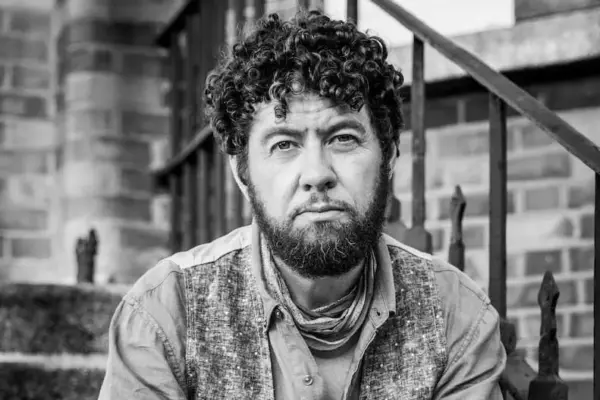
In the heart of West London, where the multi-ethnic cultural tapestry of Ladbroke Grove rubs shoulders with stark economic disparity, a new voice is cutting through the noise of contemporary British hip-hop and theatre. Behkam, a rising multidisciplinary artist, writer, and performer, has emerged as a compelling cultural chronicler of our times. His debut play and its haunting title track, Manchester Drive, serve as a visceral intersection of local trauma and global geopolitics—drawing a direct, unyielding line from the charred skeleton of the Grenfell Tower to the ongoing devastation in Gaza.
Behkam’s creative journey is rooted in the contradictions of North Kensington. Growing up in a neighbourhood where extreme wealth and generational poverty exist side by side, he adopted the moniker "a Lad Broke"—a clever linguistic nod to his stomping ground and a commentary on systemic abandonment. This localized socioeconomic critique quickly broadens in Manchester Drive, evolving into a searing indictment of Western political hypocrisy, media censorship, and the stark disparities in how refugees are treated based on their race and geographic origin.
Far from being confined to the margins of underground art, Behkam’s work has garnered critical acclaim. His theatrical debut—a modern reimagining of a 12th-century Persian masterpiece directed by Amari Harris—premiered to rave reviews at the Peckham Fringe festival. Simultaneously, his musical output has received a massive credibility boost through a collaboration with renowned producer Toddla T at the iconic Steeze Factory studios.
This comprehensive report examines the genesis of Manchester Drive, exploring its theatrical roots, its socioeconomic and political underpinnings, the unique production methodologies behind its musical iterations, and its broader implications for the future of socially conscious British art.
Detailed Chronology: From the Streets of North Kensington to the Stage
The Echoes of Ladbroke Grove
The genesis of Manchester Drive cannot be separated from its geography. Growing up in West London’s Ladbroke Grove, Behkam was perpetually immersed in a landscape marked by both vibrant multiculturalism and deep-seated social trauma. The defining catastrophe of modern North Kensington—the 2017 Grenfell Tower fire, which claimed 72 lives—left an indelible scar on the community.
In the wake of the tragedy, the streets echoed with slogans that demanded accountability and solidarity: "Justice for Grenfell, Justice for Gaza." For Behkam, these overlapping chants were not merely political slogans; they were a call to action. They highlighted a shared global language of resistance against institutional neglect and state violence. This realization prompted him to pick up his pen and draft his very first play, naming it after Manchester Drive, a quiet street situated in the same corner of North Kensington where local realities mirror global struggles.
Translating Tragedy into Theater: The Play’s Conception
In developing Manchester Drive for the stage, Behkam turned to the classical literary canon for structural inspiration, adapting Nezami Ganjavi’s 12th-century Persian romance, Layli o Majnun. By transplanting the themes of obsessive love, sacrifice, and societal barrier into a contemporary London setting, Behkam crafted a narrative that feels both timeless and urgently modern.
In the play, Behkam steps into the dual role of rapper and pianist, embodying the protagonist Ardz. In the narrative universe of the play, Ardz is a pre-clinical medical student whose parents run a humble corner shop—a direct reflection of Behkam’s own upbringing as the son of shopkeepers operating on the Notting Hill Carnival route.
The plot thickens when a freestyle video of Ardz rapping goes viral online, overnight thrusting him from obscurity into the dizzying heights of internet stardom. However, this sudden fame brings a loss of autonomy. When Ardz uses his newly acquired platform to speak out on volatile geopolitical issues, his management team swiftly intervenes, attempting to sanitize his public image. They lock him out of his own social media accounts, forcing him to choose between a lucrative, commercialized career and his artistic integrity. Complicating matters further is his burgeoning romance with Shirin, a fearless photojournalist embedded in the West Bank.
The Spring 2026 Premiere and Creative Team
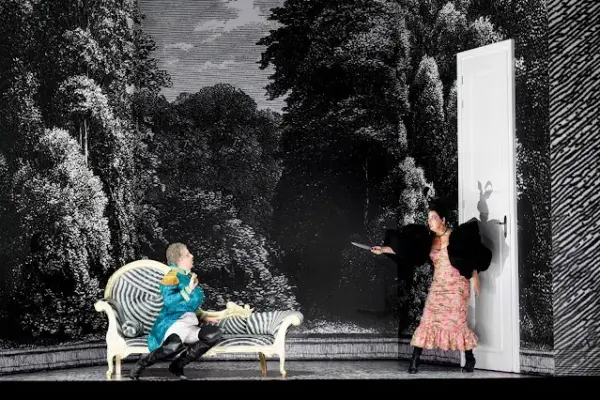
The theatrical realization of Manchester Drive culminated in May 2026, when the production hit the stage during the Peckham Fringe festival—a celebrated annual showcase curated by Theatre Peckham—before transferring to the Canada Water Theatre in London.
The production’s success was driven by a collaborative creative team:
- Director: Amari Harris, whose sharp pacing and spatial awareness brought the narrative’s tension to life.
- Cast: Alongside Behkam, performers Rima Georges and Wesley Bozonga delivered emotionally resonant supporting turns that grounded the play’s high-stakes political themes in intimate human relationships.
- Artistic Training Ground: Behkam’s entry into the theatrical sphere was forged through rigorous institutional incubation. He is an alumnus of the prestigious Lyric Hammersmith Springboard programme and Theatre Peckham’s Rep company, having previously made his theatrical debut as Bacchus in a radical retelling of The Bacchae at the Lyric.
Supporting Context & Metrics: The Politics of Manchester Drive
Socioeconomic Commentary and the "Lad Broke" Ethos
Musically and lyrically, the title track "Manchester Drive" functions as a microcosm of modern British urban anxiety. The track opens with a deeply personal local observation. Behkam introduces himself as “a Lad Broke,” a brilliant pun that encapsulates the jarring inequality of North Kensington, where multi-million-pound townhouses sit mere yards away from public housing estates plagued by structural disinvestment.
This localized critique sets the stage for a broader geopolitical awakening. Behkam wastes no time expanding his lens outward, specifically addressing the ongoing humanitarian catastrophe in Gaza.
Lyrical Deconstruction: Censorship and Western Hypocrisy
The lyrical architecture of "Manchester Drive" is built on stark, uncompromising imagery designed to jolt the listener out of complacency. Key thematic pillars of the track include:
- The Suppression of Dissent: Behkam raps candidly about the chilling effect of speaking out on Palestine within Western cultural industries, detailing the sensation of being deliberately silenced and marginalized whenever he raises his voice against injustice.
- The Human Cost of War: In one of the track’s most haunting verses, he recounts a harrowing exchange involving a child in a war zone. The child asks whether an object falling from the sky is food, only to be told the grim reality: it is a bomb.
- Refugee Double Standards: Behkam levels a scathing critique at Western governments and media outlets, contrasting the rapid, compassionate mobilization to open European homes to Ukrainian refugees with the cold, hostile architecture that leaves Black and brown migrants to drown in the Mediterranean.
The song concludes with a signature sign-off that grounds all these sweeping global tragedies back in his local reality: “Reporting live from Manchester Drive.” It is an assertion that the struggles of the global South and the disenfranchised pockets of Western inner cities are inextricably linked by systems of power, displacement, and media obfuscation.
Official Statements and Industry Perspectives
The Steeze Factory Session: Toddla T’s Sonic Laboratory
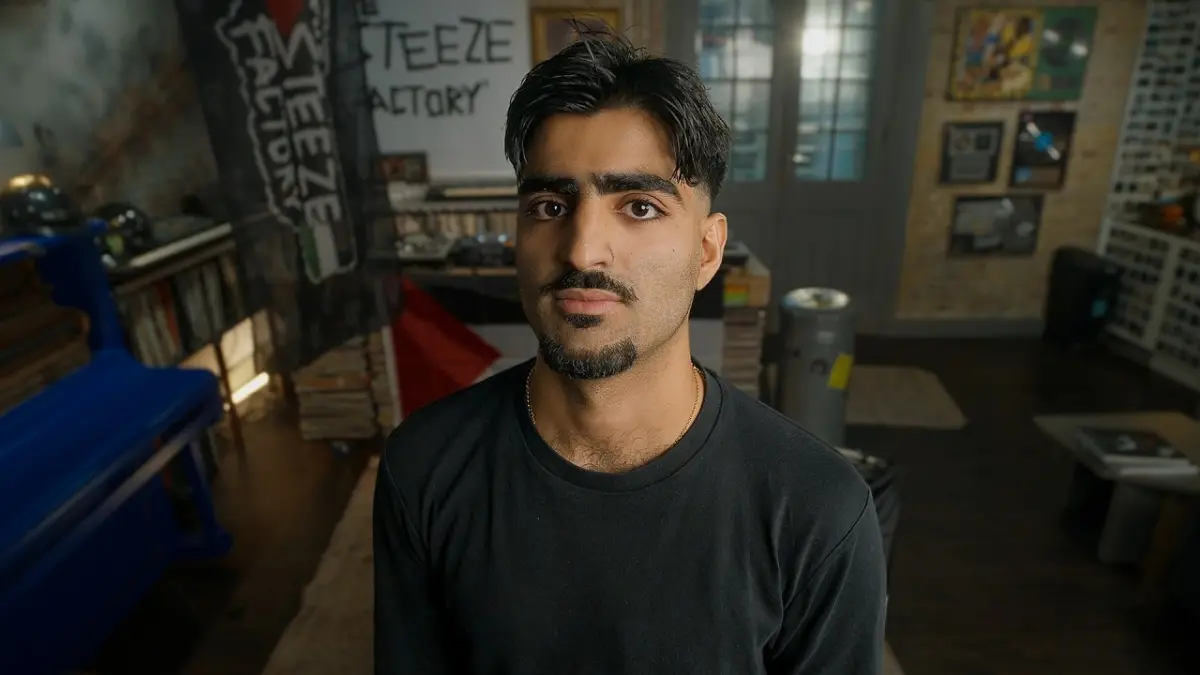
The definitive audio-visual recording of "Manchester Drive" was captured live at the Steeze Factory, the renowned West London studio operated by Sheffield-born producer Toddla T. A luminary of the British underground music scene, Toddla T has spent decades crafting boundary-pushing records for heavyweights like Skepta, Wiley, Roots Manuva, and Ms. Dynamite.
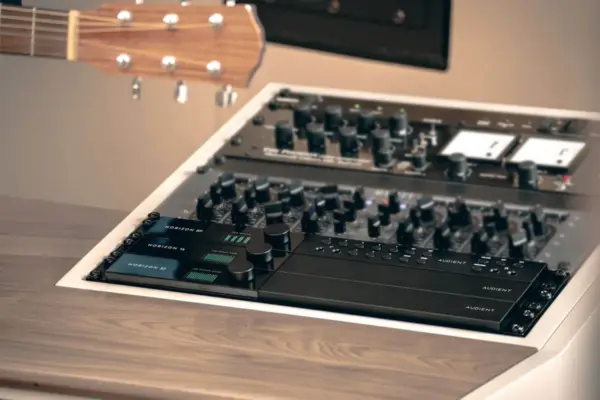
The Steeze Factory operates in stark contrast to the sterile, highly corporate environment of major commercial recording studios. Located within a single rented room in an industrial complex, the studio strips away the traditional glass-walled vocal booth. Instead, Toddla T records vocalists directly out in the room alongside him—amidst the hum of running air conditioning, the whistle of a boiling kettle, and the resonant tones of an upright piano he famously acquired off Gumtree for just £50.
"The environment dictates the sound," Toddla T has noted of his workspace ethos. By removing the barriers between producer and artist, the Steeze Factory fosters raw, unvarnished performances that capture the immediate energy of a live cypher.
An Accidental Partnership
The connection between Toddla T and Behkam runs deeper than standard industry networking. The producer first met the young artist through a mutual friend, entirely unaware that Behkam’s parents owned the red corner shop situated right on the Notting Hill Carnival route—an establishment Toddla T had frequented for years to pick up his iced coffees.
This biographical convergence mirrors the plot of Manchester Drive, wherein the protagonist Ardz is likewise defined by his identity as the son of corner-shop proprietors. Art and life continuously bleed into one another in Behkam’s world.
Critical Reception and Digital Engagement
The release of the live performance video at the Steeze Factory has ignited a wave of digital engagement. Following its premiere, the session prompted a detailed reaction video from prominent British artists, including Jordan Stephens—one half of the iconic Brighton rap duo Rizzle Kicks—who regularly collaborates with Toddla T on the Steeze Factory’s cultural review and reaction series.
Industry analysts have pointed to this cross-generational cosign as proof that Behkam’s blend of politically charged lyricism and theatrical discipline is carving out a unique, highly respected lane within the UK creative ecosystem.
Future Outlook: The Next Chapter for Behkam
As the dust settles on the successful spring run of Manchester Drive at the Peckham Fringe and Canada Water Theatre, industry watchers are looking ahead to see where Behkam’s multifaceted career will take him next.
Bridging Mediums: Music Meets Theatre
The success of Manchester Drive proves that contemporary audiences—particularly younger demographics saturated in digital media—hunger for art that defies rigid categorization. Behkam’s ability to fluidly transition from the theatrical stage to the underground rap cypher represents a modern evolution of the protest artist. By refusing to separate his identity as a playwright from his identity as an MC, he creates a comprehensive multimedia commentary that resonates across diverse cultural platforms.
Upcoming Projects and Cultural Impact
While specific details regarding a full-length theatrical tour or a commercial musical release remain under wraps, insiders suggest that Behkam is currently developing new material that continues to probe the friction points between localized British identity and international human rights struggles.
As cultural institutions increasingly grapple with questions of censorship, institutional neutrality, and the sociopolitical responsibilities of artists, figures like Behkam provide a vital blueprint. By anchoring global solidarity movements in the concrete realities of West London’s streets, Manchester Drive stands as a testament to the enduring power of art to bear witness, provoke discomfort, and demand justice—whether reporting live from Manchester Drive or echoing across the global stage.