Executive Overview
To the modern observer, the European rabbit (Oryctolagus cuniculus) is an ubiquitous and often destructive element of the British countryside. Universally recognized as one of the UK’s most persistent and economically damaging invasive species—costing the economy billions annually in agricultural disruption and habitat degradation—the animal’s current status belies a fascinating, highly stratified past. Long before they overran pastures and undermined earthworks, rabbits were an exotic novelty, a rare luxury reserved exclusively for monarchs and the highest tiers of the Norman aristocracy.
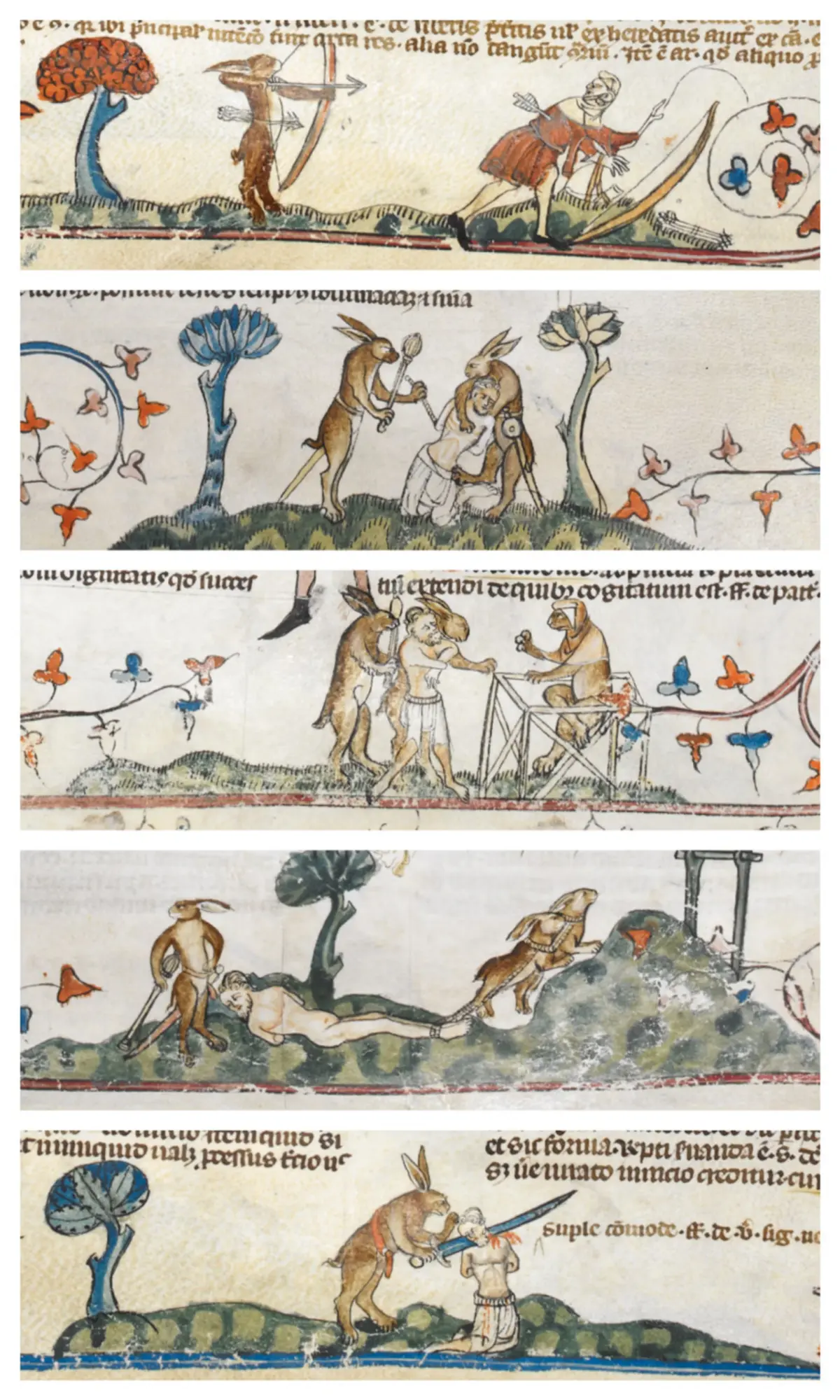
The historical trajectory of the rabbit in the British Isles offers a unique lens through which to examine medieval social mobility, economic disruption, and cultural anxieties. Far from being a permanent fixture of the ancient landscape, the species’ proliferation tracks closely with the tumultuous demographic shifts of the 14th century, most notably the catastrophic socio-economic restructuring brought on by the Black Death. Furthermore, surviving medieval manuscripts reveal that these creatures captured the popular imagination in unexpected ways, inspiring centuries-old traditions of dark humor, subversive art, and social inversion that predate modern pop-culture tropes by hundreds of years. This investigation explores how a fragile, imported luxury item transformed into a ubiquitous peasant staple, an agricultural pest, and an enduring canvas for medieval satire.
Detailed Chronology: From Roman Curiosities to Tudor Plagues
The arrival and domestication of the rabbit in Britain did not occur overnight; rather, it was a protracted, centuries-long process marked by ecological adaptation, royal protection, and shifting human demographics.
Antiquity and the Norman Introduction
While once broadly assumed to be an entirely post-conquest introduction by the Normans, modern archaeological discoveries have complicated the timeline. Excavations at sites such as Fishbourne Roman Palace have uncovered isolated rabbit remains dating back to Roman Britain, suggesting that Roman occupiers may have imported captive populations. However, these early introductions failed to establish enduring, widespread wild populations.
It was not until the post-Norman Conquest period that documentary evidence confirms the intentional establishment of rabbits within the British Isles. One of the earliest unambiguous administrative references appears in 1176 from the Scilly Isles, recorded via a tithe dispute. Landowner Richard de Wyka withheld his customary tenth-part offering of produce to the church, arguing that "tithes were not payable on things of this kind." De Wyka’s legal confusion highlights the sheer novelty of rabbits at the time; they did not fit neatly into traditional agrarian tax categories, occupying an ambiguous legal space between wild game and domestic livestock.
Royal Patronage and High-Status Warrens in the 13th Century
By the 13th century, rabbits—frequently referred to as "coneys"—were prized commodities carefully managed by the crown and high nobility. They were valued primarily for their dense, warm fur and tender meat, which positioned them as luxury goods accessible only to the elite.
Royal records from the reign of Henry III illuminate the strict controls placed upon these animals. In 1235, the king gifted ten live rabbits from his secure park at Guildford to Geoffrey Despenser, a prominent English landowner and Lord of Martley in Worcestershire. A few years later, royal foresters were dispatched to catch 30 or 40 rabbits in the same Guildford warren, with explicit instructions to harvest them only if the breeding colony remained robustly stocked—a clear indication that the crown actively sought to protect its valuable breeding reserves from depletion.
Despite Henry III’s frequent procurement of venison, boars, freshwater fish, swans, and peacocks for grand feasts, rabbits were so exclusive that they did not appear on his official banquet requisition lists until his Christmas feast in 1240. At the height of this exclusivity, a single rabbit could cost four to five times as much as a chicken. To safeguard these lucrative investments against poachers and predatory carnivores, aristocratic estates constructed specialized defensive infrastructure, including stone lodges and elevated watchtowers overlooking the warrens.
The Black Death and the Democratization of Consumption
The catastrophic arrival of the Black Death between 1346 and 1353 fundamentally reshaped European society, wiping out an estimated one-third to two-thirds of the population. In the wake of this demographic collapse, profound socio-economic transformations occurred across England. With labor suddenly scarce, surviving agricultural workers could command significantly higher wages, while land became vastly more accessible.
These rising living standards allowed peasants and aspiring artisans to adopt consumption habits previously restricted to the nobility. Rabbits quickly reflected this democratization. During the 14th and 15th centuries, rabbit meat began appearing on the tables of wealthier peasants, while their pelts—once reserved for the crown—were utilized by craftsmen and tradespeople. The trend toward social mimicry alarmed the ruling class, prompting parliament to introduce strict sumptuary legislation in 1363 to curb "the excess of dress of people beyond their estate."
Even royalty continued to prize specialized variants; Henry VII famously commissioned bespoke night attire lined with luxurious black rabbit fur. However, as the number of warrens multiplied through deliberate breeding, the administrative records of manors began to fill with angry complaints regarding crop destruction and land degradation caused by escaping rabbits.
Subversion and the Legislation of Sport
The growing accessibility of rabbits also intersected with rising class tensions in the post-plague era. Following the Peasants’ Revolt of 1381, the English Parliament grew deeply suspicious of hunting and trapping among lower-class laborers and artisans, fearing that collective hunting expeditions served as covers for political conspiracies and armed rebellions.
In January 1390, the crown enacted sweeping anti-poaching legislation. The law criminalized the use of "hounds and ferrets, hays, nets, hair-pipes, cords and all other devices" by non-landowning citizens, legally cordoning off the hunting of hares, rabbits, and forest beasts as the exclusive preserve and sport of the gentry.
By the mid-16th century, the ecological tide had turned decisively. Writing in 1555, the renowned Swiss naturalist Conrad Gesner observed that while coneys bred in various parts of Europe, "the most plenty of all is in England"—marking the transition of the species from a protected royal luxury to a widespread ecological presence.
Supporting Context & Metrics: The Economics of Medieval Warrening
To understand the rabbit’s historical trajectory, one must examine the specialized husbandry required to maintain them before they adapted to open British ecosystems.
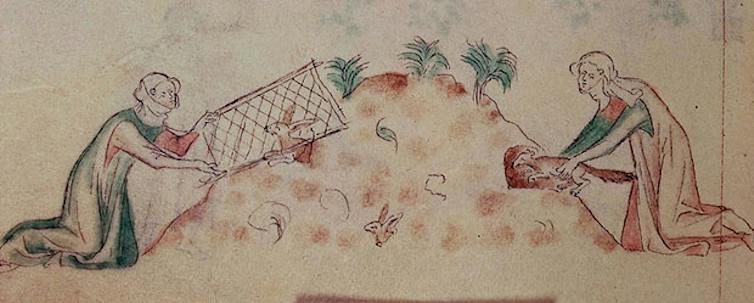
- The Warren Economy: Unlike modern feral rabbits that burrow freely in open fields, medieval rabbits were largely kept in artificial warrens (cunicularia). These were often man-made mounds of earth, stones, and timber designed to facilitate easy harvesting while protecting the stock from native predators like stoats, foxes, and birds of prey.
- Cost Disparities: Historical guild and manorial records indicate that while a standard chicken cost a fraction of a penny or a single silver denarius in the early 13th century, a prime breeding coney could command prices equivalent to multiple days’ wages for an unskilled laborer.
- Mortality and Labor Shocks: The Black Death reduced the English labor force by up to 60%. This sudden labor shortage drove up real wages for agricultural workers by as much as 100% in certain regions, directly fueling the purchasing power that integrated luxury foods like rabbit meat into peasant diets.
- Modern Ecological Impact: Today, descendants of those medieval warren rabbits cost the UK economy an estimated £100 million annually in agricultural damages, soil erosion, and infrastructure disruption, cementing their status as one of the most successful and destructive invasive species in British history.
Official Statements and Academic Insights
Historians and archaeologists studying the transition of the rabbit from luxury import to common pest emphasize its unique role as a mirror for medieval social change.
Dr. Aleksander Pluskowski, an environmental archaeologist specializing in medieval Europe, notes:
"The rabbit is unique among medieval fauna because its introduction was entirely anthropogenic and heavily institutionalized. It wasn’t merely an animal brought over for food; it was a managed technological system requiring specialized real estate, masonry, and laws. When that system expanded past aristocratic control after the demographic shock of the 14th century, it triggered some of the earliest recorded conflicts over wildlife management and property rights in English history."
Cultural historians examining medieval marginalia point out that the animal’s rapid integration into folklore and manuscript art highlights a deep psychological engagement with the creature.
Prof. Marion Turner, a specialist in medieval literature and culture, observes:
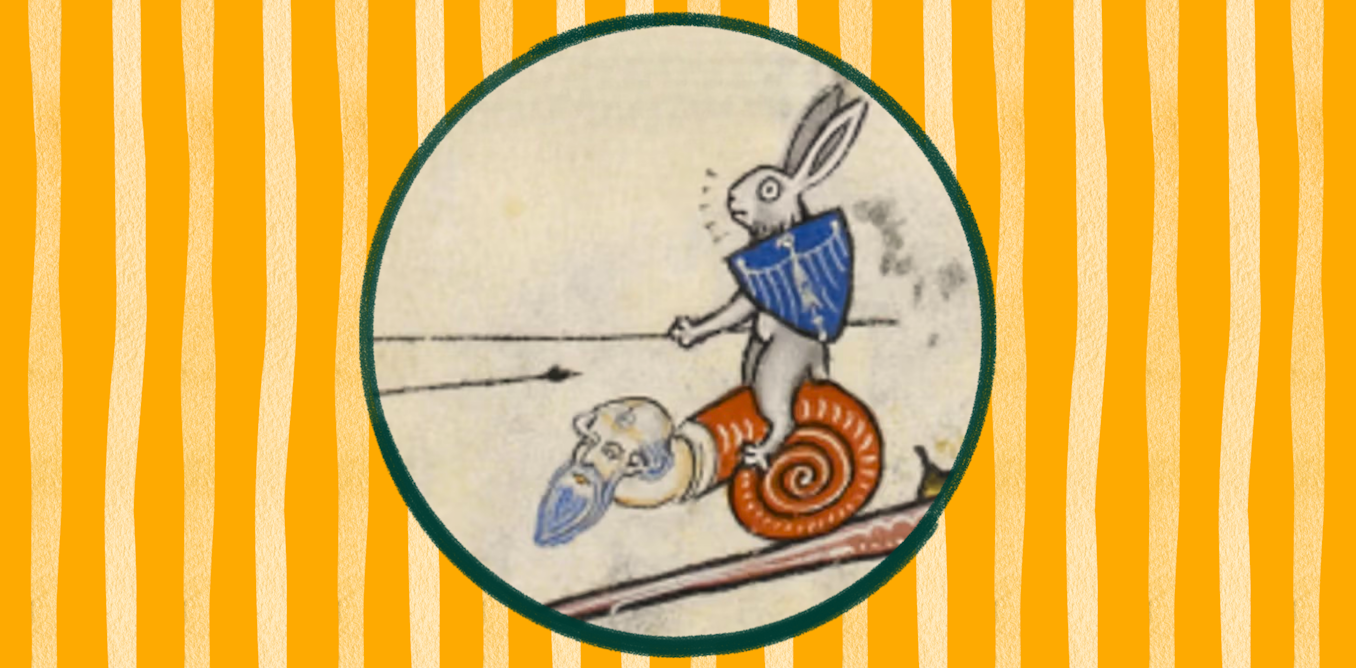
"When we look at manuscript illuminations from the 14th century, the rabbit is rarely depicted neutrally. It is either an object of aristocratic sport or, fascinatingly, an agent of revenge. These inversions—where rabbits judge, execute, or hunt humans—reveal a sophisticated medieval culture that used dark humor and absurdity to question rigid social hierarchies. The Killer Rabbit of Monty Python fame is not a modern invention; it is a direct inheritance of fourteenth-century satirical traditions."
Future Outlook: Managing an Ancient Legacy
As modern conservationists, ecologists, and agricultural bodies grapple with the ongoing ecological and economic fallout of invasive rabbit populations in the UK, the historical record provides valuable context. The European rabbit’s success in Britain is a masterclass in biological adaptation driven initially by human intervention and protection.
Modern management strategies—ranging from biological controls like Rabbit Haemorrhagic Disease Virus (RHDV) to targeted habitat management—must contend with an animal that has spent over eight centuries deeply embedded in the British landscape and cultural psyche. Understanding that the rabbit was once a closely guarded, high-status treasure helps reframe our relationship with a species that has journeyed from the king’s private park to the center of agricultural and ecological debate.