Executive Overview
For decades, the name Moog has been synonymous with pioneering synthesis, the architectural blueprint of modern subtractive sound design, and analog warmth that has defined generations of recorded music. From the towering modular systems of the late 1960s to the ubiquitous Minimoog, the company has fundamentally shaped how humanity interacts with electronic sound. However, a glaring gap has historically existed in the signal chain for live-performing electronic musicians: once a sound was sculpted within a synthesizer or workstation, how best to project it outward without coloring, masking, or mutating its hard-earned frequencies?
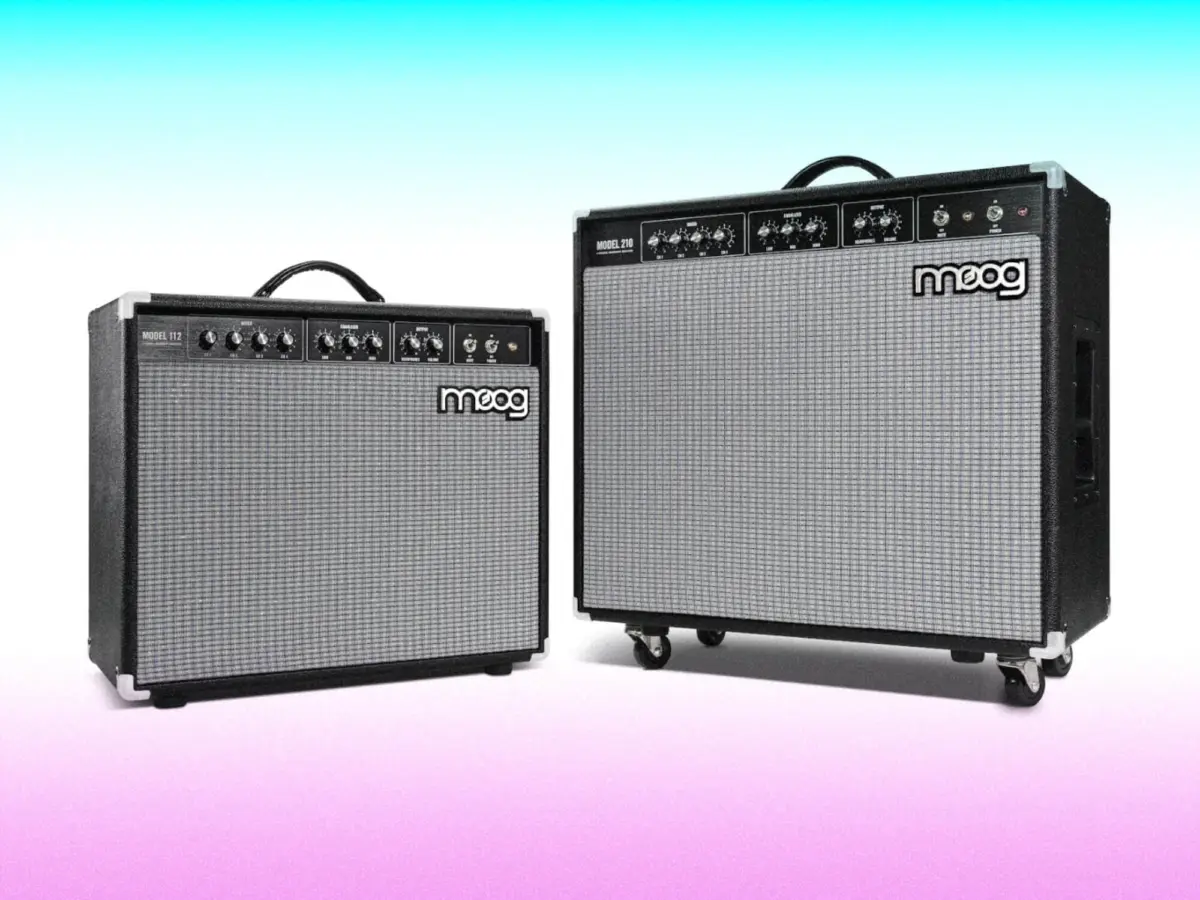
Addressing this crucial challenge, Moog Music has officially entered the amplification arena with the debut of two all-purpose, full-range, flat-response (FRFR) amplifiers: the Moog Model 112 and the Moog Model 210. Engineered from the ground up to accommodate everything from complex analog and digital synthesizers to drum machines, stage keyboards, modeling processors, and electric guitars, these units aim to bridge the divide between studio-grade fidelity and rugged live-performance power.
Priced at $799 for the compact Model 112 and $999 for the larger Model 210, these units do not attempt to emulate the character of vintage tube guitar stacks or distort the input signal in traditional ways. Instead, they champion absolute sonic transparency. By offering integrated four-channel mixing, robust bi-amped and multi-way power architectures, Bluetooth streaming, headphone monitoring, and Stereo Link capabilities, Moog is positioning these amplifiers as comprehensive hubs for modern, multi-instrument setups. This comprehensive review examines the technical engineering, market positioning, official philosophies, and future performance implications of Moog’s bold new hardware venture.
Detailed Chronology and Technical Evolution
The journey toward Moog’s first foray into dedicated instrument amplification reflects a broader industry shift. As electronic music production migrated from isolated studio environments into dynamic, hybrid live rigs, musicians increasingly found themselves relying on amplification solutions originally built for other instruments—most notably guitar amplifiers or powered PA speaker wedges.
Guitar amplifiers, by their very nature, heavily color sound. They introduce mid-range bumps, aggressive harmonic saturation, and high-frequency roll-offs designed to flatter a mid-frequency electric guitar string. Conversely, standard PA wedges can sometimes sound clinical, brittle, or ill-suited for the tactile, bass-heavy demands of modular synthesizer patches and sub-heavy drum machines. Over recent years, the market demand for FRFR (Full-Range, Flat-Response) systems has skyrocketed, largely driven by amp-modeling guitar processors. Seizing on this technological maturation, Moog’s engineering team recognized an opportunity to apply FRFR principles specifically to the intricate, wide-bandwidth requirements of electronic music gear.
Development of the Model 112 and Model 210 spanned several years of rigorous acoustic testing, circuit prototyping, and field trials. Moog’s engineering objective was clear: create cabinets that could faithfully reproduce the deepest sub-bass drops of a massive analog patch alongside the lightning-fast transient attacks of a crisp drum machine, all without introducing unwanted distortion or tonal coloration.

The resulting hardware lineup establishes a two-tiered ecosystem tailored to distinct performance profiles:
The Moog Model 112: Portability Meets Punch
- Price: $799
- Power Output: 440W RMS of bi-amplified power
- Transducers: 12-inch woofer paired with a 1-inch compression driver
- Frequency Response: 40Hz – 20kHz
- Form Factor: Highly portable cabinet featuring an integrated top handle for effortless transport between the studio, rehearsal spaces, and performance stages.
The Moog Model 210: Maximum Power and Low-Frequency Extension
- Price: $999
- Power Output: 550W RMS
- Transducers: Dual 10-inch woofers paired with a 1-inch compression driver in a 2.5-way design
- Frequency Response: Reaches down to 35Hz
- Form Factor: Built for demanding stage environments and multi-instrument setups where raw power and sub-frequency depth take precedence over absolute portability.
Both amplifiers feature integrated four-channel mixing matrices, offering extraordinary routing flexibility for performers juggling multiple sound sources on stage without requiring an external sub-mixer. Furthermore, modern conveniences such as Bluetooth audio streaming, dedicated headphone monitoring outputs, and Stereo Link functionality—which allows users to easily daisy-chain two amplifiers for a true stereo soundstage—cement these units as state-of-the-art modern tools.
Supporting Context and Market Metrics
To fully understand the significance of the Moog Model 112 and Model 210, one must analyze the current landscape of live electronic music hardware. The past decade has experienced a massive renaissance in hardware synthesizers, drum machines, and desktop grooveboxes. Manufacturers large and small have flooded the market with compact, powerful sound sources. However, the supporting infrastructure—specifically amplification—has largely lagged behind or remained fragmented.
+-------------------------------------------------------------------------+
|                       THE MOOG AMP SIGNAL FLOW                          |
+-------------------------------------------------------------------------+
|                                                                         |
|  [Synths / Keyboards] --+                                               |
|  [Drum Machines]      --+--> [ 4-Channel Mixing ] --> [ Bi-Amped / ]    |
|  [Modelers / Guitars] --+    [     Matrix       ]    [ 2.5-Way Amp]    |
|  [Bluetooth Audio]    --+                                     |         |
|                                                              v          |
|                                                    [ FRFR Transducers ] |
|                                                    [ (Pristine Output)] |
|                                                                         |
+-------------------------------------------------------------------------+
The FRFR Revolution in Electronic Music
Traditionally, keyboard players running complex digital workstations or vintage analog synths faced a painful compromise:
- DI Box to PA System: Highly accurate, but robs the performer of tactile "on-stage" monitoring feel and forces total reliance on venue sound engineers and monitor mixes.
- Keyboard Amps: Often heavy, plagued by limited frequency response, and prone to muddiness when pushed with complex, bass-heavy electronic patches.
- Powered PA Speakers: Functional, but rarely designed with the aesthetic, rugged physical housing, or intuitive front-panel instrument connectivity that musicians prefer on stage.
By introducing high-headroom, bi-amped FRFR systems tailored specifically for electronic instrumentation, Moog is effectively establishing a new product category. At $799 and $999, the Model 112 and Model 210 occupy the premium tier of the amplification market. They compete directly against high-end stage monitors and boutique acoustic amplification systems, yet they distinguish themselves through dedicated multi-channel mixing architecture and voicing specifically tuned to handle wide dynamic range audio signals.
Market Positioning & Pricing Analysis
- Moog Model 112 ($799): Targets solo electronic performers, mobile producers, and touring keyboardists who require a balance of high-output volume and manageable weight. The 440W bi-amplified design ensures ample headroom to handle transient peaks without clipping.
- Moog Model 210 ($999): Targets heavy synthesizer users, ambient soundscapers, and live electronic acts pushing deep sub-bass frequencies (down to 35Hz). The dual 10-inch driver configuration in a 2.5-way setup provides superior dispersion and lower harmonic distortion at elevated decibel levels.
Official Statements and Design Philosophy
The underlying philosophy guiding the development of the Model 112 and Model 210 centers on sonic integrity. In an industry where many amplification manufacturers market their gear based on how much "character" or "warmth" an amp adds to an instrument, Moog has taken the exact opposite approach.

Joe Richardson, President at Moog Music, elaborated on this core design ethos during the product launch:
"Every great electronic instrument has its own sonic identity. Model 112 and Model 210 were designed to preserve that identity, not colour it."
Richardson emphasized that the painstaking work musicians invest in designing patches, tweaking filter resonance, and programming custom wavetables deserves an honest acoustic translation:
"These amplifiers allow the true character of [an] instrument to come through. Musicians work hard to shape their sound. They deserve amplification that delivers it honestly, consistently, and exactly as intended."
This commitment to transparency reflects Moog’s deep respect for the creative process. When a musician spends hours crafting a complex evolving patch on a synthesizer, introducing an amplifier that boosts mid-range mud or compresses high frequencies can ruin the patch’s intricate nuances. By utilizing flat-response engineering, Moog ensures that what comes out of the speaker cone is an uncompromised reflection of what was generated in the circuit boards.
Future Outlook and Industry Implications
Moog’s entry into the amplification market signals a fascinating evolution for the brand. Historically recognized as an instrument manufacturer—creators of sound sources rather than sound reproducers—Moog is now asserting control over the entire signal chain.

What This Means for Live Electronic Performers
As electronic music continues to dominate festival stages, underground clubs, and hybrid live setups, the demands placed on stage monitoring will only intensify. Performers are increasingly abandoning backing tracks in favor of fully live hardware rigs. This trend requires flexible, high-fidelity amplification that can handle the unpredictable transients and massive frequency spectrums of modern synthesizers.
The inclusion of features like Bluetooth streaming and Stereo Link also hints at how these amplifiers are built for the modern workspace. Beyond live performance, they double as exceptional secondary monitoring systems for home or commercial studios, allowing producers to audition mixes or jam along with reference tracks effortlessly.
Potential Future Developments
While Moog has launched with two distinct models—the compact 12-inch Model 112 and the dual 10-inch Model 210—industry observers are already speculating on the future trajectory of this product line. Could we see lighter practice-oriented desktop amps, or perhaps larger touring-grade line arrays down the line?
Regardless of future expansions, the Model 112 and Model 210 successfully establish Moog as a holistic solutions provider for electronic musicians. By bridging the gap between studio fidelity and stage volume, Moog has provided artists with a reliable tool to project their sonic visions into the world—honestly, powerfully, and without compromise.
For further technical specifications, dealer availability, and ordering information, visit the official Moog Music Amplifiers Portal.