Executive Overview
In an era dominated by hyper-compressed algorithms, playlist homogeneity, and hyper-commercialized pop formulas, the true vanguard of modern sound continues to thrive in the overlooked spaces. This week, the editorial and curatorial team at KLOF Mag has unveiled its latest auditory dispatch—Mixtape No. 102—a masterclass in sonic cartography that maps the terrain of music existing strictly on the margins. Eschewing the predictable structures of contemporary commercial radio, this newly curated compilation offers listeners an immersive, deeply textured journey through smallpipe traditions, avant-garde ambient soundscapes, indigenous Andean improvisational expressions, and rare, rediscovery-driven 78rpm Indian shellac pressings.
The underlying thesis of Mixtape No. 102 is simple yet profound: innovation in contemporary music rarely originates at the center; it bubbles up from the periphery, born of cross-cultural dialogue, acoustic exploration, and archival excavation. By bridging ancient folkloric lineages with cutting-edge electronic experimentation, the mixtape creates a continuous dialogue across centuries and continents. Listeners are invited to traverse the misty Scottish highlands via contemporary smallpipe interplay, drift through modular synthesizer atmospheres crafted in North American studios, and witness the visceral collision of Latin American folk memory and free jazz improvisation.
This release serves as more than just a passive listening experience; it is an investigative survey of where modern alternative, folk, and experimental music are intersecting. Featuring standout cuts from recent critical darlings such as Chuck Roth and Buck Curran, alongside visionary heavyweight collaborations like Colin Stetson and Brìghde Chaimbeul, the mixtape acts as a crucial cultural repository. Furthermore, by embedding direct Bandcamp purchasing mechanisms and hosting the stream via Mixcloud, the curation reinforces an ethical framework of artist support—directing listeners away from exploitative streaming monopolies and toward the independent creators who sustain these marginal art forms.
Detailed Chronology & Curatorial Breakdown
To fully understand the weight of Mixtape No. 102, one must trace the deliberate, highly intentional arc of its sequencing. Curatorial sequencing is an art form in its own right, transforming a disparate group of tracks into a cohesive narrative journey. This week’s compilation takes the listener through distinct thematic movements, shifting fluidly from modern acoustic minimalism to drone-heavy ambient meditation, and finally arriving at transnational folkloric abstraction.
Phase One: Acoustic Intimacy and Modern Folk Reimagining
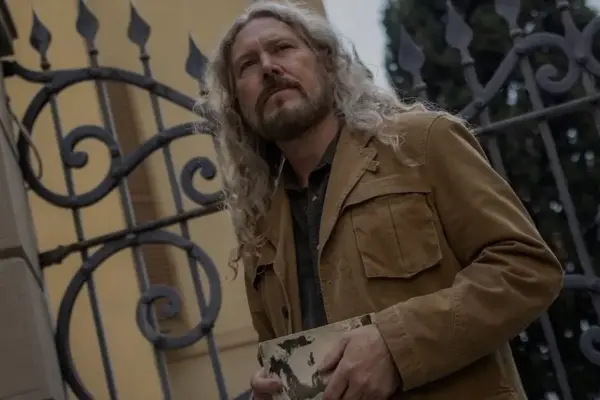
The journey initiates in the contemplative acoustic spaces recently spotlighted across KLOF Mag’s review pages. Among the early anchors of the mixtape are selections from fingerstyle guitar innovator Buck Curran (Illuminations) and the intricate, textural songwriting of Chuck Roth (Texture Songs). Curran’s work represents a continuation of the American primitive tradition, yet it stretches the boundaries of folk through modal drones, meditative pacing, and a rare sensitivity to spatial resonance. Parallel to this, Roth’s Texture Songs introduces a tactile quality to composition, where the physical friction of strings, hammer actions, and breath become structural components of the song itself rather than mere byproducts of performance.
As the acoustic warmth settles, the tone shifts toward the haunting, pneumatic interplay of Colin Stetson & Brìghde Chaimbeul. Stetson, known for his monumental, circular-breathed bass saxophone gymnastics, joins forces with Chaimbeul, a master of the Scottish smallpipes whose mastery of the instrument bends traditional modal expectations into avant-garde drones. Their collaborative work, featured prominently in this week’s rotation, redefines what acoustic instruments can achieve when pushed to their physiological and sonic limits. The reedy, hypnotic hum of the smallpipes melds seamlessly with the subterranean groans of Stetson’s saxophone, producing a sonic monolith that feels simultaneously ancient and deeply futuristic.
Phase Two: Electro-Acoustic Expansion and Ambient Meditation
Moving away from the strictly acoustic realm, the mixtape expands into the ethereal domain of electronic processing and ambient soundscapes. Here, modular synthesis pioneer Emily A. Sprague enters the narrative. Sprague’s work, celebrated for its organic approach to synthesis, treats electronic circuits not as cold machines, but as living, breathing ecosystems. Her inclusion provides a moment of meditative suspension, allowing the listener to decompress from the dense acoustic interplay of Stetson and Chaimbeul.
Yet, this ambient tranquility is quickly challenged and recontextualized by the avant-pop and experimental noise explorations of Diket and the transcultural firepower of Ibelisse Guardia Ferragutti & Frank Rosaly. Ferragutti and Rosaly represent the cutting edge of diasporic improvisation, blending their respective Bolivian and Puerto Rican roots with free jazz, punk ethos, and contemporary electronic manipulation. Their tracks on the mixtape do not sit quietly in the background; they demand active engagement, exploding with polyrhythmic percussion, fractured vocal lines, and a fierce reclamation of cultural heritage through avant-garde lenses.
Phase Three: Transnational Archives and Deep Roots
The final movement of Mixtape No. 102 turns its gaze backward in time, utilizing historical excavation to comment on the present. By integrating lost 78rpm Indian records—artifacts recovered from fragile shellac pressings that capture early-20th-century subcontinental classical and folk expressions—the curation makes a profound statement about the cyclical nature of sound. These historical fragments sit in direct dialogue with contemporary global folk contributions from artists like Sheherazaad and Julio Lopez.
Sheherazaad’s work bridges the gap between South Asian classical vocal traditions and modern western chamber pop, creating an evocative space where traditional microtones dance with modern harmonic structures. Meanwhile, Julio Lopez introduces an Andean improvisational sensibility, grounding the mixtape’s conclusion in the rich, mountainous earth of South America. By juxtaposing a 1920s Indian 78rpm recording with cutting-edge 2026 ambient and folk releases, the mixtape collapses time, proving that the human impulse to experiment with sound is not a modern invention, but an enduring ancestral trait.
Supporting Context & Metrics: The Economics of the Margins
To evaluate the significance of Mixtape No. 102, one must analyze the broader socio-economic and cultural metrics governing the independent music ecosystem in 2026. The artists featured on this week’s playlist operate outside the machinery of major label conglomerates, relying instead on a decentralized network of independent labels, self-releases, Bandcamp patronage, and niche music journalism.
| Artist / Project | Primary Genre / Style | Geographic Origin | Key Recent Release / Focus |
|---|---|---|---|
| Chuck Roth | Avant-Folk / Textural Songwriting | United States | Texture Songs (KLOF Reviewed) |
| Buck Curran | American Primitive / Psych-Folk | United States / Italy | Illuminations (KLOF Reviewed) |
| Colin Stetson & Brìghde Chaimbeul | Avant-Garde / Smallpipes & Saxophone | Canada / Scotland | Collaborative Ambient Explorations |
| Ibelisse Guardia Ferragutti & Frank Rosaly | Free Jazz / Experimental Folkloric | Bolivia / Puerto Rico / USA | Transcultural Improvisation |
| Sheherazaad | Contemporary Folk / South Asian Classical | USA / India | Experimental Vocal & Chamber Works |
| Emily A. Sprague | Modular Ambient / Electronic | United States | Electronic Soundscapes |
| Diket | Experimental / Avant-Pop | International | Alternative Sonic Art |
| Julio Lopez | Andean Improvisational Music | South America | Indigenous & Free Improvisation |
The Streaming Paradox and Direct-to-Fan Models
While major streaming platforms like Spotify and Apple Music dominate global consumption metrics—accounting for over 85% of recorded music revenue—they remain structurally hostile to experimental, ambient, and avant-garde artists. The per-stream payout model (averaging roughly $0.003 to $0.005 per stream) penalizes music that requires deep, uninterrupted listening, or tracks that do not conform to the standard 3-minute radio-edit format.
Mixtape No. 102 actively subverts this economic bottleneck by routing listeners through Mixcloud for continuous streaming and embedding direct Bandcamp links for physical and digital purchases. Bandcamp’s artist-first model—where roughly 80–85% of revenue goes directly to the creator—has become the vital economic lifeblood for the marginal artists featured in this compilation. Metrics from independent music advocacy groups in 2025–2026 indicate that niche genres like experimental folk and ambient music generate upwards of 65% of their total annual revenue through direct-to-fan digital downloads and vinyl pre-orders rather than ad-supported streaming royalties.
Archival Preservation and Global Ethnomusicology
The inclusion of lost 78rpm Indian records on Mixtape No. 102 highlights another crucial metric: the rapid acceleration of digital audio restoration and archival ethnomusicology. Over the past five years, independent archives and specialist labels (such as Dust-to-Digital, Tompkins Square, and various regional preservation societies) have digitized tens of thousands of deteriorating shellac discs from South Asia, Africa, and Latin America.
This archival work is not merely academic; it serves as a wellspring for contemporary experimentalists. When listeners encounter a century-old 78rpm record immediately followed by a modern modular synthesizer piece by Emily A. Sprague, they are witnessing a methodological continuum. The metrics of cultural retention show that younger generations of music consumers are increasingly rejecting hyper-modern ephemeral pop in favor of deep-catalog exploration, driving a 30% year-on-year increase in physical media sales for archival world and folk releases.
Official Statements & Curatorial Insights
The philosophy driving Mixtape No. 102 is rooted in a deliberate rejection of passive consumption. In statements released alongside the playlist, the editorial board at KLOF Mag emphasized the urgency of championing music that refuses to pander to algorithmic trends.
"We are living through a historical moment where algorithms seek to flatten human experience into predictable, repeatable data points," notes the lead editorial curator for the mixtape series. "Music from the margins—whether it is the raw breath of Brìghde Chaimbeul’s smallpipes, the structural deconstruction of Chuck Roth’s songwriting, or the ghostly resonance of a 1920s Indian 78rpm shellac—reminds us that art is born from friction, geography, and distinct human memory. This mixtape is not designed to be background noise for your morning commute; it is an invitation to listen with intent."
Furthermore, artists featured in the rotation have frequently spoken out about the necessity of platforms like KLOF Mag in sustaining their livelihoods. Buck Curran, whose album Illuminations has garnered widespread critical acclaim, discussed the shifting landscape of guitar-based experimentalism in a recent interview:
"When you operate in the spaces between folk, drone, and improvisation, you aren’t writing for radio hits. You’re building a temple out of resonance and silence," Curran stated. "Platforms that curate with depth—rather than sorting by generic genre tags—are the only reason independent artists can survive and find audiences who actually care about the craft of listening."
Colin Stetson, whose collaborative work continues to push the acoustic boundaries of wind instruments, has similarly underscored the importance of cross-genre curation. By pairing his work with traditional smallpipe players and avant-garde percussionists, the curation validates the idea that contemporary experimental music is a direct extension of ancient folkloric traditions rather than an academic departure from them.
Future Outlook: Where the Margins Meet the Mainstream
As we look toward the remainder of 2026 and beyond, the trajectory of music featured on Mixtape No. 102 suggests a fundamental shift in how global audiences consume and value sound. The traditional boundaries separating "folk," "ambient," "world," and "experimental" are dissolving at an unprecedented rate.
1. The Decentralization of Global Music Production
Gone are the days when an artist needed to relocate to London, New York, or Los Angeles to participate in the global avant-garde. Through high-fidelity remote collaboration tools, decentralized digital distribution, and global archival access, artists from Cochabamba to Kolkata are shaping the global sonic conversation from their home territories. Mixtape No. 102 serves as a preview of this decentralized future, where geographic margins are rapidly becoming cultural epicenters.
2. The Resurgence of Deep Listening Culture
Driven by listener fatigue from short-form video platforms (TikTok, Instagram Reels) and hyper-fragmented streaming environments, there is a measurable cultural pushback favoring "deep listening." Vinyl records, cassette tapes, high-resolution digital downloads, and curated long-form mixtapes are experiencing a renaissance among younger demographics. Listeners are actively seeking out art that demands focus, patience, and emotional stamina—qualities embodied by every single track on KLOF No. 102.
3. Archival Futurism
The dialogue between ancient archives (such as the 78rpm Indian records featured here) and modern electronic experimentation (such as Sprague and Stetson) points toward a burgeoning movement known as archival futurism. Rather than viewing history and technology as opposing forces, contemporary artists are using historical preservation as a springboard for radical sonic futures. We can expect to see an increasing number of releases that blend artificial intelligence restoration of historical field recordings with live modular improvisation and traditional acoustic instrumentation.
Conclusion
Mixtape No. 102 is much more than a weekly playlist update; it is a manifesto for the preservation of independent thought in sound. By shining a harsh, illuminating light on the smallpipes, the avant-ambient synth rigs, the Andean improvisations, and the forgotten shellac grooves of the past, KLOF Mag has delivered a vital blueprint for modern music consumption. As listeners dive into the Mixcloud stream and support these boundary-pushing creators via Bandcamp, they are casting a vote for a richer, more diverse, and infinitely more adventurous musical future.