Executive Overview
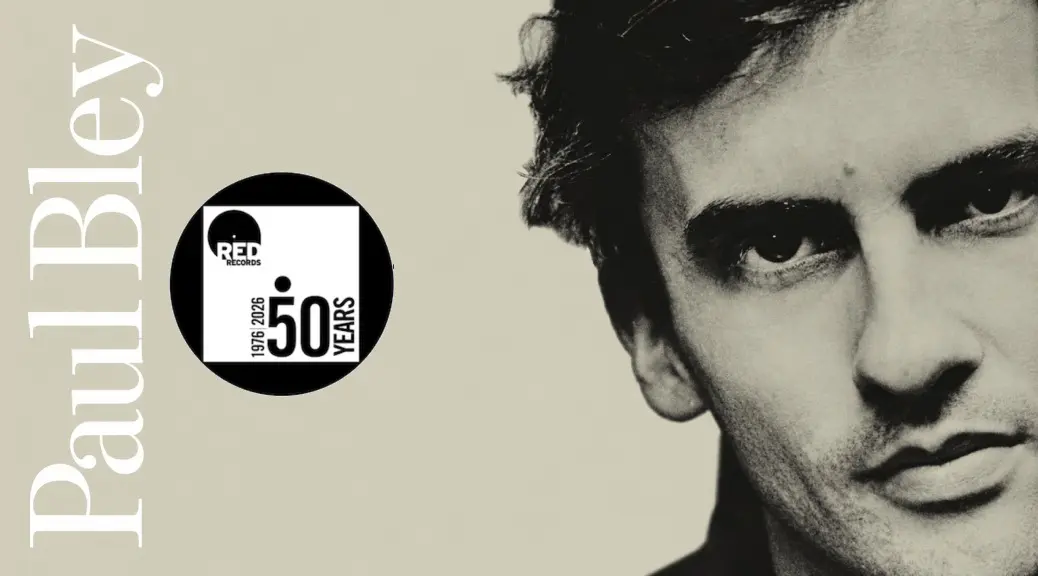
As Red Records marks its golden anniversary this year, the Milan-based institution is celebrating by casting its gaze backward to a historical artifact older than the label itself. At the center of this milestone stands a pristine, 180-gram vinyl remaster of Ramblin’, a masterclass in modern piano trio dynamics captured live and in-studio during the high summer of 1966 at RCA’s studios in Rome. Originally taped a decade before Sergio Veschi and Alberto Alberti formally established Red Records in 1976, these sessions document pianist Paul Bley at a pivotal crossroads of his artistic evolution.
Alberto Alberti, a Bologna record-shop owner and visionary festival promoter whose name is preserved on the original sleeve as executive producer, helped plant the seeds for a label that would consciously mirror the curatorial independence of American imprints like Blue Note, Riverside, Contemporary, and Prestige. Veschi once characterized Red’s ethos to the Italian daily L’Unità as an effort to capture each musician’s sound in the raw heat of creation, proudly dubbing his enterprise the "Leoncavallo of jazz labels"—a nod to Milan’s fiercely independent, self-managed social center.
Though these historic Roman tapes first surfaced internationally in Paris in 1969 via BYG’s radical Actuel series and later received sparse local pressings in the late 1970s, this definitive deluxe reissue returns the sessions to the corporate lineage Alberti spent decades building. More than a mere archival rescue mission, this release serves as an essential sonic document of an artist who continually dismantled bebop convention to forge an entirely new lexicon for the piano trio.
Detailed Chronology: From Montreal Prodigy to West Coast Revolutionary
To understand the breathtaking fluency of Ramblin’, one must retrace a transcontinental trajectory that began long before Bley ever set foot in a Roman studio. Born in Montreal in 1932, Bley was a child prodigy who picked up the violin at age five before transitioning to the piano at eight. By the time he was eleven, he held a junior diploma from the McGill Conservatory, and before his sixteenth birthday, he was already leading his own quartet for a lucrative residency at the city’s Chalet Hotel.
Bley’s early career reads like a breathless roll call of mid-century jazz royalty. In 1949, while still finishing high school, he inherited Oscar Peterson’s prestigious residency at Montreal’s Alberta Lounge when Peterson departed for the United States, seamlessly slotting in alongside Peterson’s rhythmic foundation, bassist Ozzie Roberts and drummer Clarence Jones. Stints at New York’s prestigious Juilliard followed, alongside co-founding Montreal’s legendary Jazz Workshop—a venture that successfully brought bebop architect Charlie Parker north for a groundbreaking television broadcast in early 1953. Later that year, Charles Mingus enlisted Bley for his newly minted Debut label, anchoring a historic piano trio session completed by drummer Art Blakey (Introducing Paul Bley). Tours backing tenor titan Lester Young and extended club residencies at Basin Street and Birdland cemented Bley’s status as a formidable bop stylist, though his ties to his Canadian roots remained deep; as late as 1965, he was still drawing crowds alongside Peterson at Montreal’s Casa Loma.
The Los Angeles Catalyst and the Birth of Free Jazz
The true metamorphosis of Bley’s aesthetic, however, occurred after his relocation to Los Angeles in 1957—the same year he married composer and pianist Carla Bley (then credited as Carla Borg). His West Coast quartet album Solemn Meditation, issued on Gene Norman’s GNP label, provided legendary bassist Charlie Haden with his professional recording debut, alongside vibraphonist Dave Pike. Carla contributed a striking original tune and the album’s liner notes, while the quartet’s radical reimagining of Gershwin’s "Porgy" was pushed as a single.
At the Hillcrest Club, Bley settled into a legendary, white-hot residency alongside Haden and drummer Billy Higgins. In the autumn of 1958, this rhythm section was augmented by a pair of sonic iconoclasts: Ornette Coleman and Don Cherry. The resulting tapes, later issued as The Fabulous Paul Bley Quintet and Live at the Hillcrest Club 1958, represent the earliest surviving live documents of Coleman’s revolutionary free jazz quartet.
Significantly, when Coleman soon elected to permanently drop the piano from his own ensembles, Bley found himself uniquely positioned as one of the sole keyboardists capable of translating those open, non-chordal structures to the piano. The inclusion of Coleman’s composition "Ramblin’" (originally from Change of the Century) as the centerpiece of side two on Bley’s 1966 Rome album directly traces its lineage back to these fertile Los Angeles nights.
The New York Avant-Garde and the Jazz Composers Guild
Returning to New York in 1959, Bley plunged headfirst into the city’s burgeoning downtown avant-garde. He collaborated extensively with Mingus, George Russell, and Don Ellis before forming a legendary collaborative unit: the Jimmy Giuffre 3. Alongside bassist Steve Swallow and operating entirely without a drummer, the trio recorded Fusion and Thesis for Verve under Creed Taylor’s watchful production eye. That autumn, the trio undertook a grueling, culturally challenging tour of Germany and Austria, performing radio broadcasts for Stuttgart and Radio Bremen to audiences who were frequently perplexed by their rigorous, chamber-jazz dialogues.
Undeterred, Bley expanded his network, working closely with Sonny Rollins (appearing on Sonny Meets Hawk! alongside Coleman Hawkins) while leading pianoless and chordally liberated trios featuring Swallow, Gary Peacock, Pete La Roca, and Paul Motian.
By 1964, the epicenter of New York’s creative music had shifted to the Cellar Café on West 91st Street. Here, Bley helmed a dizzying array of ensembles. One quartet featured a young Pharoah Sanders (still performing under his given name, Farrell) on tenor saxophone, anchored by bassist David Izenzon and drummer Motian. Another configuration paired Sun Ra’s fierce tenor saxophonist, John Gilmore, with Peacock and Motian—tapes that languished on shelves until their eventual 1975 release as Turning Point.
That autumn also witnessed the birth of Bill Dixon’s October Revolution in Jazz, an event that catalyzed the formation of the Jazz Composers Guild, with Paul and Carla Bley serving as founding members. Bernard Stollman, a pioneering lawyer who had launched ESP-Disk that summer by capturing Albert Ayler’s seismic Spiritual Unity, caught Bley live and immediately offered him a recording contract. The resulting album, Barrage, relied entirely on Carla Bley’s labyrinthine compositions and featured Sun Ra saxophonist Marshall Allen in a rare, external excursion alongside trumpeter Dewey Johnson, bassist Eddie Gomez, and powerhouse drummer Milford Graves.
Supporting Context & Metrics: The European Exodus
By the mid-1960s, the economic realities of the American jazz scene were growing increasingly grim. As rock and roll steadily siphoned away younger audiences, foundational jazz venues across the United States were shuttered at an alarming rate. A sobering 1967 Chicago report noted the closure of ten distinct jazz rooms within a four-block radius of 63rd Street and Cottage Grove Avenue alone—a corner Bley had frequently played.

Conversely, Europe offered a welcoming cultural and financial infrastructure. Publicly funded radio broadcasters, state-supported jazz festivals, and independent European imprints provided a vital economic lifeline. In 1966, Down Beat explicitly categorized Bley among a vanguard of American artists finding steady, appreciative work abroad, alongside Archie Shepp, Albert Ayler, Don Cherry, Steve Lacy, John Tchicai, and Cecil Taylor.
Bley’s 1966 European touring itinerary illustrates the sheer volume of work available across the Atlantic. Following the Rome sessions, his trio performed at the Lugano festival in late August, recorded for Fontana in Baarn (Netherlands), performed a radio-broadcast club date at Bremen’s Lila Eule, traveled to Prague for the International Jazz Festival in October, and wrapped up with a concert in Haarlem in November.
These sustained European networks directly paved the way for the independent labels that blossomed across the continent in the subsequent decade. When Aldo Sinesio launched Horo records in Rome in 1972, or when Sergio Veschi and Alberto Alberti founded Red Records in Milan in 1976, their ability to easily access and record visiting American masters was a direct byproduct of the artistic bridges and personal friendships forged on the European circuit a decade prior.
Official Statements and Critical Reception
The critical reception of Bley’s mid-sixties output reflected a music industry grappling with paradigm shifts. When ESP-Disk released Closer in early 1966—a trio date with Steve Swallow and Barry Altschul produced entirely by Bley himself—trade publications were forced to reckon with his unique position between tradition and radicalism.
One contemporary review singled out the compositions "Ida Lupino," "Sideways in Mexico," and "Start" as mandatory listening for serious jazz collectors. Another critic took pains to separate Bley from the hollow pretenders of the avant-garde, hearing in his haunting reading of "Ida Lupino" a direct melodic descendent of his earlier West Coast ballad work on "Porgy," praising the music as:
"Beautiful, melodic, probing and lyrical."
This aesthetic description serves as a remarkably accurate blueprint for Ramblin’. Even when mainstream critics subjected Bley’s work to blindfold tests—such as when Down Beat played his recording of Carla Bley’s "Walking Woman" to a bewildered guest in 1966—the music consistently commanded respect. The listener initially mistook the band for Ornette Coleman’s ensemble, debating whether Scott LaFaro or Charlie Haden was holding down the bass, before ultimately awarding the track four solid stars.
Reflecting on this era decades later, producer Manfred Eicher of ECM Records—who would sign Bley early in his label’s history for masterworks like 1967’s Ballads and the seminal 1972 solo piano outing Open, To Love—noted that in 1969, major commercial record labels had completely abandoned jazz, leaving visionary independent producers to preserve a vital art form.
Future Outlook: The Ongoing Legacy of Paul Bley
Paul Bley’s relentless forward momentum did not slow after the Rome sessions. In November 1969, he wheeled a cumbersome Moog synthesizer onto the stage of New York’s Town Hall, accompanied by bassist Glen Moore and drummer Laurence Cook, while Annette Peacock processed her vocals through the electronics in an early iteration of the pioneering Bley-Peacock Synthesizer Show.
Throughout the 1970s and beyond, Bley continually acted as a midwife to future generations of virtuosos. In 1974, operating through Improvising Artists Inc. (IAI)—the independent label he co-founded with video artist Carol Goss—Bley took an electrifying, embryonic lineup featuring Jaco Pastorius, Pat Metheny, and drummer Bruce Ditmas into a New York studio. Originally issued simply as Pastorius/Metheny/Ditmas/Bley (and later retitled Jaco), the session marked the very first professional commercial recording for both electric bassist Pastorius and guitar wunderkind Metheny.
Sixteen years after his foundational residency at the Hillcrest Club, Bley was still executing his lifelong mission: identifying revolutionary young talent, offering them an uncompromised global platform, and meeting them at the musical frontier as an absolute equal.
With Red Records’ reissue of Ramblin’ housed in a numbered gatefold package complete with an LP-sized booklet and premium 180-gram vinyl mastering—featuring Mark Levinson, who would trade his upright bass shortly after these sessions to pioneer ultra-high-end audio design with Mark Levinson Audio Systems—listeners today are invited back to the exact moment where the modern piano trio was radically reimagined. It is an essential monument to an artist who spent his entire creative life walking unpaved roads.