Executive Overview
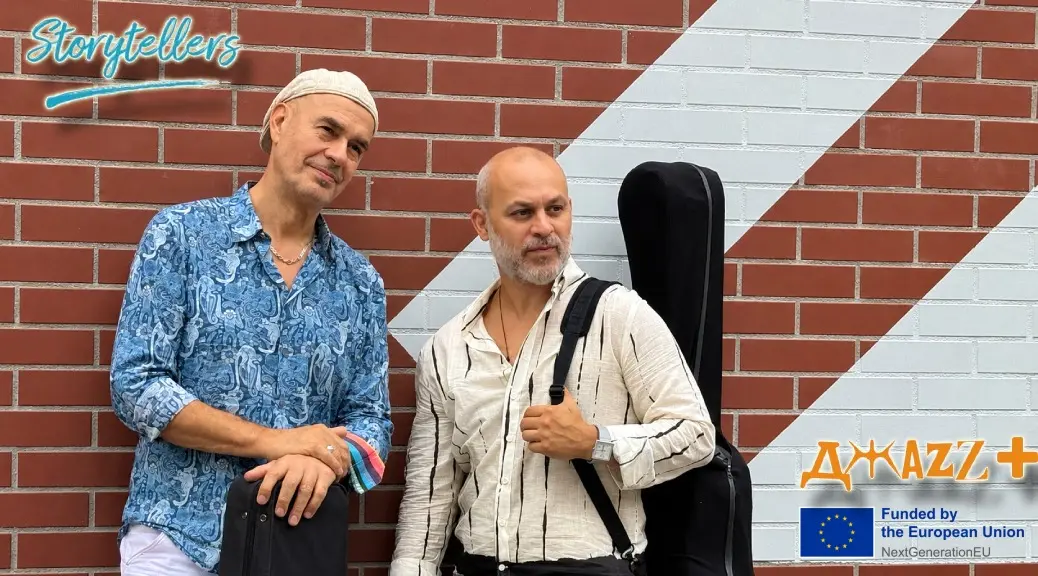
In the realm of contemporary acoustic and world-fusion music, few undertakings carry the narrative weight, patience, and cross-cultural resonance of Storytellers, the landmark collaborative album by master guitarists Antonio Forcione and Cenk Erdoğan. Recorded over the stifling summer months of July and August 2025 at Sofia’s Pekarnata Studio under the meticulous engineering of Ivan Boshev, this ten-track masterwork represents far more than a routine pairing of virtuosos. It is the culmination of a twenty-four-year transatlantic dialogue delayed by geopolitical friction, bureaucratic inertia, and the unpredictable tides of international artistry.
The partnership bridges two distinct worlds of stringed interpretation: Forcione, the Molise-born, London-seasoned nylon-string maestro whose career encompasses twenty solo albums and legendary collaborations with luminaries like Charlie Haden; and Erdoğan, an Istanbul-born vanguard of the baritone fretless guitar whose mastery of Turkish microtones stems directly from the lineage of pioneering fretless innovator Erkan Oğur.
Released to critical acclaim and notably backed by the European Union’s NextGenerationEU recovery programme via Bulgaria’s cultural funding initiatives, Storytellers is an exercise in dynamic contrast. The record weaves Western harmonic structures with Eastern modal fluidities, moving effortlessly from fiery flamenco-tinged dialogue to deeply introspective acoustic meditations. Structured meticulously across a gatefold vinyl release featuring five compositions from each artist, the album presents an unbroken chain of musical storytelling. For anyone attuned to the subtle interplay of timbre, space, and cultural geography, Storytellers stands as a defining achievement of the decade—a testament to the enduring notion that musical affinity can ultimately outlast any bureaucratic delay.
Detailed Chronology: From Istanbul Masterclass to Sofia Studio
The genesis of Storytellers stretches back more than two decades, originating in a historic flashpoint of creative cross-pollination that neither artist could have fully anticipated at the time.
The 2001 Istanbul Encounter
In 2001, Cenk Erdoğan was a young composition student deeply immersed in his studies at İstanbul Bilgi University. During a local guitar festival in Istanbul, Antonio Forcione—already an established fixture of the London acoustic scene following years of rigorous Covent Garden busking and international touring—held a high-profile masterclass.
As Erdoğan performed on his instrument, Forcione heard something distinctive and inherently vocal within the young Turk’s approach to the fretless guitar. Recognizing a kindred spirit who possessed a rare sensitivity to microtonal bends and vocal phrasing, Forcione extended an invitation for Erdoğan to travel to London to explore collaborative possibilities. However, the realities of international travel restrictions, visa bureaucracies, and the logistical hurdles facing emerging artists from outside the European Union at the turn of the millennium intervened. The grand idea was placed on an indefinite hiatus, remaining an unrealized ambition for the best part of twenty years.
The 2019 Reconnection and European Touring
The institutional barriers that kept the two guitarists apart finally began to fracture in 2019, when Bulgaria’s prestigious Sofia’s Jazz Plus festival served as the catalyst for their long-awaited reunion. Brought together on stage for the first time in nearly two decades, Forcione and Erdoğan discovered that their artistic chemistry had not only survived the intervening years but had deepened significantly.
The successful Sofia engagement opened the floodgates for a series of high-profile live dates across Bulgaria and broader European stages. Audiences and critics alike witnessed the organic evolution of a duo whose members played with the telepathic intuition of lifelong chamber musicians. This phase of intensive live performance laid the essential groundwork for entering the recording studio, transforming what had once been a theoretical cross-cultural experiment into a battle-tested musical partnership.
The Summer 2025 Recording Sessions
With momentum firmly on their side, the duo booked time at Pekarnata Studio in Sofia during July and August 2025. Over these sweltering summer weeks, engineer, mixer, and mastering specialist Ivan Boshev captured the unadorned acoustic reality of Forcione’s Western nylon-string guitar alongside Erdoğan’s baritone fretless instrument.
Reflecting the ironies of their initial delay, the completed physical release proudly bears a European Union funding credit on its sleeve, courtesy of Bulgaria’s allocation from the NextGenerationEU recovery programme. It seems that after decades of being thwarted by officialdom, continental bureaucracy ultimately owed the duo a debt—one paid forward through cultural infrastructure funding that enabled this trans-European masterpiece to be preserved for posterity.
Supporting Context & Metrics: The Artistry and Mechanics of Storytellers
To fully appreciate the auditory landscape of Storytellers, one must examine the distinct stylistic genealogies and technical foundations that Forcione and Erdoğan bring to the sonic table.
The Protagonists: Biographies and Lineages
- Antonio Forcione (Born 1960, Molise, Italy): Relocated to London in 1983, Forcione initially honed his craft on the unforgiving asphalt of Covent Garden as a street busker. This crucible of public performance forged an uncanny ability to captivate diverse audiences instantly. Over a prolific career spanning some twenty albums—including the breathtaking 2006 ECM-distributed Heartplay alongside legendary bassist Charlie Haden—Forcione has mastered the nylon-string guitar, employing percussive slaps, intricate fingerpicking, and rich harmonic voicings that evoke Mediterranean warmth and contemporary jazz sophistication.
- Cenk Erdoğan (Born 1979, Istanbul, Turkey): A torchbearer of contemporary Turkish modal jazz, Erdoğan’s artistic awakening was sparked by Erkan Oğur, who famously defretted a classical guitar in 1976 to unlock the quarter-tones and microtonal bends native to Turkish folk and classical traditions. Inspired by Oğur, Erdoğan pulled the frets from his own instrument, developing a proprietary command of the baritone fretless guitar. His pedagogical reach has extended to global institutions like Berklee College of Music, and his performance credits include contributions to Jim “Kimo” West’s Grammy-winning album More Guitar Stories.
Album Architecture and Physical Presentation
Storytellers is designed as an immersive physical artifact, harking back to an era when music consumption was a multisensory ritual. The gatefold packaging features a personal introductory note from Forcione, accompanied by micro-narratives penned by the respective composers for each of their pieces. These liner notes offer intimate glimpses into the creative sparks behind the music: childhood memories, dedications to loved ones, and traditional culinary adages.
The ten-track listing is divided evenly—five compositions apiece—and arranged in a meticulously calculated alternating running order:
- Side A: Opens with Forcione’s "Folk Song for Two," followed by Erdoğan’s "Da Capo," Forcione’s "Children of the World," Erdoğan’s "4 Hands on the Table," and concluding Side A with Forcione’s "Petals in the Ashes."
- Side B: Opens with Erdoğan’s "Dilemma," followed by Forcione’s "Nena," Erdoğan’s "Leaving Home," Forcione’s "Turning Pages," and closing the record with Erdoğan’s "Luna."
This symmetrical sequencing ensures that the listener experiences a continuous, balanced conversation between Western harmonic navigation and Eastern microtonal fluidity.

Track-by-Track Breakdown
Side A
- "Folk Song for Two" (Forcione): Written with Brazilian acoustic titan Egberto Gismonti in mind, this opener establishes immediate intimacy. Forcione’s traditional Western nylon-string phrasing provides a crisp rhythmic and harmonic anchor, contrasting sharply against Erdoğan’s liquid, microtonal flow. The dual-timbre interplay captivates without ever feeling crowded.
- "Da Capo" (Erdoğan): Infused with the rhythmic bravado and percussive attack of flamenco, Erdoğan’s piece flirts with Spanish idioms before Forcione expertly reins the energy back into a contemporary chamber-jazz framework.
- "Children of the World" (Forcione): A gentler, more comforting sonic interlude that provides a moment of lyrical reflection following the high-octane exchanges of the opening tracks.
- "4 Hands on the Table" (Erdoğan): Taking its title from a chef’s kitchen expression describing two culinary artists working in seamless tandem, this track leans heavily into distinctly Turkish rhythmic feels. It summons the rich, vibrant heritage of Turkish jazz pioneers like Önder Focan and Okay Temiz.
- "Petals in the Ashes" (Forcione): Evocative of a festive rural wedding song echoing across a sun-drenched town square, this composition suspends time, drawing the listener into an atmosphere of hypnotic, melancholic beauty.
Side B
- "Dilemma" (Erdoğan): Serving as an emotional anchor for the second half, this piece portrays the eternal battle between heart and head. It features stunning, conversational trade-offs that occasionally evoke the haunting drone and sustain of an Indian sitar, wrapped securely in a contemporary European acoustic aesthetic.
- "Nena" (Forcione): A masterclass in narrative-driven composition. This track embodies the spacious, atmospheric purity often associated with the classic ECM Records catalog, allowing every note to breathe within the acoustic envelope of Pekarnata Studio.
- "Leaving Home" (Erdoğan): Dedicated to the loved ones left behind during endless cycles of touring, this piece begins with Forcione establishing a steady foundation before Erdoğan enters, injecting profound depth and bittersweet sorrow into the musical narrative.
- "Turning Pages" (Forcione): A deeply personal reflection on Forcione’s childhood in southern Italy, where he lived with his grandparents while his parents worked abroad, piecing together their lives through old family photo albums. Utilizing a weighted timbre and a subtle studio echo, the piece achieves a dreamlike, nostalgic resonance.
- "Luna" (Erdoğan): Written to honor the moon in all its shifting phases—though wittily sharing its name with a beloved canine companion—this closing track guides the listener through a bustling sonic landscape of street corners and nocturnal impressions. It leaves an indelible, lasting mark on the listener.
The album concludes with a poignant spoken-word coda captured as the needle approaches the run-out groove: "I think we have a good vibe, man." It is a modest, honest postscript to a towering artistic achievement.
Official Statements and Critical Perspectives
The release of Storytellers has prompted widespread reflection from critics, cultural commentators, and the artists themselves regarding the rarity of unforced musical collaborations in the modern era.
Reflecting on the decades-long delay in bringing their vision to the stage and studio, Antonio Forcione noted in the album’s gatefold liner notes:
"Music has its own internal clock. While the political and logistical landscapes of Europe tried to keep us in separate orbits for twenty years, the underlying resonance we found in Istanbul back in 2001 was never subject to bureaucratic expiration dates. When we finally locked arms in Sofia, it felt as though no time had passed at all."
Cenk Erdoğan emphasized the symbiotic nature of their acoustic dialogue, stating during promotional interviews surrounding the release:
"The fretless guitar speaks a language of microtones, breathing spaces, and vocal inflections that often defies standard Western bar lines. Antonio understands how to create a canvas that accommodates both the microtonal bends of the East and the precise rhythmic architecture of the West. Storytellers is the physical proof that our instruments were always meant to speak to one another."
Industry analysts and jazz critics have been quick to praise the album’s rare blend of technical brilliance and emotional transparency. Steve Williams, writing for UK Vibe, encapsulated the critical consensus:
"The gatefold earns its keep… It’s a record to sit with, sleeve open, as each side plays. I find little to fault in this album, but this closing piece certainly cements the lasting impression this music has made on me. Like my Luna, it will be there beside me for a good few years yet. As the needle heads for the run-out groove, a spoken finale has the last word: ‘I think we have a good vibe, man.’ Who am I to argue?"
Furthermore, cultural administrators overseeing the NextGenerationEU cultural recovery grants in Bulgaria pointed to Storytellers as a prime example of how targeted public funding can bridge historic divides. By enabling independent artists from different corners of the Mediterranean and European spheres to record in premier regional facilities like Pekarnata Studio, these initiatives ensure that transnational artistic legacies continue to flourish despite ongoing geopolitical pressures.
Future Outlook
As Storytellers establishes its presence on turntables and streaming platforms internationally, the partnership between Antonio Forcione and Cenk Erdoğan transitions from a celebrated studio project into an ongoing, dynamic live entity.
Upcoming Tour and Live Implementations
With the album now fully realized, booking agents across Europe and the UK are actively coordinating an expanded live itinerary for the duo throughout 2026 and beyond. Promoters anticipate that the intimate, conversational dynamic captured by Ivan Boshev in Sofia will translate exceptionally well to boutique concert halls, jazz festivals, and acoustic music showcases. Unlike heavily produced studio releases that rely on extensive overdubs, the material on Storytellers was forged in the crucible of live performance. Consequently, Forcione and Erdoğan are uniquely positioned to recreate—and dynamically expand upon—these ten compositions in real-time, offering audiences an unvarnished masterclass in improvisational guitar dialogue.
Pedagogical and Cultural Legacy
Beyond the immediate concert stage, the collaboration serves as a vital educational touchstone for younger generations of string players. By demonstrating how the microtonal nuances of the baritone fretless guitar can harmonize seamlessly with traditional Western nylon-string fingerpicking, Forcione and Erdoğan have effectively charted a new pedagogical blueprint. Workshops and masterclasses tied to their upcoming tour dates are already being planned in collaboration with institutional partners, ensuring that the methodologies pioneered by figures like Erkan Oğur and reinterpreted by Erdoğan continue to cross-pollinate with contemporary European jazz traditions.
Ultimately, Storytellers transcends the boundaries of a standard jazz or world-music release. It stands as a triumphant monument to artistic endurance—a reminder that patience, mutual respect, and an uncompromising dedication to craft can successfully overcome decades of bureaucratic separation. As the final notes fade into the run-out groove, Forcione and Erdoğan leave listeners with an undeniable truth: when two true masters of their craft finally find their shared frequency, the resulting vibe is nothing short of transcendent.