Executive Overview
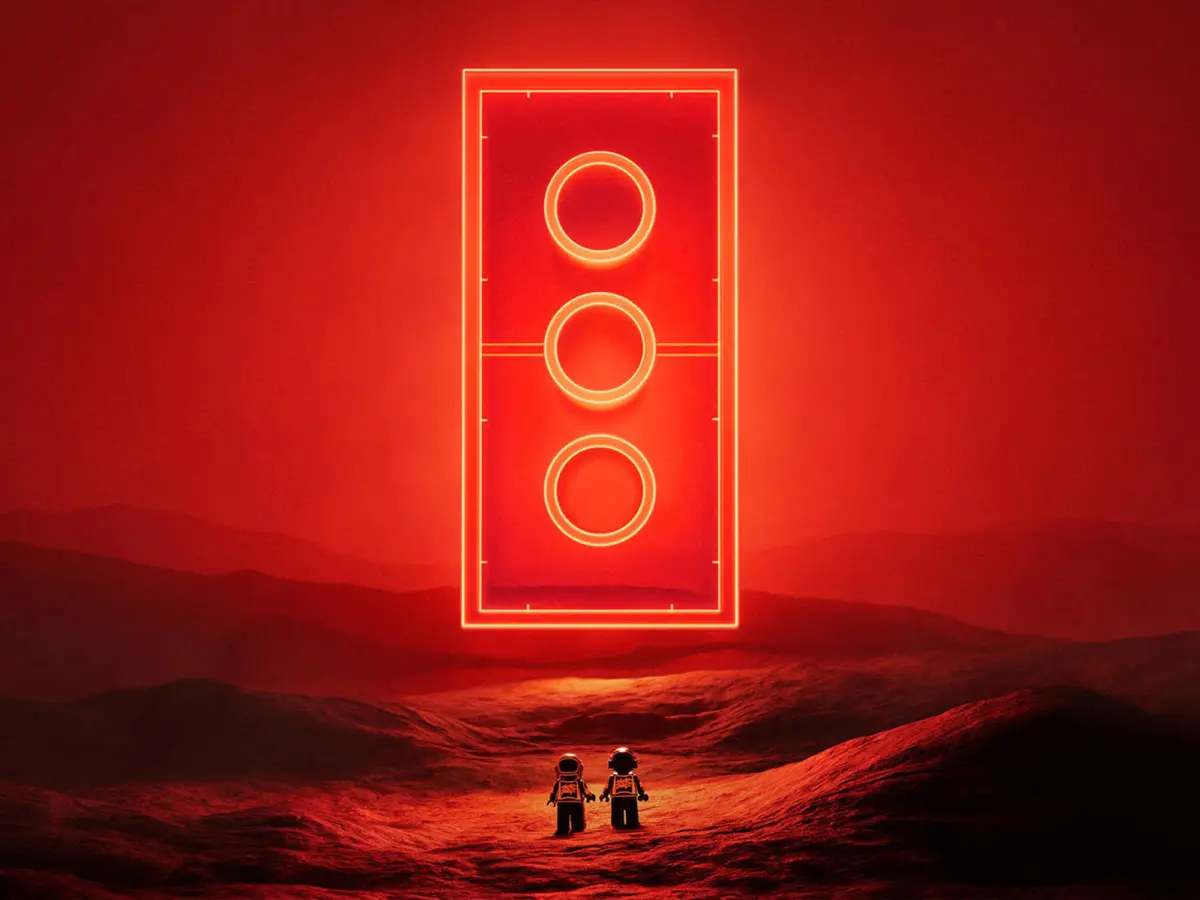
In a development that has sent shockwaves through both electronic music fandom and the adult-collector toy community, the LEGO Group has officially announced a sweeping, multi-faceted creative partnership with legendary French electronic music duo Daft Punk. Thomas Bangalter and Guy-Manuel de Homem-Christo—the elusive sonic architects who permanently altered the landscape of modern dance music before officially calling it a day in 2021—are once again stepping into the cultural zeitgeist. This time, however, they are doing so molded in ABS plastic.
The collaboration, spanning "product, content, and brand experiences," kicked off with an animated short film transforming the iconic robotic duo into official LEGO minifigures. The visual piece is anchored by a masterclass in nostalgic sound-design, utilizing the hypnotic, bassline-driven grooves of Voyager from their landmark 2001 sophomore LP Discovery, alongside the driving, mechanical pulse of Human After All, the title track from their 2005 third studio album.
While the partnership marks a major commercial alignment for two cultural heavyweights, its true origins are remarkably grassroots. The centerpiece of the collaboration is an upcoming commercial LEGO set immortalizing Daft Punk’s mythical, LED-adorned Pyramid Stage from their legendary 2007 ALIVE tour. This product traces its lineage directly to a fan-submitted concept on the LEGO Ideas platform, conceived by a father-and-son duo from Luxembourg during the COVID-19 lockdowns.
As executives from both camps hint at a broader roadmap culminating in 2027—the twentieth anniversary of the ALIVE tour—this alliance represents far more than mere nostalgic merchandising. It is a masterclass in IP convergence, proving that the enduring cultural footprint of Daft Punk can seamlessly merge with the ubiquitous, boundary-pushing universe of the world’s most famous brick.
Detailed Chronology: From Lockdown Project to Global Enterprise
To understand the magnitude of the Daft Punk x LEGO collaboration, one must trace a timeline that stretches from the bedrooms of Luxembourg to the executive boardrooms of Billund and Paris. The trajectory of this partnership is a testament to the power of community-driven design and the relentless persistence of fandom.
Phase 1: The Lockdown Genesis (2020)
In the spring of 2020, as the world retreated indoors under pandemic-induced lockdowns, families sought creative outlets to weather isolation. For Patrick Harboun and his young son in Luxembourg, this sanctuary took the form of joint LEGO building sessions fueled by a mutual, fervent admiration for Daft Punk.
Seeking a challenge worthy of their building skills, the pair set out to replicate one of the most revered spectacles in electronic music history: the monolithic, geometric pyramid stage that served as the command center for Daft Punk’s revolutionary 2007 ALIVE tour. Utilizing digital rendering tools and physical brick inventories, they engineered a detailed replica of the stage, complete with the duo’s signature helmets and the blinding, immersive lighting aesthetics that defined the tour.
Phase 2: The LEGO Ideas Breakthrough (2020–2022)
Seeking validation for their labor of love, the Harbouns submitted their design to the LEGO Ideas platform—a crowdsourcing initiative that allows fans to pitch original concepts, with the promise that designs receiving enough community backing will be evaluated for official commercial production.
The project was entered into the LEGO Ideas Music to Our Ears challenge in 2020, where it instantly captured the imagination of the platform’s user base. Voted the Grand Prize Winner of the challenge, the concept was propelled into the rigorous evaluation phase after crossing the coveted threshold of 10,000 public supporters. For over two years, fans of both the band and the brick waited in suspense, wondering if corporate licensing hurdles—historically notoriously difficult to clear with high-profile electronic music acts—would ground the project indefinitely.
Phase 3: The Pharrell Williams Precedent (2024)
While the pyramid stage wound its way through LEGO’s exhaustive internal review process, Daft Punk’s presence in the brick universe quietly manifested through an unexpected avenue: Pharrell Williams’ 2024 LEGO-animated autobiographical documentary film, Piece by Piece.
The film, which used LEGO animation to chronicle Williams’ extraordinary journey in the music industry, featured appearances by the French robots, signaling a softening of their famously protective stance regarding their visual likeness and intellectual property. This cameo served as a crucial warm-up act, testing the waters for how well the metallic, anonymous silhouettes of Bangalter and de Homem-Christo would translate into the rigid, charmingly blocky medium of LEGO animation.
Phase 4: Official Unveiling and Beyond (2025 and Onward)
The culmination of years of fan campaigning and corporate negotiation arrived with the official announcement of the global partnership. Alongside the announcement of the forthcoming commercial release of the ALIVE Pyramid Stage set, LEGO and Daft Punk dropped their introductory short film.
Executives have confirmed that this is merely the opening salvo. The partnership is slated to unfurl across multiple phases leading up to 2027, promising unexpected pop-up events, cross-media content, and immersive brand experiences designed to bridge the gap between high art, electronic music culture, and tactile play.
Supporting Context & Metrics: The Intersection of Two Cultural Titans
To fully appreciate the cultural gravity of this partnership, one must examine the distinct yet complementary trajectories of the two entities involved: the LEGO Group, a nearly century-old Danish toy institution, and Daft Punk, a duo that redefined the parameters of electronic music and visual presentation between 1993 and 2021.
The Engineering of Nostalgia
Both brands operate heavily on the currency of nostalgia, yet both possess a relentless drive for innovation. LEGO has successfully pivoted over the past decade from a children’s toy manufacturer to a dominant lifestyle brand catering heavily to adults (AFOLs—Adult Fans of LEGO). Products aimed at mature collectors, such as the LEGO Art, Icons, and Architecture lines, command premium price points and often sell out within minutes of release.

Daft Punk, meanwhile, cultivated an aura of absolute mystique. By adopting the personas of cybernetic androids in 1999—reportedly following a studio accident involving a sampler explosion—Bangalter and de Homem-Christo removed their human egos from the equation. This anonymity allowed their visual identity to become a blank canvas for fans. The pyramid stage from ALIVE 2007 is universally recognized not just as a concert stage, but as a monumental sculpture of modern pop culture. Quantifying the demand for a brick-built version of this stage is straightforward: the 10,000-vote threshold on LEGO Ideas is a rare milestone achieved by less than 1% of submitted projects, signaling guaranteed commercial viability.
Sonic Architecture: Discovery and Human After All
The choice of soundtrack for the introductory LEGO film is deeply deliberate. Voyager, culled from 2001’s Discovery, is widely regarded as one of the finest melodic bassline compositions in house music history. Its warm, bubbling progression contrasts sharply with the abrasive, industrial-rock-infused distortion of Human After All (2005).
By pairing these tracks with the rigid, physical animation of LEGO minifigures, the production underscores the core dichotomy of Daft Punk’s artistry: the marriage of organic, emotional human soul with cold, calculated machinery. It is a philosophy that mirrors the act of building with LEGO bricks—taking rigid, standardized plastic elements and assembling them to create fluid, breathing works of art.
Official Statements: Perspectives from Creators and Executives
The gravity of the collaboration is underscored by statements from key stakeholders, illuminating the emotional weight of a fan-driven project transitioning into official corporate canon.
Patrick Harboun, the mastermind behind the original LEGO Ideas submission, reflected on the surreal nature of the journey:
"This all started as a creative escape during lockdown between my son and I because of our shared love of Daft Punk and LEGO building. We never dared imagine it would take off in this way. Watching our passion project become part of an official collaboration is an incredible experience, and it’s a reminder of what makes the LEGO Ideas community so special. That a simple idea, shared by fans, really can become something much bigger."
Cédric Hervet, Creative Director for Daft Punk and a long-time visual collaborator with the duo, emphasized the importance of the band’s aesthetic lineage:
"The Pyramid Stage is one of the most recognisable expressions of Daft Punk’s visual world, so it feels fitting that this fan-created design will be centre stage of this partnership. Fans have always played an important part in Daft Punk’s story, and we are excited to see that creativity reflected through the LEGO universe."
Julia Goldin, Chief Product & Marketing Officer at the LEGO Group, framed the partnership as a meeting of kindred spirits committed to inspiring multiple generations:
"What makes this partnership so special is the enduring appeal both brands share. Like the LEGO brand, Daft Punk inspires generations through creativity, innovation and a deep connection with fans. We’re excited to build on these foundations to reimagine the Daft Punk legacy in a fresh and unexpected way, creating something unique that resonates with fans across all ages. This is just the beginning of a bigger journey — a creative collab made for fans ready to lose themselves to play."
Future Outlook: What Lies Ahead for the Daft Punk x LEGO Universe
As the ink dries on this unprecedented agreement, speculation is running rampant across enthusiast forums regarding what the coming years will hold. While official channels remain tight-lipped about the exact roadmap, industry analysts and die-hard fans are piecing together clues pointing toward 2027.
The 20th Anniversary Horizon
The year 2027 will mark two decades since the monumental ALIVE 2007 tour—a run of live performances that fundamentally reshaped how electronic music was presented on the global festival stage. With the Pyramid Stage set slated for release well in advance of this milestone, observers anticipate a crescendo of activations. Could we see a massive, museum-grade LEGO exhibition featuring life-sized recreations of the robots built entirely from bricks? Will there be limited-edition vinyl pressings bundled with exclusive LEGO minifigures?
Bridging Music, Culture, and Play
The phrasing used by LEGO executives—promising a mashup of "surprising events and content that crosses music, culture, and creative spaces"—suggests that this partnership will not be limited to static boxed sets sitting on retail shelves. Given Daft Punk’s historical penchant for high-concept visual media (such as their collaboration with anime legend Leiji Matsumoto on Interstella 5555), the potential for narrative-driven LEGO content featuring the robot duo is immense.
For a generation of electronic music enthusiasts who grew up spinning Discovery on CD while sorting through bins of colorful plastic bricks, the Daft Punk x LEGO partnership is the ultimate convergence of childhood nostalgia and adult devotion. It proves that while Thomas Bangalter and Guy-Manuel de Homem-Christo may have permanently powered down their synthesisers as a touring entity, the mythos of Daft Punk continues to evolve—proving, one brick at a time, that they are truly human after all.