Executive Overview
In the sprawling, hyper-connected landscape of contemporary electronic music, few artists possess the audacity—and the deeply rooted lineage—to stitch together the golden age of classical Arabic cinema, the ecstatic communal ecstasy of tarab, and the heavy, subterranean pulse of modern club culture. Enter Jana Saleh, a Beirut-born, London-based multi-instrumentalist, producer, and sonic architect whose debut album, I Only Have Eyes For You, arrives as a watershed moment for avant-garde electronic music.
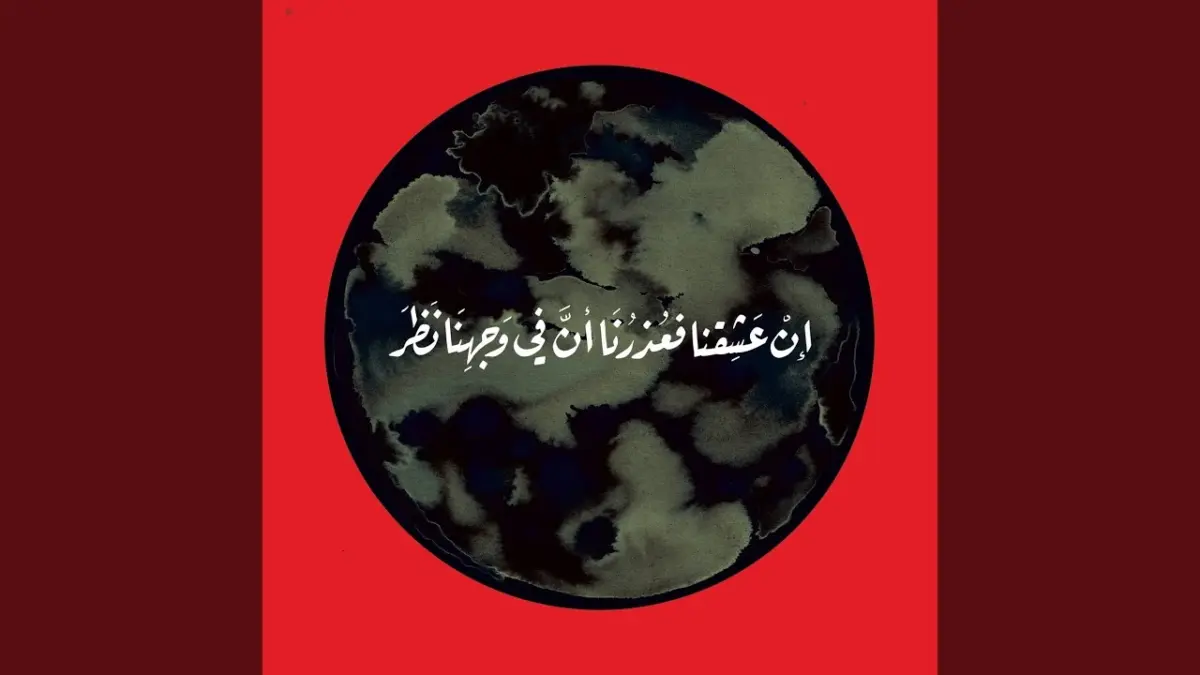
Released via the London-based independent label Mais Um, the record unfolds as a continuous, 32-minute sonic odyssey divided into seven interconnected movements. At its bleeding edge sits the lead single, “Al Maktaa al Awwal (Verse 1)”—an arresting piece of work built around a fragile, ghostly vocal fragment of the legendary Egyptian singer and composer Mohamed Abdel Wahab. Originally captured in 1933 for the cinematic milestone al-Warda al-Baida (The White Rose), Abdel Wahab’s voice is gently extracted from the classical love song “Gafnouhu Allam Al Ghazal,” penned by the eminent Lebanese poet Bechara Al Khoury. Around this archival ghost, Saleh builds a dense, immersive ecosystem of analog synthesizers, crisp percussion, hypnotic drum programming, and heavy sub-bass.
Far more than a simple exercise in nostalgic sampling, I Only Have Eyes For You is the culmination of decades of rigorous academic study, transcontinental migration, and personal resilience. Saleh’s journey takes us from the classical piano conservatories of Beirut under the tutelage of legend Boghos Gelalian, through the experimental computer-music laboratories of the Berklee College of Music and a decade-long crucible in the New York underground, to the devastating aftermath of the August 2020 Beirut port explosion that catalyzed her relocation to the British capital.
The resulting album is an investigative and deeply emotional exploration of tarab—that ephemeral, communal state of musical rapture where performer and listener merge into a single entity. Available in standard album versions alongside club-ready and radio-friendly edits—meticulously mixed by Alex Venguer and mastered by Oscar Zambrano—I Only Have Eyes For You demands to be heard not merely as a collection of tracks, but as a monumental manifesto for the future of Arabic electronic music.
Detailed Chronology: The Making of an Avant-Garde Vision
The Genesis of a Movement: From Versions to I Only Have Eyes For You
The conceptual foundation of I Only Have Eyes For You began taking physical shape during the production of Saleh’s earlier EP, Versions. On that project, she systematically deconstructed live performance recordings of Arab musical royalty—including the peerless Egyptian songstress Umm Kulthum, the Lebanese folk luminary Zaki Nassif, and the master of the Qudud Halawiya, Sabah Fakhri. By isolating their vocals and rebuilding entire instrumental arrangements around them using synthesizers, outboard drum machines, and heavy sub-bass frequencies, Saleh established a methodology: honoring the past by forcing it to converse with the future.
This methodology reached its zenith during the writing and recording sessions for her debut long-player. The album’s title track acts as a conceptual umbrella for a 32-minute continuous listening experience. The opening movement, “Al Maktaa al Awwal (Verse 1)”—translating literally to "the first section"—sets the thematic and emotional tone. By invoking the classical ghazal (the ancient Arabic poetic form dedicated to themes of beauty, unrequited longing, and the agonizing physical pain of separation), Saleh bridges the gap between pre-modern literary traditions and contemporary club soundscapes.
The single drops listeners straight into a world where decades-old acoustic warmth rubs shoulders with cold, driving machine rhythms. The archival vocal of Mohamed Abdel Wahab does not feel pasted on or digitally manipulated for cheap shock value; rather, it sits organically within Saleh’s modern arrangements, functioning as a spectral lead vocalist guiding a futuristic ensemble.
A Transcontinental Musical Education
To understand the intricate technical mastery behind I Only Have Eyes For You, one must trace the winding, geographically diverse path of Jana Saleh’s life in music. Born in Beirut in 1980, Saleh was immersed in a culturally rich environment from an early age. Her formal classical piano training in Beirut was spearheaded by Boghos Gelalian, a towering figure in Lebanese musical pedagogy who notably served as the musical adviser to the legendary Rahbani brothers—the brilliant minds behind the vast majority of timeless repertoire performed by icon Fairuz. Studying under Gelalian instilled in Saleh an uncompromising structural discipline and a profound respect for modal phrasing, harmonies, and counterpoint.
Seeking to expand her technical palette, Saleh crossed the Atlantic to attend the prestigious Berklee College of Music in Boston, where she concentrated on film scoring and music synthesis. This academic pivot proved pivotal, equipping her with the advanced programming skills required to manipulate sound at a microscopic level.
Following her studies, Saleh relocated to New York City, embarking on a ten-year residency that shaped her professional identity. In NYC, she toured North America as one-half of an avant-garde electro-acoustic duo alongside Richard Boulanger, a legendary pioneer of Csound computer music software. This collaboration pushed Saleh deep into the realms of algorithmic composition, spectral processing, and real-time audio synthesis. Simultaneously, she managed new media operations for the iconic reggae and dancehall powerhouse VP Records, absorbing the structural mechanics of sound-system culture, heavy low-end theory, and independent label logistics.
Return, Ruin, and Rebirth in London
Seeking to reconnect with her cultural roots, Saleh eventually returned to Beirut. She established B-ROOT Studio, a creative hub that quickly became a vital nerve center for the city’s burgeoning independent music scene. During this tenure, she co-produced the critically acclaimed debut album by Mashrou’ Leila, the alternative rock band that radically redefined the sound of the contemporary Middle East. Concurrently, she became a fixture behind the decks in Beirut’s vibrant underground club circuit, holding down dancefloors with eclectic, genre-defying DJ sets.
This productive chapter came to a horrific, abrupt halt on August 4, 2020. The catastrophic port explosion in Beirut tore through the city, reducing neighborhoods to rubble, claiming hundreds of lives, and completely destroying both Saleh’s home and her beloved B-ROOT studio.
Displaced by the tragedy, Saleh relocated to London later that year. Far from silencing her creative voice, the trauma of displacement galvanized her artistic mission. In the British capital, she found a supportive, outward-looking musical community—a journey that led to her residency hosting a monthly show on the cutting-edge underground online radio station Radio Al Hara, and ultimately catching the attention of Mais Um.
Supporting Context & Metrics: Deconstructing Tarab and Club Culture
The Science and Emotion of Tarab
At the academic and emotional core of Saleh’s work is the concept of tarab. Often inadequately translated as "enchantment" or "musical ecstasy," tarab is an active, communal phenomenon unique to traditional Arabic musical performance. It describes the state of heightened emotional transport achieved when a master vocalist, an ensemble of instrumentalists (playing instruments like the oud, nay, kanun, and riq), and an attentive, engaged audience enter a feedback loop of emotional resonance.
In a traditional tarab setting, an audience member’s vocal interjections (Aah! or Allah!) spur the singer on to stretch microtonal vocal ornaments (maqamat), which in turn electrifies the instrumentalists to improvise with greater intensity.
Saleh’s monumental achievement on I Only Have Eyes For You is translating this fundamentally acoustic, room-bound phenomenon into the architecture of electronic club music. By taking legendary vocal performances—charged with decades of cultural memory and emotional weight—and inserting them into sequenced rhythms and synthesizer patches, she attempts to recreate the conditions of tarab on a dark dancefloor. The sub-bass acts as the physical chest-resonance once provided by acoustic bass and percussion, while her meticulous programming mimics the responsive interplay of a live backing ensemble.
Production and Technical Specifications
The technical lineage of the record reflects a masterclass in modern audio engineering.
- Composition, Performance & Programming: Jana Saleh (100% self-played and programmed synths, percussion, drums, and bass).
- Source Material: Archival vocal fragment of Mohamed Abdel Wahab, lifted from the 1933 film al-Warda al-Baida (song: “Gafnouhu Allam Al Ghazal,” composed by Abdel Wahab, lyrics by Bechara Al Khoury).
- Mixing Engineer: Alex Venguer (known for his pristine clarity, spatial depth, and ability to balance organic timbres with heavy electronic processing).
- Mastering Engineer: Oscar Zambrano (ensuring club-ready translation across high-end sound systems without sacrificing the dynamic range essential for emotional resonance).
- Formats: Released by Mais Um on October 15 in three distinct iterations:
- Album Version (the continuous 32-minute, seven-movement journey).
- Club Edit (optimized for peak-time dancefloor immersion and heavy sound-system pressure).
- Radio Edit (curated for broadcast environments like her Radio Al Hara residency).
Official Statements & Industry Perspectives
While major critical assessments of the album highlight its genre-defying scope, label representatives and industry insiders have been vocal about the importance of Saleh’s debut within the contemporary electronic canon.
In promotional notes accompanying the release, Mais Um emphasized the singularity of Saleh’s artistic voice:
"Jana Saleh bridges worlds that are rarely allowed to touch in contemporary production—the profound, collective emotional weight of classical Arab tarab and the forward-thrusting momentum of underground electronic club culture. ‘Al Maktaa al Awwal’ is an invitation into a continuous 32-minute ritual of sound, memory, and physical release."
Reflecting on her research-driven approach to production, Saleh herself has frequently pointed out that her work is not about pastiche or superficial "oriental fusion," but about sonic archeology. Speaking on her methodology during the creation of her Versions EP and subsequent album work, she noted:
"When you listen to Umm Kulthum, Zaki Nassif, or Mohamed Abdel Wahab, you aren’t just hearing a song; you are hearing a cultural architecture built on nuance, microtones, and shared breathing. My goal has never been to sample them as a novelty, but to build a modern vehicle powerful enough to carry their weight into spaces they never physically inhabited—like the late-night club."
Industry peers have lauded the album for its seamless integration of complex musicological history with cutting-edge sound design. DJ and producer circles across London and Beirut have noted that tracks like "Al Maktaa al Awwal" successfully subvert Eurocentric expectations of what electronic music from the Middle East "should" sound like, sidestepping tired tropes of ambient desert pastiche in favor of driving, heavy-hitting club constructions.
Future Outlook: A New Paradigm for Arabic Electronic Music
The release of I Only Have Eyes For You on October 15 marks a pivotal turning point not only for Jana Saleh’s career, but for the broader landscape of electronic music production originating from the SWANA (South West Asia and North Africa) diaspora. As European and North American club scenes continue to look outward for fresh rhythmic frameworks and untamed sonic textures, Saleh’s work offers an ethical, highly sophisticated blueprint for how to engage with historical archives without flattening or exoticizing them.
Looking ahead, Saleh’s monthly residency on Radio Al Hara will continue to serve as a laboratory for her ongoing sonic explorations, connecting global listeners to the deep currents of underground music flowing from Beirut, London, and beyond. Furthermore, the multi-format release strategy implemented by Mais Um—spanning immersive home listening via the continuous album version, high-energy peak-time utility via the club edits, and broadcast accessibility via the radio edits—ensures that I Only Have Eyes For You will find a home across diverse listening environments.
As dancefloors worldwide increasingly demand music that carries both emotional gravity and physical impact, Jana Saleh stands at the vanguard. I Only Have Eyes For You proves that the ghosts of the golden age of Arabic cinema and song do not need to rest in archives; in the right hands, they can be reawakened to command the future.
Listen to “Al Maktaa al Awwal (Verse 1)” via Bandcamp and pre-order the full-length album, I Only Have Eyes For You, directly through Mais Um.