Executive Overview
For decades, the pantheon of mid-century American rhythm and blues royalty has been dominated by a familiar roster of household names: Aretha Franklin, Etta James, and Gladys Knight. Yet, lingering just outside the blinding glare of mainstream international superstardom sits an artist whose vocal delivery, interpretive genius, and cultural footprint match—and occasionally surpass—that of her more celebrated peers. Irma Thomas, universally and rightfully hailed as the "Soul Queen of New Orleans," has long occupied a peculiar space in musical history: revered by musicians, canonized by soul purists, and championed by the UK’s Northern Soul circuit, yet commercially under-recognized on a global scale.
From her breakout releases on Ron and Minit Records in the early 1960s to her Grammy-winning renaissance in the wake of Hurricane Katrina, Thomas’s journey is a masterclass in resilience, artistic integrity, and vocal sovereignty. Her trajectory intersects with some of the most monumental moments in rock and roll history—from having her definitive arrangement of "Time Is On My Side" famously replicated note-for-note by The Rolling Stones, to capturing a new generation of listeners through cultural touchstones like Netflix’s Black Mirror.
This investigative retrospective examines the life, career, and lasting impact of a foundational American artist. By analyzing her comprehensive discography, the industry slights that redirected her trajectory, her profound influence on British Invasion icons, and her enduring partnership with modern acts like Galactic, this piece seeks to right a historical oversight. It is time to look beyond the commercial metrics and recognize Irma Thomas not merely as a regional luminary, but as the quintessential architect of modern soul music.
Detailed Chronology: From Ponchatoula Prodigy to New Orleans Royalty
The Formative Years and the Ron Records Breakthrough
Born in Ponchatoula, Louisiana, in 1941, Irma Thomas possessed a voice that commanded attention from her earliest days within her local community. Even as a teenager, her vocal maturity set her apart from her contemporaries. At the remarkably young age of 13, she auditioned for Specialty Records, signaling an early readiness for the professional stage.
However, it was local bandleader Tommy Ridgley who truly catalyzed her career trajectory. Recognizing a rare talent, Ridgley secured Thomas a recording contract with Ron Records, a boutique New Orleans label specializing in rich, swampy R&B. Founded by Joe Ruffino to showcase local Louisiana talent, Ron Records proved to be fertile ground. Thomas found herself surrounded by extraordinary company, recording alongside legendary figures such as Professor Longhair and Mac Rebennack, who would later achieve global fame as Dr. John.
Thomas wasted no time leaving an impression. Her debut single, "(You Can Have My Husband But Please) Don’t Mess With My Man," peaked at No. 22 on the Billboard R&B chart. The track immediately showcased her artistic confidence; rather than sounding like an untested newcomer, Thomas delivered the performance with the swagger and stylistic assurance of a seasoned veteran.
The Minit Years and Allen Toussaint’s Pen
Following her success with Ron Records, Thomas transitioned to the Minit label, where she began a historic creative partnership with producer, arranger, and songwriter Allen Toussaint. This collaboration yielded some of the most atmospheric, blues-drenched recordings of the era.
In 1962, Toussaint penned "It’s Raining" for Thomas—a melancholy, deeply textured ballad that highlighted the vulnerable, weeping qualities of her upper register. The following year, she recorded "Ruler Of My Heart," a composition written by Aaron Neville. The song’s structural brilliance and emotional resonance were so undeniable that it later became a staple for artists like Otis Redding (who reworked it into "Pain in My Heart") and Norah Jones.
The Imperial Records Era and the Rolling Stones Controversy
The year 1964 marked a commercial peak for Thomas, during which she scored four Top 100 R&B hits on the Imperial label. The streak began with the heart-wrenching "Wish Someone Would Care." Written by Thomas during a period of deep personal distress as her first marriage was dissolving, the song was an emotional tour de force. Ironically, its physical vinyl pressing was backed by the crisp, uptempo snare-drum shuffle of "Breakaway" (penned by Jackie DeShannon and Sharon Sheely), which would later become a major hit for British pop star Tracy Ullman.
Next came "Anyone Who Knows What Love Is (Will Understand)," co-written by the legendary Randy Newman. This track was paired with the gospel-tinged "Time Is On My Side," a song that would become inextricably—and controversially—linked with The Rolling Stones.
The British rock icons copied Thomas’s arrangement word for word, right down to the spoken ad-libs, for their second album. Due to the massive global reach of the Stones, a perverse twist of fate occurred: many casual listeners mistakenly believed that Thomas had covered the song from the Stones. The historical erasure deeply frustrated Thomas, leading her to refuse to perform the track live for decades.
Imperial rounded out her 1964 chart success with "Times Have Changed" and the stunning "He’s My Guy." During this window, Thomas’s popularity positioned her as an unofficial ambassador of R&B, her catalog serving as a masterclass in genre mastery.
The Chess Interlude and Genre-Crossing Experiments
In 1968, Thomas recorded her final R&B chart hit of the era: a cover of Otis Redding’s "Good For Me," cut for Chess Records at the hallowed studios in Muscle Shoals, Alabama. Unfortunately, her tenure with Chess was frustratingly brief. A sustained partnership with a major label of that caliber could have profoundly altered her international reach.
Instead, Thomas navigated a series of brief label associations—signing to Canyon, Roker, and Cotillion—before finding a uniquely sympathetic creative home on Swamp Dogg’s Fungus Records. With Fungus, she released In Between Tears (1973), an idiosyncratic, deeply soulful masterpiece that was criminally overlooked by mainstream audiences upon release and subsequently consigned to years of obscurity.
Return to New Orleans and the "Soul Queen" Crown
Following several years residing in Los Angeles, Thomas returned to her spiritual home of New Orleans. Alongside her husband, Emile Jackson, she opened The Lion’s Den, a local club where she fronted her own house band, cementing her status as a community fixture. Her regular performances at the newly established New Orleans Jazz Fest (founded in 1970) dramatically widened her exposure, leading to more frequent, lucrative, and prestigious live engagements.
Musical shifts in the late 1970s prompted further label experiments. In 1978, she signed with Maison de Soul, releasing "Hip Shakin’ Mama" as a nod to the booming dancefloor culture. For the same label, she recorded Soul Queen Of New Orleans, an album featuring disco-updated reworkings of her classic back catalog.
The Rounder Records Era and Grammy Vindication
In 1986, Thomas entered a fruitful, critically acclaimed partnership with Rounder Records. This era yielded a string of landmark albums that solidified her critical standing, including The New Rules (1986), The Way I Feel (1988), Live: Simply The Best (1991), and True Believer (1992).
However, catastrophe struck in August 2005 when Hurricane Katrina devastated the Gulf Coast, flooding 80 percent of New Orleans. The Lion’s Den was among the hundreds of thousands of properties destroyed in the deluge. Refusing to be broken, Thomas channeled the tragedy into her art. She entered Dockside Studios in Maurice, Louisiana, to record After The Rain. Released in 2006, her 18th studio album earned her a Grammy Award for Best Contemporary Blues Album—making her the first woman to win the category since Etta James.
Modern Collaborations and Ongoing Relevance
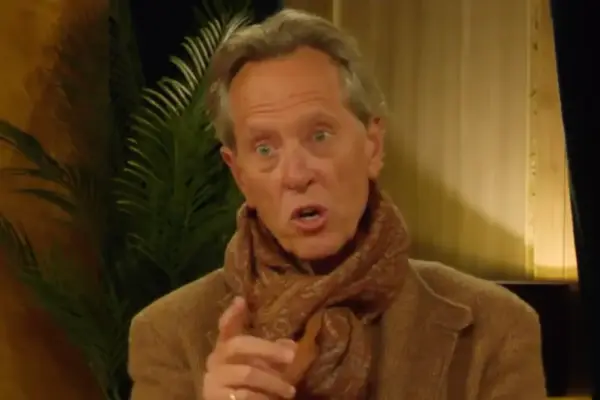
In the decades following her Grammy win, Thomas remained a vibrant, collaborative force in American music. She lent her voice to recordings by B.B. King and funk-jazz outfit Galactic (featured prominently on tracks like "Lady Liberty"). In 2011, she appeared on actor and musician Hugh Laurie’s blues tribute album, Let Them Talk, delivering a searing rendition of the traditional railroad ballad "John Henry."
Her cultural resonance has continued to find unexpected avenues. Filmmakers and television creators frequently turn to her catalog for emotional gravity; most notably, writer Charlie Brooker featured "Anyone Who Knows What Love Is (Will Understand)" across seven pivotal episodes of the acclaimed Netflix dystopian anthology series, Black Mirror.
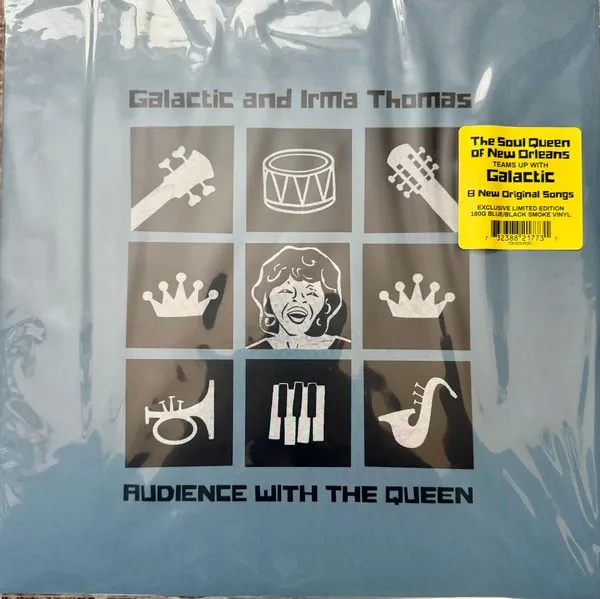
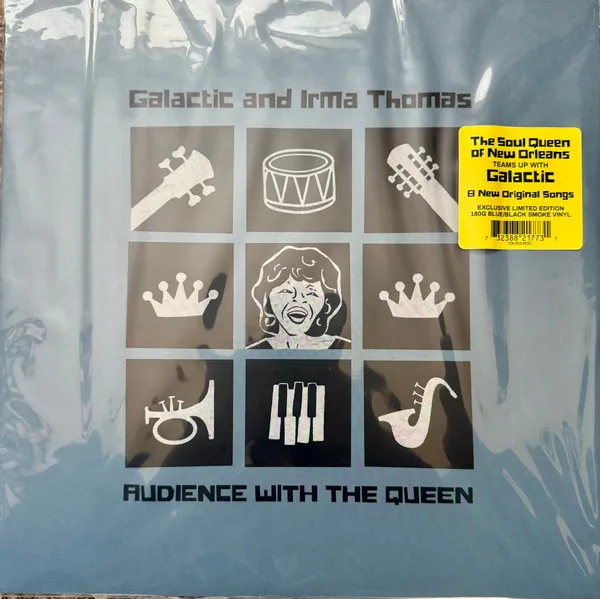
The circle finally closed at Jazz Fest 2024, when The Rolling Stones invited Thomas to share the stage to perform "Time Is On My Side." Mick Jagger publicly acknowledged the band’s deep musical debt to Thomas, offering a long-overdue public restitution and allowing the Soul Queen to officially reclaim her masterwork. This momentum continued into 2025 with the release of Audience With The Queen, a collaborative full-length project with electro-funk ensemble Galactic, released via Tchoup-Zilla Records.
Supporting Context & Metrics: Commercial Discrepancy vs. Critical Stature
To understand Irma Thomas is to examine a profound paradox in the music industry: the inverse relationship between critical reverence and commercial reward. While contemporaries like Aretha Franklin achieved multi-platinum, cross-format global dominance, Thomas’s career trajectory was repeatedly hindered by shifting label priorities, geographic loyalties to New Orleans, and the historical appropriation of her material by British Invasion acts.
| Metric / Milestone | Irma Thomas | Commercial Counterparts (e.g., Aretha Franklin / Etta James) |
|---|---|---|
| Primary Chart Peak | Billboard R&B Top 30 ("Don’t Mess With My Man") | Multiple cross-genre Billboard Hot 100 #1 hits |
| Grammy Recognition | 1 Win (After The Rain, 2007) out of multiple nominations | Multiple career wins across Pop and R&B categories |
| International Breakthrough | Cult status (UK Northern Soul Scene, European blues aficionados) | Mainstream global pop-chart ubiquity |
| Industry Peer Regard | Universally cited as an "artists’ artist" by Jagger, Redding, Clapton | Widely acknowledged pop-cultural icons |
Despite these metrics, Thomas’s influence on guitar gods and vocalists cannot be overstated. Beyond Otis Redding and Mick Jagger, artists such as Bonnie Raitt, Boz Scaggs, and Eric Clapton have consistently bowed to her artistry. Furthermore, musicologists note that her searing rendition of "I Need Your Love So Bad" served as the unmistakable blueprint for Peter Green’s definitive interpretation recorded with Fleetwood Mac for the Blue Horizon label in 1968.
Official Statements and Critical Reflections
Critics and collaborators alike have long struggled to encapsulate the ineffable quality of Thomas’s voice. She has frequently been described by jazz and blues journalists as possessing “the sadly sweet voice of a fallen angel”—a descriptor that speaks to the delicate balance of sorrow and strength embedded in her vibrato.
Within the New Orleans music community, she carries an even loftier title. Viewing her decades of mentorship, uncompromising artistic standards, and institutional knowledge, Thomas proudly refers to herself simply as “The Teacher.”
Reflecting on her legacy and the enduring power of her catalog, industry consensus remains unwavering: any serious examination of rhythm and blues history must place Thomas at the very head of the class. As music writer Lin Bensley aptly notes:
"Anyone seeking a tutorial on how to attain rhythm and blues royalty should pay attention to the music of her majesty, Irma Thomas."
Future Outlook: The Undisputed Reign Continues
As she enters her ninth decade of life and seventh decade in the recording studio, Irma Thomas shows no signs of artistic deceleration. The release of Audience With The Queen in 2025 alongside Galactic demonstrates a rare willingness to merge her classic, time-tested vocal delivery with modern, forward-thinking electro-funk arrangements.
The oversight that kept her from achieving household name status alongside Etta James in the UK and broader international markets may never be entirely corrected by mainstream radio playlists. However, historical correction is underway. Through synchronization deals in prestige television, triumphant live returns with the very rock stars who once borrowed her arrangements, and a pristine recorded legacy that continues to inspire younger generations, Irma Thomas’s throne is secure.
She is not merely a survivor of the golden age of Gulf Coast R&B; she is its living embodiment. The Soul Queen of New Orleans reigns on—unbowed, unmatched, and forever the teacher.