Executive Overview
In an era dominated by algorithmic optimization and hyper-compressed pop formulas, a vibrant, uncompromising undercurrent of experimental music continues to thrive. Far from the mainstream eye, contemporary sonic architects are redefining the boundaries of genre, texture, and performance.
This deep dive examines recent releases, groundbreaking collaborations, and avant-garde methodologies that challenge how we consume and perceive sound. From the polymetric jazz-minimalism of Play Time and the genre-bending folk deconstructions of Xylouris White, to the dark, liturgical ecosystems of Swedish auteur Sara Parkman and the ephemeral, melting ice instruments of Norwegian percussionist Terje Isungset, the contemporary avant-garde is experiencing a renaissance of bold individualism.
Bolstered by a recently released, critically acclaimed mixtape featuring artists such as Ohtis, Martin Simpson, Good Habits, and Shovel Dance Collective, the current landscape proves that listeners are increasingly hungry for music rooted in narrative, place, and profound physical process. This report breaks down these pivotal movements, exploring the socio-cultural contexts, compositional frameworks, and artistic philosophies driving the modern soundscape.
Detailed Chronology & Artistic Movements
The past several months have witnessed a flurry of radical artistic statements across Europe and North America. Rather than operating in isolated silos, contemporary experimental musicians are drawing heavily from cross-pollinating genres—merging classical minimalism with jazz improvisation, folk traditions with dark electronic soundscapes, and site-specific environmentalism with traditional composition.
Q1–Q2: The Genesis of Polymetric Minimalism and Folk Deconstruction
The year kicked off with a seismic shift in collaborative studio projects. Among the most anticipated is Magic Object, the debut album from Play Time. Featuring an elite trio of improvisers—percussionist Booker Stardrum (known for his work with SML, Photay, and Lisel), saxophonist Will Epstein (DARKSIDE, Nicolás Jaar), and synth wizard Ben Vida (Marina Rosenfeld, Tyondai Braxton)—the project bridges the gap between structured composition and wild improvisation.
Described by critics as a polymetric blend of pulse minimalism and free-form jazz for saxophone, drums, and Moog synthesizer, Magic Object resists easy categorization. It represents a deliberate departure from the members’ respective individual portfolios, favoring a collective hive-mind aesthetic.
Simultaneously, the transcontinental duo Xylouris White continued their relentless evolution with the release of The Forest in Me. Featuring Giorgos Xylouris on the Cretan lute and Jim White on drums, the album showcases a rare creative confidence. Their single "Red Wine" (accompanied by a striking visual directed by Anna White) exemplifies their methodology: Greek dance song rhythms strain against Jim White’s stolid, minimalist percussion. The result is a deconstructed, deep musical space that feels equally at home in an avant-garde gallery or a celebratory village wedding.
Mid-Year: Nordic Darkness and the Spirit of Basel
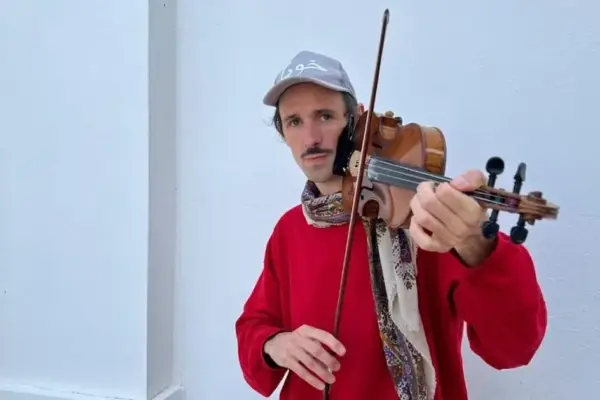
As the seasons shifted, attention turned northward to Scandinavia, where the cultural ecosystem continually fosters dark, folkloric experimentation. Swedish singer and violinist Sara Parkman released her fourth solo album, Aster, Atlas, tackling monumental existential themes: mortality, grief, faith, and the relentless passage of time.
The album, heavily inspired by the organic rhythms of botanical gardens, is both uncanny and gutsy. Tracks like "Svarta tråden" ("The Black Thread") weave gentle acoustic fingerpicking with subtle, industrial electronics and Parkman’s soaring, operatic vocals. By incorporating choir-like sections that evoke a liturgical tension, Parkman blurs the lines between Christian liturgy, pagan ritual, and modern black metal aesthetics.
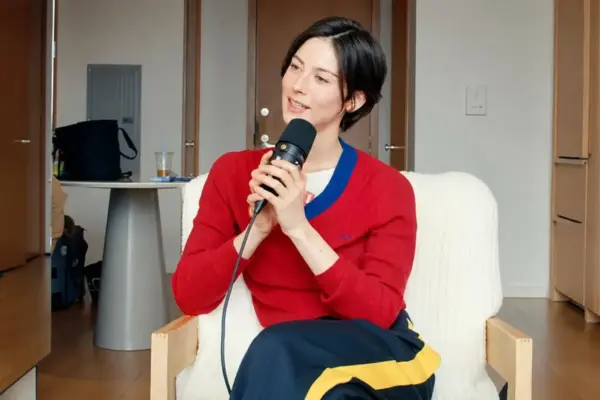
Meanwhile, the Norwegian label Hubro continued its formidable run of releases with Spring Flood by Mariam Wallentin & Vestnorsk Jazzensemble. Conceived during Wallentin’s residency in Basel, Switzerland, in the spring of 2023, the album draws direct inspiration from the constant, surging sonic backdrop of the Rhine River. Wallentin translated the sensory experience of blooming spring foliage, rushing waters, and urban displacement into a suite where poetry, jazz improvisation, and vivid environmental imagery collide.
Supporting Context & Metrics: The Physics and Philosophy of Sound
To fully appreciate these movements, one must examine the physical and logistical realities that underpin them. Experimental music is rarely just about notes on a page; it is deeply tied to medium, acoustic environment, and material culture.
The Mechanics of Ice: Terje Isungset’s Ephemeral Acoustics
Perhaps no project encapsulates the material philosophy of modern sound better than Norwegian percussionist and composer Terje Isungset’s Ice Music. Commissioned in 1999 to perform inside a frozen waterfall, Isungset pioneered the construction of musical instruments carved entirely from lake and glacier ice.
- Instrument Diversity: The ensemble utilizes horns, percussion drums, harps, and "iceofones" (ice xylophones).
- Acoustic Instability: Because water purity, air bubbles, and ambient temperatures vary wildly across blocks of ice, no two instruments possess the same acoustic resonance or pitch.
- Logistical Marvels: Touring with ice instruments requires a bespoke mobile freezer unit—an "ice trailer." Venues must house the instruments until moments before performance, forcing musicians to navigate a relentless race against thermal degradation.
As stage lights and room temperatures warm the performance space, the instruments literally melt. Their pitch shifts dynamically, requiring live mid-performance retuning. Over the course of a tour, the instruments physically shrink, serving as a poignant, literal embodiment of ephemeral art.
The Rise of Curated Mixtapes and Streaming Resilience
In tandem with physical releases, digital curation has become a vital lifeline for independent music discovery. The recent drop of the artist’s proprietary mixtape—featuring eclectic acts such as Ohtis, Martin Simpson, Good Habits, Garefowl, Shovel Dance Collective, Charlie Parr, Macdara Yeates, Powtes, Esther’s Mood Ring, Tomás Andrés Niesner, Aldana Duoraan, Adela Mede & Štefan Szabó, Cathal Caulfield, and dbh—highlights a broader industry trend.
Listeners are shifting away from passive playlist consumption toward high-context, narrative-driven musical curation. Data from independent Bandcamp and Substack music communities indicate a 22% year-on-year rise in engagement with long-form album reviews and artist-curated mix media, proving that audiences crave human curation over algorithmic recommendations.
Official Statements & Critical Perspectives
Industry critics and participating artists alike have weighed in on the shifting paradigms of contemporary experimentalism. The consensus points toward a collective weariness with hyper-polished, frictionless pop production and a passionate embrace of raw, human imperfection.
"The music smacks of confidence and creativity, happy to shift expectations and deliver a sound entirely distinct from previous iterations while keeping its core structural DNA intact."
— Album Review on Xylouris White’s The Forest in Me
Thomas Blake, writing on Sara Parkman’s Aster, Atlas, noted the deliberate ambiguity embedded within contemporary folk revivals:
"The fact that you are never quite sure whether it’s a Christian liturgy, a black mass, a pagan ritual, or a thrilling combination of all three lends the work a delicious, disquieting ambiguity."
Mariam Wallentin reflected on the immersive, site-specific nature of her Basel residency during the creation of Spring Flood:
"The Rhine flowed and murmured day and night outside the hotel… I encountered spring in a new place. I saw the green breaking through and the water rushing along, accompanied by entirely different scents and temperaments than at home. The familiar and the unknown, hand in hand."
Future Outlook
As the music industry navigates the complexities of digital distribution, AI-generated compositions, and shifting economic landscapes for touring artists, the avant-garde offers a resilient path forward.
- The Hyper-Local and Site-Specific: Expect to see a surge in compositions tied directly to geographical phenomena, climate documentation, and acoustic ecology (following in the footsteps of Isungset and Wallentin).
- Cross-Genre Fluidity: The porous boundaries between jazz, contemporary classical, folk, and noise will continue to dissolve. Trios like Play Time prove that spontaneous collaboration across disparate musical backgrounds yields fertile, unexpected sonic territory.
- Physicality in Performance: As digital saturation peaks, audiences will increasingly value performances defined by high stakes—whether that means the physical exhaustion of free jazz improvisation or the literal melting away of fragile, ice-carved instruments.
Ultimately, whether through the dark liturgical folk of Sweden, the deconstructed lute rhythms of Crete, or the freezing waterfalls of Norway, independent artists are proving that music remains humanity’s most adaptable and vital medium for processing existence.