Executive Overview
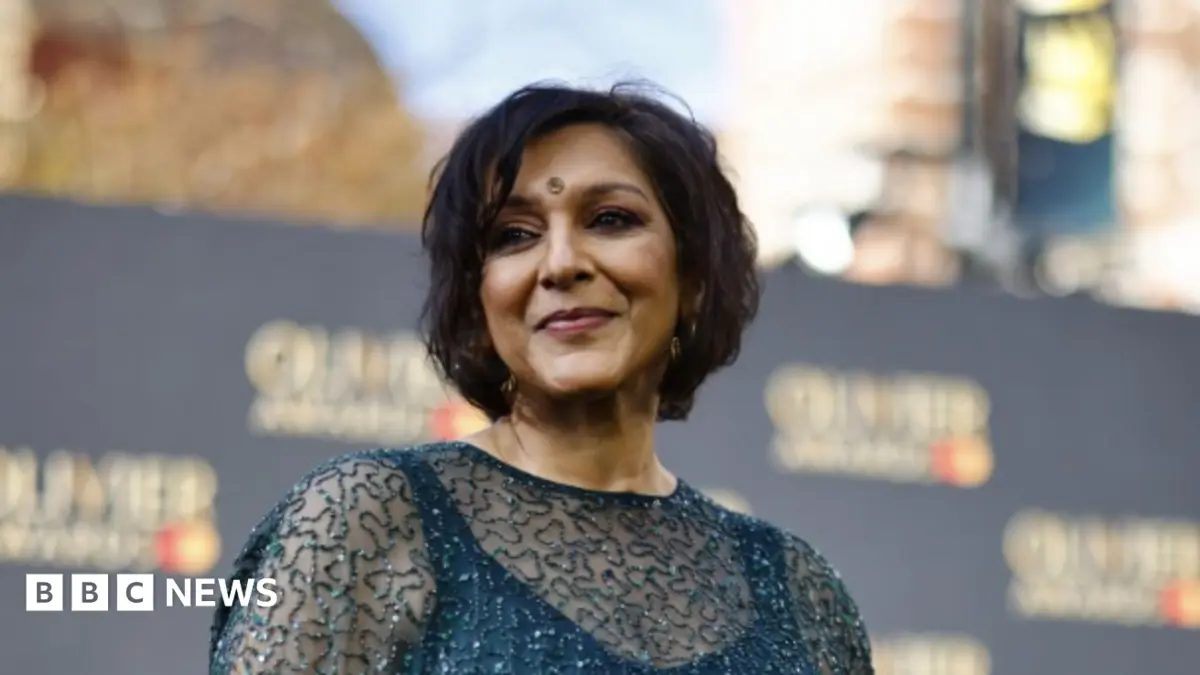
Renowned British actress, writer, and comedian Dame Meera Syal has opened up about a profoundly challenging period in her early career, revealing that she "almost gave up" the entertainment industry after enduring sexual harassment and assault by two different men in positions of power. The Wolverhampton-born trailblazer, now 65, shared the harrowing experiences in a deeply candid interview with the BBC Asian Network’s Amber Haque, coinciding with the publication of her new memoir, Vigilauntie.
The incidents occurred during her twenties—a time marked by career uncertainty and acute financial precarity, which saw her experiencing homelessness and sleeping on the floors of acquaintances. Rather than letting these abuses derail her aspirations, Syal channeled her trauma into a lifelong commitment to advocacy and community organizing. Her refusal to be silenced not only fueled her creative resilience but also propelled her into pivotal grassroots movements, such as the Newham Asian Women’s Project and Southall Black Sisters.
Reflecting on an era when predatory behavior was systemic and widely tolerated across British media and theatre, Syal’s revelations shed light on the dark underbelly of the cultural sectors during the 1970s, 1980s, and 1990s. Today, as a revered cultural figure holding a damehood for her multifaceted contributions to drama, literature, and charity, Syal’s story stands as a testament to the transformative power of female solidarity in the face of institutional injustice.
Detailed Chronology: Navigating Vulnerability and Predatory Culture
The Precarity of Youth and the Reality of the "Casting Couch"
During her formative years in the industry, Syal faced the grueling realities common to many young actors attempting to break into the profession. Without financial safety nets or institutional support systems, she found herself navigating a precarious lifestyle characterized by sporadic employment and unstable housing. It was within this climate of profound vulnerability that she encountered the first of two predatory figures who would profoundly test her resolve.

In what she described as her "first casting couch approach," a prominent theatre director insinuated that professional advancement—specifically a role in an upcoming regional pantomime—was contingent upon her compliance with sexual demands. Syal immediately refused the proposition and managed to extract herself from the situation. However, the psychological toll of the encounter underscored the transactional and perilous nature of an industry where young women were frequently treated as disposable commodities rather than artistic professionals.
The Escalation to Assault
The situation escalated severely just weeks later. An older, established male actor invited Syal to his home under the guise of mentorship and career progression, offering to help her navigate the complexities of the entertainment business. Instead of receiving professional guidance, Syal was sexually assaulted.
Reflecting the broader silence enforced by the cultural norms of the era, Syal did not report the assault to law enforcement, nor did she confide in friends or family. The perpetrator, whose identity has not been publicly disclosed, has since passed away. For Syal, keeping the secret was not an isolated choice, but rather a survival mechanism born out of the prevailing professional climate.
A Systemic Climate of Impunity
In her interview and memoir, Syal emphasizes that her experience was far from unique. When she later discussed these incidents with female peers and contemporaries, she discovered a widespread, unspoken history of trauma shared by women across the theatrical and broadcast landscapes of the 1970s, ’80s, and ’90s.

"When I have talked about this incident to other women, particularly of my age, they’ve all said that happened to me, and a lot of them have never talked about it because it was part of the culture," Syal explained. "The 70s, 80s and 90s, it was absolutely part of the culture. You wouldn’t even bother to report half of these things because A, you wouldn’t be believed and B, everyone was doing it."
This pervasive environment effectively institutionalized impunity for abusers, leaving victims isolated, doubting whether they would be believed, and acutely aware that speaking out could spell immediate termination for their burgeoning careers.
Supporting Context & Metrics: Cultural Impact and Institutional Legacy
From Marginalization to Mainstream Triumph
Dame Meera Syal’s journey from a struggling, homeless newcomer to a pillar of British broadcasting is a masterclass in artistic endurance. Born in Wolverhampton in 1961 to Indian Punjabi parents who migrated to the UK from New Delhi, Syal’s early life bridged the immigrant experience with traditional British upbringing, culminating in her education at Queen Mary’s High School in Walsall.
Her breakthrough into the mainstream transformed the representation of South Asian communities on British screens. Some of her most defining career milestones include:

- Goodness Gracious Me (1990s): Syal was a core writer and performer on the groundbreaking BBC sketch show, which used satire to subvert racial stereotypes and explore the nuances of British-Asian identity.
- Bhaji on the Beach (1993): She penned the screenplay for this critically acclaimed comedy-drama film directed by Gurinder Chadha, offering a nuanced exploration of generational dynamics and female solidarity.
- Beautiful Thing (1995): Syal showcased her dramatic versatility as an actress in this celebrated Channel 4 romantic comedy-drama.
- The Kumars at No. 42 (2001–2006): Playing the iconic matriarch Sushila Kumar, Syal helped create one of the most successful and culturally resonant sitcoms of the decade, earning widespread international acclaim.
- Bombay Dreams (2002): Expanding her theatrical footprint, she co-wrote the book for Andrew Lloyd Webber’s West End musical, successfully bridging Bollywood aesthetics with traditional British musical theatre.
Recognition and Accolades
Syal’s decades-long dedication to the arts culminated in prestigious national recognition. In the King’s New Year Honours list, she was appointed a Dame Commander of the Order of the British Empire (DBE) for her exceptional services to drama, literature, and charity. This honor cemented her status not merely as a comedic icon, but as a foundational architect of modern British cultural diversity.
Official Statements: Fueling the Fire for Collective Change
Rather than allowing the systemic failures of the industry to extinguish her passion, Syal channeled her deep-seated anger into fuel for collective action. She actively sought out communities of women who were similarly committed to social justice, fundamentally altering the trajectory of her life and career.
"It could have been a point where I gave up," Syal reflected. "It put some fire in my belly because the reason I wanted to tell these stories is that I did survive, and not only did I survive, I thrived. The anger of the injustice of the situation made me seek out a bunch of women that changed the course of my life."
This realization birthed a deep involvement with grassroots organizations dedicated to protecting and empowering marginalized women.

"I got involved with Newham Asian Women’s Project and Southall Black Sisters. I began campaigning because these issues became personal and I wanted to create South Asian women that roared," she noted. "All of that came from the fury I felt at what had happened to me. It did change the course of my life."
Through these organizations, Syal transitioned from an isolated survivor to an active participant in systemic resistance, realizing that individual trauma could be alchemized into a powerful force for communal defense and political advocacy.
Future Outlook: Legacy, Memoir, and Industry Evolution
The publication of Vigilauntie marks a significant new chapter for Dame Meera Syal, offering a reflective look back at the personal and professional trials that shaped her worldview. By laying bare the systemic abuses of her youth, Syal is contributing to an ongoing, vital reckoning within the global entertainment industry regarding power dynamics, accountability, and the protection of vulnerable artists.
As conversations surrounding workplace safety, non-disclosure agreements, and the eradication of predatory behaviors continue to evolve in the post-#MeToo era, memoirs like Syal’s serve as crucial historical markers. They document the entrenched nature of past abuses while celebrating the resilience of those who refused to let their voices be extinguished.

For the next generation of performers, writers, and activists, Dame Meera Syal’s life story remains an enduring beacon—proving that while institutional barriers and personal betrayals can wound, they can also serve as the catalyst for a life defined by creative triumph, unyielding strength, and a legendary, unapologetic roar.