Executive Overview
In the autumn of 2001, the American cultural landscape was fundamentally upended by an unprecedented national tragedy. Yet, amidst the immediate aftermath of the September 11 terrorist attacks, the nation’s top-selling album was a frantic, abrasive, and fiercely confrontational alternative metal masterwork. System of a Down’s sophomore release, Toxicity, debuted at No. 1 on the Billboard 200 during a week that will forever live in infamy.
While the Armenian-American quartet from Hollywood did not write or record the album with the events of 9/11 in mind, the record’s chaotic soundscapes, pointed anti-war sentiments, and skepticism toward state authority uncannily mirrored the collective shock, anxiety, and disorientation of the American public.
This historical convergence forms the core of the final installment of the Greatest Pop Stars podcast’s "Vintage Almost-Pop Stardom" mini-series. Featuring Vulture critic Craig Jenkins, the episode unpacks how an uncompromisingly aggressive art-metal band briefly seized the apex of pop culture commercialism. It explores a complex matrix of historical timing, internal band dynamics, radio censorship controversies, and the enduring resonance of a record that feels increasingly prophetic a quarter-century later.
Detailed Chronology: The Whirlwind of 2001
To understand how System of a Down achieved this jarring cultural alignment, it is necessary to retrace the trajectory of the band through the turbulent months leading up to and immediately following September 11, 2001.
Spring and Summer 2001: Building the Momentum
Long before Toxicity landed on store shelves, System of a Down had cultivated a fiercely loyal cult following through relentless touring and their 1998 self-titled debut. However, the lead-up to their second album signaled a quantum leap in ambition.
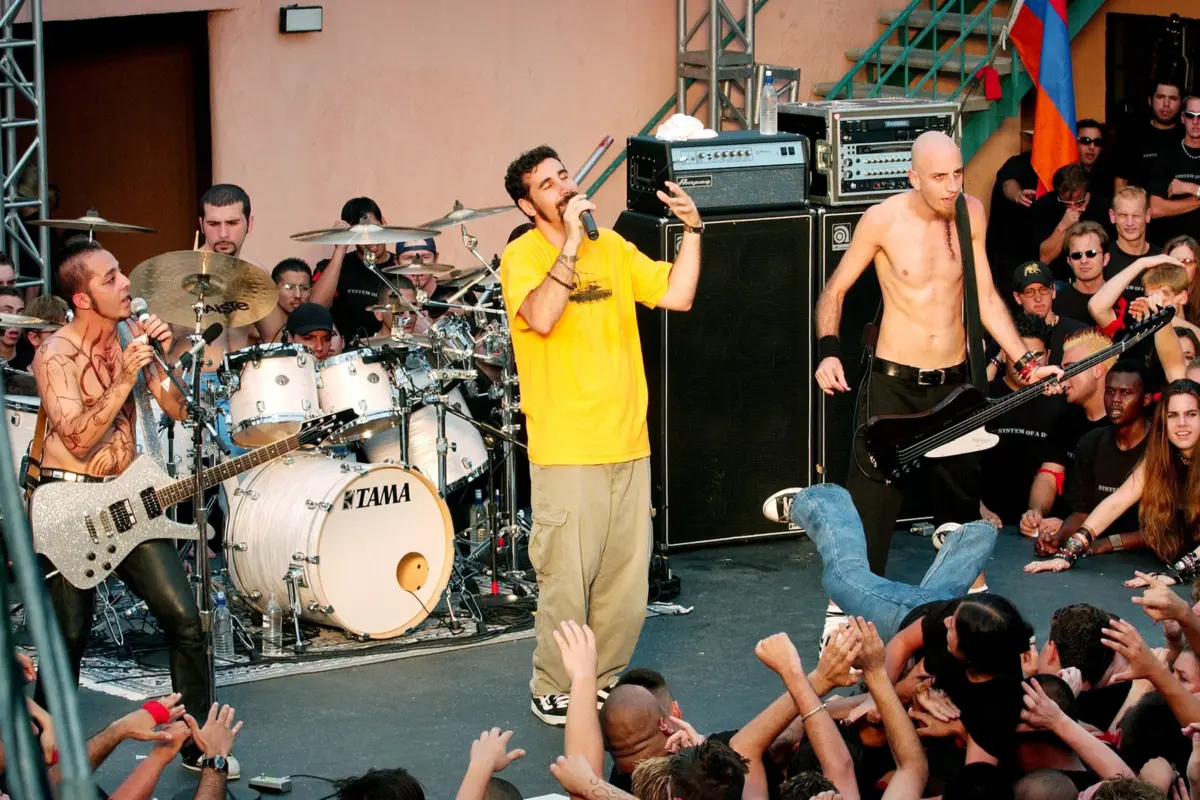
In August 2001, the band was actively filming high-concept music videos—such as the chaotic, guerrilla-style shoot for lead single "Chop Suey!" in the parking lot of a Hollywood hotel. Musically, the band bridged traditional heavy metal thrash with dissonant art-rock tendencies, middle-eastern folk scales, and singer Serj Tankian’s mercurial vocal delivery, which shifted effortlessly between operatic croons and guttural screams.
September 3, 2001: The Release of Toxicity
Toxicity was officially released to the public on September 3, 2001, via American Recordings/Columbia Records. Produced by Rick Rubin and guitarist Daron Malakian, the album was immediately praised by critics for its sonic adventurousness and scathing sociopolitical commentary. Tracks like "Prison Song" targeted the systemic failures of the American prison-industrial complex, while "Deer Dance" critiqued police brutality and crowd control at protests.
September 11, 2001: A Nation Transformed
Eight days after the release of Toxicity, commercial airliners were hijacked and flown into the World Trade Center towers, the Pentagon, and a field in Shanksville, Pennsylvania. As the nation ground to a halt, processing a collective trauma of historic proportions, the media landscape underwent an instantaneous, severe contraction.
In the days that followed, media conglomerates scrambled to navigate the grief and anger of a traumatized populace. Broadcasters instituted self-censorship guidelines, most notably via the infamous Clear Channel memorandum, which distributed an internal list of over 150 "lyrically questionable" songs that radio stations were advised not to play.
Late September 2001: The Chart Pinnacle
Despite the atmosphere of heightened nationalistic fervor and strict broadcast guidelines, retail sales figures told a different story. Propelled by word-of-mouth momentum and a burgeoning fanbase, Toxicity debuted at No. 1 on the Billboard 200 chart for the week ending September 22, 2001, beating out releases from mainstream pop and hip-hop heavyweights.

For a metal band espousing anti-establishment politics to top the American charts at the exact moment the nation rallied around institutional leadership presented a stark cultural paradox. Yet, millions of listeners found catharsis in the album’s chaotic energy. Lines like "Wake up / Grab a brush and put a little make-up" from "Chop Suey!" suddenly took on unintended, haunting resonances of denial and awakenings in a fractured world.
Supporting Context & Metrics: The Anatomy of an Unlikely Smash
System of a Down’s ascent to the top of the charts defies conventional music industry math. Alternative metal in the early 2000s enjoyed commercial viability via acts like Korn and Limp Bizkit, but those bands largely channeled adolescent angst, party-hard nihilism, or brooding alienation. System of a Down injected high-concept socio-political discourse, Armenian genocide awareness, and surrealist dark humor into their work.
Chart Performance and Critical Acclaim
- Billboard 200: Toxicity spent multiple weeks near the top of the charts, eventually achieving multi-platinum certification from the RIAA.
- Critical Reception: The album appeared on numerous year-end critic polls, famously claiming the No. 1 spot on SPIN magazine’s prestigious Best Albums of 2001 list.
- Global Impact: Beyond the United States, the record established the band as an international juggernaut, proving that heavy, complex, non-English-inflected musical textures could achieve mainstream dominion.
The Clear Channel Memorandum and Radio Airplay
The role of the Clear Channel memo in suppressing or altering the trajectory of "Chop Suey!" remains a frequent point of discussion among music historians. While the song—originally titled "Suicide"—was scrutinized due to its thematic elements of self-harm, its explosive music video still achieved heavy rotation on MTV. The friction between corporate broadcast caution and organic consumer demand highlighted the limitations of media gatekeeping during the dawn of the internet age, where file-sharing networks like Napster and early peer-to-peer communities were already decentralizing music consumption.
Official Perspectives and Critical Discourse
The retrospective evaluation of System of a Down’s 2001 breakout involves navigating complex intersections of art, politics, and shifting media paradigms.
Craig Jenkins and the Greatest Pop Stars Analysis
On the Greatest Pop Stars podcast, Vulture critic Craig Jenkins dissects the volatile chemistry that fueled the band’s creative output. The sharp contrast between guitarist Daron Malakian’s aggressive, stadium-ready riffage and frontman Serj Tankian’s intellectual, often provocative essayistic commentary created a dynamic internal tension.
Jenkins and the podcast hosts interrogate several defining facets of the band’s legacy:
- The Band’s Combustibility: How the distinct, often opposing personalities of Tankian, Malakian, Shavo Odadjian, and John Dolmayan paradoxically strengthened their studio output while complicating their long-term viability as a recording unit.
- Serj Tankian’s Writing: Examining polarized reactions to Tankian’s sociopolitical essays—such as his post-9/11 "Understanding Oil" piece—and how the frontman weathered the intense blowback from media pundits who demanded conformity during a time of crisis.
- The Definition of "Pop Stardom": Questioning whether a band so fundamentally confrontational can ever truly occupy the same cultural space as traditional pop stars, or if their brand of "almost-pop stardom" represents a more authentic form of mass-cultural infiltration.
Future Outlook: The Legacy of Toxicity and Unanswered Questions
As a quarter-century approaches since the release of Toxicity, the cultural footprint of System of a Down looms larger than ever. Their songs—addressing corporate greed, media manipulation, and military-industrial expansion—feel remarkably prescient in the political climate of the 2020s. Younger generations continue to discover the band through streaming platforms, social media virality, and generational transmission, keeping anthems like "B.Y.O.B." and "Chop Suey!" firmly embedded in the global consciousness.
Will System of a Down Record Again?
Perhaps the most persistent question surrounding the band is whether they will ever enter the studio to record a full-length follow-up to their 2005 double-album project, Mezmerize / Hypnotize. Aside from releasing two standalone singles in 2020 to raise funds and awareness for humanitarian relief during the Artsakh war, the band has remained largely dormant regarding new recorded material. Creative differences, divergent artistic visions, and personal boundaries have kept a comprehensive reunion album out of reach.
Nevertheless, the legacy of their 2001 zenith remains entirely secure. System of a Down proved that populist appeal does not require creative compromise. By holding a mirror up to a world spinning out of control—both before and after the defining tragedy of the modern era—they created a timeless monument to dissent that continues to challenge, electrify, and awaken listeners worldwide.