Executive Overview
The modern era of independent music began with a profound and startling juxtaposition: a poignant farewell followed instantly by an unbridled explosion of grassroots experimentation. Released on his 69th birthday in January 2016, David Bowie’s 26th studio album, Blackstar, arrived just two days before his death from cancer. It transformed almost overnight from a thrilling, exploratory new work into a staggering final testament. Blackstar served as an enduring reminder that even after five decades of relentless, shape-shifting reinvention, the Starman was still looking resolutely forward.
That forward-looking ethos defined the decade that followed. Across the global musical landscape—catalyzed by underground community spaces, independent record stores, and a shifting technological and cultural paradigm—a vibrant new generation of artists took the stage. From the gritty, post-industrial pubs of South London to the sprawling art-punk scenes of New York, Stockholm, and Melbourne, guitar music, hip-hop, electronic experimentation, and pop underwent a radical democratization.
As Rough Trade marked its monumental 50th anniversary, the institution reflected on a decade of profound expansion. Opening new spaces in Bristol, Liverpool, London, and Berlin, establishing roots in Nottingham, and relocating Rough Trade NYC from Brooklyn to Manhattan, the legendary retailer remained at the epicenter of this modern golden age. Through exclusive pressings, intimate in-store performances, and the curatorial lens of the "50 Records for 50 Years" drop series, the last ten years proved that physical music, tactile discovery, and community-driven curation are more vital than ever.
Detailed Chronology: A Decade in Records (2016–2025)
To understand the trajectory of modern independent music, one must trace the chronological milestones that shaped the cultural consciousness between 2016 and 2025. Through its commemorative 50th-anniversary editions, Rough Trade mapped this evolution year by year.
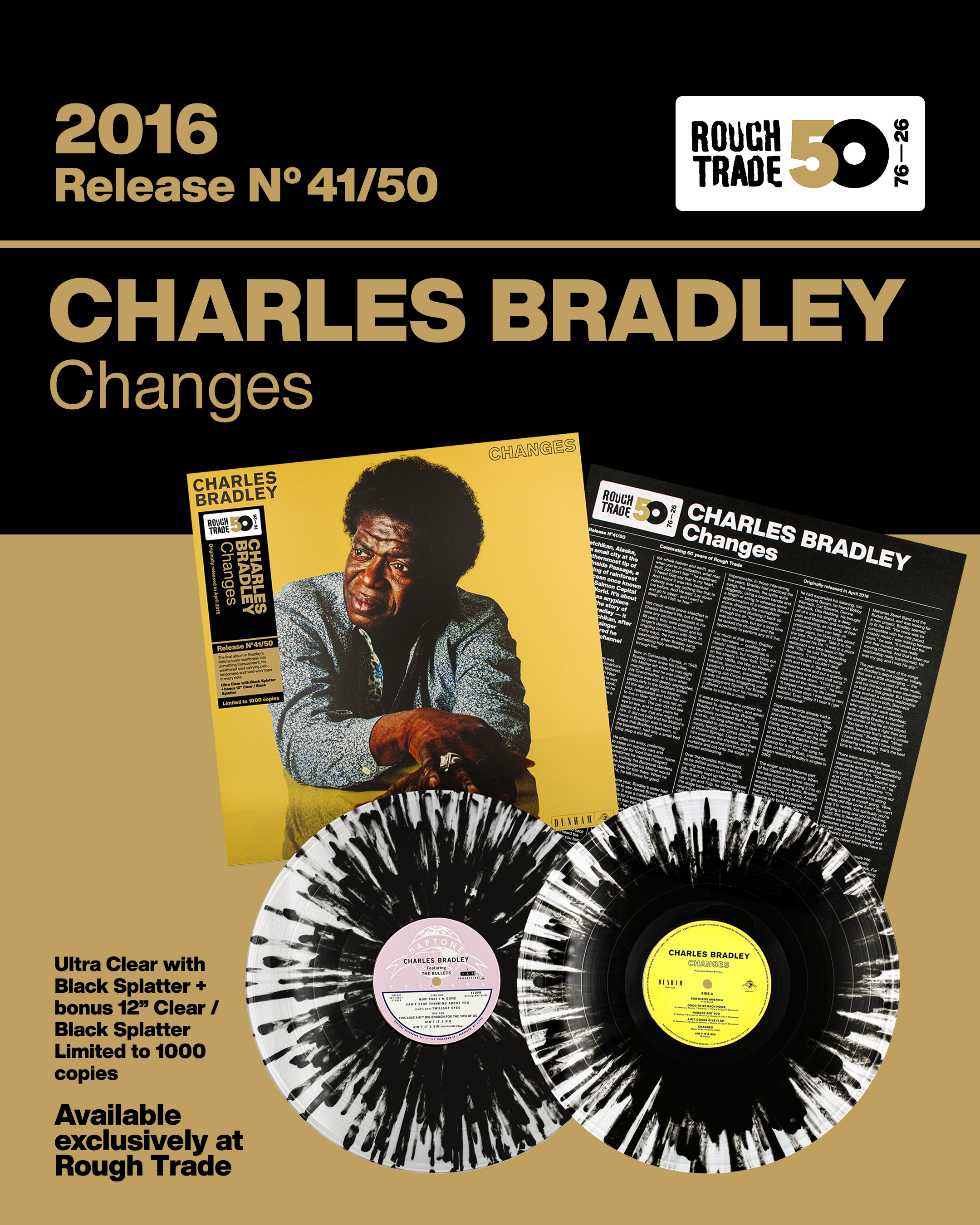
2016: Charles Bradley – Changes
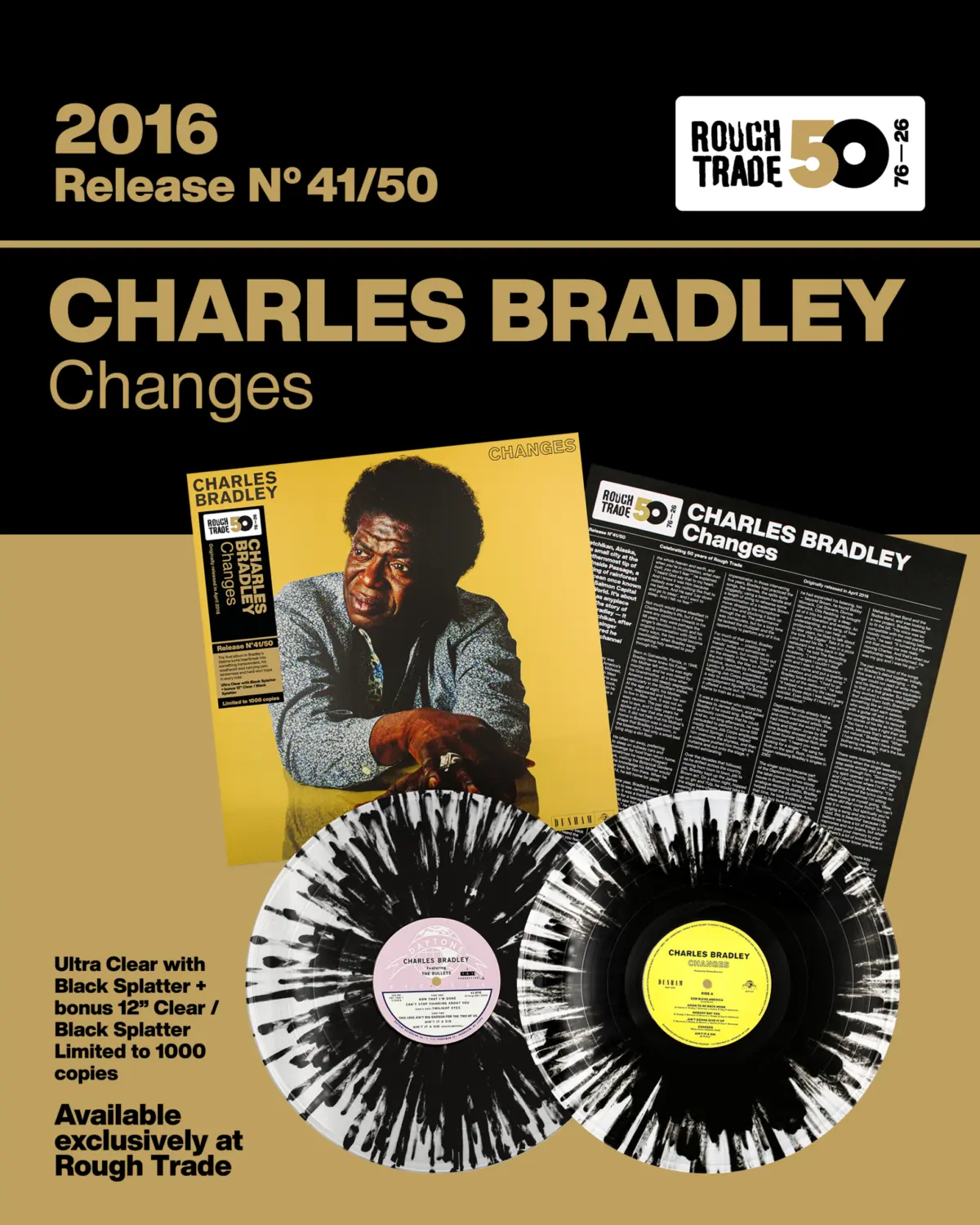
Nicknamed "The Screaming Eagle of Soul," Charles Bradley was a once-in-a-generation talent whose every rasp, howl, and vocal break carried the emotional weight of an extraordinary life. Having grown up homeless for stretches, lost his first band when members were drafted into the Vietnam War, and suffered the tragic murder of his brother, Bradley pursued music relentlessly, deeply inspired by James Brown. Discovered at age 62 by Gabriel Roth (co-founder of Daptone Records) while performing as a James Brown impersonator, Bradley captured the world’s attention with 2016’s Changes. Drawing on classic soul, funk, and gospel, his haunting cover of Black Sabbath’s Changes transformed the original into a stirring, deeply personal masterpiece that cemented his legacy before his untimely passing.
2017: IDLES – Brutalism
When the debut album from Bristol five-piece IDLES arrived in record racks, it hit with the force of a clenched fist. Addressing themes of grief, toxic masculinity, class disparity, and existential frustration with uncommon directness, Brutalism announced a band with plenty to say and zero interest in whispering. It laid the groundwork for an explosive run of politically charged, deeply empathetic post-punk.
2018: Confidence Man – Confident Music For Confident People
Confidence Man proved that independent music didn’t always have to look inward to find depth. Fusing 1990s Ibiza danceability, camp lyricism, electro-punk synthesizers, and driving disco beats, their debut album was a masterclass in unadulterated joy. Hilariously tongue-in-cheek, the Brisbane-formed outfit invited listeners to meet their sardonicism with a "just get up and dance" lightheartedness, instantly establishing themselves as global dancefloor-fillers.
2019: Fontaines D.C. – Dogrel
Though whispers had circulated via a string of electrifying early singles, the 2019 arrival of Fontaines D.C.’s Dogrel sparked a cultural phenomenon. Topping Rough Trade’s Albums of the Year list at the close of 2019, this urgent, insistent, and powerful debut played out like a poetic brawl. It was a slick-witted, self-assured set of songs from five musicians who possessed an innate understanding of tension and release.
2020: Rina Sawayama – SAWAYAMA
As maximalist hyperpop began to exaggerate early-2000s dance-pop aesthetics, Rina Sawayama shattered the mold entirely. SAWAYAMA was a hyper-ambitious collision of pop, nu-metal, R&B, rock, and electronic music, punctuated by blistering guitar solos and ultra-synthetic textures. Exploring identity, family, capitalism, and the immigrant experience, tracks like "XS" proved that modern pop could be intellectually rigorous, razor-sharp, and stadium-ready all at once.
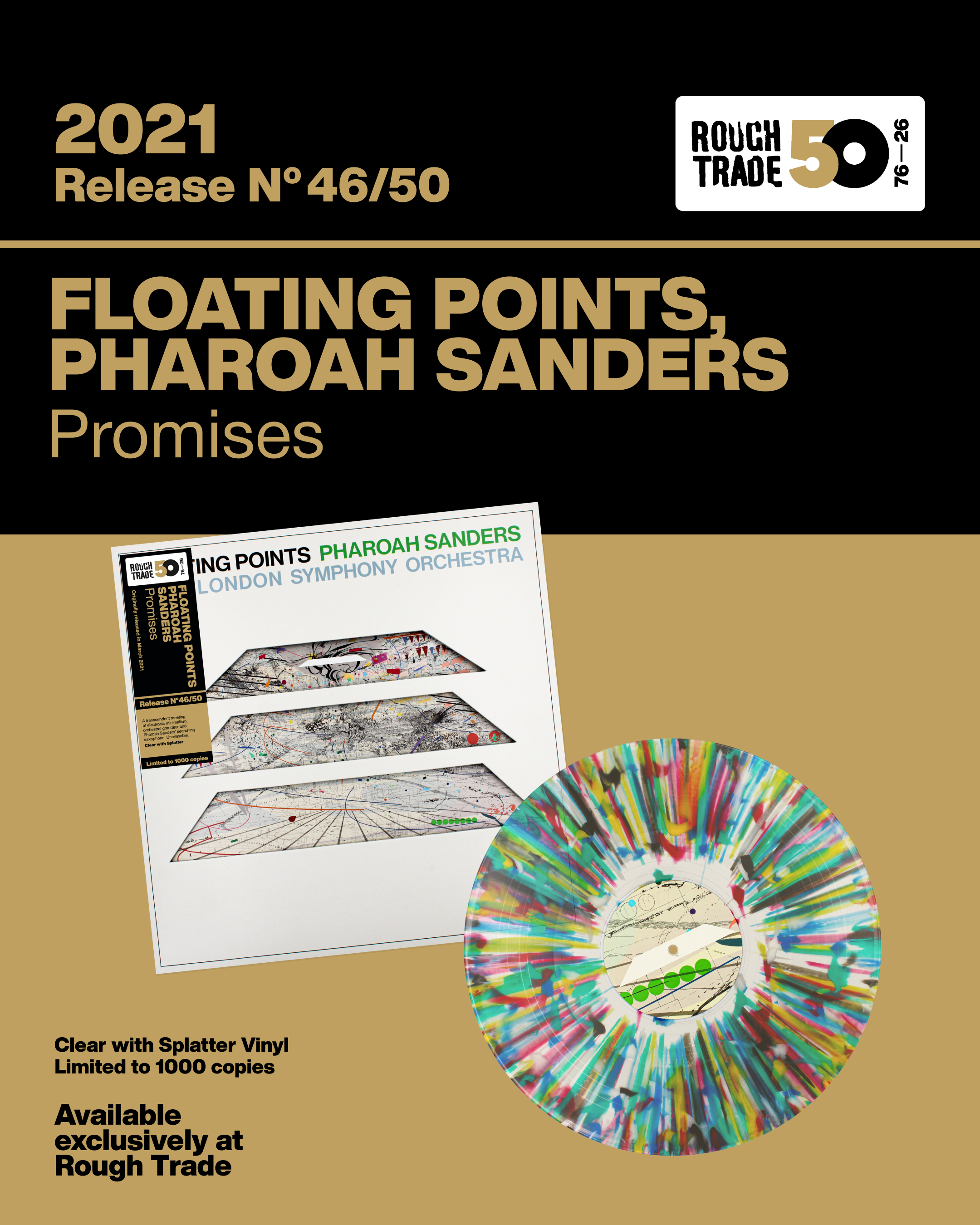
2021: Floating Points, Pharoah Sanders & The London Symphony Orchestra – Promises
Conceived during the isolation of the 2019–2020 pandemic, Promises stands as one of the decade’s most breathtaking anomalies. Uniting a mid-century free jazz pioneer (Pharoah Sanders), an innovative electronic producer/DJ (Floating Points), and the world-renowned London Symphony Orchestra, the album offered nine connected movements of profound patience and minimalism. Sanders’ transcendent saxophone lines, woven against ambient string arrangements, marked a majestic final chapter for a legendary jazz icon.
2022: Black Country, New Road – Ants From Up There
Undoubtedly the emotional pinnacle of 2022, Ants From Up There paired Isaac Wood’s devastatingly vulnerable vocals with sweeping, orchestral grandeur. It stands as one of the most powerful break-up records of the modern era—and a gut-wrenching farewell following Wood’s departure from the band just days before its release. It remains the crown jewel of the South London Windmill scene.
2023: Lankum – False Lankum
Irish folk experimentalists Lankum proved that innovation could thrive while remaining deeply rooted in centuries of tradition. Released via Rough Trade Records, False Lankum wrapped traditional instrumentation in heavy drones and whirring distortion. Radie Peat’s haunting vocals felt ancestral, imparting an addictive unease that traversed the razor-thin line between absolute dark and sublime light.

2024: MJ Lenderman – Manning Fireworks
Mark Jacob Lenderman emerged as one of the defining alternative-country songwriters of his generation. Through dry wit and disarming vulnerability, Manning Fireworks assessed the mundanity of everyday life, materialism, Catholicism, heartbreak, and isolation, packaging them into a nine-track Americana masterpiece.
2025: Pulp – More
Marking a triumphant return after nearly 24 years without new material, Pulp delivered More. Jarvis Cocker’s observational lyricism remained as sharp, eccentric, and characterful as ever, embracing a mature perspective without losing the band’s signature blend of melancholy, romanticism, and everyday absurdity.
Supporting Context & Metrics: The Global Underground and the Rise of Physical Media
While arena reunions and legacy acts dominated headlines—from the triumphant return of Slowdive and The Cure to the much-debated, nostalgia-fueled Oasis reunion—the lifeblood of the 2016–2025 musical landscape was forged in sweaty grassroots venues and indie record store aisles.

In London, the scene centered around Brixton’s Windmill venue birthed a fiercely collaborative ecosystem. Bands like Goat Girl, Shame, black midi, Squid, Jockstrap, and Black Country, New Road rejected tidy genre classifications. Often lumped together by lazy media pundits under the banner of "post-Brexit new wave," these artists shared an appetite for sonic strangeness. Sprechgesang—the spoken-sung vocal delivery pioneered in early twentieth-century classical music—invaded the indie lexicon, driving the dry, observational wit of Yard Act and Dry Cleaning, while Wet Leg mounted a rocket-fueled ascent from the Isle of Wight to global acclaim.
This wasn’t an exclusively British phenomenon. Bodega injected wiry New York art-punk energy into the conversation, Viagra Boys channeled Stockholm absurdity, and Amyl and the Sniffers delivered Melbourne pub rock at breakneck speed. These international scenes fed directly into the racks of independent record stores worldwide.
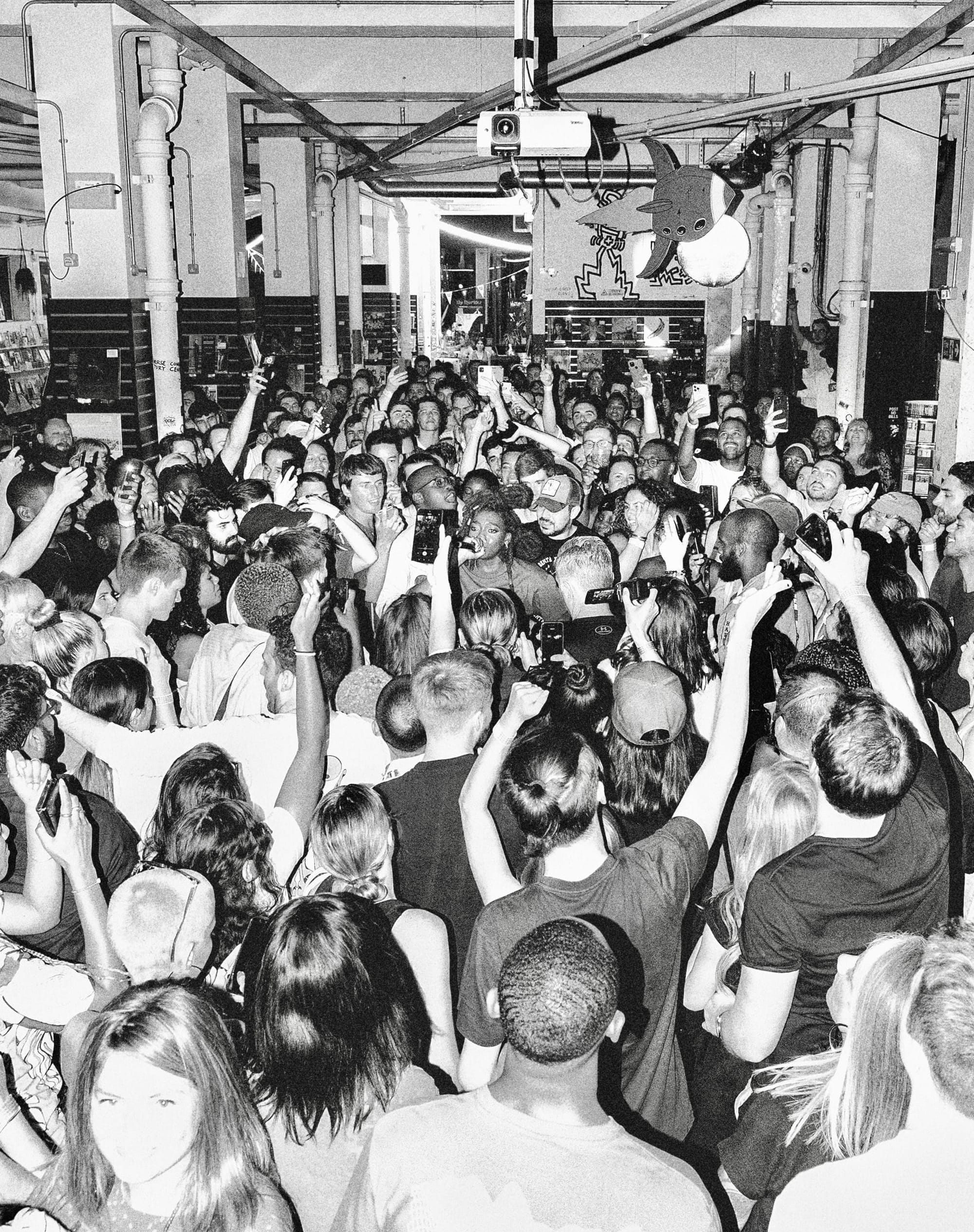
Simultaneously, independent rap reached breathtaking heights. Little Simz spent the decade steadily redefining the boundaries of independent hip-hop, culminating in her powerhouse trilogy (GREY Area, Sometimes I Might Be Introvert, NO THANK YOU, and Lotus). Her intimate 2021 performance at Rough Trade East stands as a testament to the raw power of experiencing an artist operating at the absolute peak of their creative powers in close quarters.

In the pop sphere, Charli xcx redefined world-building with BRAT, fusing music, fashion, language, and internet-age community into an inescapable cultural force. Charli’s work built upon the pioneering, visionary foundations laid by the late SOPHIE, whose tragic 2021 passing robbed music of a true icon. SOPHIE’s fearless approach to sound continues to echo through boundary-pushing artists like Arca and Vince Staples, inspiring a generation entirely uninterested in artificial borders between pop, electronic music, rap, and the avant-garde.
Despite the digital ubiquity of streaming platforms and viral TikTok trends capable of catapulting decades-old tracks back into the charts overnight, physical music experienced a remarkable renaissance. As Rough Trade expanded its global footprint—opening doors in Bristol, Liverpool, London, Berlin, Nottingham, and Manhattan—the core philosophy remained unchanged: an album can exist infinitely in the cloud, but it acquires an entirely different soul once it sits inside your hands.
Official Statements and Industry Reflections
Reflecting on fifty years of cultural curation, the team at Rough Trade shared insights into the mechanics of musical discovery:

"There are few better pleasures in running a record store than seeing something genuinely exciting flourish. The venues get bigger, the crowds wilder, and the records more ambitious, but that first spark of discovery remains much the same."
This sentiment encapsulates the journey of artists like Phoebe Bridgers, Fontaines D.C., CMAT, and Geese, all of whom transitioned from intimate instore performances to massive global audiences with the steadfast support of independent retailers.
Furthermore, the curation behind the 50 Records for 50 Years drop series highlighted the intimate relationship between retail staff and the music they champion. As staff members like Georgia, Emily, and Cammy noted across retrospective liner notes, records like Charles Bradley’s Changes, IDLES’ Brutalism, and Floating Points’ Promises were not merely commercial products, but cultural anchors that defined specific emotional epochs for music lovers worldwide.
Future Outlook
As Rough Trade looks beyond its golden anniversary into the latter half of the 2020s, the landscape of independent music is defined by a paradox of hyper-digitization and tactile longing.
The lines separating genres have dissolved almost entirely. Young listeners and seasoned crate-diggers alike move fluidly between avant-garde jazz, hyperpop, localized post-punk, and traditional folk. Initiatives like the Rough Trade Club—offering exclusive vinyl pressings, priority event access, and community-driven perks—demonstrate an enduring appetite for curated curation in an algorithmically saturated world.
Fifty years after the first Rough Trade doors opened, the mission remains strikingly consistent: to maintain a physical and cultural sanctuary where artists and audiences meet, where curiosity is continually rewarded, and where a casual recommendation across a counter can send someone home with a record they never knew they desperately needed.