Executive Overview
The landscape of British modern jazz is inextricably linked to the towering legacy of the London-born pianist and composer Stan Tracey (1926–2013). Known for a idiosyncratic style deeply indebted to the harmonic innovations of Duke Ellington and Thelonious Monk, Tracey spent over half a century at the beating heart of the UK jazz scene. From his tenure as the house pianist at Ronnie Scott’s Jazz Club—where his trio famously backed visiting American titans such as Sonny Rollins, Stan Getz, and Ben Webster—to his monumental 1965 suite Under Milk Wood, Tracey helped forge an autonomous, highly sophisticated British jazz idiom.
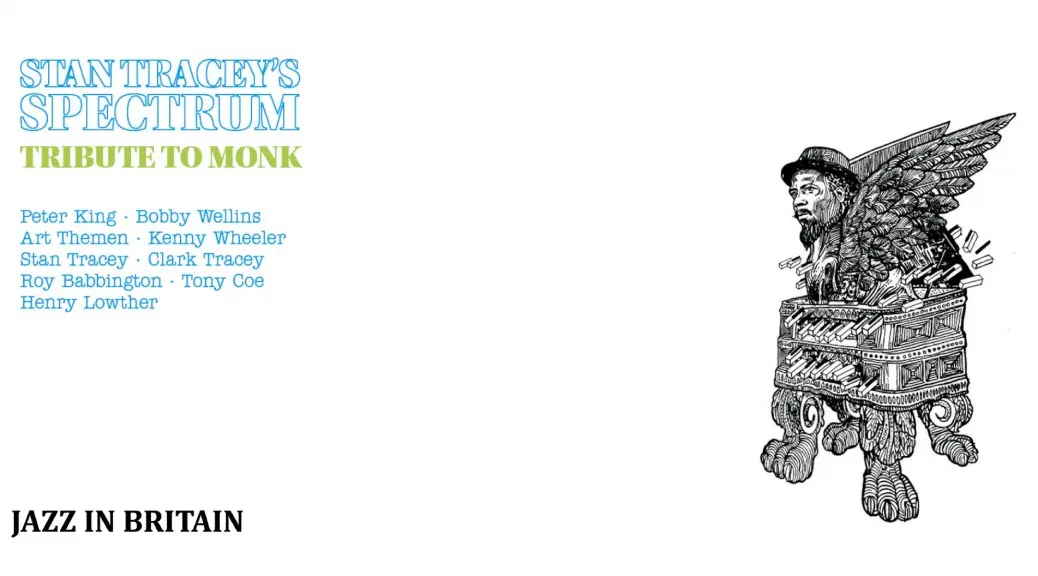
Now, more than four decades after its ultra-limited initial run, Tracey’s landmark 1982 tribute album to Thelonious Monk—recorded under the moniker Spectrum—has finally been rescued from obscurity. Released as a comprehensive, limited-edition triple-CD collection via a landmark collaboration between Jazz In Britain and Clark Tracey’s ReSteamed Records, this archival package goes far beyond a simple reissue. Alongside the pristine 1982 Lansdowne Studios sessions, the set unveils explosive, previously unreleased live performances captured at London’s 100 Club and the inaugural Ealing Jazz Festival at the Questors Theatre.
Published to honor what would have been Stan Tracey’s centenary on December 30, this release is accompanied by immaculate packaging, an eight-panel digisleeve, a 12-page explanatory booklet featuring liner notes by John Thurlow and original band member Art Themen, and a treasure trove of historical context. It stands not merely as a retrospective curio, but as an essential historical document illuminating a defining zenith of British improvised music.
Detailed Chronology: From Ronnie Scott’s to the Lansdowne Studios Sessions
To understand the magnitude of the Spectrum recordings, one must trace the arc of Stan Tracey’s career through the golden decades of British jazz. Working professionally from the age of 16, Tracey’s early chops were forged in big band environments, notably joining Ted Heath’s orchestra in 1957 as a pianist, vibraphonist, and arranger. By 1960, he had secured his legendary residency as the house pianist at Ronnie Scott’s Old Gerrard Street club. For the best part of a decade, Tracey’s rhythm section acted as the crucible for American jazz royalty visiting London.
The high regard in which he was held by these visiting luminaries is legendary. Most famously, after sharing a stage with Tracey, tenor saxophone colossus Sonny Rollins turned to the room and asked the immortal question:
"Does anyone here realise how good this guy is?"
Tracey’s musical affinity with American greats extended deeply into the recording studio. He recorded with Ben Webster at Ronnie Scott’s in 1964 and 1968, later serving as both arranger and pianist for Webster’s delightful 1970 London-recorded album, Webster’s Dictionary. Yet, it was Tracey’s internal processing of Monk’s structural framing and Ellington’s tonal colors that birthed his own groundbreaking compositions.
In June 1959—just weeks after laying down his trio album Little Klunk—Tracey entered the studio with bassist Kenny Napper and drummers Tony Crombie and Phil Seamen. These sessions, steeped in the swinging dissonance, rhythmic displacement, and economy of space championed by Thelonious Monk, remained unissued for decades until ReSteamed unearthed and released them as The 1959 Sessions in 2022.
When Monk passed away in February 1982, the jazz world mourned the loss of high-modernism’s high priest. For Tracey, whose stylistic architecture owed so much to Monk, a tribute was not just appropriate; it was an artistic imperative. Just weeks after Monk’s death, Adrian Kerridge—Tracey’s former engineer and the driving force behind Lansdowne Studios—brought together a stellar ensemble of modern jazz heavyweights to record the project.
Released originally as an ultra-rare, six-track LP on Kerridge’s private Switch label, Tribute to Monk became an elusive holy grail for collectors. Now, framed by the newly discovered live recordings from late 1982 and early 1983, the full historical narrative of Spectrum is finally accessible to the public.
Supporting Context & Metrics: The Ensemble, Venues, and Repertoire
The lineup assembled for Spectrum represents a literal who’s who of British modern jazz aristocracy. The core of the ensemble was drawn directly from Tracey’s working quartet of the era:
- Stan Tracey (Piano)
- Art Themen (Tenor and soprano saxophones)
- Roy Babbington (Bass)
- Clark Tracey (Drums)
To this formidable rhythm and reed core, Tracey added massive frontline firepower. He brought in Bobby Wellins—his legendary partner on Under Milk Wood—alongside Peter King, an alto saxophone virtuoso steeped in authentic bebop traditions and a veteran of Tracey’s octets and quartets.
The Reeds and Trumpets: A Masterclass in Contrast
The inclusion of three distinct tenor saxophonists (Art Themen, Bobby Wellins, and later Tony Coe) alongside altoist Peter King offers a masterclass in individualistic jazz phrasing. Themen, renowned for his exhilarating flights and penchant for outrageous, tongue-in-cheek musical quotations, contrasts brilliantly with King’s razor-sharp, bebop-fueled alto lines and Wellins’ famously plaintive, smoky tone—a sound critics have often romantically (if perhaps overly conveniently) linked to the Highland pipes of his native Scotland.

The brass section brought its own fascinating dynamics. The initial "wildcard" of the ensemble was trumpeter Kenny Wheeler, an artist more frequently associated with the avant-garde and exploratory fringes of European jazz. However, Wheeler’s relationship with Tracey ran deep; he had performed in Tracey’s 1960s big bands and featured in an expanded quintet version of Under Milk Wood recorded for German radio in Hamburg in 1966 (subsequently released by Clark Tracey’s ReSteamed Records as Under Milk Wood in Hamburg in 2022). Wheeler’s idiosyncratic, lyrical trumpet lines fit the Monk repertoire like a glove. For subsequent live dates, fellow trumpeter Henry Lowther stepped in, providing a compellingly different yet equally adventurous foil.
Meanwhile, Tony Coe—Wellins’ deputy at Ealing and a stalwart of Tracey’s units since the late 1960s (including the Duke Ellington tribute We Love You Madly and The Crompton Suite)—brought his sophisticated clarinet and tenor work to the live performances.
Repertoire and Audio Engineering
The musical program across the triple-CD collection is a masterclass in interpreting Monk’s complex architectural songbook. The studio tracks and live sets traverse essential compositions:
- "In Walked Bud"
- "I Mean You"
- "Nutty"
- "’Round Midnight" (featured multiple times, including breathtaking solo piano interpretations by Tracey)
- "Little Rootie Tootie" (the sole tune to appear across all three performance settings, providing a fascinating structural comparison between studio discipline and live improvisation)
Engineering-wise, the package is a triumph. The original Lansdowne Studios master tapes—overseen by Adrian Kerridge, who began his storied career there alongside Denis Preston and Joe Meek in 1959—exhibit pristine, high-fidelity clarity. Miraculously, the accompanying live recordings from the 100 Club (October 1982) and the Ealing Jazz Festival at the Questors Theatre (February 1983), though captured on cassette, surpass normal archival expectations, bursting with the raw acoustic energy, sweat, and interactive telepathy of a frontline band operating at the absolute height of its powers.
Official Statements and Archival Significance
The release of Spectrum marks a historic milestone: it is the very first album issued under Stan Tracey’s name on the Jazz In Britain label, and the inaugural formal collaboration between Jazz In Britain and Clark Tracey’s ReSteamed Records.
Reflecting on the meticulous physical and sonic curation of the release, co-producers and annotators emphasize the cultural weight of the project. John Thurlow, writing in the accompanying 12-page booklet alongside original band member Art Themen, noted:
"In hindsight, it is somewhat sad that Tribute to Monk existed only as a one-off, limited-edition LP for over four decades… It’s all credit, therefore, to the good people at Jazz In Britain and ReSteamed that we can now hear this wonderful music afresh."
Clark Tracey, speaking on behalf of ReSteamed Records regarding his father’s upcoming centenary, underscored the importance of preserving these archival tapes:
"My father’s music was built on spontaneity, deep listening, and a profound respect for the jazz tradition passed down from Ellington and Monk. Bringing these sessions to light isn’t just about looking backward; it’s about making sure contemporary listeners understand the uncompromised standard of British modern jazz during its golden eras."
Future Outlook: The Centenary and Beyond
As the global jazz community approaches Stan Tracey’s centenary on December 30, the release of Spectrum serves as the foundational opening salvo for a broader celebration of his monumental artistic footprint.
With this limited-edition triple-CD set, Jazz In Britain and ReSteamed Records have established a new benchmark for archival jazz production in the UK. The success of this joint venture—paired with the enthusiastic reception of previous archival drops like The 1959 Sessions and Under Milk Wood in Hamburg—signals a bright horizon for fans of British improvised music.
Crucially, insiders have hinted that Spectrum is merely the tip of the iceberg. As Clark Tracey continues to comb through his father’s vast vaults in cooperation with specialist independent labels, collectors can anticipate further unreleased broadcast sessions, live recordings, and expanded studio retrospectives.
For now, Spectrum stands as an unassailable monument. Housed in its immaculate eight-panel digisleeve, featuring authoritative liner notes, and vibrating with the immortal genius of Stan Tracey, Art Themen, Bobby Wellins, Peter King, Kenny Wheeler, and their peers, this release demands a place on the shelf of every serious jazz aficionado. It proves unequivocally that British jazz, at its best, could stand shoulder-to-shoulder with any movement across the Atlantic.