Executive Overview
In an era dominated by algorithmic playlists, micro-genres, and bite-sized streaming snippets optimized for TikTok, the traditional concept of the full-length album faces an existential crisis. Listeners frequently drift from track to track, treating music as ambient wallpaper rather than immersive art. Yet, against this industry-wide tide of fragmentation, British singer-songwriter Raye has delivered a resounding counter-statement.
Her latest record, This Music May Contain Hope—a sprawling, one-hour-and-thirteen-minute magnum opus—swept the judges at the October 22 awards ceremony in Newcastle, capturing the prestigious Mercury Prize. The album is a masterclass in genre-bending composition, seamlessly traversing old-Hollywood jazz, big-band bombast, contemporary R&B, and cinematic orchestral arrangements. More than just a collection of songs, it is an intensely personal cinematic journey.
Raye’s victory is not merely a personal triumph; it is a cultural milestone. It signals a broader industry shift spearheaded by women who are rejecting the role of the passive pop commodity to assume total creative control. Alongside visionary records like Beyoncé’s Cowboy Carter and Rosalía’s Lux, Raye’s latest work proves that when liberated artists are given unbridled freedom, the album format remains one of the most powerful storytelling mediums available.
Detailed Chronology: From Label Shackles to Independent Glory
To fully understand the gravity of This Music May Contain Hope, one must trace the arduous road Raye travelled to claim her artistic autonomy.
2016–2022: The Major Label Wilderness
For seven long years, Raye found herself trapped in the machinery of a major record label. Despite penning major hits for other artists and amassing a dedicated fanbase, she was consistently blocked from releasing her own debut album. The corporate consensus at the time dictated that she remain a singles artist, confined to formulaic pop formats designed for immediate radio consumption. The frustration of being creatively stifled came to a head in July 2021, when Raye took to social media in an emotional post revealing that she was being withheld from releasing an album.
February 2023: The Independent Liberation
Refusing to let her artistry languish indefinitely, Raye bought her way out of her major label contract and chose the path of independence. The gamble paid off spectacularly with the release of her debut independent album, My 21st Century Blues. Propelled by raw honesty and fierce independence, the record struck a chord with the public and critics alike, transforming her overnight from a label-handled pop act into an uncompromising auteur.
October 2024–October 2026: Crafting the Magnum Opus
With the commercial and critical success of her debut providing an unshakeable foundation, Raye entered the studio with absolute creative freedom. Over the course of 17 tracks, she orchestrated This Music May Contain Hope. The project expanded her sonic palette exponentially, incorporating complex brass sections, intimate voice notes from loved ones, and high-profile collaborations.
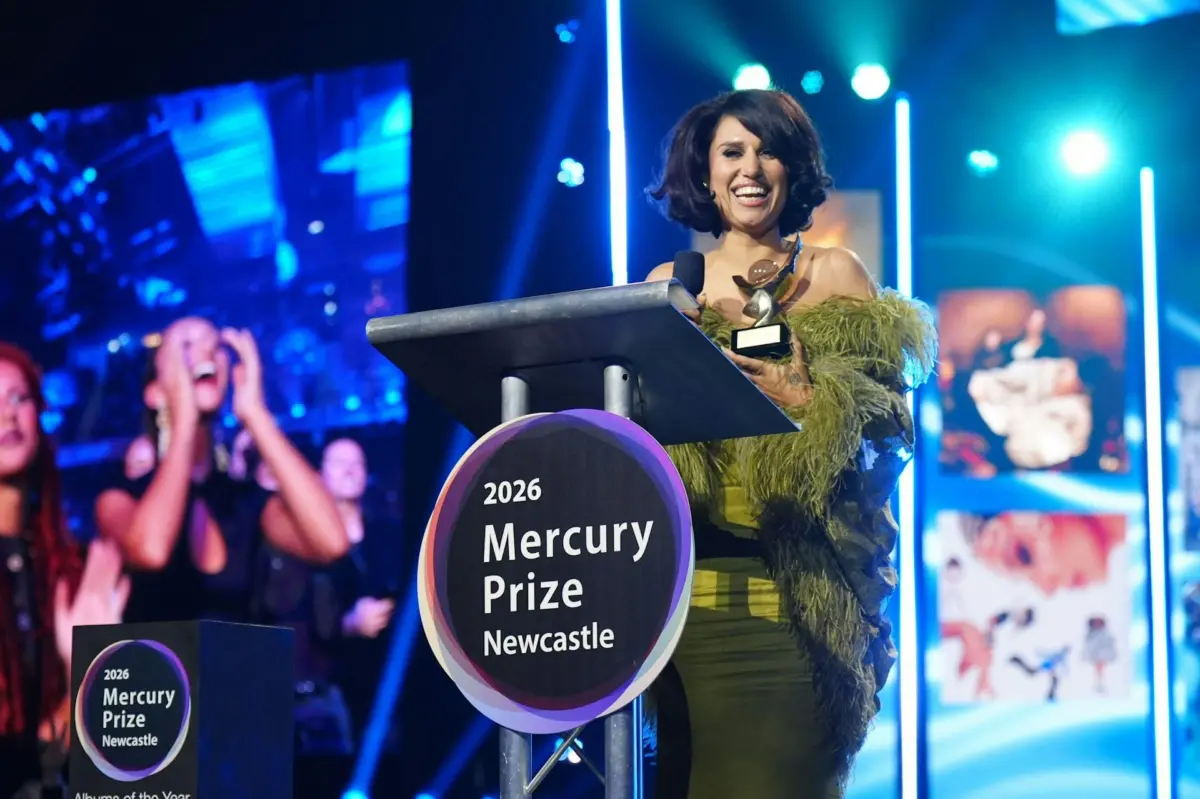
On October 22, 2026, the culmination of this grueling journey was recognized in Newcastle, where Raye clutched the golden Mercury Prize trophy. Beaming at the podium, she cemented her status as one of the most vital creative forces in contemporary music.
Supporting Context & Metrics: Anatomy of a Cinematic Masterpiece
Clocking in at 73 minutes across 17 meticulously structured tracks, This Music May Contain Hope is anything but minimalist. Raye acts less like a traditional recording artist and more like the director of a grand cinematic production, pulling listeners through contrasting emotional states and sonic textures.
The Sonic Architecture and High-Profile Collaborations
The record’s production is unapologetically opulent. Lush arrangements of brass and layered vocal harmonies are punctuated by raw, unvarnished voice notes from friends and family. The project’s crown jewel is "Click Clack Symphony," an ambitious collaboration with legendary film composer Hans Zimmer. The track bridges visceral emotional vulnerability with an explosive, cinematic soundscape, proving that Raye’s ambitions stretch far beyond conventional pop boundaries.
Furthermore, Raye honors her musical lineage throughout the project. On "Goodbye Henry," she introduces soul legend Al Green with profound reverence, while the album’s epic six-minute closing track, "Fin," lists every single contributor involved in the record—a radical departure from the industry standard of burying credits in digital fine print.
A Masterclass in Musical Contrast
What truly separates Raye from her contemporaries is her fearless deployment of juxtaposition:
- "I Hate The Way I Look Today": Confessional, harrowing lyricism regarding body image and self-esteem is draped over the opulent glamour of an old-Hollywood big-band arrangement. As the track concludes, Raye cheerfully dismisses her session musicians with a warm, domestic sign-off: "Alright everyone, have a cup of tea now."
- "The WhatsApp Shakespeare": Bridging the archaic with the hyper-modern, the track opens on a sleek, contemporary R&B beat before erupting into an up-tempo swing rhythm, ultimately dissolving into a haunting, James Bond-esque orchestral outro.
The Vocalist as Director
Raye’s voice is the primary vehicle navigating this labyrinth of styles. Eschewing the one-note vocal delivery common in modern streaming pop, she deploys an astonishing range of techniques: operatic highs, soulful ad-libs, playful scatting, and theatrical spoken-word passages.
Drawing comparisons to the fourth-wall-breaking style of television’s Fleabag, Raye uses spoken intros and outros to directly address the listener. On "Beware.. The South London Lover Boy," she adopts a posh, narrative cadence to warn listeners about the song’s subject. On "Nightingale Lane," she opens with the disarming declaration: "This is a song about the greatest heartbreak I’ve ever known."
Even amidst intense vulnerability, her focus remains outward. The album closes on "Happier Times Ahead" with a comforting, motherly directive to her audience: "Just hold on to happier times, alright darlin’?"
Official Statements and Industry Reception
The critical reception to This Music May Contain Hope has been deeply polarized, illuminating a wider debate about artistic excess in modern music.
While some traditional critics have argued that the album is "overstuffed with musical ideas" and occasionally "over-indulgent and messy," champions of the record view these very traits as the triumphant hallmarks of an artist breaking free from systemic censorship.
Reflecting on her journey and the unexpected victory at the Mercury Prize, Raye shared her profound gratitude with fans via Instagram:
"Being able to even create an album is a privilege I will never take for granted."
This sentiment echoes far beyond her own catalog. Raye is part of a formidable vanguard of female artists redefining the parameters of global pop music. By seizing complete creative direction, women are crafting conceptual, high-concept masterpieces that challenge industry norms. This movement includes landmark releases such as:
- Beyoncé’s Cowboy Carter (2025): A Grammy-winning exploration that reclaims the foundational Black female lineage within country music.
- Rosalía’s Lux (2025): A stunning, multilingual meditation on female divinity performed across 13 languages.
These artists are not merely vocalists executing a record label’s vision; they are master architects of complex, immersive musical worlds.
Future Outlook: The New Paradigm of Pop Auteurism
As the music industry continues to grapple with the shifting sands of streaming economics and algorithmic homogenization, Raye’s Mercury Prize win serves as a vital compass point for the future.
The success of This Music May Contain Hope proves that audiences are still hungry for depth, narrative cohesion, and unapologetic ambition. When artists are granted the runway to experiment—to risk being "messy" or "overstuffed" in pursuit of genuine emotional and sonic truth—the resulting art cuts through the noise of disposable pop.
Moving forward, Raye’s trajectory establishes a blueprint for independent artists seeking to bypass legacy gatekeepers. By treating the album not as a commercial obligation, but as a sprawling, director’s-cut medium, she has raised the bar for what pop music can achieve. As she looks toward her next chapter, Raye has not only secured her place in British music history—she has proven that the future belongs to the uncompromising creators willing to rewrite the rules entirely.