Executive Overview
In an era defined by hyper-connectivity, ecological anxiety, and a
growing disconnect from the natural world, a quiet cultural renaissance is taking root across rural Europe. At the intersection of traditional indigenous cosmology and contemporary folk artistry lies Waytamayu, a transcontinental musical project founded by Peruvian-born ceremonial guide Yari Bonilla and German artist Paula Katharina. Operating from a secluded homestead in southern Portugal, the duo has emerged as a compelling voice within the global "medicine music" movement—a genre dedicated to creating ceremonial chants that honor plant teachers, foster community healing, and re-establish a reverent relationship with the earth.
At the heart of their latest release, Semilla Dorada, is the evocative track "Mama Coca." Drawing deeply from the ancestral traditions of the Murui Muina people (commonly known as the Uitoto) of the Colombian Amazon, the song explores the sacred practice of endulzando la palabra—"sweetening the word." For the Uitoto, consuming mambe (toasted and ground coca leaves) alongside ambil (a concentrated tobacco paste) during communal council fires is a sacred act. It grounds dialogue in truth, clarity, and collective harmony.
Waytamayu translates this profound indigenous philosophy into a modern musical tapestry. By blending traditional Andean instrumentation—such as the charango and ronroco—with Western folk sensibilities, violin, and bass, the ensemble creates a bridge between ancient Amazonian cosmovisions and contemporary European seekers. This feature-length investigation explores the origins of Waytamayu, the philosophical and ecological foundations of "Mama Coca," the mechanics of medicine music in modern ceremonial spaces, and the broader socio-cultural implications of indigenous wisdom migrating into Western counter-cultures.
Detailed Chronology: From the Andes and Germany to the Portuguese Countryside
To understand the resonance of Waytamayu’s music, one must trace the geographical and spiritual journeys of its co-founders, whose lives converged to form a unique cross-cultural collaboration.
Roots and Convergence (Pre-2018)
- Yari Bonilla’s Early Life in Peru: Growing up immersed in the rich musical and spiritual heritage of the Andes, Yari developed a deep affinity for native flora and traditional healing modalities. His upbringing instilled a visceral understanding of how music functions not merely as entertainment, but as a technology for spiritual alignment and community cohesion.
- Paula Katharina’s Artistic Development in Northern Germany: Far from the high-altitude peaks of Peru, Paula cultivated a multidisciplinary artistic practice encompassing visual arts, songwriting, and poetry. Drawn to the expressive potential of music and the visual arts, her journey eventually led her beyond European borders to seek out deeper connections with land-based cultures.
- The Path to Ceremonial Guidance (2014): By 2014, Yari had formally stepped into the role of a ceremonial guide. His work centered predominantly around Wachuma (commonly known as San Pedro), a sacred, psychoactive cactus native to the Andes that has been utilized by indigenous healers for millennia to induce deep introspection, emotional healing, and ecological communion.
Establishment of the Portuguese Sanctuary (2018)
In 2018, Yari and Paula made a pivotal lifestyle shift, relocating to a small, rural community in southern Portugal. This transition was not merely logistical; it was an intentional grounding in land stewardship.
- The Homestead: The couple integrated themselves into a rhythm of tending native forests, cultivating fruit trees, and maintaining organic vegetable gardens.
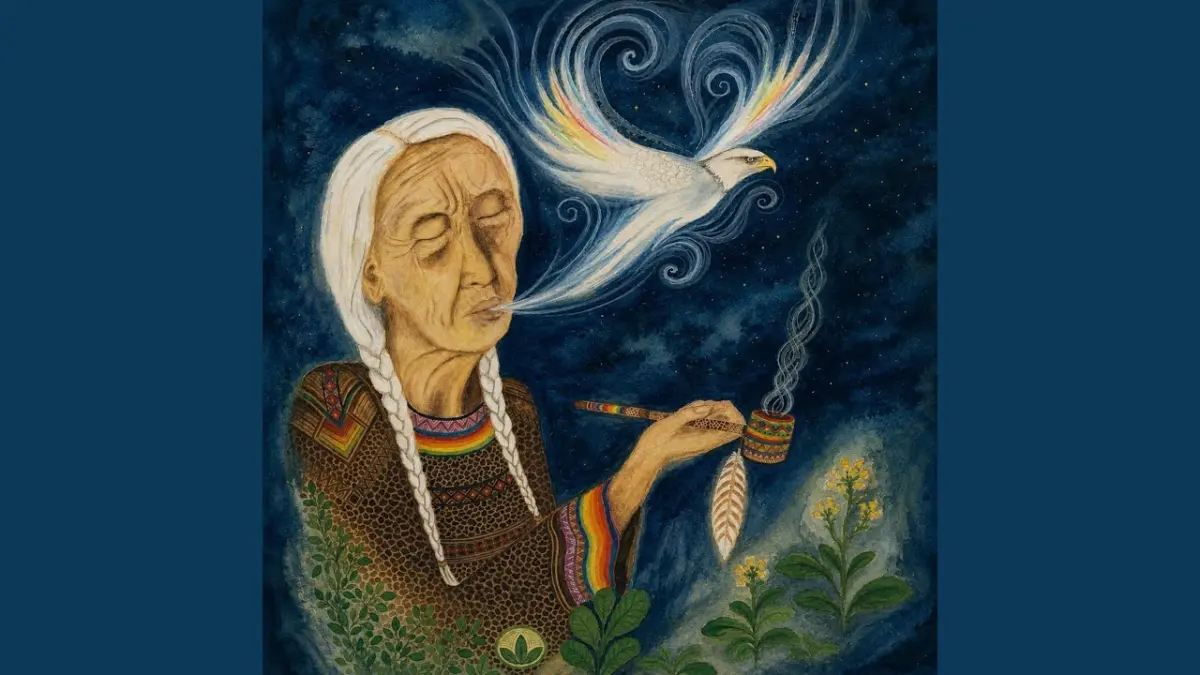
- The Integration of Art and Ritual: Living intimately with the land provided the fertile soil from which Waytamayu would grow. While Yari continued to facilitate plant ceremonies, Paula channeled her creative energies into painting the project’s visual identity and composing the foundational melodies for their songs.
The Birth of Waytamayu and Semilla Dorada
As their ceremonial practice deepened, Yari and Paula recognized a recurring need within their gatherings: songs written specifically for the rituals, designed to be easily learned and sung collectively by all participants. This realization birthed Waytamayu—a Quechua-derived name meaning "wild flower and river" (wayta for flower, mayu for river).
Culminating years of shared ceremonial holding and artistic collaboration, the duo released their project, Semilla Dorada (Golden Seed). Featuring tracks like "Mama Coca," the album serves as both a sonic artifact of their ceremonies and an invitation for listeners worldwide to participate in a shared act of collective remembrance.
Supporting Context & Metrics: The Philosophy and Craft of "Mama Coca"
The Amazonian Cosmology of Coca and Tobacco
In Western discourse, the coca plant is frequently stigmatized due to its association with illicit cocaine production and the global narcotics trade. However, for Amazonian and Andean indigenous nations, coca (Erythroxylum coca) is revered as a foundational plant mother—a sacred entity that sustains physical energy, sharpens mental focus, and fosters social cohesion.
In their song "Mama Coca," Waytamayu honors this sacred dualism, singing to coca as a mother and to tobacco as a father.
- The Mother (Coca): Invoked to tell the truth, soften human interactions, and weave individuals into a cohesive community.
- The Father (Tobacco): Invoked in its concentrated paste form (ambil) to clear the mind, provide grounding strength, and burn away mental confusion.
Endulzando la Palabra (Sweetening the Word)
The central motif of "Mama Coca" is the Uitoto concept of endulzando la palabra. In indigenous Amazonian governance, disputes are resolved and community decisions are made not through adversarial debate, but through extended circles around the fire.
By consuming mambe and ambil, participants enter a physiological and psychological state of calm eloquence. The bitter plant materials physically stimulate the body, while the ceremonial container ensures that speech remains measured, respectful, and constructive. As Waytamayu interprets this tradition, the coca leaves act as a loom, tejiendo la humanidad (weaving humanity together), dissolving individual ego into collective harmony.
The Musical Architecture and Instrumentation
The sonic landscape of "Mama Coca" is meticulously crafted to support both personal meditation and communal participation.
- Vocal Harmony: The core of the song rests on the warm, blended voices of Yari Bonilla and Paula Katharina. Their delivery is unpretentious and inviting, intentionally designed to encourage listeners to join in.
- Andean Folk Traditions: Central to the arrangement is the contribution of Tavo Vazquez, who brings the authentic timbre of the Andes through the charango—a bright, ten-stringed lute traditionally made from an armadillo shell or wood—and the ronroco, a larger, deeper-voiced cousin of the charango that adds a resonant, melancholic warmth.
- Classical and Modern Foundations: Paulina Violina contributes sweeping violin melodies that elevate the emotional arc of the piece, while Renzo Bonilla anchors the rhythm and harmony with the bass guitar, bridging traditional acoustic folk with modern ambient structures.
The track follows a deliberate narrative and sonic compression. It opens with rich instrumentation and layered vocals, gradually stripping away extraneous elements until the entire song narrows down to a single, resonant mantra:
"Juntos vamos despertando, aquí y ahora recordando"
(Together we are waking up, remembering here and now).
Official Statements & Artistic Vision
To fully grasp the ethos of Waytamayu, one must examine the philosophy behind the broader "medicine music" genre and how artists navigate the delicate boundary between cultural borrowing and genuine reverence.
The Role of Medicine Music in Contemporary Healing
Medicine music—a genre that includes Amazonian icaros, Andean folk chants, and modern Spanish- and English-language ceremonial hymns—operates under a fundamentally different paradigm than commercial popular music. It is utilitarian, sacred, and relational.
"We do not write songs simply to perform them on a stage or chase chart success," explains Paula Katharina in production notes accompanying their releases. "These songs are tools for the altar. They are written to hold space, to calm a nervous system, to call upon the intelligence of the plants, and to remind everyone in the circle of who they are and why they are here."
Honoring the Lineage
Cultural exchange in the realm of plant medicine is a fraught and sensitive topic. The commercialization of Amazonian ceremonies by unqualified practitioners has led to widespread concerns regarding cultural appropriation and the exploitation of indigenous knowledge systems.
Waytamayu addresses this ethical tightrope through transparency, land stewardship, and direct acknowledgment of their sources. Their life in rural Portugal—marked by physical labor, gardening, and ecological maintenance—is presented not as a romantic aesthetic, but as an essential practice of reciprocity with the earth. By crediting indigenous traditions such as those of the Uitoto people and collaborating with artists steeped in Andean folk traditions (like Tavo and Renzo Bonilla), the project seeks to act as a respectful conduit rather than an appropriator of sacred cultural property.
Future Outlook: The Global Trajectory of Medicine Music
As industrial societies grapple with compounding ecological crises, mental health epidemics, and social fragmentation, the hunger for earth-based spiritual frameworks continues to accelerate. The global medicine music movement—once confined to remote jungle lodges and clandestine urban circles—is increasingly finding an international audience via platforms like Bandcamp, SoundCloud, and specialized gathering spaces.
The Road Ahead for Waytamayu
Following the positive reception of Semilla Dorada, Waytamayu plans to continue expanding their musical offerings while deepening their roots in their Portuguese homestead.
- New Collaborative Works: The ensemble is currently developing additional tracks that integrate more traditional instruments from both the Amazon basin and the Andean highlands.
- Ceremonial Gatherings: Yari and Paula remain committed to intimate, localized ceremonial work, prioritizing depth of container over scale of audience. They view large-scale commercial touring as antithetical to the intimate, land-based nature of medicine music.
- Educational Outreach: Alongside their music, the duo utilizes their platform to educate European listeners on the ecological and cultural realities behind traditional plant medicines, advocating for ethical engagement and indigenous sovereignty.
Conclusion
Waytamayu’s "Mama Coca" is more than a folk song; it is a sonic bridge across continents, languages, and worldviews. By translating the Uitoto practice of endulzando la palabra into an accessible European folk-ceremonial idiom, Yari Bonilla and Paula Katharina offer a timely reminder. In a world fractured by noise and division, the ancient prescription remains remarkably consistent: gather around the fire, listen to the quiet intelligence of the plant teachers, and remember, here and now, how to weave ourselves back together.
To experience "Mama Coca" and support Waytamayu’s ongoing artistic and ecological work, listeners can stream and purchase Semilla Dorada on a pay-what-you-wish basis directly through their official Bandcamp page.