Executive Overview
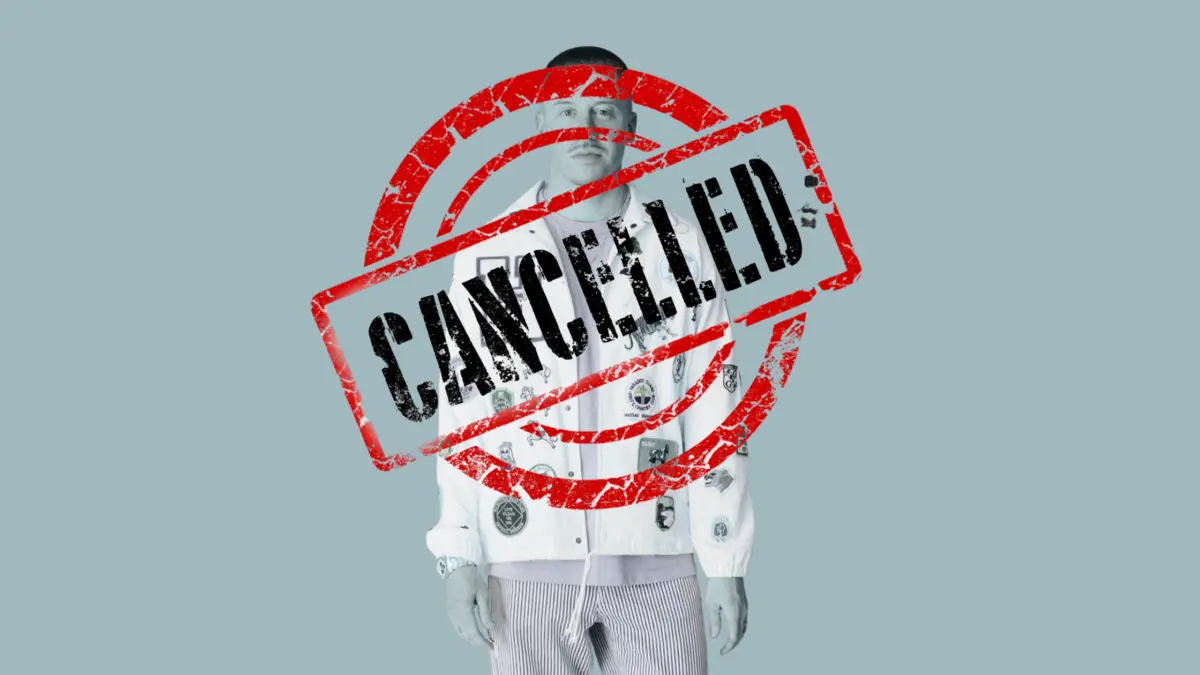
The intersection of global geopolitics, high-stakes live entertainment, and corporate real estate reached a volatile apex when rapper Macklemore was abruptly dropped from Ed Sheeran’s ongoing U.S. stadium tour. The removal followed a coordinated ultimatum delivered by prominent U.S. venue owners—spearheaded by billionaire New England Patriots owner Robert Kraft—in direct response to Macklemore’s explicit on-stage support for Palestine and the screening of content from the ongoing conflict in Gaza.
What began as standard artistic expression during two high-profile New Jersey concert dates quickly metastasized into a major industry-wide flashpoint. Faced with the immediate prospect of sweeping venue boycotts and the cancellation of multiple arena-scale dates impacting hundreds of thousands of ticket-holders, Sheeran’s promoters, the Messina Touring Group, severed ties with the support act.
The incident highlights a shifting paradigm within the North American live music ecosystem. Unlike traditional booking agencies like Live Nation or AEG, which prioritize ticket sales and artistic collaboration, major U.S. stadiums are frequently owned by sports franchises, corporate conglomerates, and billionaires. These entities maintain vastly different risk tolerances regarding sociopolitical commentary.
Both artists have since released extensive, contemplative statements detailing the behind-the-scenes scramble, the limits of corporate-sponsored performance spaces, and the profound ideological divide over how artists should utilize their platforms during geopolitical crises. For Macklemore, the ouster has transformed a supporting role into a platform for resistance; for Sheeran, it underscores the precarious balancing act of maintaining an apolitical brand inside increasingly polarized spaces.
Detailed Chronology: From New Jersey Speeches to Corporate Ultimatums
The controversy traces back to early-month performances in New Jersey, where Macklemore joined Ed Sheeran’s "+-=÷× Tour" (frequently referred to as the "Loop" tour). During these sets, the rapper delivered impassioned anti-war and pro-Palestinian speeches. Crucially, his performances featured the live airing of footage from the ongoing humanitarian crisis in Gaza while he performed his pro-Palestine protest track, “Hind’s Hall.”
While these demonstrations were met with vocal enthusiasm from significant segments of the stadium crowds, they immediately galvanized opposition from pro-Israel advocacy groups. Organizations such as the Israeli American Council launched rapid-response petitions demanding the rapper’s immediate removal from the tour. Concurrently, the advocacy group StopAntisemitism issued a public rebuke, stating that Jewish fans who purchased tickets to see Ed Sheeran were "ambushed by Macklemore’s anti-Israel propaganda."
As public pressure mounted, Macklemore used his second support slot to address the backlash directly. Looking out at the audience, he addressed his "Jewish brothers and sisters," explicitly stating that "criticism of Israel, criticism of apartheid, being against genocide, is in no way a criticism of you." Despite these efforts to nuance his remarks, the defense failed to appease critics or stem the growing corporate backlash.
The inflection point arrived when billionaire businessman Robert Kraft—owner of the New England Patriots and Gillette Stadium in Foxborough, Massachusetts, one of the premier stops on Sheeran’s itinerary—intervened directly. According to Macklemore’s subsequent statements, Kraft contacted Sheeran to inform him that the rapper was explicitly banned from performing at Gillette Stadium.
Furthermore, Kraft reportedly rallied fellow venue owners across the upcoming tour route. Together, they delivered an ultimatum to Sheeran and his management: either Macklemore was removed from the lineup, or the venues would pull their contracts, effectively canceling the shows.
Faced with a logistical and financial catastrophe, Sheeran’s camp conceded. The Messina Touring Group confirmed to trade publications that venue owners had made it clear that concerts featuring Macklemore would not be permitted to proceed. Consequently, stakeholders made the joint decision to pull the support act from the remaining eight dates.
Supporting Context & Metrics: The Power Dynamics of U.S. Stadiums
The ouster of Macklemore exposes a structural vulnerability inherent in contemporary stadium touring. While international touring often relies on dedicated music promoters who view artistic expression through a lens of creative license, the upper echelon of the North American live touring market operates on different terms.
When an artist ascends to stadium status in the United States, they are rarely booking venues owned by traditional music companies like Live Nation or AEG. Instead, they lease multi-million-dollar facilities owned by NFL, MLB, and MLS franchises, managed by corporate boards and wealthy private investors.
These venue operators possess vastly different priorities than music promoters. For a billionaire stadium owner, the reputational risk or political liability of hosting controversial on-stage protests outweighs the ancillary revenue generated by a support act. When Robert Kraft and his peers issued their ultimatum, they were leveraging the immense scarcity of elite stadium infrastructure.
Industry analysts point out that Sheeran and the Messina Touring Group were effectively stripped of leverage. To call the venue owners’ bluff would have risked the cancellation of multiple sold-out stadium dates, resulting in tens of millions of dollars in losses, insurance nightmares, and disappointed fans numbering in the hundreds of thousands.
This dynamic underscores a sobering reality for politically active musicians: as production scales up, independence scales down. The larger the stage, the more institutional gatekeepers hold the power to pull the plug, rendering corporate venues hostile terrain for sustained anti-establishment or geopolitical dissent.
Official Statements: Perspectives from the Artists
Both Ed Sheeran and Macklemore addressed the fallout through detailed, highly publicized statements, offering contrasting views on artistry, neutrality, and advocacy.
Ed Sheeran’s Perspective: The Sanctuary of Neutrality
Sheeran’s statement sought to explain his position while navigating the delicate middle ground between corporate compliance and respect for his long-time peer.
"After Macklemore’s performances at my New Jersey shows, venues on my upcoming tour dates communicated that they would pull the shows if he was still supporting," Sheeran confirmed. He emphasized that despite efforts to find a compromise, the ultimate removal was a promoter and venue-driven decision, not his own.
Addressing his choice to remain politically silent on stage, Sheeran explained:
"There is a reason I do not use my professional platform for politics—my audience includes young people, often children, of all backgrounds. Those who come to my shows do not expect a political forum."
While acknowledging Macklemore’s "strength of purpose," Sheeran argued for alternative pathways toward peace:
"I choose to use my fame and platform to be a place of safety and sanctuary, to maintain diplomacy and keep conversations open, not closed. If we only focus on shouting the loudest, nothing will ever change."
Macklemore’s Perspective: The Impossibility of Neutrality
Macklemore’s statement offered a granular, unvarnished look into his private conversations with Sheeran and his philosophical rejection of corporate neutrality.
Recalling his discussions with the British pop star, Macklemore noted that Sheeran was placed in an unprecedented position due to his typical apolitical stance. He recounted Sheeran sharing that the words "Free Palestine" and the imagery of the Palestinian flag were deeply painful to various stakeholders.
"I told him that if those words were more offensive than tens of thousands of Palestinian children being killed by Israel, then there was a fundamental disconnect," Macklemore wrote.
Addressing the broader economic consequences of speaking out, the rapper acknowledged the personal toll:
"Taking a side can cost you. Money, brand deals, sponsorships, festivals, private shows, relationships and access. I’ve lost all of those things. But there is no neutral position between the oppressor and the oppressed. When one side has the bombs and bottomless financial and military support from America, refusing to take a side doesn’t leave you in the middle."
Macklemore closed by reframing his dismissal not as a silencing, but as an amplification of his core message:
"I am not a victim, Ed Sheeran is not a victim, the victims are the Palestinian people… But if those words cost me the stage, while turning the conversation back to Palestine, then it was the most successful tour I’ve ever been on."
Future Outlook: A Precedent for Live Entertainment?
The fallout from Macklemore’s removal from the "Loop" tour establishes a formidable precedent for the live music industry. As global conflicts continue to polarize public discourse, artists are increasingly expected—or pressured—to take public stances, yet the infrastructure hosting them is increasingly fortified against controversial discourse.
For major touring acts, the incident serves as a cautionary tale regarding the curation of supporting lineups. Promoters may now institute stricter vetting processes for support acts, seeking artists whose stage banter and visual displays conform to the risk-averse guidelines demanded by corporate landlords.
Conversely, for politically engaged artists, the backlash may accelerate a bifurcation within the industry. While mainstream stadium tours remain constrained by corporate gatekeepers, underground, independent, and alternative touring circuits may see an influx of performers seeking spaces where free expression is not subordinated to real estate management and billionaire sensitivities.
Ultimately, the clash between Macklemore and the stadium owners demonstrates that the modern stage is far from a neutral cultural vacuum. It is an intensely contested arena where capital, politics, and art perpetually collide—and where the owners of the infrastructure retain ultimate veto power over the microphone.