Executive Overview
Long before the advent of modern environmentalism, industrial agriculture, or the wellness industry, the blueprint for sustainable living was meticulously drafted within the cloistered walls of medieval monasteries. Across Europe, from the windswept shores of Lake Constance to the rugged valleys of North Yorkshire, Benedictine, Cistercian, and Augustinian monks quietly revolutionized land management, botany, and medicine.
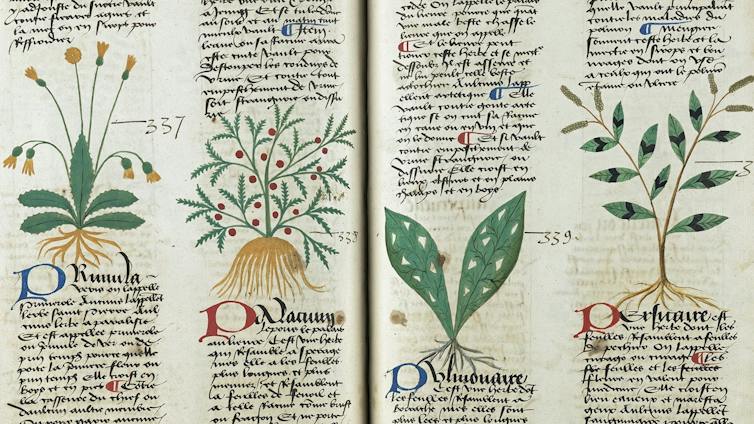
Far from being isolated from the secular world, these medieval monastic communities acted as the intellectual and ecological hubs of their age. They combined empirical observation with classical textual traditions to cultivate comprehensive botanical libraries, known as “herbals.” These handwritten volumes preserved medical knowledge, culinary traditions, and ecological techniques that would otherwise have been lost to the turbulence of the early medieval period.
Furthermore, their approach to the natural world went far beyond simple cultivation. Monks were pioneering landscape architects, hydrologists, and conservationists. By practicing careful crop rotation, sophisticated woodland management (such as coppicing), and complex water diversion, they exerted a profound, stabilizing influence on local ecosystems.
Today, as modern society grapples with climate change, food security, and a collective yearning for green spaces that nourish mental health, the echoes of the medieval cloister are ringing louder than ever. The core tenets of the monastic garden—self-sufficiency, ecological stewardship, biodiversity, and the holistic connection between diet, spirituality, and well-being—form the bedrock of contemporary sustainable gardening movements. This investigation explores the historical trajectory of medieval monastic agriculture, examining how ancient parchment manuscripts continue to inform modern ecological science and sustainable land management.
Detailed Chronology: The Evolution of Monastic Botany and Land Management
The transmission of botanical knowledge and agricultural science in medieval Europe was not a sudden revelation, but a centuries-long evolution rooted in the preservation of ancient texts and the daily necessities of monastic life.
The 1st to 9th Centuries: Foundations and Early Texts
The intellectual lineage of medieval European plant lore draws heavily from classical antiquity. One of the earliest and most influential foundational texts was On Medical Matters (De Materia Medica), compiled by the Greek physician Dioscorides between 40 and 90 AD. Written originally in Greek and later translated into Latin and Arabic, this monumental work served as the ultimate standard reference text for medicinal plants throughout the medieval era. It was frequently supplemented by older Roman scientific traditions, such as the expansive Natural History of Pliny the Elder, who died during the eruption of Vesuvius in 79 AD.
As the Roman Empire fractured, the torch of botanical and agricultural preservation passed to the emerging monastic orders. A critical milestone in this tradition was reached in the 9th century with the composition of Hortulus (The Little Garden), written by Walafrid Strabo (c. 808–849), a Benedictine monk from the monastery of Reichenau on an island in Lake Constance.
Strabo’s Hortulus is widely considered one of the most important European historical documents on gardening. Uniquely combining lyrical poetry with rigorous practical advice, the text offers a vivid literary tour of a monastery garden, detailing the characteristics and uses of twenty-nine distinct plants. From Indian pepper and grapes to nettles, pennyroyal, and peaches, Strabo documented plants that served dual purposes as culinary ingredients and powerful medicines.
[Antiquity: Dioscorides & Pliny]
       │
       ▼
[9th Century: Strabo's Hortulus & Plan of St Gall]
       │
       ▼
[12th Century: Neckham, Henry of Huntingdon, & Durham Catalogues]
       │
       ▼
[Modern Era: Sustainable Gardening & Eco-Spirituality]
To Strabo, gardening was both a physical labor and a spiritual exercise. In the opening lines of the work, he captured the egalitarian nature of the earth:
“For whatever the land you possess, whether it be where sand / And gravel lie barren and dead, or where fruits grow heavy / In rich moist ground; whether high on a steep hillside, / Easy ground in the plain or rough among sloping valleys – / Whereever it is, your land cannot fail to produce / Its native plants…”
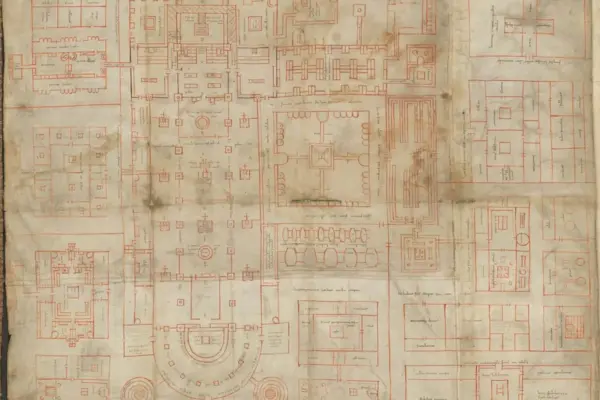
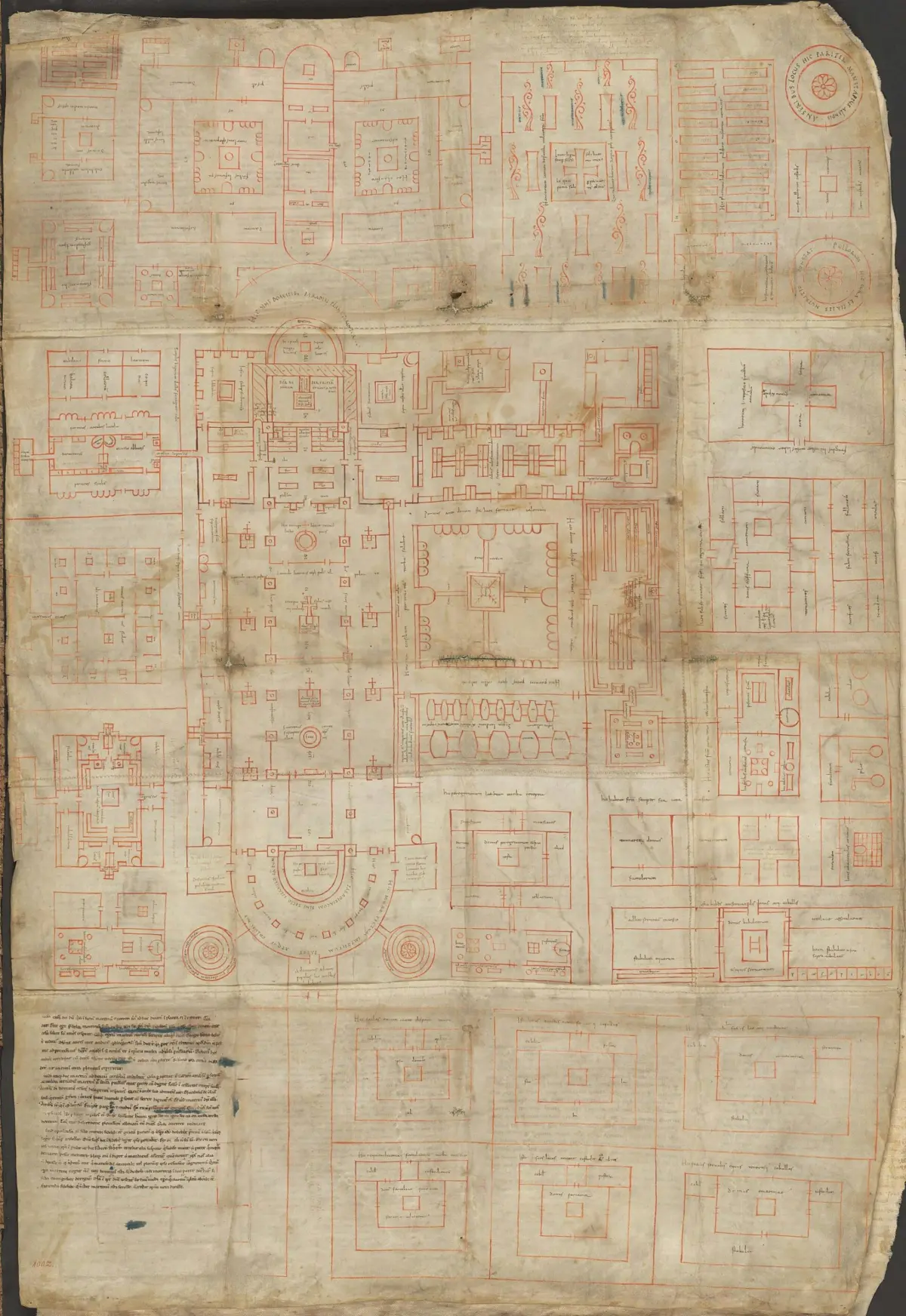
This era also birthed the famous Plan of St Gall (c. 820–830), a remarkable architectural drawing of an idealized Benedictine monastery. Preserved in the Abbey Library of St Gall, this intricate parchment blueprint explicitly maps out dedicated spaces for a main kitchen garden (hortus) and an orchard (pomarium), proving that systematic food production was central to the monastic vision from its earliest days.
The 12th Century: Expansion, Cataloging, and Literary Flourishes
By the 12th century, the scope of monastic horticulture expanded dramatically. Monastic libraries had grown into formidable repositories of ecological and medical knowledge. For instance, the mid-12th-century library catalogue of Durham Cathedral Priory meticulously documented the works of four key botanical authorities: Isidore, Bede, Macer, and Dioscorides.
Simultaneously, writers outside the strictest monastic confines began documenting the aesthetic and scientific dimensions of the garden. Around 1150–1200, Alexander Neckham, an English Augustinian canon, composed his extensive work On the Nature of Things. Drawing on his days as a scholar in Paris, Neckham provided expansive lists of garden flora—including parsley, coriander, savory, cress, sorrel, leeks, garlic, and purslane, alongside exotic fruits like medlars, quinces, and citrus. Crucially, Neckham also cataloged imported spices that could not naturally survive the European climate, such as ginger, cloves, zedoary, and myrrh, highlighting the burgeoning trade networks connected to monastic and scholarly centers.
Around the same period, Henry of Huntingdon, a 12th-century archdeacon, penned The English Garden, a sophisticated literary work that covered roughly six times the number of plants found in Strabo’s earlier Hortulus. Henry’s work transformed the botanical catalogue into an elaborate literary journey through the various plots of the monastic estate.
Supporting Context & Metrics: Medicine, Ecology, and Landscape Engineering
The daily operations of a medieval monastery required a sophisticated understanding of botany, chemistry, and environmental management. Monks were not merely theoreticians; they were frontline practitioners whose survival depended on the efficient exploitation and preservation of their natural surroundings.
The Pharmacy of the Cloister
In medieval society, healthcare and nutrition were viewed as inextricably linked. When illness struck, monastic infirmarians turned to the garden rather than distant apothecaries. Plants were categorized meticulously according to their humors and healing properties:
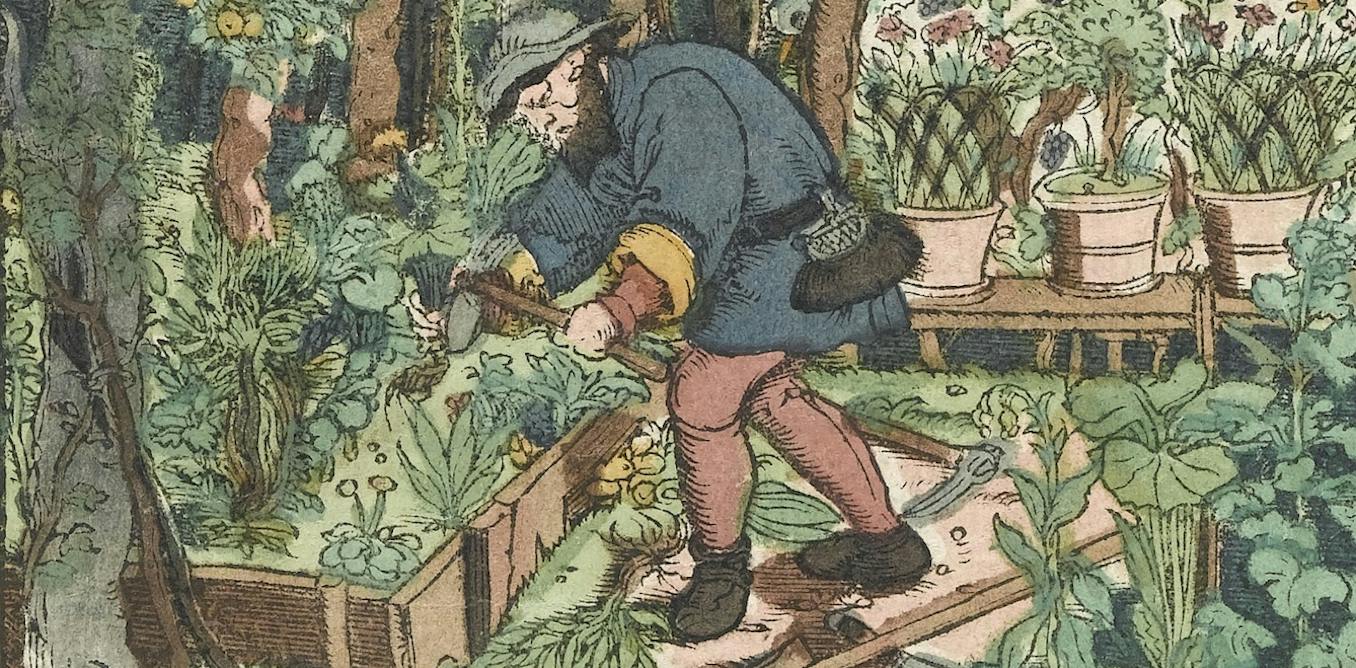
- Southernwood (Artemisia Abrotanum): Highly common in the medieval period though rarely utilized today, Strabo noted its efficacy against fevers, stitching chest pains, and the mysterious, agonizing symptoms of gout.
- Fennel: Monastic recipes routinely called for fennel-root to be steeped in wine to relieve rasping, chronic coughs.
- Betony: Widely deployed as a powerful antiseptic treatment to cleanse and heal septic wounds.
- The Rose: Beyond its visual and spiritual symbolism as a representation of the Virgin Mary, the rose was cultivated extensively as a source of soothing oils used in balms and anti-inflammatory treatments.
Landscape Engineering and Ecological Stewardship
Beyond the garden walls, monastic houses managed vast estates comprising agricultural fields, livestock pastures, mineral rights, and complex waterways. The scale of their ecological intervention was massive.
Consider the Cistercian abbey of Rievaulx, nestled in the valley of the Rye in North Yorkshire. Historical surveys and archaeological investigations reveal a masterclass in medieval environmental stewardship. The monks practiced systematic woodland management through coppicing—cutting trees near the base to encourage vigorous new growth—which provided a sustainable, renewable supply of timber while creating open foraging grounds for herds of pigs.
Furthermore, the monks engineered the landscape to serve multiple industrial and domestic purposes:
- Terracing: Stepped agricultural terraces were carved into steep valley slopes to maximize arable land and prevent catastrophic soil erosion.
- Hydrological Channelling: Elaborate networks of diverted streams and leats provided pristine drinking water, fed sanitation systems, powered fulling mills for textile and clothing production, and supplied tanning vats for leather processing.
┌────────────────────────────────────────────────────────┐
│             MONASTIC LAND MANAGEMENT (Rievaulx)        │
└────────────────────────────────────────────────────────┘
       │                          │              │
       ▼                          ▼              ▼
┌──────────────┐          ┌──────────────┐┌──────────────┐
│  Coppiced    │          │ Agricultural ││ Hydrological │
│  Woodlands   │          │  Terracing   ││ Engineering  │
└──────────────┘          └──────────────┘└──────────────┘
       │                          │              │
       ▼                          ▼              ▼
 • Sustainable timber     • Prevents soil erosion  • Sanitation systems
 • Foraging grounds for pigs • Maximizes arable land • Powers fulling mills
                                                 • Supplies tanning vats
A similarly dramatic ecological feat occurred at Durham Cathedral Priory. In 2009, heavy rains revealed the ancient, forgotten bed of the River Wear. Historical and archaeological analysis confirmed that medieval monks had deliberately altered the course of the River Wear to prevent the wooded peninsula of Durham from eroding into an isolated island, demonstrating an advanced capacity for large-scale river engineering.
Official Statements & Historical Perspectives
The philosophical framework governing medieval monastic agriculture was deeply intertwined with Christian mysticism, asceticism, and a profound reverence for creation.
The 12th-century theologian William of St Thierry articulated the spiritual dimensions of the natural environment in his writings on monastic foundations. Describing the psychological and spiritual impact of secluded, shady woodland valleys, William wrote that the “silent valley spoke to them of the simplicity and humility in the buildings, mirroring the simplicity and humility of those living there.” For the monks, the untamed or gently managed wilderness was not an obstacle to be conquered, but a mirror of the soul that fostered introspection, mental clarity, and divine communion.
Similarly, strict reforming orders such as the Grandmontines—who lived in isolated communities capped at just twelve members—championed an ethos of radical minimalism. Rejecting material excess, they maintained that a community must be entirely self-sustaining, living strictly off the yields of its own land and labor.
Modern historians of science and agriculture emphasize that these historical attitudes offer critical lessons for the 21st century. As noted by contemporary agricultural researchers studying monastic chartularies and estate records, the transition from exploitative resource extraction to cyclical, closed-loop management systems was pioneered centuries ago by institutions like the Benedictines and Cistercians. Their meticulous record-keeping allowed knowledge to accumulate over generations, transforming localized trial-and-error into a durable, transmissible science of sustainability.

Future Outlook: The Modern Resonance of Monastic Agriculture
As contemporary society confronts intersecting crises in food security, ecological degradation, and mental health, the ancient practices of the medieval cloister are experiencing an intellectual and cultural renaissance.
The Convergence of Gardening and Mental Health
The monastic belief that working the soil heals the mind is finding robust validation in modern psychological research. Horticultural therapy—the structured use of plants and gardening to improve mental and physical well-being—directly mirrors the medieval understanding of the garden as a sanctuary. Modern community gardening movements, urban agriculture initiatives, and therapeutic green spaces in hospitals explicitly echo the Benedictine integration of physical labor, contemplation, and holistic healing.
Decentralization and Self-Sufficiency
The modern "homesteading" and "grow-your-own-food" movements share the foundational philosophy of the Grandmontines and the layout of the Plan of St Gall. In an era dominated by fragile global supply chains and industrial monoculture, the decentralized, highly diverse, and self-sufficient agricultural model practiced by medieval monasteries provides a compelling blueprint for resilience. Modern permaculture design—which mimics the resilient patterns and relationships found in natural ecosystems—owes an unspoken debt to the empirical woodland management and polycultural companion planting perfected by medieval monks.
Preserving Biodiversity Through Heritage Plants
Furthermore, modern conservationists are increasingly turning to historical texts like Strabo’s Hortulus and medieval herbals to rediscover heritage plant varieties. These ancient cultivars, often hardier and more resilient to local pests than modern commercial hybrids, represent an invaluable genetic reservoir for organic farming and climate-resilient agriculture.
Ultimately, the enduring legacy of the medieval monastery garden is not merely historical curiosity; it is a vital roadmap. By demonstrating that human habitation can exist in harmony with—and actively enhance—local ecosystems, the monks of the Middle Ages left behind a timeless truth: that the health of the land, the health of the community, and the health of the human soul are inseparably intertwined.